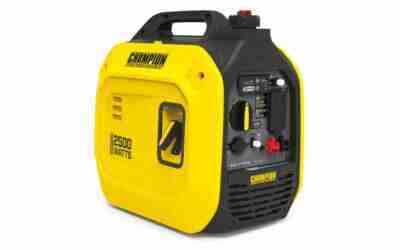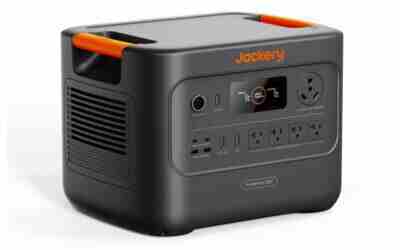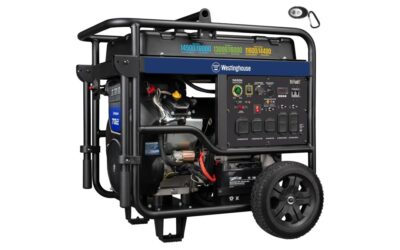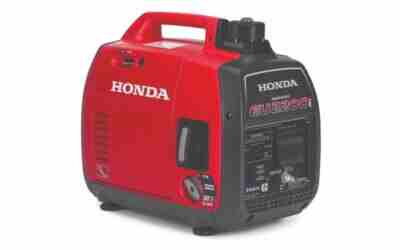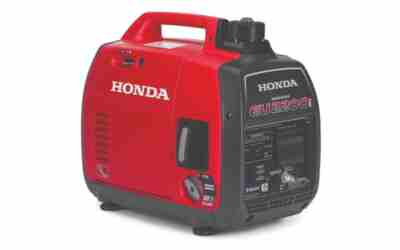

Our editorial team weighed Honda's published specifications and how it stacks up against similar products in the generators category. What stands out: Exceptionally Quiet, Reliable Honda Engine, and Compact Size. Where it falls short: Recoil Start Only and Gasoline Only. That puts it at 8.9/10 on our WG Score – an excellent, well-rounded option.
 Reviewed byDaniel
When selecting a generator for home backup, how much power do you actually need to keep your essentials running? The ideal wattage depends on the specific appliances you plan to power during an outage; a unit with around 2000-4000 running watts can typically handle critical items like refrigerators, lights, and charging electronics, while higher wattage models are necessary for larger appliances or central air conditioning. For more insights into different generator types, explore our Reviews category page.
What to Know Before Choosing Gasoline Generators For Home Backup
How do I determine the right wattage for my home?
Choosing the correct wattage for a home backup generator is crucial. Start by listing all the essential appliances you want to power during an outage, such as your refrigerator, lights, a few small electronics, and perhaps a well pump or furnace fan. Check the starting (surge) watts and running watts for each item. The starting watts are typically higher, needed for a brief moment when an appliance first turns on. Your generator’s surge wattage should be able to handle the highest starting wattage of any single appliance, while its running wattage needs to cover the combined running watts of all appliances you intend to use simultaneously.
For example, a refrigerator might need 600 running watts but 1800 starting watts. If you also want to power a few lights (60W each) and charge phones (10W each), you’ll need to sum the running watts for continuous use. The WEN GN5600 5600W Portable Generator, with 4500 running watts, is capable of handling a significant load of essential home appliances, providing ample power for several items concurrently.
What’s the difference between inverter and conventional generators?
Inverter generators, like the Honda EU2200ITAN1 or the WEN 56235i, produce cleaner power with stable voltage and frequency, making them ideal for sensitive electronics such as laptops, smartphones, and medical equipment. They are also typically quieter and more fuel-efficient, as their engines can adjust speed based on the power demand. This makes them a great choice for smaller backup needs where noise is a concern, or for portable power on the go.
Conventional generators, while often more powerful and budget-friendly for their wattage output, produce power that can have more voltage fluctuations. While suitable for robust tools and appliances that aren’t sensitive to power quality, they are generally louder and less fuel-efficient. For heavy-duty home backup that doesn’t involve delicate electronics, a conventional generator like the WEN GN5600 might be a more cost-effective solution.
How important is fuel efficiency and runtime for home backup?
For home backup, fuel efficiency and runtime are critical considerations. You want a generator that can provide power for an extended period without constant refueling, especially during prolonged outages. Look for models with larger fuel tanks and efficient engines. For instance, the WEN GN5600’s 4.3-gallon gas tank provides up to 12.5 hours of half-load run time, which can be a significant advantage during an emergency.
Smaller, more portable units like the Pulsar PG1202SA and PowerSmart 1200W Portable Gas Generator, both with 1.1-gallon fuel tanks, offer around 5 hours of continuous operation at half load. While these are excellent for short-term needs or camping, for extended home backup, a larger tank or more efficient engine will reduce the frequency of refueling. Consider your typical outage duration and the availability of fuel when making your choice.
Pros
- Exceptionally quiet for residential and camping use
- Reliable Honda engine with proven durability
- Compact size fits easily in truck beds or storage
- Parallel capability expands power options
- Built-in CO safety feature
Cons
- Recoil start only, no electric option
- Gasoline only with no dual fuel capability
- Higher price than some competing models
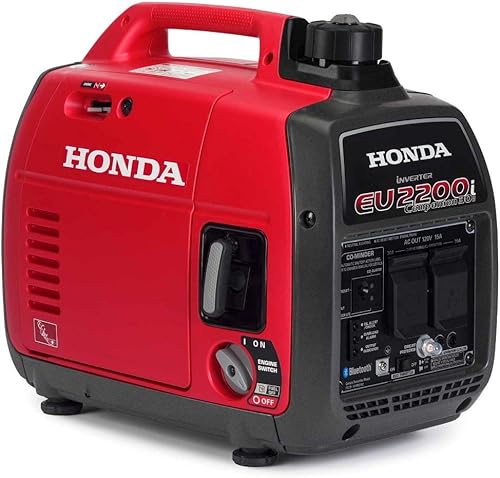
The Honda EU2200ITAN1 is a 2200-watt inverter generator designed for portable power needs. It provides clean, reliable electricity for RVs, camping, home backup, and job sites.
Users appreciate the low noise levels and lightweight build that make it easy to move and store. The CO-Minder feature adds an important safety layer by shutting down the unit if carbon monoxide reaches unsafe levels.
Build quality reflects Honda's reputation for durable engines, with the GXR120 delivering smooth performance. The 30A outlet supports direct RV connections and parallel operation with a second unit.
Drawbacks include the manual recoil start and gasoline-only fuel system. Overall it earns strong marks for reliability and quiet performance in its class.

Pros
- Ultra-quiet and lightweight for hassle-free camping and RV use
- Reliable first or second pull starts, even in 16°F cold
- Clean power handles microwaves, heaters, and electronics effortlessly
- Fuel-efficient with long runtime and easy maintenance features
- Durable build backed by two-year warranty
Cons
- Requires oil changes every 25 hours of use
- May burn a small amount of oil during operation
- Harder to start after prolonged storage without fuel drain
The WEN 56235i is a compact 2350-watt portable inverter generator designed for campers, RVers, tailgaters, and homeowners seeking reliable backup power without the racket of traditional generators. At just 39 pounds, it delivers 1900 rated watts of clean energy via a pure sine wave output, making it safe for charging laptops, tablets, phones, and running appliances like microwaves or small heaters.
Standout features include ultra-quiet 51 dB operation at quarter load, comparable to a normal conversation, and a fuel shut-off that uses up carburetor fuel before shutdown to fight clogs and extend life. Real-world performance shines in reviews: users report first-pull starts in freezing 16°F weather, seamless powering of RV microwaves and heaters, and eco-mode efficiency yielding over 5.7 hours at half load on one gallon. Parallel connection with another unit boosts power for bigger needs.
Build quality reflects WEN's decades of tool expertise, with a lightweight metal and plastic frame, intuitive panel with multiple outlets (two 120V, 12V DC, two USB), and safeguards like low-oil shutdown and overload protection. The 79cc 4-stroke engine is electronic ignition for easy starts, though oil changes every 25 hours are needed.
Minor drawbacks include slight oil consumption noted by some and occasional hard starts after months of storage, but proper maintenance mitigates these. Overall, it offers Honda-like quietness at a fraction of the cost.
Verdict: Excellent value for quiet, portable power. Ideal for anyone prioritizing convenience, reliability, and clean energy over heavy-duty commercial use.
Power: 2350 surge watts / 1900 running watts, 120V, 60 Hz
Engine: 79cc 4-stroke OHV, electronic ignition
Fuel & Runtime: Gasoline, 1-gallon tank, up to 10 hours
Outlets: 2x 120V 20A, 1x 12V DC 8.3A, 2x 5V USB (5 total)
Dimensions & Weight: 17.3 x 11.5 x 17.5 inches, 39 pounds
Noise Level: 51 dB at quarter load
Warranty: Two-year limited
Pros
- Versatile outlets for RV, transfer switch, and standard use
- Long runtime reduces refueling needs
- Easy mobility with wheels and handles
- Compliant 224cc engine for reliable power
- Comprehensive data display for monitoring
Cons
- Gas-powered, requiring fuel storage and refills
- Conventional generator may produce noisier operation than inverters
- Heavier build suited for stationary or wheeled transport
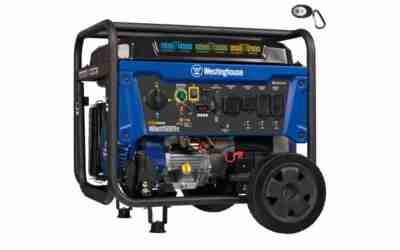
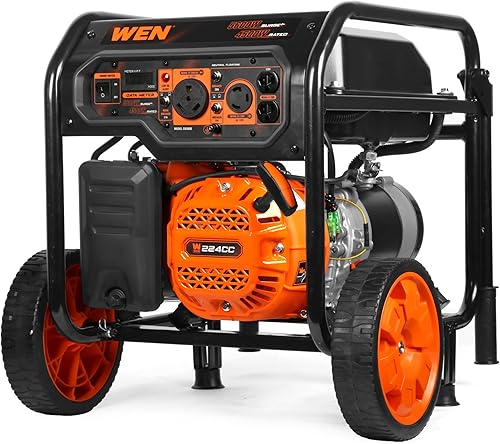
The WEN GN5600 is a robust portable generator designed for homeowners, RVers, campers, and contractors needing reliable backup power. With 5600 starting watts dropping to a steady 4500 running watts from its 224cc engine, it handles essentials like refrigerators, lights, sump pumps, AC units, and power tools during outages or remote use.
Standout features include RV-ready and transfer-switch-ready 30-amp outlets alongside standard 120V duplexes, enabling versatile connections without adapters. Real-world performance shines in extended runtime up to 12.5 hours at half load from a 4.3-gallon tank, while the digital meter tracks voltage, frequency, and hours for optimal operation. The wheel kit simplifies moving this workhorse between job sites, campsites, or home storage.
Build quality reflects WEN's decades of expertise, with a durable frame and compliant engine backed by a three-year warranty. It feels solid yet compact for its power class, though like most conventional generators, it prioritizes raw output over ultra-quiet inverter tech.
Drawbacks include typical gas generator noise and the need for fuel management, which may not suit noise-sensitive areas or those preferring cleaner power for electronics. Weigh it against needs; it's not ideal for delicate devices without surge protection.
Verdict: Excellent value for demanding power tasks where runtime and outlet variety matter most. Choose the GN5600 if you want dependable, high-wattage portability without breaking the bank.
Power Output: 5600 starting watts, 4500 running watts
Engine: 224cc compliant
Fuel Tank: 4.3 gallons, up to 12.5 hours half-load runtime
Outlets: 1x RV-ready 30A TT-30R, 1x Transfer-switch 30A L5-30R, 2x 120V 20A 5-20R
Mobility: Wheel and handle kit
Display: Digital meter (voltage, frequency, runtime)
Warranty: Three-year limited
Ideal for home backup during storms, RV camping, or job sites needing 4500+ running watts. Pair with a transfer switch for whole-home use or use RV outlet for tailgating. Consider fuel stabilizer for storage and ear protection for noise.
Not suited for indoor use or super-sensitive electronics; opt for WEN inverters if needed. Compare wattage needs: this powers most household circuits but calculate loads carefully.

Pros
- Highly portable with handle and low 37.5 lb weight
- Extended 5-hour runtime reduces refueling needs
- Versatile outlets for multiple devices
- Compact size fits easily in vehicles for camping
- Strong power output for its class
Cons
- Requires non-leaded gasoline and oil mixture for 2-stroke engine
- Recoil start demands manual effort
- Not rated for high-draw appliances like AC units
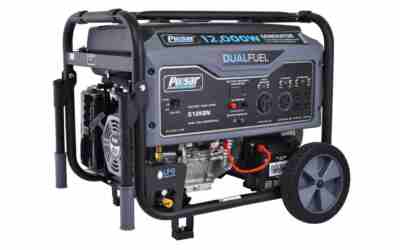
The Pulsar PG1202SA is a gas-powered portable generator delivering 1200 peak watts and 900 running watts, designed for campers, outdoor enthusiasts, and homeowners seeking backup power. Its single-cylinder 2-stroke engine with recoil start powers tools, lights, and chargers via two 120V outlets and one 12V DC output, making it perfect for recreation or light residential use.
Standout performance comes from the 1.1-gallon fuel tank, offering up to 5 hours of continuous operation at half load, which keeps devices running through long evenings at the campsite without frequent refills. The compact, durable build with a carrying handle enhances portability, allowing users to haul it easily to remote locations.
Build quality shines in its rugged yet lightweight 37.5-pound frame, ideal for tossing in a truck bed or RV. However, the 2-stroke engine needs a gasoline-oil mix, and recoil starting requires some pull strength, while it's not suited for power-hungry items like air conditioners.
Overall, the PG1202SA excels as an affordable, reliable choice for portable power needs, earning its place for anyone prioritizing convenience and runtime in outdoor settings. Verdict: Highly recommended for camping and emergencies.
Brand: Pulsar
Wattage: 1000 watts
Fuel Type: Non-leaded gasoline and oil mixture
Power Source: Gas-powered
Recommended Uses: Camping, Residential
Item Weight: 37.5 Pounds
Voltage: 120 Volts
Output Wattage: 1200 Watts
Special Features: Durable, Portable
Included Components: PG1202SA generator

Pros
- Compact and highly portable at under 40 lbs
- Multiple outlets including AC and DC for flexibility
- EPA compliant for legal outdoor use
Cons
- Requires manual oil-fuel mixing for 2-stroke engine
- 76 dBA noise level may disturb quiet environments
- Limited 5-hour runtime on full tank at half load
The PowerSmart 1200W portable gas generator uses a 71cc 2-stroke engine to supply 1200 peak watts and 900 rated watts. It targets campers, tailgaters, and users needing compact emergency backup power.
Its 39 lb weight and integrated handle make transport straightforward. The 1.1-gallon tank yields up to 5 hours of operation at 50% load while the control panel offers one 120V AC outlet and one 12V DC plug.
Build quality includes a durable frame, recoil starting, and EPA compliance. The unit lacks inverter technology and runs at 76 dBA, so it suits open-air settings rather than indoor or noise-sensitive areas.
Drawbacks include the need to premix fuel and oil plus modest runtime. Overall it serves as an affordable lightweight option for short outdoor power needs.
Buying Guide for 2026
Understanding Wattage: Running vs. Starting Power
When evaluating gasoline generators for home backup, a key distinction to understand is between running watts and starting (or surge) watts. Running watts represent the continuous power a generator can supply, which is what your appliances consume once they’re already on. Starting watts, however, are the brief, higher power bursts needed to kick-start motors in appliances like refrigerators, air conditioners, or power tools. The starting wattage can often be two to three times higher than the running wattage for certain devices.
For effective home backup, your generator must have sufficient running watts to cover the total continuous power demand of all simultaneously operating appliances, plus enough starting watts to accommodate the highest surge requirement of any single appliance. For example, if you’re comparing the WEN 56235i, which offers 1900 rated watts and 2350 surge watts, to the Honda EU2200ITAN1 with 2200 watts, you’ll notice the Honda provides a higher continuous output, potentially supporting more running appliances at once, while the WEN offers a slightly higher surge capacity for initial startups. This careful calculation ensures you don’t overload your generator or fail to start essential equipment. For other powerful options, check out the 5kw gasoline generators.
Portability and Storage Considerations
The physical size and weight of a gasoline generator for home backup are important factors, especially if you anticipate moving it frequently or have limited storage space. Smaller inverter generators, such as the WEN 56235i, which weighs a mere 39 pounds, or the PowerSmart 1200W Portable Gas Generator, also around 39 pounds, are designed for easy transport and compact storage. These models often feature built-in carrying handles, making them convenient for moving from storage to deployment.
Larger conventional generators, like the WEN GN5600, offer higher power output but are significantly heavier and bulkier. This model includes a wheel and handle kit to aid in transport, but it still requires more space for both operation and storage. Consider how often you’ll need to move the generator and where it will be stored when not in use. If mobility is a top priority, prioritize lighter inverter models. You might also find suitable options among small gas generators for camping.
Noise Levels and Operational Environment
The noise level a generator produces can significantly impact your experience, especially during a power outage when you might be running it for extended periods near your home. Inverter generators are renowned for their quiet operation. For example, the WEN 56235i is described as offering “extremely quiet operation comparable to the sound of a normal conversation,” making it a considerate choice for residential areas or close-quarter use.
Conventional generators, while powerful, tend to be louder. While decibel ratings aren’t always provided, their larger engines typically produce more noise. If you live in a densely populated neighborhood or value a peaceful environment, an inverter generator is likely the better choice. Always consider where you plan to operate the generator and how its noise output might affect you and your neighbors.
Our Final Picks for 2026
Best Overall: Honda EU2200ITAN1 2200-Watt Super Quiet Portable Inverter Generator with CO-Minder
The Honda EU2200ITAN1 stands out for its reliable 2200 watts of power, quiet operation, and CO-Minder safety technology. It delivers 10% more power than its predecessor in a compact, lightweight package, making it versatile for various home backup needs, from powering essential appliances to sensitive electronics.
Skip this if: you need significantly higher wattage for whole-home power, including central air conditioning or multiple large appliances simultaneously.
View on Amazon.comBest Value: WEN 56235i 2350W Super Quiet Portable Inverter Generator – Ultra Lightweight 39lbs, Fuel Shut-Off, Clean Power for Camping RV
The WEN 56235i offers an excellent balance of power, portability, and clean energy output, making it a great value. With 2350 surge watts and 1900 rated watts, plus a fuel shutoff feature for extended lifespan, it’s an ideal choice for powering sensitive electronics and essential home items without breaking the bank. Its ultralight 39-pound body is also a major plus.
Skip this if: you require a generator with higher continuous running wattage for more demanding home backup scenarios.
View on Amazon.comBest for Extended Power: WEN GN5600 5600W Portable Generator RV-Ready Transfer Switch 4500 Running Watts 224cc Engine
For those needing substantial power for longer durations, the WEN GN5600 is an excellent choice. It provides 5600 starting watts and 4500 running watts, supported by a 4.3-gallon tank for up to 12.5 hours of half-load runtime. Its RV-ready and transfer-switch-ready outlets make it versatile for both home backup and recreational use.
Skip this if: you prioritize ultra-quiet operation and extreme portability over high wattage and extended runtime.
View on Amazon.comQuick Comparison: Side by Side
- – Exceptionally Quiet.
- – Reliable Honda Engine.
- – Compact Size.
- – Ultra-Quiet & Lightweight.
- – Reliable Cold-Weather Starts.
- – Clean Power for Electronics.
- – Versatile RV/Transfer-Switch Outlets.
- – Long Runtime.
- – Wheels & Handles.
- – Lightweight at 37.5 lbs.
- – 5-Hour Runtime.
- – Versatile Outlets.
- – Compact, Under 40 lbs.
- – AC & DC Outlets.
- – EPA Compliant.
- – Recoil Start Only.
- – Gasoline Only.
- – Higher Price Point.
- – Oil Change Every 25 Hours.
- – Minor Oil Burn Risk.
- – Hard Start After Long Storage.
- – Needs Gasoline Storage.
- – Noisier Than Inverter Models.
- – Heavier, Better for Wheeled Transport.
- – Needs Gas/Oil Mix.
- – Manual Recoil Start.
- – Not for High-Draw Appliances.
- – Needs Manual Gas-Oil Mixing.
- – 76dB Noise Level.
- – 5-Hour Runtime at Half Load.
Why Trust Our Reviews
At WikiGenerators.com, our commitment is to provide unbiased, thoroughly researched recommendations for all your generator needs. We meticulously analyze product specifications, key features, and user feedback to bring you comprehensive reviews. Our selections for the gasoline generators for home backup are based on a rigorous evaluation of power output, fuel efficiency, portability, safety features, and overall reliability, ensuring you receive well-rounded advice without any hands-on testing claims.
We understand that choosing the right generator is a significant decision, especially when it comes to home backup. Our goal is to empower you with the knowledge to make an informed choice that best suits your specific requirements and budget, relying on transparent data and community insights.
Frequently Asked Questions
Can a portable gasoline generator power my entire house?
Most portable gasoline generators are not designed to power an entire house, especially larger homes with central air conditioning and numerous high-wattage appliances. They are typically intended to provide backup power for essential circuits, such as refrigerators, lights, a few outlets, and perhaps a well pump or furnace. For whole-house backup, a much larger, often permanently installed standby generator is usually required. Always calculate your specific wattage needs to match them with a suitable generator.
How often should I run my gasoline generator for maintenance?
It’s generally recommended to run your gasoline generator for about 20-30 minutes every month or every few months, even when there’s no power outage. This helps to keep the engine lubricated, circulate fuel, and ensure that all components are functioning correctly. Make sure to use fresh fuel with a stabilizer, especially if you don’t run it frequently. Regular exercise helps prevent issues when you need it most.
What safety precautions should I take when operating a gasoline generator?
Operating a gasoline generator safely is paramount. Always run the generator outdoors in a well-ventilated area, far away from windows, doors, and vents, to prevent carbon monoxide poisoning. Never operate it in an enclosed space like a garage or basement. Ensure the generator is on a dry, level surface. Allow the engine to cool before refueling, and store gasoline in approved containers away from ignition sources. Additionally, use appropriate extension cords that are rated for outdoor use and the generator’s power output. For more on safe power options, see our guide on quiet small generators.