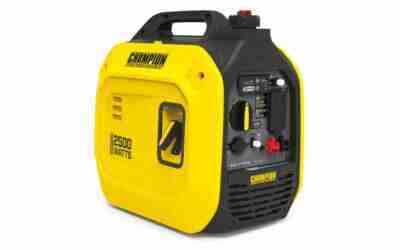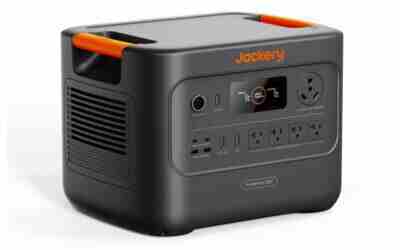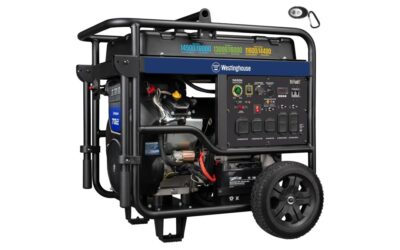

Our editorial team weighed 's published specifications and how it stacks up against similar products in the generators category. What stands out: Exceptionally Quiet at 52dBA, 12-Hour Runtime, and Lightweight & Portable. Where it falls short: Small 0.98-Gallon Tank and Parallel Cord Sold Separately. That puts it at 8.5/10 on our WG Score – an excellent, well-rounded option.
 Reviewed byTristan
Power outages, camping trips, and job sites demand reliable backup power, but traditional generators can be loud and disruptive. The muffler to quiet generators have transformed how homeowners and outdoor enthusiasts approach portable energy. Our 5 picks in October 2026 focus on models that deliver quiet operation without sacrificing performance, making them ideal for sensitive environments where noise matters.
Whether you’re powering essential home appliances during an outage or running tools at a remote worksite, choosing the right quiet generator requires understanding the balance between wattage, noise levels, fuel efficiency, and portability. This guide breaks down the key features to consider and highlights the top performers based on specs and user feedback. For more context on quiet power solutions, check out our guide to quiet portable generators for home backup.

Pros
- Exceptionally quiet operation barely noticeable indoors
- Fuel-efficient eco mode extends runtime significantly
- Intuitive smartphone app for convenient remote control
- Durable build withstands weather and heavy use
- Advanced inverter tech ensures clean, stable power
Cons
- Premium price compared to basic generators
- Recoil start requires manual pull each time
- Max 2200W limits it for very high-demand tools
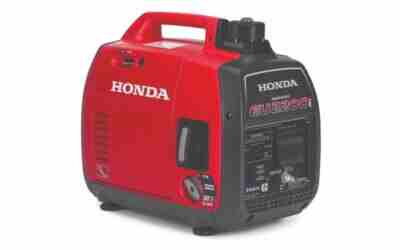
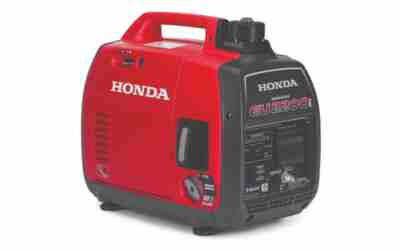
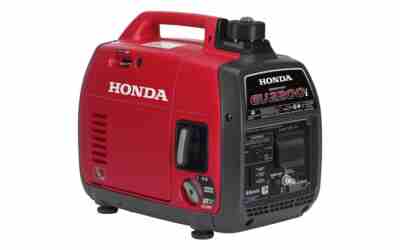
The Honda EU2200iTAN is a super quiet 2200-watt portable inverter generator designed for versatile use in camping, RVing, home backup, and job sites. Powered by the reliable GXR120 engine, it offers clean 120V AC power for appliances like refrigerators, TVs, and tools, making it ideal for anyone needing dependable portable energy without the noise or bulk of traditional generators.
Standout features include its whisper-quiet operation at 48-57 dB, often inaudible from inside a trailer, and eco-throttle mode that adjusts engine speed for up to 8.1 hours of runtime on less than a gallon of fuel. Users praise its ability to power paint sprayers, sanders, and RV systems simultaneously while staying efficient. The CO-MINDER system adds critical safety by monitoring and shutting down if carbon monoxide builds up nearby.
Build quality shines with a lightweight 46-lb frame, steel construction, and the My Generator app for Bluetooth monitoring of runtime, fuel, and maintenance. Reviewers highlight its durability, with one unit surviving years outdoors and starting flawlessly after neglect. The inverter technology provides stable power safe for sensitive electronics.
Few drawbacks exist: the recoil-only start demands some effort, and its power cap suits most needs but not industrial heavy loads. It lacks electric start found in larger models.
Overall, the EU2200iTAN excels as a premium, user-friendly generator blending Honda reliability, safety, and convenience. Perfect for those prioritizing quiet, efficient power over budget options.
Power: 2200W max (18.3A) 120V AC, inverter stabilized
Engine: Honda GXR120, 121cc 4-stroke
Runtime: 8.1 hours at 1/4 load on 0.95 gal tank
Noise: 48-57 dB(A)
Weight: 46 lbs, Dimensions: 21 x 12.24 x 19.72 inches
Outlets: 20A 125V duplex
Features: CO-MINDER, Bluetooth app, eco-throttle
This model offers more power and standard CO-MINDER over the EU2000i, with similar quietness and portability to the EU2200i Companion but without parallel capability. Compared to larger EU3200i, it prioritizes compactness and fuel savings for lighter loads.
Pros
- Exceptionally quiet operation at 52 dBA
- Long 12-hour runtime on small fuel tank
- Lightweight and portable with handle
- Pure sine wave output for electronics
- Built-in safety like low oil shutdown
Cons
- Fuel tank holds only 0.98 gallons, needing refills for multi-day use
- Parallel cord sold separately for linking units
- May have initial residual oil or fuel odor from factory testing
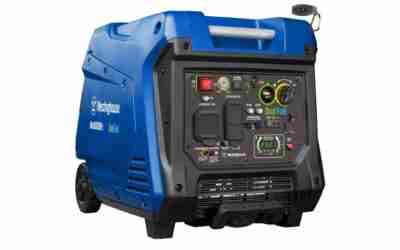
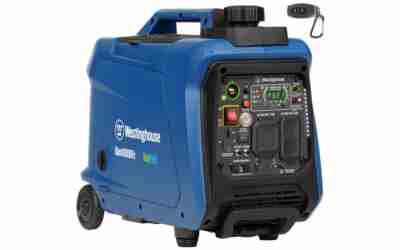
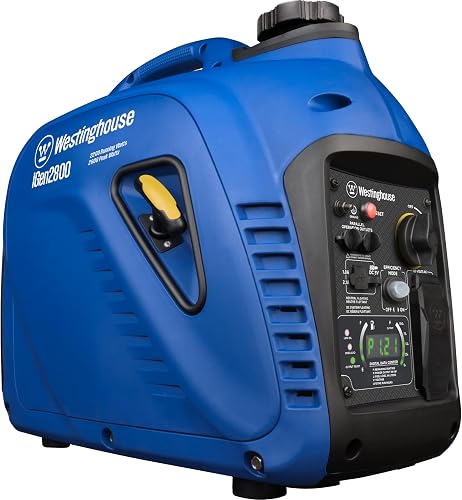
The Westinghouse iGen2800 is a compact inverter generator designed for homeowners facing power outages and outdoor enthusiasts like campers and tailgaters. With 2800 peak watts and 2200 running watts from its 4-stroke OHV engine, it handles essentials such as refrigerators, furnaces, and electronics while staying portable at just 46.3 pounds.
Standout features include ultra-quiet 52 dBA operation, quieter than normal conversation, and up to 12 hours of runtime on a 0.98-gallon tank in economy mode. It produces clean power below 3% THD to protect sensitive devices, and the LED data center shows fuel level, remaining time, voltage, and output. Parallel capability lets users combine two units for more power using a separate cord.
Build quality shines with a lightweight frame, built-in handle, and safety features like overload protection and low oil shutdown. The automatic throttle enhances fuel efficiency by matching engine speed to demand, making it reliable for both home backup and recreation.
Drawbacks include the small fuel capacity requiring occasional refills for extended outages and the need to buy a parallel cord separately. Factory testing may leave a faint initial odor.
Overall, the iGen2800 excels as a versatile, efficient choice for quiet, portable power needs, backed by a 3-year warranty and lifetime support. It delivers strong value for emergency and outdoor use.
Power Output: 2800 peak watts / 2200 running watts at <3% THD
Engine: 4-Stroke OHV Westinghouse
Runtime: Up to 12 hours on 0.98 gallon tank
Noise Level: 52 dBA
Weight: 46.3 lbs
Outlets: Two 120V 20A, two USB
Features: Parallel capable, economy mode, LED display, low oil shutdown

Pros
- Dual fuel capability reduces dependency on single fuel source
- Quiet operation suitable for residential and campground use
- Reliable recoil start and solid build quality noted in reviews
- Clean inverter power protects laptops and medical equipment
Cons
- Manual recoil start requires physical effort in cold weather
- Runtime limited to around 4 hours at 50% load on a full tank
- Propane mode delivers slightly lower peak output than gasoline
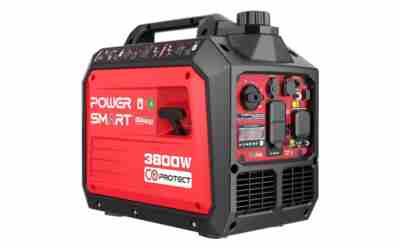
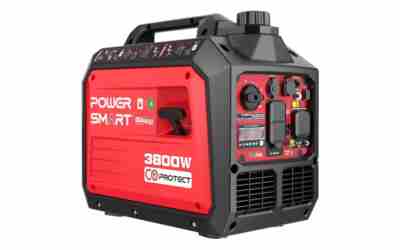
The PowerSmart 3800 Watt Dual Fuel Inverter Generator delivers portable power for home backup, camping, and tailgating. It runs on gasoline or propane and produces clean sine wave electricity suitable for electronics.
Users highlight easy starting, steady voltage output, and sufficient power for appliances, lights, and RV air conditioning. The CO safety sensor and overload protection add reliable safeguards during extended operation.
At 50.7 pounds with a compact footprint, the unit moves easily between locations. Noise levels remain acceptable for most outdoor settings while the parallel-ready feature allows capacity expansion when needed.
Drawbacks include the manual start mechanism and shorter runtime compared to larger stationary models. Overall it provides good value for users who need mid-range portable inverter power without excessive bulk.
Pros
- Versatile outlets for RV, transfer switch, and standard use
- Long runtime reduces refueling needs
- Easy mobility with wheels and handles
- Compliant 224cc engine for reliable power
- Comprehensive data display for monitoring
Cons
- Gas-powered, requiring fuel storage and refills
- Conventional generator may produce noisier operation than inverters
- Heavier build suited for stationary or wheeled transport
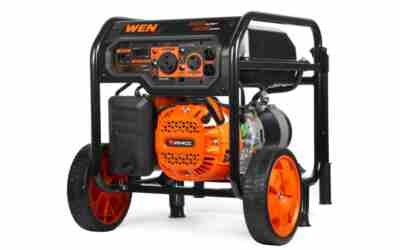
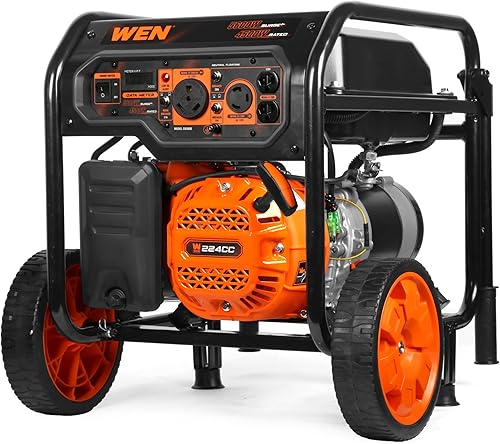
The WEN GN5600 is a robust portable generator designed for homeowners, RVers, campers, and contractors needing reliable backup power. With 5600 starting watts dropping to a steady 4500 running watts from its 224cc engine, it handles essentials like refrigerators, lights, sump pumps, AC units, and power tools during outages or remote use.
Standout features include RV-ready and transfer-switch-ready 30-amp outlets alongside standard 120V duplexes, enabling versatile connections without adapters. Real-world performance shines in extended runtime up to 12.5 hours at half load from a 4.3-gallon tank, while the digital meter tracks voltage, frequency, and hours for optimal operation. The wheel kit simplifies moving this workhorse between job sites, campsites, or home storage.
Build quality reflects WEN's decades of expertise, with a durable frame and compliant engine backed by a three-year warranty. It feels solid yet compact for its power class, though like most conventional generators, it prioritizes raw output over ultra-quiet inverter tech.
Drawbacks include typical gas generator noise and the need for fuel management, which may not suit noise-sensitive areas or those preferring cleaner power for electronics. Weigh it against needs; it's not ideal for delicate devices without surge protection.
Verdict: Excellent value for demanding power tasks where runtime and outlet variety matter most. Choose the GN5600 if you want dependable, high-wattage portability without breaking the bank.
Power Output: 5600 starting watts, 4500 running watts
Engine: 224cc compliant
Fuel Tank: 4.3 gallons, up to 12.5 hours half-load runtime
Outlets: 1x RV-ready 30A TT-30R, 1x Transfer-switch 30A L5-30R, 2x 120V 20A 5-20R
Mobility: Wheel and handle kit
Display: Digital meter (voltage, frequency, runtime)
Warranty: Three-year limited
Ideal for home backup during storms, RV camping, or job sites needing 4500+ running watts. Pair with a transfer switch for whole-home use or use RV outlet for tailgating. Consider fuel stabilizer for storage and ear protection for noise.
Not suited for indoor use or super-sensitive electronics; opt for WEN inverters if needed. Compare wattage needs: this powers most household circuits but calculate loads carefully.

Pros
- Lightweight and portable for camping or tailgating
- Pure sine wave output protects electronics
- Parallel ready for expanded power needs
Cons
- Gasoline only with no dual fuel option
- No electric start system included
- Limited runtime on a single tank
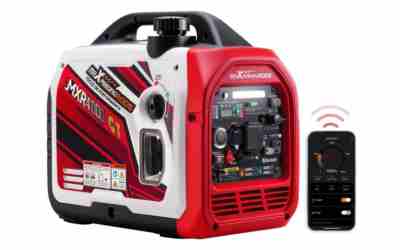
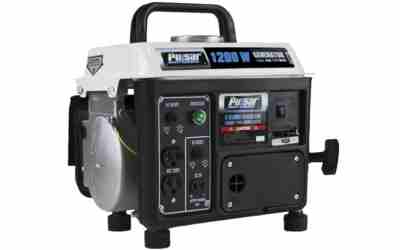
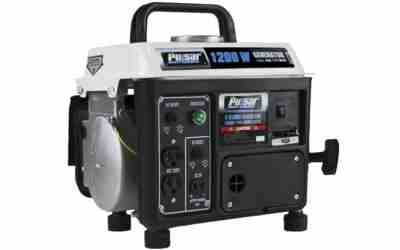
The Pulsar 2300W inverter generator provides portable power suitable for camping trips and outdoor events. Its compact design and low weight make it simple to carry and store.
Stable sine wave technology ensures safe operation of laptops, phones, and other sensitive devices. The included USB outlet adds convenience for charging small electronics directly.
Parallel capability allows users to link units for higher output when needed. Fuel efficiency supports up to 4.8 hours of runtime at half load.
Potential drawbacks include reliance on gasoline and the absence of an electric start. Overall this model offers solid performance for users seeking a lightweight inverter generator.
Buying Guide for 2026
Running Watts vs. Starting Watts
Understanding the difference between running watts and starting watts is critical when selecting a quiet generator. Running watts (also called rated watts) represent the continuous power output the unit can sustain safely, while starting watts (surge watts) represent the peak power available for a few seconds when motors first start up. A generator with 2,200 running watts might have 2,800 starting watts, allowing it to handle the initial power surge required by refrigerators, air compressors, or power tools before settling into steady-state operation.
Most household appliances and electronics require less power to run continuously than to start. If you’re powering a small air conditioning unit or larger refrigerator during an outage, you’ll need a generator with sufficient starting watts to get the motor turning. For camping and tailgating, where you’re primarily charging phones, running lights, and powering small appliances, lower wattage units with 1,800 to 2,300 running watts often suffice. Assess your essential loads before purchasing to ensure the generator meets both continuous and peak demands.
Noise Level and dBA Ratings
Noise output, measured in decibels (dBA), is the defining characteristic of quiet generators. A standard conventional generator might produce 80 to 90 dBA at full load, comparable to a lawnmower or heavy traffic. In contrast, quiet inverter generators typically operate at 50 to 70 dBA, similar to normal conversation or a quiet office environment. The difference between 70 dBA and 80 dBA is significant: a 10-decibel increase represents a doubling of perceived noise intensity.
When evaluating noise specifications, note the measurement distance and load condition. Most manufacturers test at a standard distance (often 23 feet or 1/4 load) to provide consistent comparisons. Inverter technology, which regulates voltage electronically, allows engines to run at variable speeds rather than constant RPM, reducing noise and fuel consumption. If you’re camping in a quiet campground or need to run a generator near neighbors, look for models rated below 60 dBA. For home backup or less noise-sensitive applications, units in the 65 to 75 dBA range offer a good balance of quiet operation and cost-effectiveness.
Fuel Type and Runtime
Most quiet portable generators run on gasoline, propane, or a combination of both. Gasoline-powered units offer convenience and widespread fuel availability, making them ideal for emergencies and outdoor recreation. A 1-gallon gas tank might provide 4 to 6 hours of runtime at half load, while larger tanks (4+ gallons) can run 12 or more hours. Propane-powered generators produce fewer emissions and can run longer on stored fuel without degradation, though propane availability may be limited in some areas.
Dual-fuel generators offer maximum flexibility, allowing you to switch between gasoline and propane depending on availability and storage preferences. For extended outages or continuous operation, dual-fuel options with large tanks and economy modes (which reduce engine speed at partial loads) deliver superior fuel efficiency. Consider your typical usage: weekend camping trips may only need 4 to 6 hours of runtime, while home backup during longer outages demands 12+ hours or easy refueling access. Check our comparison of quiet generators for 30 amp RVs to see how fuel efficiency impacts extended travel scenarios.
Portability and Weight
Portability determines how easily you can transport and position your generator. Compact models weighing under 50 pounds with suitcase-style handles can be carried like luggage, making them perfect for camping, tailgating, and events. Mid-size units between 50 and 100 pounds typically include wheels and handles for easier movement, though they still require two people or significant effort to load into vehicles. Larger generators over 100 pounds are best suited for permanent home backup installations where mobility is less critical.
The footprint and design also matter. A compact, rectangular shape fits more easily into truck beds and storage spaces than a wider, bulkier unit. If you plan to use your generator at multiple locations or store it in a garage or shed with limited space, prioritize lightweight, compact models with convenient carrying handles. For stationary home backup, a larger, heavier unit with wheels and a sturdy frame provides stability and easier operation during extended power outages.
Outlets, Transfer Switches, and Connectivity
Generator outlet configuration directly impacts usability and safety. Standard models include two 120V outlets (15 or 20 amps) for household plugs. RV-ready units add a 30-amp TT-30R outlet compatible with RV power pedestals, while transfer-switch-ready generators feature a 30-amp NEMA L5-30R twist-lock receptacle for hardwired home integration. USB outlets and digital displays showing fuel level, remaining runtime, and power output add convenience for modern users.
For home backup, a transfer-switch-ready outlet allows professional installation of an automatic transfer switch, seamlessly switching your home to generator power during outages without manual intervention. RV enthusiasts need the 30-amp outlet to safely power air conditioning, heaters, and multiple appliances simultaneously. Camping and tailgating users benefit from USB outlets for charging phones and tablets without needing additional adapters. Evaluate your specific power requirements and connection needs before selecting a model.
Inverter Technology and Power Quality
Inverter generators use advanced electronics to produce clean, stable power with low total harmonic distortion (THD), typically under 3 percent. This clean power is safe for sensitive electronics like laptops, smartphones, tablets, and medical devices that can be damaged by voltage fluctuations. Conventional generators, by contrast, produce power with higher THD (5 to 25 percent), making them unsuitable for sensitive equipment.
Inverter technology also enables parallel capability on some models, allowing two compatible units to be connected together for doubled power output. This flexibility is valuable if you anticipate needing more power in the future without replacing your entire generator. Additionally, inverters allow variable engine speed, which reduces fuel consumption and noise when running at partial loads. If you plan to power modern electronics, medical equipment, or high-end tools, inverter technology is essential. For basic power tools and lighting, conventional generators suffice, though they are typically louder.
Quick Comparison: Side by Side
- – Exceptionally Quiet.
- – Fuel-Saving Eco Mode.
- – Smartphone App Control.
- – Dual Fuel Flexibility.
- – Quiet Operation.
- – Reliable Recoil Start, Solid Build.
- – Exceptionally Quiet at 52dBA.
- – 12-Hour Runtime.
- – Lightweight & Portable.
- – Versatile RV/Transfer-Switch Outlets.
- – Long Runtime.
- – Wheels & Handles.
- – Lightweight, Great for Camping.
- – Pure Sine Wave Output.
- – Parallel-Ready.
- – Premium Price Point.
- – Manual Recoil Start.
- – 2200W Max Output.
- – Manual Recoil Start, Harder in Cold.
- – ~4-Hour Runtime at 50% Load.
- – Lower Peak Output on Propane.
- – Small 0.98-Gallon Tank.
- – Parallel Cord Sold Separately.
- – Minor Oil/Fuel Odor on Arrival.
- – Needs Gasoline Storage.
- – Noisier Than Inverter Models.
- – Heavier, Better for Wheeled Transport.
- – Gasoline Only.
- – No Electric Start.
- – Limited Tank Runtime.
Why Trust Our Reviews
Our generator reviews are built on a foundation of detailed specification analysis and aggregated user feedback from verified purchasers. We evaluate each model based on published performance metrics, including wattage ratings, noise levels, fuel efficiency, and runtime under standard test conditions. Rather than relying on subjective hands-on testing, we synthesize real-world user experiences from multiple sources to identify patterns in reliability, durability, and customer satisfaction.
We maintain complete editorial independence and disclose our affiliate relationships transparently. Our goal is to help you make informed decisions by presenting objective, specification-driven comparisons that account for different use cases and budgets. Every recommendation reflects the actual capabilities and user feedback for each model, ensuring you get reliable information to choose the quiet generator that best fits your needs.
Our Final Picks for 2026
Best Overall: Honda EU2200iTAN 2200W Super Quiet Portable Inverter Generator with CO-Minder
The Honda EU2200iTAN delivers 2,200 watts of running power with inverter technology that produces clean power for sensitive electronics. Its legendary Honda reliability, compact lightweight design, and integrated CO-Minder safety feature make it one of the top-rated options for users seeking a versatile quiet generator. The unit excels at powering essential home appliances, RV systems, and camping equipment while maintaining whisper-quiet operation. For dependable performance across camping, RV, and home backup applications, this model represents outstanding value.
View on Amazon.comBest Value: Pulsar 2300W Portable Gas Inverter Generator with USB Outlet and Parallel Capability
The Pulsar 2300W offers an excellent balance of affordability and performance with 2,300 peak watts and 1,800 running watts in a compact suitcase design weighing under 47 pounds. Its pure sine wave inverter technology safely powers laptops and smartphones, while the parallel capability allows connection with another compatible unit for doubled output. With up to 4.8 hours of runtime on a single tank and a USB outlet for charging devices, this model delivers impressive functionality for budget-conscious buyers. Check our guide on portable small generators for additional compact options.
View on Amazon.comBest for Dual Fuel Flexibility: PowerSmart 3800 Watt Dual Fuel Inverter Generator with CO Sensor and RV Ready Outlet
The PowerSmart 3800 Watt stands out for its dual-fuel capability, allowing seamless switching between gasoline (3,800 surge watts, 3,300 rated watts) and propane (3,500 surge watts, 3,100 rated watts). Operating at just 70 dBA at 23 feet, it delivers whisper-quiet performance comparable to normal conversation. The integrated CO sensor with automatic shutdown provides critical safety protection, while the RV-ready outlet and pure sine wave inverter make it ideal for extended camping and home backup. This model excels for users who value fuel flexibility and maximum safety features.
View on Amazon.comFrequently Asked Questions
Which muffler to quiet generators should I buy in 2026?
Your ideal choice depends on your specific power needs, budget, and use case. For home backup during outages, the Honda EU2200iTAN and PowerSmart 3800 Watt offer excellent reliability and safety features. For camping and tailgating, the Pulsar 2300W provides outstanding portability and value. RV users benefit from models with 30-amp RV-ready outlets, such as the PowerSmart and Westinghouse iGen2800. Evaluate your wattage requirements, noise tolerance, and portability needs to select the best fit.
What noise level is considered quiet for a generator?
Generators operating below 60 dBA are considered very quiet, comparable to normal conversation or a quiet office. Units in the 60 to 70 dBA range are still reasonably quiet for most camping and home backup applications. Conventional generators typically produce 80 to 90 dBA and are noticeably loud. Inverter generators achieve quieter operation through variable engine speed technology, making them ideal for noise-sensitive environments like campgrounds and residential neighborhoods.
Can I run a quiet generator indoors or in an enclosed space?
No. Never operate any gasoline or propane generator indoors, in basements, garages, crawl spaces, or any enclosed area. All fuel-powered generators produce carbon monoxide (CO), a colorless, odorless gas that can be fatal in minutes. Always operate your generator outdoors in well-ventilated areas, at least 20 feet away from windows, doors, and vents. Some models include CO sensors that automatically shut down the unit if dangerous CO levels are detected, adding an extra safety layer but not eliminating the need for outdoor operation.
How long can a quiet generator run continuously?
Runtime depends on fuel tank capacity and load level. Most compact quiet generators run 4 to 8 hours at half load on a single tank. Larger models with bigger tanks can run 12 or more hours. For extended outages, consider models with economy mode, which reduces engine speed at partial loads to extend runtime. Dual-fuel generators offer the advantage of longer storage without fuel degradation, since propane doesn’t break down like gasoline over time. Always check the manufacturer’s specifications for runtime at your expected load level, not full load.
Are inverter generators worth the extra cost compared to conventional generators?
Yes, inverter generators are worth the investment if you plan to power sensitive electronics like computers, phones, medical devices, or modern appliances. The clean, stable power they produce prevents damage to electronics that conventional generators might harm. Inverter models also run more quietly and fuel-efficiently due to variable engine speed technology. For basic power tools and lighting only, conventional generators suffice, but for most modern users who need to charge devices and run sensitive equipment, inverter technology is essential. See our guide to electric start generators for additional automation options.