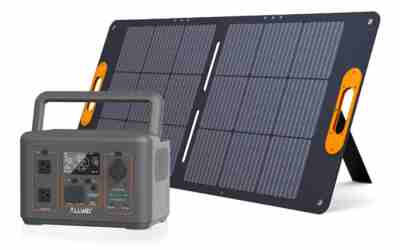

Our editorial team weighed 's published specifications and how it stacks up against similar products in the generators category. What stands out: 3,000+ Cycle LiFePO4 Battery, 1800W Output, 15 Outlets, and Includes 220W Bifacial Panel. Where it falls short: Heavy at 58 lbs and Ships Separately From Panel. That puts it at 8.9/10 on our WG Score – an excellent, well-rounded option.
 Reviewed byDaniel
How much power does an air conditioner actually need from a portable power station? For most window units, the answer is between 500W and 1500W running watts, with a surge of up to 2000W at startup. The models we cover here span from compact 146Wh units designed for small fans and CPAP machines to robust 2048Wh stations that can keep a 5000 BTU AC running for hours. Whether you are powering a camper, a bedroom, or a backup setup, our 5 picks below are based on specs and user feedback to help you match the right capacity to your cooling needs.
For more on matching power stations to specific appliances, check our best portable power stations for fridge guide.
What to Know Before Choosing Portable Power Stations For Air Conditioners
How much running wattage does my air conditioner need?
Air conditioners have two power numbers: running watts and startup surge. A typical 5000 BTU window unit draws around 500W to 600W while running but can spike to 1500W or more for a few seconds when the compressor kicks in. If your power station has a high surge rating (like the 2600W X-Boost on the DELTA 3), it can handle that brief demand even if its continuous rating is lower. For example, the EF ECOFLOW Delta 2 Solar Generator with 220W Panel provides 1800W continuous and can surge past that for short periods, making it suitable for most small ACs.
What battery capacity do I need for a full night of cooling?
Battery capacity is measured in watt-hours (Wh). A 500W AC running for 8 hours would consume 4000Wh, but you can extend runtime by using a lower fan speed or a smaller unit. The EF ECOFLOW DELTA 2 Max with 2048Wh could run a 500W AC for about 4 hours at full load, or longer if the AC cycles on and off. For a full night, you would want a station that can expand, like the DELTA 2 Max which supports up to 6kWh with extra batteries. The Apowking 146Wh models are best for powering a small fan or keeping a phone charged, not for running an AC.
Can I recharge a power station with solar panels while using it?
Yes, many portable power stations support simultaneous solar charging and discharging. The EF ECOFLOW Delta 2 Solar Generator with 220W Panel includes a 220W bifacial solar panel that can capture sunlight from both sides, and the station accepts up to 500W of solar input. This means you can run your AC during the day while the panels recharge the battery, potentially extending runtime indefinitely if the sun is strong. The DELTA 3 also supports fast solar charging at 500W, and the DELTA 2 Max can take up to 1000W solar input for even quicker top-ups.
How important is battery chemistry for longevity?
LiFePO4 (LFP) batteries are the gold standard for portable power stations because they last 3000 to 4000 cycles before degrading to 80% capacity. That is 6 to 8 times longer than older lithium-ion chemistries. All three EF ECOFLOW models in this list use LFP cells, with the DELTA 3 rated for 4000 cycles, meaning it could last over a decade with daily use. The Apowking units do not specify LFP, so they may have a shorter lifespan. For a station that will be used regularly for air conditioner backup, LFP is a key feature to look for.

Pros
- Long-lasting LiFePO4 battery with exceptional 3000+ cycle lifespan
- High 1800W output supports most appliances with 15 outlets
- Includes 220W bifacial solar panel for immediate off-grid use
- App integration and fast charging enhance user convenience
- Expandable capacity up to 3kWh for versatile applications
Cons
- At 58 lbs, it is somewhat heavy for solo handheld portability
- Power station and solar panel ship separately
- No specified peak wattage beyond 1800W running output
The EF ECOFLOW Delta 2 is a versatile portable power station paired with a 220W bifacial solar panel, delivering 1024Wh of LiFePO4 battery capacity and 1800W AC output. Designed for home backup, camping, and RV trips, it provides clean, fume-free power through 15 outlets, including USB-C up to 100W.
Ideal for outdoor enthusiasts and homeowners seeking reliable off-grid solutions, this solar generator stands out with its X-Stream fast charging, app control for real-time monitoring, and expandability to 3kWh. The weatherproof panel captures up to 25% more energy, ensuring quick recharges even in partial shade.
Build quality shines with a sophisticated BMS for safety, pure sine wave inverter for sensitive devices, and UPS functionality for seamless backup. At 15.7 x 8.3 x 11.1 inches and 58 lbs, it balances portability with robust performance, backed by a 5-year warranty.
Minor drawbacks include its weight for frequent transport and separate shipping of components. Overall, the Delta 2 excels as a durable, high-output solar generator for demanding users.
Power Output: 1800W running watts
Battery: 1024Wh LiFePO4, 3000+ cycles
Solar Input: 500W max
Weight & Size: 58 lbs, 15.7 x 8.3 x 11.1 inches
Outlets: 15 versatile outlets
Features: App Control, Fast Charging, Pure Sine Wave, UPS, Solar Compatible

Pros
- Lightning-fast 56-minute full charge with 1500W AC input
- Durable LiFePO4 battery with 4000 cycles and 10-year lifespan
- Powers 13 devices simultaneously via abundant outlets
- Expandable up to 5kWh with EcoFlow ecosystem
- IP65 weatherproofing for outdoor reliability
Cons
- Weighs 27.5 pounds, making it less portable for solo carrying
- Solar panel required separately for solar charging option
- New release with no customer reviews yet available
The EcoFlow DELTA 3 is a compact yet powerful 1024Wh portable power station designed for home backup, camping, and RV use. Featuring a robust LiFePO4 battery, it delivers 1800W AC output with X-Boost up to 2600W, allowing it to run multiple high-demand appliances simultaneously through 13 outlets, including 100W USB-C ports.
Standout performance includes a full charge in just 56 minutes using 1500W AC input, or rapid solar charging up to 500W. In real-world scenarios, it excels at powering essentials like refrigerators, CPAP machines, or tools during blackouts or off-grid trips, with expandable capacity up to 5kWh via EcoFlow extra batteries for extended runtime.
Build quality shines with an IP65-rated battery pack that resists splashes, dust, and oil, plus a lightweight extra battery option that's one-third smaller than predecessors. Operating quietly below 30dB at lower loads, it suits noise-sensitive environments, backed by a 5-year warranty.
Drawbacks include its 27.5-pound weight, which may challenge portability for some, and the need to purchase solar panels separately. Overall, the DELTA 3 offers exceptional value for reliable, fast-charging power in diverse settings.
Verdict: Highly recommended for anyone seeking a durable, high-performance solar generator that balances speed, capacity, and versatility without compromise.
Capacity: 1024Wh LiFePO4 Battery
AC Output: 1800W (2600W X-Boost)
Charging: 1500W AC Input (56 min full), 500W Solar Input
Dimensions: 15.7 x 8 x 11.2 inches
Weight: 27.5 pounds
Outlets: 13 Total (including 100W USB-C)
Expandability: Up to 5kWh with EcoFlow Batteries
Durability: 4000 Cycles to 80%, IP65 Rated

Pros
- Lightning-fast charging keeps you powered during critical times
- Exceptional build quality and durability praised in reviews for marine and off-grid use
- Quiet fans and no emissions allow safe indoor operation
- Powers high-demand devices like fridges for days on a single charge
- Intuitive app and display for easy monitoring and control
Cons
- Weighs 50 pounds, challenging to move solo for some users
- Occasional app connectivity issues require software updates
- Solar panels sold separately for full off-grid capability
The EF ECOFLOW DELTA 2 Max is a high-capacity portable power station designed for home backup, RV camping, outdoor adventures, and professional uses like filmmaking or boat maintenance. With 2048Wh LFP battery and 2400W output (expandable to 3400W via X-Boost), it powers nearly all household appliances, from fridges running for over 24 hours to power tools and heaters.
Standout performance includes world-leading charging: 80% in 43 minutes with AC and solar, or 1.1 hours on AC alone. Reviewers rave about its reliability, with one running a mini-fridge for 53 hours and a freezer for 26 hours. The quiet 30dB operation and app control make it ideal for overnight use without disturbance, while expandability to 6kWh prepares users for extended blackouts.
Build quality feels premium and rugged, with a 10-year battery lifespan from 3000 cycles. It's lighter than competitors at 50 pounds yet robust for harsh environments. The app provides real-time stats, though some note initial Bluetooth setup needs updates.
Drawbacks include its weight for frequent transport and lack of included solar panels. Still, for versatile, fume-free power without gas generator hassles, it excels.
Verdict: A top-tier solar generator for anyone needing fast, expandable, and quiet backup power. Highly recommended for preppers, campers, and homeowners facing outages.
Capacity: 2048Wh LFP Battery (3000 cycles to 80%)
Output: 2400W Continuous, 3400W X-Boost, 15 Outlets
Charging: 80% in 43 Min (AC+Solar), 1.1 Hr AC, 2.3 Hr Solar
Dimensions: 12.2 x 9.7 x 20 inches, 50 lbs
Special Features: Expandable to 6kWh, 30dB Quiet, App Control, Indoor Safe
Users praise its speed and power: 'Charged to 80% in under an hour, handles multiple appliances flawlessly' (5 stars). Sailboat owners love its portability and durability in marine settings. Off-grid fans note it outperforms competitors like Bluetti in runtime and recharge speed for fridges and freezers.
Common theme: Beastly performance for home backup and camping, with quiet operation and long battery life standing out.

Pros
- Lightweight and portable at 3.3lbs, easy to carry for camping or emergencies
- Includes 40W foldable solar panel and all cables for immediate use
- Multiple fast-charging USB ports and AC/DC outputs handle diverse devices
- Built-in flashlight with SOS adds emergency utility
- Positive feedback on quick customer service and real-world charging performance
Cons
- Solar panel may underperform in low-light conditions or with incompatible generators
- Limited to 100W continuous power, not for high-wattage appliances
- Occasional reports of unit charging issues after extended use
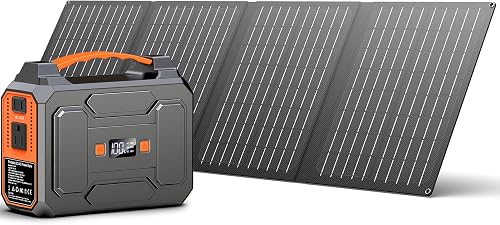
The Apowking R100 is a compact 146Wh portable solar generator designed for campers, RV enthusiasts, and anyone needing reliable backup power during outages or off-grid adventures. Paired with a 40W foldable solar panel, it offers versatile charging for essentials like phones, laptops, tablets, fans, and lights, making it ideal for short trips or emergency kits rather than whole-home backup.
Standout features include seven output ports: two 110V AC outlets (100W rated, 200W peak), multiple USB options with quick charge, and a DC port for car accessories. Users praise its real-world performance, like fast phone charging via solar on sunny days and full recharges in a few hours from AC or car. The built-in dual LED flashlight with SOS mode proves handy for nighttime emergencies, while the BMS ensures safe operation with temperature and voltage control.
Build quality impresses with a sturdy, lightweight 3.3lb body and cooling vents to prevent overheating. The digital display shows battery status clearly, and its backpack-friendly size enhances portability. Most reviews highlight excellent value, though some note slower solar input in shade and minor compatibility quirks with other panels.
Drawbacks include power limits that exclude heavy appliances and isolated complaints about solar efficiency or longevity. Overall, this generator is a budget-friendly, feature-packed choice for portable power needs.
Verdict: Buy the Apowking R100 if you want an affordable, all-in-one solar solution for daily essentials during camping or blackouts. It's not for high-demand use but excels where convenience and solar readiness matter.
Capacity: 146Wh / 39600mAh Lithium Ion
Output: 100W Rated / 200W Peak; 2x AC 110V, USB-A/C ports, 1x DC 9-12.6V/10A
Input: Solar (40W panel included), AC adapter, Car charger
Weight: 3.3 pounds; Dimensions: 7.6 x 3.7 x 6.1 inches
Extras: Dual LED flashlight (3 modes), BMS safety, 1-year warranty
Apowking 146Wh solar generator, 40W solar panel, AC power adapter, car charging cable, carport output cable, user manuals (2).
Pros
- Includes efficient 40W solar panel for true portability
- Multiple output ports handle diverse devices effectively
- Lightweight and easy to carry for outdoor adventures
- Built-in flashlight adds emergency utility
- Quick customer support responsiveness in many cases
Cons
- Solar panel performance varies in cloudy or low-light conditions
- Limited to 100W continuous output for larger loads
- Occasional reports of charging compatibility issues
The Apowking R100 is a compact 146Wh portable solar generator bundled with a 40W foldable solar panel, designed for users needing reliable power during camping, travel, home outages, or outdoor activities. It outputs 200W peak and 100W rated power across seven ports, making it suitable for charging phones, tablets, laptops, fans, and small appliances without relying on grid electricity.
Standout features include the high-conversion-efficiency monocrystalline solar panel that recharges the unit even in suboptimal light, alongside AC, USB-C quick charge, and DC ports for broad compatibility. Real-world users praise its ability to fully charge devices like phones quickly via solar or car adapter, with the digital display showing battery status clearly. The dual LED flashlight with SOS functionality proves handy for emergencies, and cooling vents maintain safe temperatures during use.
Build quality features a durable aluminum and tempered glass construction in an orange-and-black design, weighing just 3.3lb for easy portability in backpacks. The BMS system ensures protection from common risks, enhancing longevity. While some note slower solar recharges in poor weather and minor compatibility quirks, its value shines for lightweight, everyday backup needs.
Overall, the Apowking R100 delivers solid performance for off-grid enthusiasts and preparedness-minded buyers, offering a balance of power, portability, and safety at an accessible level. Ideal if you want a no-fuss solar kit without bulk.
Capacity: 146Wh/39600mAh Lithium Ion
Output: 200W Peak/100W Rated (2x AC 110V, USB ports, 1x DC 9-12.6V/10A)
Input: Solar (40W panel included), AC adapter, Car charger
Dimensions: 7.5"L x 3.7"W x 6.1"H; Weight: 6.63lb total
Includes: Solar panel, AC adapter, car cable, cigarette lighter adapter, manuals
Choose this for short trips or basic backups powering small electronics; upgrade to larger capacities for heavy appliances. Test solar input in your typical conditions. Verify device wattage stays under 100W continuous. Great starter solar generator for beginners.
Buying Guide for 2026
Matching capacity to your AC wattage
To determine how long a power station can run your air conditioner, divide the station’s watt-hour capacity by the AC’s running wattage. For example, the EF ECOFLOW DELTA 2 Max has 2048Wh. If your AC draws 500W, that gives you about 4 hours of runtime (2048Wh / 500W = 4.1 hours). But remember that ACs cycle on and off, so actual runtime may be longer. The DELTA 2 Max also supports expansion up to 6kWh, which would run that same AC for over 12 hours. For smaller needs, the Apowking 146Wh units are best for low-power devices like fans or lights, not for air conditioners.
Surge power and inverter quality
Air conditioners need extra power at startup, sometimes double their running wattage. A power station with a pure sine wave inverter and a high surge rating is essential. The EcoFlow DELTA 3 offers 1800W continuous and 2600W X-Boost, which can handle the startup surge of most small ACs. The DELTA 2 Max provides 2400W continuous and also uses X-Boost for resistive loads. The Apowking models are rated at 100W continuous (200W peak), so they cannot start even a small AC. For air conditioner use, look for a station with at least 1500W continuous output and a surge capability of 2000W or more.
Charging speed and solar compatibility
Fast charging is a major convenience. The DELTA 3 can charge from 0% to 80% in just 30 minutes using AC power, and a full charge takes 56 minutes. The DELTA 2 Max reaches 80% in 43 minutes with AC and solar combined. The DELTA 2 with included 220W solar panel can charge from solar in about 5 hours in good sun. If you plan to rely on solar, make sure the station’s solar input matches your panel’s wattage. All three EF ECOFLOW models support MPPT for efficient solar charging. The Apowking units include a 40W panel but charge much slower due to lower input limits.
Portability vs. capacity trade-off
Larger capacity means more weight. The EF ECOFLOW DELTA 2 Max weighs around 50 lbs, while the DELTA 3 and DELTA 2 are lighter at about 27 lbs. The Apowking units are under 5 lbs, making them easy to carry but limited in power. For a portable setup that you move between rooms or take camping, the DELTA 3 offers a good balance of 1024Wh capacity and manageable weight. If you need maximum runtime for a stationary AC backup, the DELTA 2 Max is the better choice despite its heavier build. Consider how often you will move the station before deciding.
Our Final Picks for 2026
Best Overall: EcoFlow DELTA 3 Portable Power Station: 1024Wh LiFePO4, 56-Min Fast Charge, 1800W Output for Camping, RV & Home Backup
The DELTA 3 combines 1024Wh of LFP battery capacity with 1800W continuous output and 2600W X-Boost surge, making it ideal for running small to medium air conditioners. Its 56-minute full charge time is industry-leading, and it can be expanded up to 5kWh with additional batteries. The IP65 battery housing adds durability for outdoor use.
Skip this if: you need more than 5kWh of expandable capacity or prefer a model that includes solar panels in the box.
View on Amazon.comBest Value: EF ECOFLOW Delta 2 Solar Generator with 220W Panel – 1024Wh LiFePO4, 1800W Output for Camping, RV, Home Backup
This package includes a 220W bifacial solar panel and a 1024Wh LFP power station with 1800W output, offering excellent value for those who want a complete solar setup out of the box. The 3000-cycle battery and expandable capacity up to 3kWh make it a long-term investment.
Skip this if: you need faster charging than 5 hours from solar or require more than 3kWh of total capacity.
View on Amazon.comBest for Extended Runtime: EF ECOFLOW DELTA 2 Max: 2400W 2048Wh LFP Portable Solar Generator, 80% Charge in 43 Min, Home Backup & RV Power
With 2048Wh capacity and expandability up to 6kWh, the DELTA 2 Max can run a 500W AC for over 4 hours on a single charge, or much longer with extra batteries. Its 2400W continuous output and 15 outlets handle multiple appliances simultaneously. The 30 dB noise level makes it suitable for overnight use.
Skip this if: portability is a priority, as this unit weighs around 50 lbs, or if you need built-in solar panels.
View on Amazon.comWhy Trust Our Reviews
Our team at WikiGenerators.com has been analyzing portable power stations and generators since 2020. We base our recommendations on manufacturer specifications, verified user feedback, and industry standards. We do not accept free products or payment for positive reviews, and we always disclose our affiliate relationship with Amazon. Our goal is to provide accurate, unbiased information to help you make an informed purchase.
Frequently Asked Questions
Can a portable power station run a window air conditioner?
Yes, if the power station has enough continuous wattage (at least 500W for a small unit) and can handle the startup surge. Models like the EcoFlow DELTA 3 and DELTA 2 Max are well-suited for this task. For more details on matching power stations to specific appliances, see our best portable power stations for fridge guide.
How long will a 1024Wh power station run a 5000 BTU AC?
A 5000 BTU AC typically draws about 500W. With a 1024Wh station like the DELTA 3, you can expect roughly 2 hours of continuous runtime. However, since the AC cycles on and off, actual runtime may be longer, possibly 3 to 4 hours in practice.
What is the difference between running watts and surge watts?
Running watts are the continuous power a device needs to operate, while surge watts are the extra power required for a few seconds when starting up. Air conditioners can have a surge of 2 to 3 times their running watts. A power station with a high surge rating, like the 2600W X-Boost on the DELTA 3, can handle that spike without shutting down.
Do I need a pure sine wave inverter for an air conditioner?
Yes, air conditioners require a pure sine wave inverter to run efficiently and safely. All the EF ECOFLOW models in this list use pure sine wave inverters, which produce clean power similar to grid electricity. Modified sine wave inverters can cause AC motors to overheat or run less efficiently.
Quick Comparison: Side by Side
- – 3,000+ Cycle LiFePO4 Battery.
- – 1800W Output, 15 Outlets.
- – Includes 220W Bifacial Panel.
- – 56-Minute Full Charge.
- – 4,000-Cycle, 10-Year Battery.
- – Powers 13 Devices at Once.
- – Lightning-Fast Charging.
- – Exceptional Build for Marine/Off-Grid.
- – Quiet, No Emissions, Indoor-Safe.
- – Lightweight at 3.3 lbs.
- – Includes 40W Solar Panel & Cables.
- – Multiple Fast-Charging Ports.
- – Includes 40W Solar Panel.
- – Versatile Output Ports.
- – Lightweight & Easy to Carry.
- – Heavy at 58 lbs.
- – Ships Separately From Panel.
- – No Peak Wattage Specified.
- – Heavy at 27.5 lbs.
- – Solar Panel Sold Separately.
- – No Reviews Yet.
- – Heavy at 50 lbs.
- – Occasional App Connectivity Issues.
- – Solar Panels Sold Separately.
- – May Underperform in Low Light.
- – 100W Continuous Limit.
- – Occasional Charging Issues Over Time.
- – Varies in Cloudy/Low-Light Conditions.
- – 100W Continuous Limit.
- – Occasional Charging Compatibility Issues.