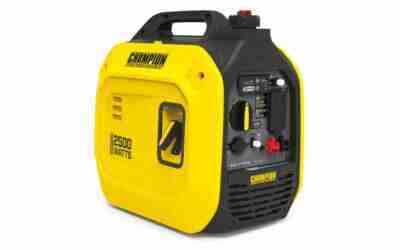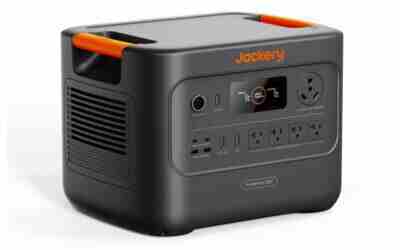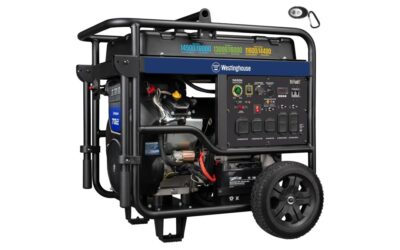

Our editorial team weighed WEN's published specifications and how it stacks up against similar products in the generators category. What stands out: Ample Power for Multiple Appliances, CO Sensor & Multiple Outlet Types, and Long Runtime. Where it falls short: Heavy at 120 lbs and Needs Regular Fuel & Maintenance. That puts it at 8.2/10 on our WG Score – an excellent, well-rounded option.
 Reviewed byEthan
If you only need one takeaway: the WEN GN5602X 5,600-Watt generator is the strongest all-around pick in this lineup, because it’s the only model here that pairs a dedicated RV-ready TT-30R outlet with a transfer-switch-ready twist-lock outlet and electric start — most RV-ready inverter generators give you one of those conveniences, not both. Which pick is actually right for your rig, though, depends on how many watts you draw and how much weight you want to carry.
Shopping for RV power gets confusing fast because “RV-ready” isn’t a single standard — some generators just have a household outlet you’d need an adapter for, while others build in the 30-amp TT-30R plug your shore-power cord already uses. Below we compared the manufacturer spec sheets — running watts, tank size, rated runtime, and the actual outlets included — for the generators in our catalog that are genuinely built for RV use, and left out anything not actually equipped for it.

Pros
- Exceptionally quiet operation barely noticeable indoors
- Fuel-efficient eco mode extends runtime significantly
- Intuitive smartphone app for convenient remote control
- Durable build withstands weather and heavy use
- Advanced inverter tech ensures clean, stable power
Cons
- Premium price compared to basic generators
- Recoil start requires manual pull each time
- Max 2200W limits it for very high-demand tools
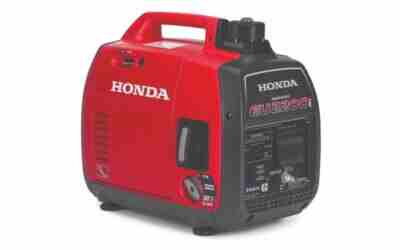
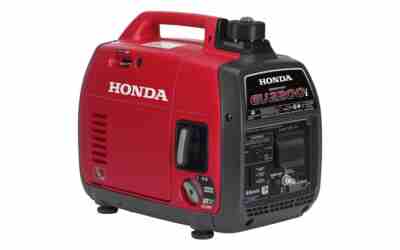
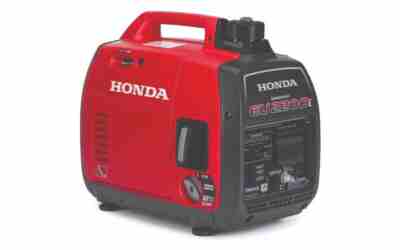
The Honda EU2200iTAN is a super quiet 2200-watt portable inverter generator designed for versatile use in camping, RVing, home backup, and job sites. Powered by the reliable GXR120 engine, it offers clean 120V AC power for appliances like refrigerators, TVs, and tools, making it ideal for anyone needing dependable portable energy without the noise or bulk of traditional generators.
Standout features include its whisper-quiet operation at 48-57 dB, often inaudible from inside a trailer, and eco-throttle mode that adjusts engine speed for up to 8.1 hours of runtime on less than a gallon of fuel. Users praise its ability to power paint sprayers, sanders, and RV systems simultaneously while staying efficient. The CO-MINDER system adds critical safety by monitoring and shutting down if carbon monoxide builds up nearby.
Build quality shines with a lightweight 46-lb frame, steel construction, and the My Generator app for Bluetooth monitoring of runtime, fuel, and maintenance. Reviewers highlight its durability, with one unit surviving years outdoors and starting flawlessly after neglect. The inverter technology provides stable power safe for sensitive electronics.
Few drawbacks exist: the recoil-only start demands some effort, and its power cap suits most needs but not industrial heavy loads. It lacks electric start found in larger models.
Overall, the EU2200iTAN excels as a premium, user-friendly generator blending Honda reliability, safety, and convenience. Perfect for those prioritizing quiet, efficient power over budget options.
Power: 2200W max (18.3A) 120V AC, inverter stabilized
Engine: Honda GXR120, 121cc 4-stroke
Runtime: 8.1 hours at 1/4 load on 0.95 gal tank
Noise: 48-57 dB(A)
Weight: 46 lbs, Dimensions: 21 x 12.24 x 19.72 inches
Outlets: 20A 125V duplex
Features: CO-MINDER, Bluetooth app, eco-throttle
This model offers more power and standard CO-MINDER over the EU2000i, with similar quietness and portability to the EU2200i Companion but without parallel capability. Compared to larger EU3200i, it prioritizes compactness and fuel savings for lighter loads.
Pros
- Exceptionally quiet operation at 52 dBA
- Long 12-hour runtime on small fuel tank
- Lightweight and portable with handle
- Pure sine wave output for electronics
- Built-in safety like low oil shutdown
Cons
- Fuel tank holds only 0.98 gallons, needing refills for multi-day use
- Parallel cord sold separately for linking units
- May have initial residual oil or fuel odor from factory testing
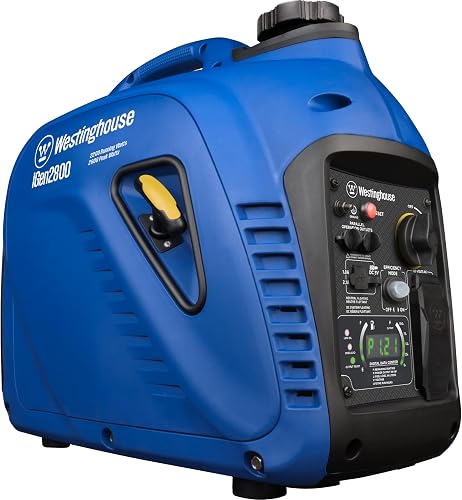
The Westinghouse iGen2800 is a compact inverter generator designed for homeowners facing power outages and outdoor enthusiasts like campers and tailgaters. With 2800 peak watts and 2200 running watts from its 4-stroke OHV engine, it handles essentials such as refrigerators, furnaces, and electronics while staying portable at just 46.3 pounds.
Standout features include ultra-quiet 52 dBA operation, quieter than normal conversation, and up to 12 hours of runtime on a 0.98-gallon tank in economy mode. It produces clean power below 3% THD to protect sensitive devices, and the LED data center shows fuel level, remaining time, voltage, and output. Parallel capability lets users combine two units for more power using a separate cord.
Build quality shines with a lightweight frame, built-in handle, and safety features like overload protection and low oil shutdown. The automatic throttle enhances fuel efficiency by matching engine speed to demand, making it reliable for both home backup and recreation.
Drawbacks include the small fuel capacity requiring occasional refills for extended outages and the need to buy a parallel cord separately. Factory testing may leave a faint initial odor.
Overall, the iGen2800 excels as a versatile, efficient choice for quiet, portable power needs, backed by a 3-year warranty and lifetime support. It delivers strong value for emergency and outdoor use.
Power Output: 2800 peak watts / 2200 running watts at <3% THD
Engine: 4-Stroke OHV Westinghouse
Runtime: Up to 12 hours on 0.98 gallon tank
Noise Level: 52 dBA
Weight: 46.3 lbs
Outlets: Two 120V 20A, two USB
Features: Parallel capable, economy mode, LED display, low oil shutdown

Pros
- Exceptionally quiet and fuel-efficient performance praised in real-world tests
- Multiple easy start options including reliable remote fob
- Portable design with telescoping handle and wheels for easy mobility
- RV-ready outlets and USB ports handle diverse power needs
- Automatic safety features like low oil and overload protection
Cons
- Heavy at 105.8 pounds, best moved by two people despite wheels
- Electric starter can be finicky on initial uses or when warm
- Remote start requires manual switch toggle, limiting full remote convenience
The Westinghouse iGen5000DFc is a premium dual fuel inverter generator delivering 5000 peak watts and 3900 running watts, perfect for RV camping, tailgating, or home emergency backup. Its variable speed engine adjusts output for efficiency, making it a go-to for users needing clean, stable power for sensitive electronics like laptops and TVs without surging or distortion.
Standout features include a super quiet 52 dBA noise level, rivaling conversation volume, and an impressive 18-hour runtime on gasoline in economy mode. Reviewers highlight its effortless remote electric start, LED data center displaying runtime, fuel, and load, plus dual fuel capability for propane versatility during outages or remote trips. It powers space heaters, fridges, and multiple devices simultaneously without faltering, backed by real-user tests.
Build quality shines with a lightweight 105.8-pound frame, telescoping suitcase handle, and wheels for one-person transport over varied terrain. The durable enclosure houses a 224cc 4-stroke engine with safety shutoffs for low oil, overload, and CO detection. Accessories like oil, propane hose, and tools arrive ready-to-use, with intuitive controls earning praise for arthritis-friendly handling.
Minor drawbacks include the weight requiring two-person lifting from the box and occasional starter hiccups on first runs, resolved by persistence or recoil. Panels may vibrate slightly under load, and full remote use needs the main switch on.
Overall, the iGen5000DFc excels as a reliable, quiet powerhouse for recreational and backup needs, with strong performance and safety features justifying its spot among top inverters. Highly recommended for those prioritizing portability and clean power.
Power: 5000 peak watts / 3900 running watts at 120V, 60Hz
Fuel: Dual fuel (gasoline 3.4 gal tank / propane), up to 18-hour runtime
Outlets: TT-30R RV-ready, 5-20R duplex (x2), USB (x2); 5 total
Features: Remote electric start, CO sensor, <3% THD, economy mode, LED data center
Dimensions: 24.5 x 17.5 x 20 inches; 105.8 lbs; Blue color
Warranty: 3-year limited with lifetime tech support
Users rave about the quiet operation comparable to smaller units, easy setup with included oil and tools, and reliable power for fridges, heaters, and camping gear. Many note quick propane starts and accurate load metering.
Positive highlights include sturdy packaging, wheels aiding mobility for those with mobility issues, and strong break-in performance under 50% load. International buyers confirm solid arrival and performance.
Some mention initial startup needs patience to clear residual oil, and suggest silencers for overnight camping quietness.

Pros
- Extremely quiet operation at 52 dBA for peaceful use
- Multiple outlets including RV-ready and USB for versatile powering
- Dual fuel capability adds convenience and availability
- LED data center displays real-time stats like runtime and voltage
- Portable design with telescoping handle and never-flat wheels
Cons
- Weighs 62.8 pounds, challenging for one person to transport long distances
- May have initial residual oil or fuel odor from factory testing
- Propane hose required for LPG use, though included
The Westinghouse iGen4000DFc is a versatile dual fuel inverter generator designed for campers, RVers, tailgaters, and homeowners needing reliable portable power. With 4000 peak watts and 3300 running watts, it handles essentials like refrigerators, lights, and electronics while delivering clean sine wave power under 3% THD to protect sensitive devices.
Standout features include a super quiet 52 dBA operation, economy mode for up to 7 hours on a 1.69-gallon gas tank, and dual fuel support for gasoline or propane. The RV-ready TT-30R outlet, household duplex, and USB ports make it ideal for travel trailers or home backups. Remote start via key fob, electric push-button, or recoil ensures easy use, while the rotating LED data center shows voltage, runtime, and more for real-time monitoring.
Build quality shines with a lightweight 62.8-pound frame, telescoping suitcase-style handle, and never-flat wheels for easy portability. Safety features like automatic CO and low oil shutdown provide peace of mind. It's EPA compliant with a 3-year warranty and lifetime support.
Potential drawbacks include its weight for solo carrying and possible factory residual odor. Overall, it excels in quiet, efficient performance for recreational and emergency needs.
Verdict: A top choice for those prioritizing quiet, clean power and versatility in a portable package. Highly recommended for RV enthusiasts and campers seeking dependable backup power.
Power: 4000 peak watts, 3300 running watts, 120V, 60Hz
Fuel: Gasoline or Propane (Dual Fuel), 1.69-gallon (12.8L) tank, up to 7-hour runtime
Outlets: TT-30R RV Ready, 5-20R duplex, two USB, total 6 outlets
Features: CO sensor, remote/electric start, LED display, <3% THD, 52 dBA noise
Dimensions: 21.3 x 12.6 x 19.3 inches, 62.8 lbs, blue color

Pros
- Dual fuel capability reduces dependency on single fuel source
- Quiet operation suitable for residential and campground use
- Reliable recoil start and solid build quality noted in reviews
- Clean inverter power protects laptops and medical equipment
Cons
- Manual recoil start requires physical effort in cold weather
- Runtime limited to around 4 hours at 50% load on a full tank
- Propane mode delivers slightly lower peak output than gasoline
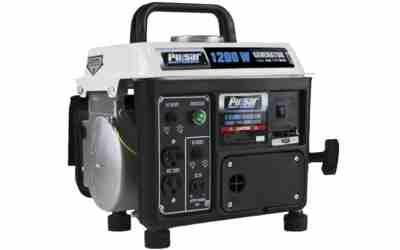
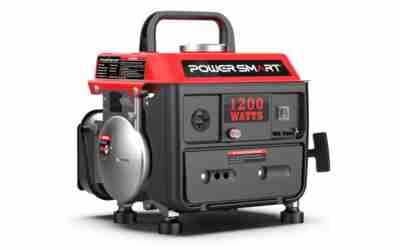
The PowerSmart 3800 Watt Dual Fuel Inverter Generator delivers portable power for home backup, camping, and tailgating. It runs on gasoline or propane and produces clean sine wave electricity suitable for electronics.
Users highlight easy starting, steady voltage output, and sufficient power for appliances, lights, and RV air conditioning. The CO safety sensor and overload protection add reliable safeguards during extended operation.
At 50.7 pounds with a compact footprint, the unit moves easily between locations. Noise levels remain acceptable for most outdoor settings while the parallel-ready feature allows capacity expansion when needed.
Drawbacks include the manual start mechanism and shorter runtime compared to larger stationary models. Overall it provides good value for users who need mid-range portable inverter power without excessive bulk.

Pros
- Ample power for multiple appliances and tools
- Safety-focused CO sensor and multiple outlet types
- Long runtime reduces downtime
- Electric start simplifies use
- Three-year warranty and service support
Cons
- At 120 pounds, requires two people for frequent moves
- Gas-powered needs regular fuel and maintenance
- Larger size may limit storage in small vehicles
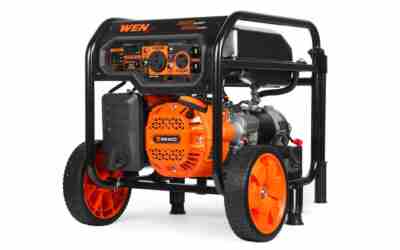
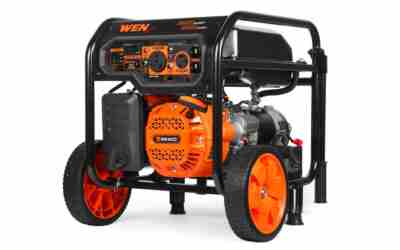
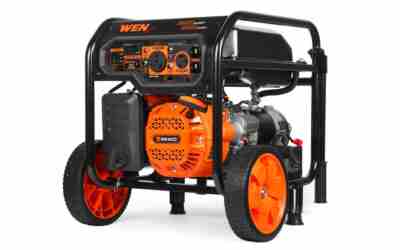
The WEN GN5602X is a robust 5600-watt starting portable generator powered by a 224cc four-stroke engine, designed for RVers, campers, job sites, and home backup needs. It excels in delivering consistent power to essentials like refrigerators, AC units, power tools, and RV appliances, with RV-ready and transfer-switch outlets for versatile connectivity.
Standout features include electric start for push-button ease, a CO shutdown sensor for family safety by detecting and halting high carbon monoxide levels, and up to 12.5 hours of runtime on a 4.3-gallon tank. The onboard digital meter tracks voltage, frequency, and runtime, helping users monitor efficiency during extended use. Multiple outlets, including two 120V 20A, one 30A RV TT-30R, and one 30A L5-30R, support simultaneous device operation without overload worries.
Build quality shines with a durable frame, wheel kit for mobility, and compact dimensions of 22.44 x 16.93 x 18.5 inches. WEN's legacy since 1951 ensures reliable performance backed by a three-year warranty and service network. While heavy at 120 pounds, the transport aids make it manageable for most users.
Potential drawbacks include its weight for solo handling and reliance on gasoline, which demands storage and refills. Noise levels typical of conventional generators may disturb quiet campsites.
Overall, the GN5602X offers exceptional value for demanding power needs, earning high marks for safety, runtime, and versatility. Ideal for those prioritizing dependable backup without complexity.
Power: 5600 starting watts, 4500 running watts
Engine: 224cc 4-stroke, electric start
Fuel & Runtime: Gasoline, 4.3-gallon tank, up to 12.5 hours at half load
Outlets: 1x 30A TT-30R (RV), 1x 30A L5-30R (transfer switch), 2x 120V 20A 5-20R
Dimensions & Weight: 22.44"L x 16.93"W x 18.5"H, 120 lbs
Other: CO sensor, wheel kit, digital data meter, 60Hz, 120V

Pros
- Clean sine wave output protects sensitive devices
- Parallel ready for higher power needs
- Compact and lighter than comparable generators
- Includes RV-ready outlet out of the box
Cons
- Recoil start only with no electric option
- Open frame design may produce more noise than enclosed models
- Rated output is 3500 watts despite 4000-watt peak
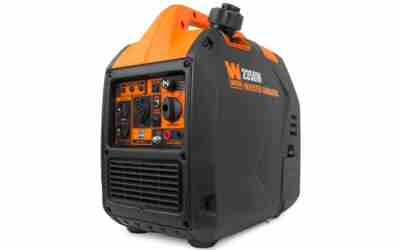
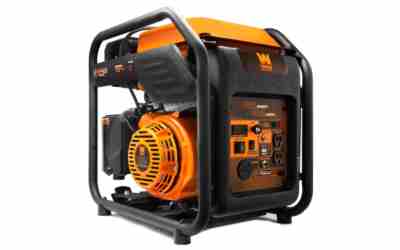
The WEN GN400iM is an open-frame inverter generator rated at 4000 surge watts and 3500 running watts. It produces clean power with total harmonic distortion under 1.2 percent at full load, making it suitable for laptops, phones, and other electronics.
This model targets campers, RV owners, and homeowners who need reliable portable backup power. The RV-ready TT-30R receptacle and parallel connection capability allow flexible use across different scenarios without additional adapters.
Key features include a 212cc 4-stroke engine, eco-mode for improved fuel efficiency, and automatic shutdown for low oil or overload conditions. The unit weighs less than standard generators in its class due to its optimized frame design.
Build quality focuses on essential protections and a two-year warranty. Drawbacks include manual recoil starting and an open-frame layout that does not enclose the engine for noise reduction.
Overall the GN400iM offers strong value for users prioritizing clean power, RV compatibility, and parallel options in a lightweight package.
RV Generator Buying Guide
What “RV-Ready” Actually Means (and Where It Gets Faked)
A generator marketed for camping isn’t automatically built for RV shore power. The real marker is a dedicated 120V 30-amp TT-30R receptacle — the same plug shape as your RV’s shore-power cord — built into the control panel. Every WEN and Westinghouse model in this guide lists a TT-30R outlet directly in its own feature sheet. Not every well-known camping generator does: we checked, and Honda’s EU2200i line (including the EU2200ITAN below) does not list a TT-30R outlet anywhere in its own spec sheet, only standard 120V household receptacles. That doesn’t make it a bad generator — it just means you’d be running a household-to-RV adapter cord rather than plugging in directly, which the dedicated RV-ready models here don’t require.
Running Watts vs. Starting Watts
Running (rated) watts is what the generator can supply continuously; starting (peak/surge) watts is the brief extra jolt needed to kick on a compressor-driven appliance like an RV air conditioner or a fridge. In this lineup, rated running watts range from 2,200W (Westinghouse iGen2800) up to 4,500W (WEN GN5602X). A single 13,500 BTU RV rooftop AC typically needs roughly 1,600–2,000 starting watts to kick on, on top of whatever else is already running — which is why the smaller 2,200W-rated units here are better suited to lights, a fridge, and device charging than to AC duty alongside other loads.
How Far Will a Tank Actually Get You? A Real Runtime-Per-Gallon Breakdown
Manufacturers publish tank size and rated runtime separately, so we did the division ourselves to get a number you can actually use when planning a weekend trip. One caveat worth being upfront about: these figures are rated under different load conditions (economy mode, half load, or 25% load, as published by each manufacturer), so only compare models measured under the same load condition against each other — not across rows.
| Model | Tank Size | Rated Runtime | Load Condition | Runtime per Gallon |
|---|---|---|---|---|
| Westinghouse iGen2800 | 0.98 gal | up to 12 h | Economy mode | ≈12.2 h/gal |
| Westinghouse iGen5000DFc | 3.4 gal | up to 18 h | Economy mode (gasoline) | ≈5.3 h/gal |
| Westinghouse iGen4000DFc | 1.69 gal | up to 7 h | Economy mode (gasoline) | ≈4.1 h/gal |
| WEN GN400iM (4000W) | 1.85 gal | over 7 h | Half load | ≈3.8 h/gal |
| WEN GN5602X (5600W) | 4.3 gal | up to 12.5 h | Half load | ≈2.9 h/gal |
| PowerSmart 3800 Dual Fuel | 1.3 gal | up to 10 h | 25% load | ≈7.7 h/gal |
The practical read: if your camp routine is mostly charging devices and running a light or two overnight, the iGen2800’s near-1-gallon tank stretching to 12 hours in economy mode means you can realistically run all weekend on the built-in tank alone. If you’re running a rooftop AC on the WEN GN5602X, budget on the half-load figure (≈2.9 h/gal) rather than the eco-mode numbers above, since AC compressors don’t let the engine idle down the way lights and USB charging do.
Gasoline vs. Dual Fuel
Two picks here — the Westinghouse iGen5000DFc and iGen4000DFc, plus the PowerSmart 3800 — run on either gasoline or propane. That matters most for boondockers who already carry propane for a stove or fridge and would rather not haul two separate fuel types. The gasoline-only models (WEN’s two picks and the Westinghouse iGen2800) are simpler and typically lighter, since they don’t carry the extra regulator hardware dual-fuel systems need.
Noise and Campground Quiet Hours
Every model in this list is an inverter generator, which is the format that keeps campground neighbors happy — inverter generators throttle engine speed to load instead of running at a fixed RPM, which is both quieter and more fuel-efficient than a conventional generator. The WEN 56235i’s own spec sheet cites 51 dBA at quarter load (roughly the level of a quiet conversation), among the quietest ratings of any model we checked for this guide.
Quick Comparison
| Model | Running Watts | Fuel | RV Outlet Built In | Electric Start |
|---|---|---|---|---|
| WEN GN5602X | 4,500W | Gasoline | Yes (TT-30R) | Yes |
| WEN GN400iM | 3,500W | Gasoline | Yes (TT-30R) | No (recoil) |
| Westinghouse iGen2800 | 2,200W | Gasoline | Yes (TT-30R) | No (recoil) |
| Westinghouse iGen5000DFc | 3,900W | Gas / Propane | Yes (TT-30R) | Yes (+ remote) |
| Westinghouse iGen4000DFc | 3,300W | Gas / Propane | Yes (TT-30R) | Yes (+ remote) |
| PowerSmart 3800 | 3,300W (gas) / 3,100W (propane) | Gas / Propane | Yes (TT-30R) | No (recoil) |
| Honda EU2200ITAN | 2,200W | Gasoline | No | No (recoil) |
Final Picks
The All-Rounder for Bigger Rigs: WEN GN5602X 5,600-Watt
At 4,500 running watts, this is the highest-capacity generator in the lineup, and it’s the only one that combines a TT-30R RV outlet with a separate transfer-switch-ready L5-30R twist-lock receptacle, electric start, and a built-in CO shutdown sensor. It’s the pick that gives you the most flexibility to power an AC unit and other appliances at once.
Skip this if: you have a smaller trailer or van and rarely run more than lights, a fridge, and device charging — you’d be carrying 4,500 watts of capacity (and the size/weight that comes with it) you won’t use.
The Budget RV-Outlet Pick: WEN GN400iM 4,000-Watt
This is the most affordable model here that still includes a genuine TT-30R RV outlet, at 3,500 running watts — enough for most single-AC setups plus a few smaller loads. WEN’s own listing doesn’t mention electric start for this model, so budget for a recoil pull-start.
Skip this if: you specifically want electric or remote start — this one is pull-start only; the GN5602X or either Westinghouse dual-fuel model above it in this list all include electric start.
The Lightest RV-Ready Pick: Westinghouse iGen2800
At 46.3 lbs, this is the lightest genuinely RV-ready model in the group, and its economy-mode runtime-per-gallon (≈12.2 h/gal, see the table above) is the best of any model we checked here — useful if you mostly need overnight device charging and lighting rather than AC.
Skip this if: you need to run an RV air conditioner — at 2,200 running watts, it’s tied for the lowest capacity in this list and wasn’t designed with AC-plus-other-loads in mind.
Best for Boondocking on Whichever Fuel You Have: Westinghouse iGen5000DFc
The highest-capacity dual-fuel model here (3,900 running watts), with remote start via key fob and the largest tank of any pick in this guide (3.4 gal). If you already carry propane for other camp gear, this is the one that lets you skip a second fuel type entirely.
Skip this if: you’ll only ever run it on gasoline — you’re paying for dual-fuel hardware (the propane regulator and hose) you’ll never touch; the gasoline-only WEN or Westinghouse iGen2800 picks above cost less to build and carry less extra hardware.
The Smaller Dual-Fuel Option: Westinghouse iGen4000DFc
Same dual-fuel and remote-start feature set as the iGen5000DFc above, scaled down to 3,300 running watts and a smaller 1.69-gallon tank — a middle ground if the 5000DFc’s size and price feel like overkill but you still want propane flexibility.
Skip this if: tank runtime matters more to you than size — at 1.69 gallons, it’s the smallest tank of any dual-fuel pick here; the iGen5000DFc’s 3.4-gallon tank runs roughly twice as long between fill-ups.
Budget Dual-Fuel Pick: PowerSmart 3800
Also switches between gasoline and propane, includes a TT-30R RV outlet and a CO shutdown sensor, and at 50.7 lbs is comparable in weight to the WEN and Westinghouse gasoline-only models despite the added dual-fuel hardware.
Skip this if: you want more runtime between fill-ups — its 1.3-gallon tank is the smallest of any pick in this entire list, dual-fuel or not.
Best If You Don’t Need a Built-In RV Outlet: Honda EU2200ITAN
Honda’s EU2200i platform has a strong reputation for reliability and quiet running. We’re including it because plenty of RV owners already own one or are considering it — but it’s worth being direct about a gap the other picks here don’t have.
Skip this if: you want to plug straight into your RV’s shore-power cord — unlike every other generator in this guide, Honda’s own spec sheet for this model doesn’t list a TT-30R RV-ready outlet, only standard household receptacles. You’d need a separate household-to-RV adapter cord to use it at a 30-amp pedestal, which the dedicated RV-ready models above don’t require.
Frequently Asked Questions
How many running watts do I need to run an RV air conditioner and a fridge together?
Plan for at least 3,000+ running watts if you’re running a single 13,500 BTU rooftop AC alongside a fridge and a few smaller loads, and check the AC’s own starting-watt spec against the generator’s peak rating — the starting surge, not the running watts, is what most often trips an underpowered generator.
Do I actually need the TT-30R RV-ready outlet, or can I use a household outlet with an adapter?
An adapter works, but it’s one more cable and connection point that can fail or introduce voltage drop. A generator with a built-in TT-30R outlet, like the WEN and Westinghouse models in this guide, plugs straight into the same shore-power cord your RV already uses.
Is dual fuel worth the extra cost for RV camping?
Only if you’re already carrying propane for something else, like a camp stove or a propane fridge. If you’re not, a gasoline-only model is simpler mechanically and typically lighter, since it skips the propane regulator hardware.
Why is runtime-per-gallon different for each generator in the table above?
Each manufacturer rates runtime at a different load level — some at “economy mode,” some at 50% load, one at 25% load — so a higher hours-per-gallon number doesn’t automatically mean a more efficient engine; it may just mean it was tested under a lighter load. Compare models rated under the same load condition, not across different ones.