Our editorial team weighed PowerSmart's published specifications and how it stacks up against similar products in the generators category. What stands out: Dual Fuel Flexibility, Quiet Operation, and Reliable Recoil Start, Solid Build. Where it falls short: Manual Recoil Start, Harder in Cold and ~4-Hour Runtime at 50% Load. That puts it at 8.4/10 on our WG Score – an excellent, well-rounded option.
 Reviewed byEthan
Gas vs petrol generator noise is identical because both words mean gasoline, and propane runs only about 1-3 dB quieter than gasoline.
Are gas and petrol the same fuel in a generator?
Yes. In the US, “gas” is short for gasoline, and “petrol” is the UK and Australian word for the same fuel, so a gas generator and a petrol generator are the same machine and sound the same. The confusion starts in the UK and Australia, where “gas” usually means LPG (propane).
| Word | US meaning | UK/AU meaning |
|---|---|---|
| Gas | Gasoline | LPG / propane |
| Petrol | Gasoline (rarely used) | Gasoline |
| Propane | Propane | LPG or bottled gas |
Check the fuel named on the generator’s label or manual if a listing uses only the word “gas”.
Is a propane or natural gas generator quieter than gasoline?
Only slightly. One manufacturer (Erayak) reports dual fuel inverter generators running about 1-3 dB quieter on propane than on gasoline, using the same engine at the same load.
Because every 10 dB drop roughly halves perceived loudness, a 1-3 dB gap is barely noticeable next to the generator. Natural gas engines are built the same way, so the fuel itself does not change the noise much. Whole-home standby units vary by model, so compare their rated dB, and note the distance and load behind it, rather than assuming gaseous fuel means quiet.
What actually makes a generator quiet?
Design matters far more than fuel. Typical manufacturer ratings look like this:
| Generator type | Typical rated noise |
|---|---|
| Enclosed inverter | About 48-60 dB at 25% load, measured at 23 ft |
| Conventional open-frame | About 65-85 dB, some reports near 90 dB |
Open-frame test distances and loads vary by brand, so treat that row as a general range.
- Inverter design: an enclosed case and an engine that changes speed with demand make the biggest difference.
- Load: noise climbs as the load rises, which is why ratings are quoted at 25% load.
- Eco mode: lets the engine slow down at light load instead of running at full speed.
- Muffler and engine size: a larger engine and a basic muffler make more noise.
For example, the Honda EU2200i is listed at about 48-57 dB, the Cummins Onan P4500iDF at 52 dB at 25% load, and the DuroMax 2300 and Cummins Onan P2500i at 52 dB each.
How do you read a generator’s dB rating?
Three details decide whether two ratings can be compared: the distance, the load and the scale. A rating taken at 23 ft looks far quieter on paper than one taken at 9 ft, so only compare numbers measured the same way.
In open air, sound drops roughly 6 dB each time you double the distance (a rough estimate; walls and trees change it). In this example, a 52 dB rating at 23 ft would be about 58 dB at roughly 11.5 ft, because halving the distance adds about 6 dB.
As a rule of thumb, 50-60 dB at 23 ft counts as quiet, and 70 dB or more is loud. Many campgrounds set quiet limits around 60 dB, but rules differ by park, so confirm yours and any local noise ordinance.
How can you make a generator quieter, or avoid the noise?
- Add distance: place the generator as far from living areas and neighbors as the cords allow.
- Aim the exhaust and body away: point the exhaust end away from people and fence lines.
- Use a barrier: a solid panel or wall placed beside it, not around it, deflects sound.
- Keep it light: run only the loads you need so the engine stays slow.
Safety: run any generator outdoors only, well away from windows, doors and vents, and use a battery CO alarm indoors. Never run one in a garage or enclosed space to muffle it, and never build an enclosure that blocks cooling or exhaust airflow, which risks overheating, fire and CO buildup.
A portable power station or solar generator is the quietest choice because it has no engine, only a faint fan hum. It suits small, short loads such as phones, laptops, lights and a CPAP, while an inverter generator suits long, heavy loads.
Our Top Picks
Ready to shop? These are the top-rated options from our related roundup, Best Quiet Gas Generators of 2026.
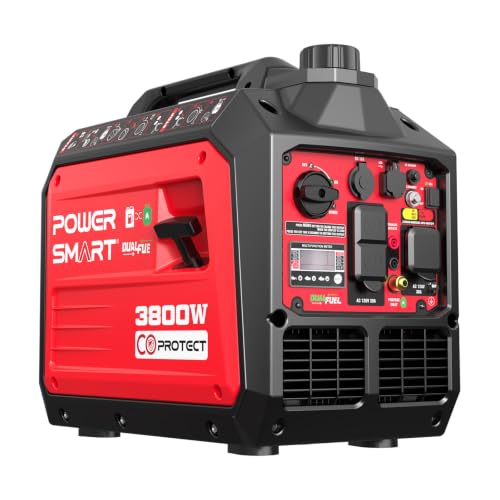
PowerSmart 3800 Watt Dual Fuel Inverter Generator Quiet Portable Gas Propane with CO Sensor RV Ready
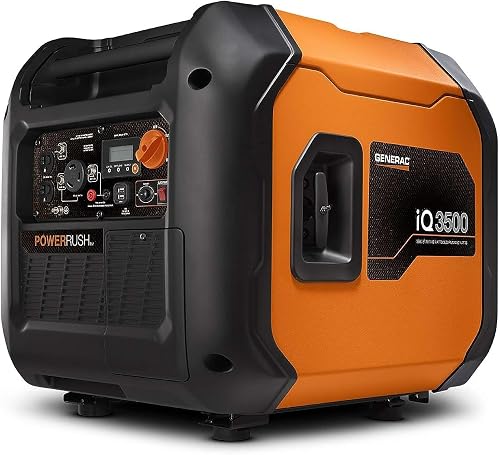
Generac iQ3500 3500W Portable Inverter Generator - Quiet, Lightweight, Electric Start, CARB Compliant for Camping & Jobsites

Pulsar 2300W Portable Gas Inverter Generator with USB Outlet and Parallel Capability
As an Amazon Associate we earn from qualifying purchases. Product prices and availability are accurate as of the date/time indicated.
Frequently Asked Questions
Do two quiet generators running together double the noise?
No. Two identical generators running together add only about 3 dB, so a pair rated 52 dB each sounds like roughly 55 dB. The sound is noticeable but nowhere near twice as loud.
Is a diesel generator quieter than a gasoline inverter?
No. Open-frame diesel units are louder than enclosed gasoline inverter generators. Compare the rated dB at the same load and distance, since diesel models vary widely in enclosure design.
Does a generator labeled silent or super quiet stay under 60 dB?
No. Terms like silent and super quiet are not standardized. Only the rated dB at a stated load and distance tells you how loud it runs, so read that number.
Why did my generator get louder after it was quiet before?
A rusted or holed muffler is the usual failure and it makes the engine sharply louder. It also leaks exhaust and carbon monoxide, so stop using the generator until the muffler is replaced.
{“@context”: “https://schema.org”, “@type”: “FAQPage”, “mainEntity”: [{“@type”: “Question”, “name”: “Do two quiet generators running together double the noise?”, “acceptedAnswer”: {“@type”: “Answer”, “text”: “No. Two identical generators running together add only about 3 dB, so a pair rated 52 dB each sounds like roughly 55 dB. The sound is noticeable but nowhere near twice as loud.”}}, {“@type”: “Question”, “name”: “Is a diesel generator quieter than a gasoline inverter?”, “acceptedAnswer”: {“@type”: “Answer”, “text”: “No. Open-frame diesel units are louder than enclosed gasoline inverter generators. Compare the rated dB at the same load and distance, since diesel models vary widely in enclosure design.”}}, {“@type”: “Question”, “name”: “Does a generator labeled silent or super quiet stay under 60 dB?”, “acceptedAnswer”: {“@type”: “Answer”, “text”: “No. Terms like silent and super quiet are not standardized. Only the rated dB at a stated load and distance tells you how loud it runs, so read that number.”}}, {“@type”: “Question”, “name”: “Why did my generator get louder after it was quiet before?”, “acceptedAnswer”: {“@type”: “Answer”, “text”: “A rusted or holed muffler is the usual failure and it makes the engine sharply louder. It also leaks exhaust and carbon monoxide, so stop using the generator until the muffler is replaced.”}}]}