

Our editorial team weighed Jackery's published specifications and how it stacks up against similar products in the generators category. What stands out: Lightning-Fast 1-Hour Charging, Efficient Battery Management, and User-Friendly Display & App. Where it falls short: Heavy at 23.8 lbs and Solar Sold Separately (Jackery Only). That puts it at 8.7/10 on our WG Score – an excellent, well-rounded option.
 Reviewed byDaniel
In a generator vs solar backup choice, solar battery systems suit outages up to about 24 hours, while fuel generators suit multi-day outages. Installer blogs put a home battery at roughly 8–24 hours on essential loads, a vendor claim that shifts with battery size and what you run, while a fuel generator runs as long as its fuel lasts.
Which is better for a short outage and a multi-day outage
Installer blogs put a home battery at roughly 8–24 hours on essential loads. That is a vendor claim and shifts with battery size and what you run. A fuel generator runs as long as fuel lasts: days or weeks on a propane supply, or indefinitely on a natural gas line, according to Sunnova.
Solar recharging narrows the gap but does not close it. Several cloudy days in a row can leave a battery low with little to recharge from, and short winter days give panels less to work with.
- Pick solar battery backup if outages run under a day, you have no safe outdoor spot for an engine, or you want near-instant switchover. A generator takes about 10–30 seconds to start and take over.
- Pick a fuel generator if you face multi-day storms, run heavy motor loads, or need power through cloudy weeks.
- Pick both if you want quiet, instant coverage for short outages and a fallback for long ones.
Generator vs solar backup side by side
| Criterion | Fuel generator | Solar battery backup |
|---|---|---|
| Runtime limit | Fuel supply | Battery capacity plus sun |
| Fuel dependence | Gasoline, propane or natural gas | None once installed |
| Recharging | Refuel the tank | Panels or grid when available |
| Noise | Engine noise while running | Near silent, with a possible inverter hum |
| Indoor use | Never indoors | Placement set by the manual and local code |
| Switchover | About 10–30 seconds | Almost instant |
| Upkeep | Oil, test runs, stored fuel | Few moving parts |
| Cost structure | Lower upfront, ongoing fuel and service | Higher upfront, little ongoing cost |
Ratings vary by model. A portable power station and an installed home battery sit far apart in output, and a portable generator and a standby generator do too, so compare the exact units you are considering.
Output and runtime for fridge, sump pump, furnace fan and well pump
| Load | Running watts (rough estimate) | Starting watts (rough estimate) |
|---|---|---|
| Refrigerator | 100–200 | 400–1,200 |
| Sump pump, 1/3 hp | 400–800 | 1,300–2,000 |
| Furnace blower fan | 300–600 | 600–1,500 |
| Well pump, 1/2 hp | 800–1,000 | 2,000–3,000 |
These ranges are ballpark figures. The nameplate on your appliance governs, and motor type changes them a lot.
The surge trap: a motor can pull several times its running watts for a moment at startup. Whatever you buy must have a surge rating above your largest motor’s starting watts, or it trips off. Battery runtime is separate. Divide usable watt-hours by running watts to estimate hours, and for a generator read the fuel-per-hour figure in its manual at your load.
A worked outage example: fridge, lights and phones
All loads below are assumptions for this example only. Replace them with your own.
- Daily load: fridge 1,200 Wh, lights 40 W × 5 h = 200 Wh, three phones at 12 Wh each = 36 Wh. Total = 1,200 + 200 + 36 = 1,436 Wh per day.
- Battery sizing: add about 15% for inverter losses (rough estimate). 1,436 ÷ 0.85 ≈ 1,689 Wh per day. That is about 1,690 Wh for 24 hours, about 5,070 Wh for 72 hours and about 11,830 Wh for 168 hours.
- Solar recharge: in this example, 400 W of panels × 4 sun hours × 0.75 real-world factor = 1,200 Wh on a sunny day. The shortfall is 1,689 − 1,200 = 489 Wh per day, or 1,467 Wh over three sunny days. Cloudy days make it worse.
- Generator fuel: in this example, run 8 hours a day and assume the manual lists 0.25 gal per hour at that load. 8 × 0.25 = 2 gal per day, so 6 gal over three days and 14 gal over seven.
The battery side is limited by storage and sun. The generator side is limited by how much fuel you can safely store and refill. Storage limits for fuel vary by local code.
Noise, fumes and carbon monoxide placement
A generator’s engine produces carbon monoxide. The CPSC says never to run a portable generator inside a home, garage, basement, crawl space or any enclosed or partly enclosed area. Manufacturers also set a minimum distance from windows, doors and vents, so follow the figure in your manual or on the label. Run a battery-powered or battery-backup CO alarm inside the home. If it sounds or anyone feels dizzy or sick, get into fresh air and call 911.
Solar battery systems have no exhaust and run quietly. Their placement is still governed by the manufacturer’s instructions and local electrical code (the NEC and local rules on garages, clearances and ventilation). Have a licensed electrician install any home battery, and connect a generator to house wiring only through a transfer switch or interlock they install.
Cost structure and upkeep for each option
EnergySage’s 20-year model, which uses its own assumptions, shows the shape of the costs. It puts a 10 kW propane standby generator at about $7,000 upfront, plus about $1,000 maintenance and about $9,151 fuel. A 13.5 kWh home battery runs about $15,650 before incentives. Installer blogs quote roughly $3,000–$15,000 installed for standby generators and $12,000–$35,000 for solar plus battery. These are vendor ranges, not quotes.
Treat solar-plus-storage savings with care. EnergySage’s totals assume a $225 monthly bill and 100% solar offset, so the savings come from the panels, not from backup alone. Battery-only backup has no fuel bill but carries a high purchase price.
- Generator upkeep: scheduled test runs, oil and filter service per the manual, and fresh stored fuel.
- Battery upkeep: little beyond keeping it charged and within the temperature range on its label.
- Incentives: federal and state credits change often, so confirm current rules with an installer or tax professional.
Using a solar generator and a fuel generator together
Combining them makes sense when your outages are mixed. Let a battery or solar generator carry quiet, steady essentials such as the fridge, lights and phones. Keep a fuel generator for the heavy motor loads, such as a well pump, and for long outages when the battery runs low.
For battery options, see this roundup of solar backup generators. For the fuel side, see these portable generators for home backup. Match battery watt-hours to your daily load and surge watts to your largest motor.
Our Top Picks
Ready to shop? These are the top-rated options from our related roundup, Best Solar Generators For Home Power Outage of 2026.

Jackery Explorer 1000 v2 Portable Power Station: 1070Wh LiFePO4, 1500W Output, 1Hr Fast Charge, Solar Generator for Camping, RV, Emergencies

Anker 521 256Wh LiFePO4 Portable Power Station, 300W Solar Generator 600W Surge, 6 Ports PowerHouse
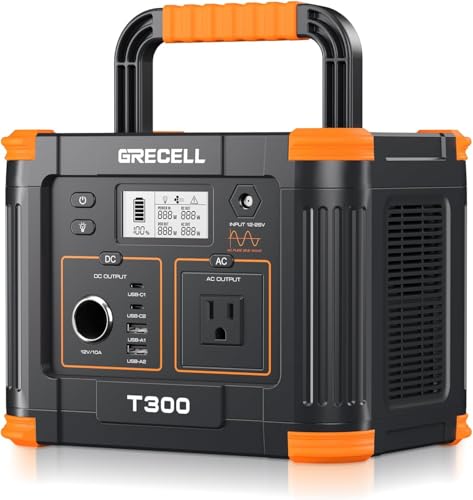
GRECELL 300W Portable Power Station 230Wh Solar Generator, 60W PD USB-C, 110V Pure Sine Wave AC for Camping & Blackouts
As an Amazon Associate we earn from qualifying purchases. Product prices and availability are accurate as of the date/time indicated.
Frequently Asked Questions
Do solar panels work during a power outage without a battery?
No. A standard grid-tied system shuts down when the grid fails, as required to protect utility workers. Panels only supply power in an outage if the system includes a battery and an inverter built to run disconnected from the grid.
Can a home battery run my whole house?
Not with one battery. A single unit covers essential circuits such as the fridge, lights and furnace fan. Electric ranges, dryers and central air conditioning need several batteries or a large standby generator.
Can a portable power station run a space heater?
Not for long. A 1,500 W heater empties a 1,500 Wh station in about an hour or less. Use the station for small loads and keep resistive heating on a fuel generator.
Can I recharge a power station from a generator?
Yes. Plug the station’s AC charger into the generator while the generator runs outdoors, following its manual. This refills the battery faster than panels on a cloudy day.
{“@context”: “https://schema.org”, “@type”: “FAQPage”, “mainEntity”: [{“@type”: “Question”, “name”: “Do solar panels work during a power outage without a battery?”, “acceptedAnswer”: {“@type”: “Answer”, “text”: “No. A standard grid-tied system shuts down when the grid fails, as required to protect utility workers. Panels only supply power in an outage if the system includes a battery and an inverter built to run disconnected from the grid.”}}, {“@type”: “Question”, “name”: “Can a home battery run my whole house?”, “acceptedAnswer”: {“@type”: “Answer”, “text”: “Not with one battery. A single unit covers essential circuits such as the fridge, lights and furnace fan. Electric ranges, dryers and central air conditioning need several batteries or a large standby generator.”}}, {“@type”: “Question”, “name”: “Can a portable power station run a space heater?”, “acceptedAnswer”: {“@type”: “Answer”, “text”: “Not for long. A 1,500 W heater empties a 1,500 Wh station in about an hour or less. Use the station for small loads and keep resistive heating on a fuel generator.”}}, {“@type”: “Question”, “name”: “Can I recharge a power station from a generator?”, “acceptedAnswer”: {“@type”: “Answer”, “text”: “Yes. Plug the station’s AC charger into the generator while the generator runs outdoors, following its manual. This refills the battery faster than panels on a cloudy day.”}}]}













