

Our editorial team weighed PulsarProducts's published specifications and how it stacks up against similar products in the generators category. What stands out: Lightweight at 37.5 lbs, 5-Hour Runtime, and Versatile Outlets. Where it falls short: Needs Gas/Oil Mix and Manual Recoil Start. That puts it at 7.8/10 on our WG Score – a solid, dependable choice.
 Reviewed byDaniel
How many outlets a generator has depends on its size: 2 to 4 on small inverter models and 6 to 9 on large open-frame units. The count never changes how much power you get, because total watts are capped by the generator’s rating.
Typical outlet counts by generator size
Count receptacles, not panel openings. A duplex outlet has two plug slots and counts as two receptacles. Pages that mix the two methods report conflicting totals for the same generator.
| Model | Receptacles | Outlet types |
|---|---|---|
| Generac GP8000E | 5 | Two 120V 20A duplex outlets and one 120/240V 30A twist-lock |
| Westinghouse WGen20000 | 9 | Four 5-20R, one L5-30R, two L14-30R and two 14-50R |
Small inverter models generally have fewer receptacles, often with USB ports, but the exact layout depends on the model, so check the spec sheet.
Generator outlet types and what each is for
The letters and numbers on a receptacle are its NEMA code. The shape tells you which plug fits, and the amp rating tells you the load ceiling. For plug diagrams and cord matching, see this guide to generator receptacle and outlet types.
| Outlet | Voltage and amps | Max watts (amps × volts) | Typical use |
|---|---|---|---|
| 5-15R | 120V, 15A | 1,800 W | Lamps, chargers, small tools |
| 5-20R | 120V, 20A | 2,400 W | Most household cords and appliances |
| TT-30R | 120V, 30A | 3,600 W | RV hookup |
| L5-30R | 120V, 30A, locking | 3,600 W | Locking 30A cords, RV with adapter |
| L14-30R | 120/240V, 30A, locking | 7,200 W | 30A transfer switch, 240V loads |
| 14-50R | 120/240V, 50A | 12,000 W | 50A RV, larger transfer switch |
USB ports and 12V DC outlets appear mainly on inverter models. They suit phones, lights and small electronics, and the port label gives each one’s limit.
These figures are the receptacle’s own limit. The generator’s breaker for an outlet may be lower, and so may the generator’s total rating, so the real limit is the smaller number.
How many outlets a generator can use at once
Outlets do not add power. Every outlet draws from one pool, the generator’s rated watts. Each outlet also has its own amp limit, and you work it out as watts = amps × volts.
Worked example on an 8,000 W generator with two 20A duplex outlets, assuming each duplex sits on one 20A breaker (confirm in the manual):
- Limit per duplex: 20 A × 120 V = 2,400 W.
- Plug a 1,500 W heater and a 1,200 W microwave into the same duplex: 1,500 + 1,200 = 2,700 W. That is over 2,400 W, so the outlet breaker trips even though the generator is far from its 8,000 W.
- Move the microwave to the other duplex. The first carries 1,500 W (1,500 ÷ 120 = 12.5 A) and the second carries 1,200 W (1,200 ÷ 120 = 10 A).
- Total load is 2,700 W, leaving 8,000 − 2,700 = 5,300 W free.
Spread loads across outlets and keep the grand total under the rating. To add up your own loads and starting surges, use this portable generator wattage guide.
Adding outlets: power strips, adapters and transfer switches
A power strip is acceptable if it carries a heavy-duty rating and the combined load stays within the limit of the single outlet it plugs into. A strip does not create extra capacity.
To get several 120V outlets from a locking receptacle, use an adapter or splitter cord made for that exact receptacle. On an L14-30R, each 120V leg has its own 30A limit, so balance the load between legs.
For an RV, a 14-50R to TT-30 adapter lets a 30A RV run from a 50A receptacle. Before using one, check neutral bonding in the owner’s manual. Many open-frame portables have a bonded neutral, while most inverter generators have a floating neutral and may need a bonding plug for some RV uses.
To power house circuits, never backfeed through a wall or dryer outlet. Have a licensed electrician install a transfer switch or interlock with a proper inlet, then feed it from the matching 30A or 50A receptacle. Local code applies. Once it is wired, this guide shows how many appliances a generator can run by size.
Spec-sheet checklist before you count outlets
Use this order on a spec sheet or the control panel photo:
- Find the receptacle list and note whether it counts duplex units or individual receptacles.
- Read each NEMA code and match it to the plugs you own, such as L5-30 for locking cords.
- Check voltage: 120V only, or 120/240V for a transfer switch or 240V load.
- Find the breaker amps for each outlet. A 14-50R protected by a 30A breaker delivers 30A, not 50A.
- Confirm GFCI protection on the household outlets.
- Note whether the neutral is bonded or floating.
- Compare running and starting watts with your load, not with the outlet count.
If an outlet has no power
Unplug the load, then press the reset button on the GFCI outlet or the outlet’s breaker. A tripped GFCI or breaker is the most common cause of one dead outlet on a running generator. If none of the outlets work, follow the steps in what to do when a generator runs but gives no power.
Always run the generator outdoors and well away from windows, doors and vents. Use grounded cords rated for the outlet’s amps.
Our Top Picks
Ready to shop? These are the top-rated options from our related roundup, Best Portable Generators For Emergency Power of 2026.

Pulsar 2300W Portable Gas Inverter Generator with USB Outlet and Parallel Capability

Pulsar PG1202SA 1200W Portable Gas Generator with Handle - Compact Camping Powerhouse
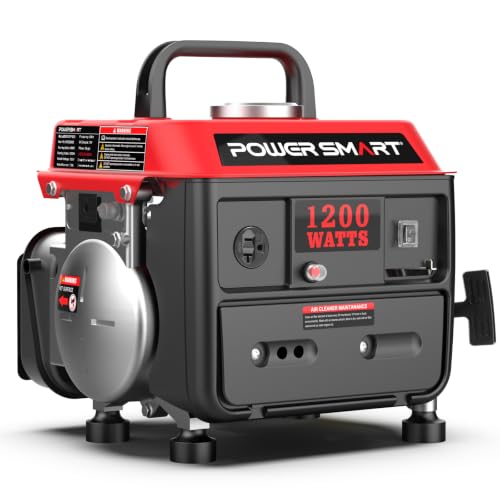
PowerSmart 1200W Portable Gas Generator 900W Rated 2-Stroke 39 lbs for Camping Emergency
As an Amazon Associate we earn from qualifying purchases. Product prices and availability are accurate as of the date/time indicated.
Frequently Asked Questions
Can I add outlets to a generator?
A heavy-duty power strip gives more plug slots, but not more capacity, because the load must stay within the limit of the single outlet it plugs into. For permanent house wiring, have a licensed electrician install a transfer switch or interlock.
Why does my generator have only one 120V outlet?
Outlet layout is set by the manufacturer for each model, and some compact models include few receptacles. Check the spec sheet or manual for the receptacle list and each outlet’s amp limit.
Can I run a 120V appliance from an L14-30R?
Only through a matching adapter or splitter cord made for that receptacle. The L14-30R plug shape will not accept a standard household plug, and each 120V leg keeps its own 30A limit.
Does a bigger generator always have more outlets?
No. Layout is set by the manufacturer, so two units with the same watts can differ by a few receptacles. Larger units usually add 30A and 50A receptacles rather than more household ones.
{“@context”: “https://schema.org”, “@type”: “FAQPage”, “mainEntity”: [{“@type”: “Question”, “name”: “Can I add outlets to a generator?”, “acceptedAnswer”: {“@type”: “Answer”, “text”: “A heavy-duty power strip gives more plug slots, but not more capacity, because the load must stay within the limit of the single outlet it plugs into. For permanent house wiring, have a licensed electrician install a transfer switch or interlock.”}}, {“@type”: “Question”, “name”: “Why does my generator have only one 120V outlet?”, “acceptedAnswer”: {“@type”: “Answer”, “text”: “Outlet layout is set by the manufacturer for each model, and some compact models include few receptacles. Check the spec sheet or manual for the receptacle list and each outlet’s amp limit.”}}, {“@type”: “Question”, “name”: “Can I run a 120V appliance from an L14-30R?”, “acceptedAnswer”: {“@type”: “Answer”, “text”: “Only through a matching adapter or splitter cord made for that receptacle. The L14-30R plug shape will not accept a standard household plug, and each 120V leg keeps its own 30A limit.”}}, {“@type”: “Question”, “name”: “Does a bigger generator always have more outlets?”, “acceptedAnswer”: {“@type”: “Answer”, “text”: “No. Layout is set by the manufacturer, so two units with the same watts can differ by a few receptacles. Larger units usually add 30A and 50A receptacles rather than more household ones.”}}]}













