

Our editorial team weighed ENGINSTAR's published specifications and how it stacks up against similar products in the generators category. What stands out: Pure Sine Wave, Quiet Power, 3-Way Charging, and Lightweight, Clear LCD. Where it falls short: 300W Device Limit and Solar Panel Sold Separately. That puts it at 8.1/10 on our WG Score – an excellent, well-rounded option.
 Reviewed byEthan
Solar energy storage time for a lithium battery is months on a shelf, hours to days of runtime, and several years of service. In one illustrative case, a 3,000-cycle pack used daily lasts about 8.2 years. These are three separate limits: how fast a charge leaks away, how long it powers your devices, and how long the battery itself lasts.
Three Meanings of ‘Stored’ That Get Mixed Up
Most pages blur these together, so keep them apart. Shelf life of the charge is how long a battery holds energy while idle. Runtime is how long that energy runs a given load once you start using it. Battery lifespan is how many years or charge cycles pass before capacity drops noticeably.
Each has its own rule below. The exact figures depend on the model, so the spec sheet and manual outrank any general number here.
How Long a Battery Holds Solar Charge When Idle
Every battery slowly loses charge on its own. Vendor spec sheets give these indicative rates:
| Battery type | Self-discharge (vendor figure) |
|---|---|
| Lead-acid solar battery | About 3% per month |
| Lithium solar battery, including LiFePO4 | About 1% to 1.5% per month |
At 1.5% per month, a lithium battery stored full loses about 9% in six months, so it still has roughly 91% when you pick it up. That is why lithium units can sit for months while lead-acid needs attention sooner.
Chemical self-discharge is often not the biggest drain. The battery management system and any inverter left switched on draw power continuously, and an inverter idling on a small battery can empty it in days. Switch the unit fully off before storing it.
Conditions that shorten storage time
- Heat: warm garages and parked vehicles speed up both self-discharge and aging.
- Cold: a frozen battery delivers less power, and most lithium packs should not be charged below freezing. Check your manual for the limit.
- Empty storage: leaving a battery near 0% can permanently damage it, and a deeply drained lithium pack may refuse to charge.
How Long Stored Solar Power Runs Your Devices
Runtime is a division problem: battery watt-hours x 0.85 / load watts = hours. The 0.85 covers inverter and conversion losses. Use the battery’s usable capacity if the maker lists one.
Worked example for a 1,000 Wh power station, using typical average loads:
| Load | Average watts | Runtime |
|---|---|---|
| Wi-Fi router | 15 W | About 57 hours |
| Laptop | 50 W | About 17 hours |
| Full-size refrigerator (averaged over cycling, an estimate) | 60 W | About 14.2 hours |
| Space heater | 1,500 W | About 34 minutes |
The refrigerator’s 60 W is an estimate, since real draw varies by model and room temperature. Your own appliance’s label or a plug-in watt meter gives the real number.
How Often to Top Off a Solar Generator in Storage
Follow the interval in your manual. Many makers suggest recharging every three to six months, and it is better to store the unit partly charged than empty.
- Power the unit off and unplug everything from it.
- Check the charge level on the display.
- Recharge from the wall or from a panel. A solar panel matched to a portable power station works if its voltage and wattage fit your unit’s input limits.
- Stop when the manual’s storage level is reached, then store it somewhere cool and dry, away from freezing temperatures.
- Put the next check on your calendar.
How Many Years a Solar Battery Lasts Before Capacity Fades
Lifespan is counted in charge cycles, not months on the shelf. Spec sheets state a cycle rating down to a stated capacity, such as 80%. As an illustration, a pack rated for 3,000 cycles and used once a day lasts about 8.2 years (3,000 / 365) before reaching that mark. Lead-acid batteries are generally rated for far fewer cycles than LiFePO4, so compare the cycle rating, not just the chemistry.
Deep daily discharge, heat and long periods at 100% all wear a battery faster. For real-world ranges by unit type, see how long solar generators last.
Storing Solar Energy Without Batteries
Batteries are not the only option, but they are the only realistic one for most homeowners.
- Grid net metering: surplus power goes to the utility for credit, and the grid acts as your storage. Credit rules vary by utility and state.
- Thermal storage: fluids such as molten salt or water hold heat from the sun. This is used mainly at utility-scale solar plants.
- Long-duration options: pumped hydro and hydrogen can hold energy for seasons, but they are grid-scale projects, not home equipment.
A full battery does not store extra power. The charge controller simply limits what the panels send in.
What to Check on the Spec Sheet
If storage time matters to you, look for three lines: the chemistry (LiFePO4 pairs a low self-discharge rate with a high cycle rating), the rated cycles to a stated capacity, and the idle or standby power draw. Our home backup solar generator roundup compares units on those points.
Our Top Picks
Ready to shop? These are the top-rated options from our related roundup, Best Solar Power Generators System of 2026.

Anker SOLIX C1000 1800W Portable Power Station | 1056Wh LiFePO4 Solar Generator | 58-Min Fast Charge for Camping, RV, Home Backup

EF ECOFLOW RIVER 2 Pro Portable Power Station: 768Wh LiFePO4, 70-Min Fast Charge, 1600W X-Boost, Solar Generator for Camping, RV, Home Backup - Black
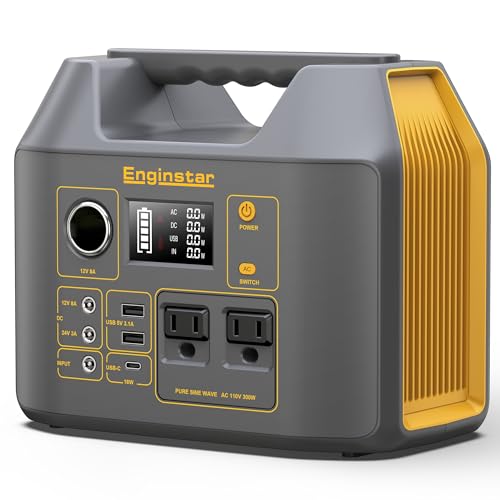
EnginStar R300 296Wh Portable Solar Generator - 300W Pure Sine Wave Power Station for CPAP, Camping, Emergencies
As an Amazon Associate we earn from qualifying purchases. Product prices and availability are accurate as of the date/time indicated.
Related reading: How Long Do Solar Generators Last? Lifespan Explained · ENGINSTAR Solar Generator 296Wh Review 2026
Frequently Asked Questions
Can I leave a power station connected to a solar panel all winter?
Only if the manual allows it. Most units stop charging when full, but short winter days give little input, and cold can block charging in lithium packs. Check the unit’s charging temperature range before leaving it outside.
Can a lithium battery that sat for a year still be used?
Often it can, if it was stored with some charge. Try recharging it normally. If it shows no response, the protection circuit may have locked it after a deep drain, so contact the manufacturer rather than forcing it.
Does a lead-acid battery need more attention in storage than lithium?
Yes. Lead-acid loses charge faster and can be damaged if left discharged, and flooded types can release hydrogen gas while charging, so they need ventilation. Lithium needs less maintenance but still dislikes heat and empty storage.
Is it worth storing solar energy for winter?
Not in a home battery. Batteries hold power for days of use, not seasons. Grid credits from net metering are the practical way to carry summer surplus into winter, depending on your utility’s rules.
{“@context”: “https://schema.org”, “@type”: “FAQPage”, “mainEntity”: [{“@type”: “Question”, “name”: “Can I leave a power station connected to a solar panel all winter?”, “acceptedAnswer”: {“@type”: “Answer”, “text”: “Only if the manual allows it. Most units stop charging when full, but short winter days give little input, and cold can block charging in lithium packs. Check the unit’s charging temperature range before leaving it outside.”}}, {“@type”: “Question”, “name”: “Can a lithium battery that sat for a year still be used?”, “acceptedAnswer”: {“@type”: “Answer”, “text”: “Often it can, if it was stored with some charge. Try recharging it normally. If it shows no response, the protection circuit may have locked it after a deep drain, so contact the manufacturer rather than forcing it.”}}, {“@type”: “Question”, “name”: “Does a lead-acid battery need more attention in storage than lithium?”, “acceptedAnswer”: {“@type”: “Answer”, “text”: “Yes. Lead-acid loses charge faster and can be damaged if left discharged, and flooded types can release hydrogen gas while charging, so they need ventilation. Lithium needs less maintenance but still dislikes heat and empty storage.”}}, {“@type”: “Question”, “name”: “Is it worth storing solar energy for winter?”, “acceptedAnswer”: {“@type”: “Answer”, “text”: “Not in a home battery. Batteries hold power for days of use, not seasons. Grid credits from net metering are the practical way to carry summer surplus into winter, depending on your utility’s rules.”}}]}













