Our editorial team weighed 's published specifications and how it stacks up against similar products in the generators category. What stands out: Exceptionally Quiet, Lightweight & Durable, and Electric Start. Where it falls short: Needs Gasoline Refueling and Occasional Battery Maintenance. That puts it at 8.2/10 on our WG Score – an excellent, well-rounded option.
 Reviewed bySarah Watts
Whether generators need to be grounded depends on use: a portable unit running cord-connected appliances usually needs no ground rod, but a house connection changes that.
Do generators need to be grounded when you use extension cords?
For a portable generator that only powers things through its own outlets and extension cords, the answer is usually no ground rod. The generator frame acts as the ground reference, and the ground pins on its outlets are tied to that frame.
NEC 250.34 is the rule behind this. It lets a portable generator skip a separate grounding electrode when it supplies only equipment mounted on the generator or cord-and-plug equipment plugged into its outlets, and the outlet ground terminals are bonded to the frame.
Three things can change that answer:
- Your manual. If it says to connect a ground rod, do it. The manufacturer’s instructions come first.
- Local code. The local authority having jurisdiction (AHJ) can require more than the NEC does.
- A house connection. Once the generator feeds your home wiring, different rules apply (see the table below).
Decision rule: cords only, and the manual says the frame is the ground, means no rod. Anything wired into a house means following the transfer switch instructions and calling a licensed electrician.
Cord-only use still depends on the cords. Match them to the load using our guide to choosing the right extension cord for your generator.
Bonded neutral vs floating neutral: which do you have?
A bonded-neutral generator has its neutral wire connected to the frame. A floating-neutral generator does not. Both designs exist, and the difference decides how the generator can be safely connected to a house.
A floating neutral can also interfere with GFCI and breaker operation. If a hot wire touches the frame, the fault may leave the frame energized instead of tripping anything.
To find out which you have:
- Read the nameplate and manual. NEC 445.11 requires the marking to show whether the neutral is bonded to the frame.
- Test with a multimeter if the marking is unclear. With the engine off and nothing plugged in, set the meter to continuity. Touch one probe to the neutral slot (the wider slot) of a 120-volt outlet and the other to the round ground hole or bare frame metal.
- Read the result. A beep or near-zero resistance means the neutral is bonded to the frame. No beep means it is floating.
- If the unit is unmarked and the test is unclear, ask the manufacturer. Do not change the bonding yourself.
Some generators, including certain inverter models, ship with a removable bonding plug or switch. Only use it as the manual describes.
When does a generator need a ground rod?
| How you use it | Ground rod? | Neutral-to-frame bond |
|---|---|---|
| Appliances and tools on extension cords | Usually no, under the NEC 250.34 exemption, unless the manual or local code says otherwise | Bonded to the frame |
| Camping, tailgating or job site on cords | Same as above; job-site rules may add requirements | Bonded to the frame |
| Transfer switch that switches the neutral (4-pole) | Generally yes, because the generator becomes its own power system; an electrician sets this up | Bonded at the generator |
| Transfer switch that does not switch the neutral (3-pole) or an interlock kit | Uses the house grounding; the generator must not add a second bond | Floating at the generator |
| Permanent standby installation | Yes, a grounding electrode installed to code | Set by the installation plan |
The reason is simple: the NEC allows only one neutral-to-ground bond per system. In a house, that bond already exists at the main service panel. If a bonded-neutral generator also feeds the house through a switch that does not switch the neutral, current can travel on the ground path and energize metal that should be dead. That is the double-bond hazard.
A transfer switch that switches the neutral isolates the generator, so the generator carries its own bond. Which type you have, and whether your generator suits it, is a question for the switch instructions and your electrician. If you are still choosing equipment for a house hookup, start with our list of portable generators for home backup.
How to ground a generator when the manual calls for it
Follow the manual first. These are the typical steps, and your inspector or the manufacturer may specify different parts.
- Confirm the need. Check the manual and ask your local building department if you are unsure.
- Get a proper rod. Use a copper-clad steel ground rod, at least 8 feet long under NEC electrode rules, typically 5/8 inch in diameter.
- Drive it fully into the ground. If you hit rock and cannot get the full length in, stop and ask an electrician.
- Choose the wire. NEC 250.66 allows 6 AWG copper wire to connect a rod electrode. If your manual lists a different size, use that.
- Connect both ends. Attach the wire to the rod with a listed ground rod clamp. Attach the other end to the generator’s ground terminal or lug. Keep the run short and straight.
- Have it checked. A licensed electrician should handle anything beyond a cord-only setup.
A rod is not a stand-in for the bonding inside the generator. Do not add one to a floating-neutral unit hoping it makes the unit safer.
GFCI protection, inverter generators and RV use
GFCI. Many generators have GFCI outlets, and portable GFCI adapters work with others. A GFCI senses current leaking away from the circuit and shuts off power in a fraction of a second. It only works as designed when the generator’s bonding matches the manual. A floating-neutral unit can interfere with GFCI and breaker operation, which is one reason to know which type you own.
Inverter generators. Many use a floating neutral, and some include a bonding plug. Cord-only use of an inverter unit still follows its manual. Do not assume it is bonded or floating based on the brand or type.
RVs. If you plug an RV into a portable generator, follow both the generator manual and the RV manual. An RV’s power system is already wired with its own neutral and ground arrangement, so an unexpected bond or float can cause trouble. If a built-in RV generator is involved, its own instructions apply.
Wet conditions. Keep the unit and plugs dry, and use a GFCI. A ground rod does not make a wet setup safe.
Grounding mistakes that cause shock
- Backfeeding through a wall outlet. A cord with two male ends sends power into house wiring and can electrocute utility workers and neighbors. Use a properly installed transfer switch or interlock.
- Creating a second neutral-to-ground bond. This happens when a bonded-neutral generator feeds a house through a switch that does not switch the neutral.
- Modifying the bonding yourself. Moving wires or jumpers inside the generator can defeat its protection.
- Damaged or mismatched cords. Cords with a broken ground prong, cheater plug adapters or cut insulation break the ground path.
- Standing water or wet ground. Do not run or touch the generator or its cords while wet.
- Treating a tingle as normal. A shock from the frame means a fault. Shut the generator off and get it repaired.
For placement, carbon monoxide and general operation, read our portable generator safety rules.
Our Top Picks
Ready to shop? These are the top-rated options from our hands-on roundup, Best Generators Inverter For Home Use of 2026.

Westinghouse iGen2800 2800 Peak Watt Super Quiet Lightweight Portable Inverter Generator - Gas Powered, Parallel Ready
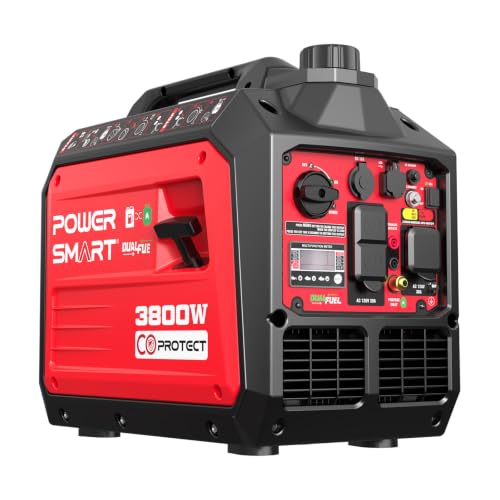
PowerSmart 3800 Watt Dual Fuel Inverter Generator Quiet Portable Gas Propane with CO Sensor RV Ready
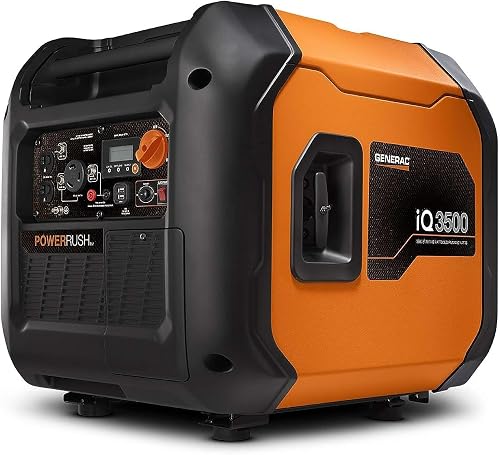
Generac iQ3500 3500W Portable Inverter Generator - Quiet, Lightweight, Electric Start, CARB Compliant for Camping & Jobsites
As an Amazon Associate we earn from qualifying purchases. Product prices and availability are accurate as of the date/time indicated.
Frequently Asked Questions
Can I use a bonding plug to change a floating-neutral generator to bonded?
Only if the manual says your model has one and describes when to use it. Inserting or removing a bonding plug changes how the generator behaves with GFCIs and house wiring. If you are unsure, ask the manufacturer or an electrician.
Can I connect my generator to my house’s water pipe or panel ground?
Not as a do-it-yourself fix. Tying a generator into house grounding is part of a transfer switch or standby installation, and the correct method depends on the switch type and local code. Have a licensed electrician do it.
Will a ground rod stop my generator from shocking me?
No. If you feel a tingle from the frame or a tool, there is a fault in the generator, a cord or the load. A rod does not fix that. Stop using the equipment and have it inspected or repaired.
Does a generator need to be grounded if it only runs one tool?
The same rule applies as for any cord-only use. If the manual says the frame is the ground and local code does not add a requirement, one tool on a cord needs no rod. The tool and cord must have an intact ground prong.
{“@context”: “https://schema.org”, “@type”: “FAQPage”, “mainEntity”: [{“@type”: “Question”, “name”: “Can I use a bonding plug to change a floating-neutral generator to bonded?”, “acceptedAnswer”: {“@type”: “Answer”, “text”: “Only if the manual says your model has one and describes when to use it. Inserting or removing a bonding plug changes how the generator behaves with GFCIs and house wiring. If you are unsure, ask the manufacturer or an electrician.”}}, {“@type”: “Question”, “name”: “Can I connect my generator to my house’s water pipe or panel ground?”, “acceptedAnswer”: {“@type”: “Answer”, “text”: “Not as a do-it-yourself fix. Tying a generator into house grounding is part of a transfer switch or standby installation, and the correct method depends on the switch type and local code. Have a licensed electrician do it.”}}, {“@type”: “Question”, “name”: “Will a ground rod stop my generator from shocking me?”, “acceptedAnswer”: {“@type”: “Answer”, “text”: “No. If you feel a tingle from the frame or a tool, there is a fault in the generator, a cord or the load. A rod does not fix that. Stop using the equipment and have it inspected or repaired.”}}, {“@type”: “Question”, “name”: “Does a generator need to be grounded if it only runs one tool?”, “acceptedAnswer”: {“@type”: “Answer”, “text”: “The same rule applies as for any cord-only use. If the manual says the frame is the ground and local code does not add a requirement, one tool on a cord needs no rod. The tool and cord must have an intact ground prong.”}}]}