

Our editorial team weighed WEN's published specifications and how it stacks up against similar products in the generators category. What stands out: Ultra-Quiet & Lightweight, Reliable Cold-Weather Starts, and Clean Power for Electronics. Where it falls short: Oil Change Every 25 Hours and Minor Oil Burn Risk. That puts it at 8.4/10 on our WG Score – an excellent, well-rounded option.
 Reviewed byEthan
The PowerSmart 3600 noise level is 70 dB at 23 feet, about 17 dB louder than the 2500, though that gap is likely a data mismatch.
PowerSmart 3600 noise level: what the 70 dB figure means
Retailer pages for the PowerSmart 3600W inverter generator give 70 dB at 23 feet, with 3,600 surge watts and 3,200 running watts. That is a seller-supplied number, not an independent meter test, so check your unit’s label and manual for the figure that applies to you.
Three details change how you should read that number:
- Model numbers differ. A related PowerSmart model, the DL5040C, is listed at 76 dB at 23 feet and 25% load. Some sellers call it a 3,600-watt unit and others a 4,400-watt unit with 3,600 running watts.
- Load is missing. The 70 dB entry does not say what load it was measured at. Engine noise rises with load, so a reading at light load will not match what you hear at full load.
- Briggs & Stratton numbers do not apply. PowerSmart is also a Briggs & Stratton line, but that range has no 3600 model, so do not borrow its figures for this unit.
For the full specs and features of the unit, see our Power Smart 3600-watt review.
PowerSmart 3600 vs 2500 and DL5040C: noise side by side
This table uses only the figures printed on the PowerSmart listings. Test conditions differ, so read it as a rough ranking.
| Model | Listed noise | Test distance | Load stated |
|---|---|---|---|
| PowerSmart 3600W | 70 dB | 23 ft | Not stated |
| PowerSmart DL5040C | 76 dB | 23 ft | 25% |
| PowerSmart 2500W | 53 dBA | 23 ft | Not stated |
The 3600W is 17 dB above the 2500W (70 minus 53). A gap that large between two small inverter generators is more likely a mismatch in how the numbers were measured or reported than a real difference in what you hear. Treat the 2500W figure as the best case and the 3600W figure as the more cautious one.
The 70 vs 76 dB difference between the 3600W and the DL5040C is 6 dB. That is a smaller gap and fits the idea that these are different models measured under different conditions.
When you compare any two generators, check three things first:
- Same distance. A figure at 7 meters and one at 23 feet are close, but a figure at 1 meter is not comparable.
- Same load. Compare 25% load to 25% load, or full load to full load.
- Same weighting. dB and dBA are not always the same measurement; see the FAQ below.
How much louder is 6, 10 or 17 dB to your ears?
Decibels are logarithmic, so small numbers hide big changes. Sound energy and perceived loudness change at different rates. As a rule of thumb, every 10 dB is 10 times the sound energy and sounds about twice as loud.
- 3 dB: 2 times the sound energy, but only about 1.2 times as loud. It is barely noticeable.
- 6 dB: 4 times the sound energy and about 1.5 times as loud. The 70 vs 76 dB gap between the 3600W and DL5040C listings falls here, and it is noticeable side by side.
- 10 dB: 10 times the sound energy and about 2 times as loud.
- 17 dB: about 50 times the sound energy and about 3.2 times as loud. This is the 3600W vs 2500W gap, which would be obvious if it were real.
For everyday reference, normal conversation is roughly 60 dB and a vacuum cleaner is often around 70 dB. A generator at 70 dB means you would need to raise your voice to talk over it nearby.
To read other spec sheets the same way, our guide to generator noise ratings explained covers distance and load in more detail.
How loud 70 dB at 23 feet is at other distances
In open air, sound drops about 6 dB each time you double your distance. Starting from 70 dB at 23 feet:
| Distance from generator | Approx. level |
|---|---|
| 11.5 ft | 76 dB |
| 23 ft | 70 dB |
| 46 ft | 64 dB |
| 50 ft | 63 dB |
| 92 ft | 58 dB |
At 50 feet the level is about 7 dB below the listed 70 dB. That is roughly one-fifth of the sound energy and about 1.6 times quieter to the ear.
These are idealized open-field figures. Trees, walls, tents and hard ground can raise or lower what you hear.
Decision rule: if a neighbor’s tent or window is within 50 feet, expect the PowerSmart 3600 to be easy to hear. Distance is your best noise control.
Is it quiet enough for a campground or HOA?
There is no single national limit. Campgrounds usually set quiet hours, and many limit generator use to certain hours or ban it outright. HOAs and cities may set a dB limit at the property line or prohibit generators. Read your campground rules, HOA covenants and local noise ordinance before you go.
Some campgrounds require inverter-type units or a stated maximum dB. A 70 dB figure at 23 feet may not meet a cap of 60 dB, and the load behind that number is unknown. If a rule gives a dB cap, ask which distance it applies to.
Inverter designs usually run quieter at light loads because the engine speed follows demand. Our conventional vs inverter generator comparison explains the difference.
How to reduce PowerSmart 3600 noise
These steps actually lower the sound you and your neighbors hear:
- Add distance. Run the unit as far from people as the cord allows.
- Aim the exhaust away from tents, windows and neighbors.
- Keep the load low. Inverter engines slow down at lighter loads, so leave off appliances you do not need.
- Use eco mode if your unit has one. It can lower engine speed at light loads.
- Set it on soft ground or a rubber mat to reduce vibration noise.
- Put a solid barrier to one side, such as a wall or parked vehicle, so sound is deflected away from camp.
Never enclose a running generator in a box or cover. Follow the manual for placement, clearance and outdoor-only use.
Our Top Picks
Ready to shop? These are the top-rated options from our hands-on roundup, Best Quiet Inverter Generators For Home Use of 2026.

Westinghouse iGen5000DF 5000 Peak Watt Dual Fuel Inverter Generator - Super Quiet RV Ready Remote Start
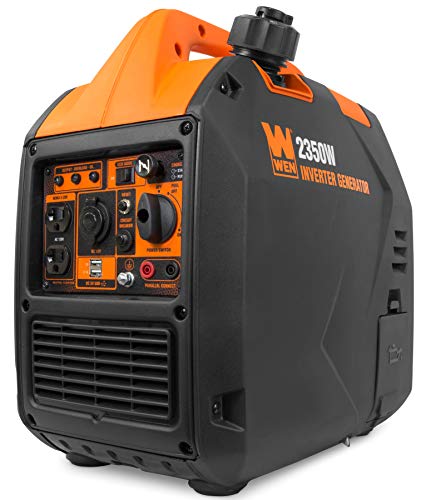
WEN 56235i 2350W Super Quiet Portable Inverter Generator - Ultra Lightweight 39lbs, Fuel Shut-Off, Clean Power for Camping RV
As an Amazon Associate we earn from qualifying purchases. Product prices and availability are accurate as of the date/time indicated.
Frequently Asked Questions
Is the PowerSmart 3600 louder at full load?
Yes. Inverter engines speed up as the load rises, so noise climbs with it. A 70 dB figure with no stated load tells you little about full-load sound. Decision rule: compare noise only at the same load.
Does an eco mode make it quieter?
On units that have one, eco mode lets the engine slow down at light loads, which lowers noise. It makes no difference once the load is high enough that the engine must run fast. Your manual shows whether your model has the feature.
What is the difference between dB and dBA on a generator spec?
dBA is weighted to match how human hearing responds, so it better reflects what you perceive. The 2500W lists 53 dBA while the 3600W lists plain dB, which is another reason the two numbers do not line up. Decision rule: compare dBA with dBA at the same distance and load.
Is the 3600 too loud to run next to a tent?
At 11.5 feet it reaches about 76 dB, roughly 1.5 times as loud as at 23 feet. That is loud enough to disturb sleep and conversation, so place it well away from the tent and aim the exhaust the other way.
Will two people notice the same noise level at the same distance?
Not always. Walls, trees, wind direction and hard ground change how sound travels, so a spot with a solid barrier can sound noticeably quieter than open grass at the same distance.
{“@context”: “https://schema.org”, “@type”: “FAQPage”, “mainEntity”: [{“@type”: “Question”, “name”: “Is the PowerSmart 3600 louder at full load?”, “acceptedAnswer”: {“@type”: “Answer”, “text”: “Yes. Inverter engines speed up as the load rises, so noise climbs with it. A 70 dB figure with no stated load tells you little about full-load sound. Decision rule: compare noise only at the same load.”}}, {“@type”: “Question”, “name”: “Does an eco mode make it quieter?”, “acceptedAnswer”: {“@type”: “Answer”, “text”: “On units that have one, eco mode lets the engine slow down at light loads, which lowers noise. It makes no difference once the load is high enough that the engine must run fast. Your manual shows whether your model has the feature.”}}, {“@type”: “Question”, “name”: “What is the difference between dB and dBA on a generator spec?”, “acceptedAnswer”: {“@type”: “Answer”, “text”: “dBA is weighted to match how human hearing responds, so it better reflects what you perceive. The 2500W lists 53 dBA while the 3600W lists plain dB, which is another reason the two numbers do not line up. Decision rule: compare dBA with dBA at the same distance and load.”}}, {“@type”: “Question”, “name”: “Is the 3600 too loud to run next to a tent?”, “acceptedAnswer”: {“@type”: “Answer”, “text”: “At 11.5 feet it reaches about 76 dB, roughly 1.5 times as loud as at 23 feet. That is loud enough to disturb sleep and conversation, so place it well away from the tent and aim the exhaust the other way.”}}, {“@type”: “Question”, “name”: “Will two people notice the same noise level at the same distance?”, “acceptedAnswer”: {“@type”: “Answer”, “text”: “Not always. Walls, trees, wind direction and hard ground change how sound travels, so a spot with a solid barrier can sound noticeably quieter than open grass at the same distance.”}}]}













