

Our editorial team weighed 's published specifications and how it stacks up against similar products in the generators category. What stands out: Tri-Fuel Flexibility, 12,500 Starting Watts, and Electric Start. Where it falls short: Larger, Limited Portability and Needs Proper Fuel Connection Setup. That puts it at 8/10 on our WG Score – an excellent, well-rounded option.
 Reviewed byTristan
In the kohler vs generac generators decision, Generac is usually cheaper and easier to get serviced, while Kohler (now Rehlko) suits buyers who want an electrical contractor handling the whole job. Both are established home-standby brands, so the deciding factors are the installer’s quality and the written warranty on your exact model. Confirm current specs on each manufacturer’s site before you buy.
Kohler vs Generac generators: side-by-side comparison
The main head-to-head range for homes is the 20 to 26 kW class. Both brands also sell smaller units and larger liquid-cooled models. Treat the table as general tendencies, not guarantees. Specs and terms change by model and year, so rows marked model-dependent must be checked on the spec sheet.
| Factor | Generac (Guardian / Evolution) | Kohler (now Rehlko) |
|---|---|---|
| Typical quote | Often lower, but varies by installer | Often higher, but varies by installer |
| Dealer network | Larger, more generator-focused | Smaller, often electrical contractors |
| Engine | Generac-built engines on residential units | Kohler Command PRO engines |
| Engine cooling (model-dependent) | Air-cooled in the common home class; liquid-cooled at larger sizes | Air-cooled in the common home class; liquid-cooled at larger sizes |
| Warranty length (model-dependent) | Varies by model and registration; sources conflict | Varies by model and registration; sources conflict |
| Noise in dBA (model-dependent) | Compare the rated dBA and test distance on the spec sheet | Compare the rated dBA and test distance on the spec sheet |
Features such as Wi-Fi monitoring, a weekly self-test and a transfer time of roughly 10 seconds are common to both brands, so they should not drive your choice.
Kohler vs Generac pros and cons
Here is the short version of each brand’s strengths and weaknesses.
Generac pros and cons
Pros: wide dealer coverage, many sizes, easy parts and installer availability, and frequently the lower quote.
Cons: the brand has faced past recalls and quality complaints, so check the specific model and any open recalls. Service quality varies a lot by dealer.
Kohler (Rehlko) pros and cons
Pros: its own engine design, and dealers that are often full-service electrical contractors.
Cons: fewer dealers in many areas, often a higher quote, and a brand transition. The business now operates as Rehlko, so manuals and listings may use either name.
How do the engines differ, and which lasts longer?
Most residential units in this class are air-cooled, which means no radiator or coolant to service. Liquid-cooled engines appear at larger sizes and are built for heavier duty.
Details such as how each engine is lubricated and whether valves ever need adjusting differ by engine family. Check the owner’s manual for your exact model rather than relying on general claims. You will also see online claims that one brand’s engines last a set number of hours longer than the other’s. We found no independent data behind them, so don’t base a purchase on them. A standby unit that runs only during outages and a weekly test may log few hours per year, so maintenance habits usually matter more than rated engine hours.
- Ask for the engine type (air- or liquid-cooled) and the recommended oil-change interval in hours and months.
- Ask whether valve adjustment is ever required.
- Plan for annual service on either brand. It typically covers oil, filter, spark plugs and a battery check.
To see what a typical air-cooled Generac home unit looks like, our Generac Guardian 22kW home standby generator review covers the specs and trade-offs. For Kohler/Rehlko, pull the current spec sheet for the model your dealer quotes and compare it line by line.
What does an installed Kohler or Generac cost?
The generator itself is only part of the bill. Quotes vary by region, labor rates, the distance from the pad to the meter and panel, and how much gas-line work is needed. Use the list below to compare quotes line by line rather than relying on a single number.
- Generator unit and the correct kW size
- Automatic transfer switch (whole-house or sub-panel type)
- Concrete or composite pad
- Gas line, meter upgrade or propane tank, and regulator
- Electrical conduit, wiring and breaker work
- Permits, inspections and sometimes a utility notice
- Load management modules, if you want a smaller generator
- Startup, commissioning and first service
Some installers say Generac saves about $1,000 on a typical job, and another blog says 15% to 25%. Neither claim is verified. The gap depends on the model, the installer’s pricing, and whether the dealer discounts one brand because they sell more of it.
Common mistake: comparing a bare-unit price from one brand to an all-in quote from the other. Get at least three written, itemized quotes covering both brands.
Warranty, dealers and parts: why your local dealer matters most
Warranty claims online conflict. Some pages say both brands now offer 5 years on 22 to 26 kW units. Others say Kohler offers 5 years against Generac’s 3. Terms differ by model, whether the unit is registered, and whether an authorized dealer installed and serviced it. Read the current warranty on each manufacturer’s site for your exact model, and ask the installer for a copy before you sign.
A warranty is only as good as the person who honors it. A generator that fails in a storm needs a technician who can arrive quickly and has parts. Generac’s network is larger, so you may have more choices. Kohler dealers are often electrical contractors who can handle the whole job. A great dealer for either brand beats an unresponsive one for the other.
How to vet a dealer:
- Confirm they are an authorized dealer for the exact brand, and ask for proof.
- Ask how many standby units they installed last year and for two local references.
- Ask for their typical response time for an outage service call.
- Ask who does warranty work: their own techs or a subcontractor.
- Check license and insurance with your state or county.
- Ask whether they stock common parts such as filters, batteries and spark plugs.
Noise and fuel compared
Noise is rated in dBA at a set distance, often 23 feet, and usually measured at full load. Ratings vary by model, so compare the spec sheets for your exact models and check the test distance. Many units run a quieter exercise cycle than they do under a real outage load, so the weekly test is not a fair preview. Ask how loud each is at your property line.
- Fuel: both brands run residential units on natural gas or propane. Natural gas avoids refilling but depends on your utility’s supply. Propane needs a tank sized for your expected runtime.
- Transfer switch: confirm the amp rating matches your service panel.
Sizing: what kW do you actually need?
Size by your real loads, not square footage. The biggest factors are usually central air conditioning, well pumps and other motors, which pull several times their running watts to start.
Worked example (running watts, approximate):
- Furnace blower: 600 W
- Refrigerator: 700 W
- Well pump: 1,000 W
- Lights, electronics, garage door: 800 W
- 3-ton central AC: 3,500 W
The math: running total is 600 + 700 + 1,000 + 800 + 3,500 = 6,600 W. Now add startup surge. As an assumption, say the AC and well pump each draw about 3 times their running watts for a moment (real values are on the nameplate). If the AC starts while everything else is running, peak demand is 600 + 700 + 800 + 1,000 + (3,500 × 3) = 13,600 W. If the AC and well pump started at the same moment, it would be 2,100 + 3,000 + 10,500 = 15,600 W.
So 6.6 kW is the steady load, but the peak is roughly 14 to 16 kW under these assumptions. That is why a unit in the mid-teens to low-20s kW range is a realistic answer for this house, while a soft-start kit on the AC or load management modules that shed the AC could allow a smaller one. Your numbers will differ. Have the installer do a written load calculation using nameplate data, and never accept a size chosen by guesswork. Local code, your gas supply and the transfer switch design can change the final answer.
Which brand fits which buyer, and what to ask before buying
Decision rule: pick the dealer first, then the brand. Get itemized quotes for both. If prices are close, choose the brand whose dealer has better references, faster service response and a clearer written warranty. If one brand has no good local dealer, it is the wrong choice for you.
- Smaller home or tight budget: a Generac air-cooled unit with load management is often the lower-cost path, if a reputable dealer is nearby.
- Larger home or heavy loads: compare liquid-cooled options from both brands, and expect higher costs.
- Want one contractor for everything: a Kohler (Rehlko) dealer who is also an electrician may suit you.
- Want the most service choices: Generac’s network is larger in most areas. Our Guardian 22kW review is a good Generac starting point.
Ask every installer: Will you perform a load calculation? Who pulls permits? What transfer switch is included? Where will the unit sit? What is the exact warranty on this model? How fast do you respond to service calls?
Safety: never run a generator indoors or in a garage, because of carbon monoxide. Keep the unit the distance from windows, doors and walls that the manual and local code require. Use a licensed electrician for the transfer switch, which prevents deadly backfeed to utility lines, and a licensed pro for gas lines. Install CO alarms in the home.
If a standby system is out of budget, a portable setup can cover essentials. See our guide to the best portable generators for home backup or the best inverter generators for quieter, fuel-efficient options.
Our Top Picks
Ready to shop? These are the top-rated options from our hands-on roundup, Best Generac Generators of 2026.

Generac GP3300i 3300W Portable Inverter Generator - Quiet, Lightweight Gas PowerRush Tech for Camping, RV, Home Backup
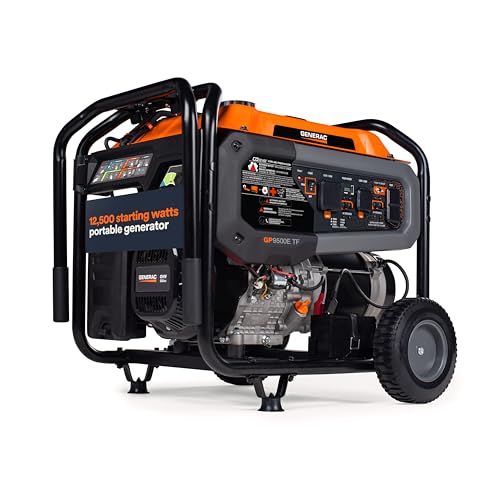
Generac GP9500E Tri-Fuel Portable Generator: 12,500 Starting Watts, Electric Start, Gas/Propane/NG, Quiet, Long Runtime

Generac iQ5200 5200W Dual-Fuel Inverter Generator - Quiet, Portable, CA Compliant
As an Amazon Associate we earn from qualifying purchases. Product prices and availability are accurate as of the date/time indicated.
Related reading: What Size Propane Tank for a Generac Generator? · GENMAX GM9000iEDC Review 2026: Specs, Pros & Cons
Frequently Asked Questions
Which is quieter, Kohler or Generac?
Neither brand is quieter across the board. Noise depends on the model, engine size and load, and it is rated in dBA at a stated distance. Compare the spec sheets for the exact models you are quoted, and check that the test distance and load match.
Does Generac have a worse reliability record than Kohler?
We found no independent data proving one brand more reliable. Generac has faced past recalls and quality complaints on some models, and it sells far more units, so there is more feedback about it. Check open recalls for your model and judge the local dealer’s service record.
How often does a standby generator need service?
Most manufacturers call for service about once a year or after a set number of run hours, covering oil, filter, spark plugs and a battery check. Intervals vary by model, so follow your manual and keep service records for warranty claims.
Is a portable generator a cheaper alternative to standby?
Usually it costs less up front, but you must set it up outdoors, fuel it and connect it through a proper inlet and interlock or transfer switch. It will not start itself during an outage. Check your essential loads against its running and starting watts.
{“@context”: “https://schema.org”, “@type”: “FAQPage”, “mainEntity”: [{“@type”: “Question”, “name”: “Which is quieter, Kohler or Generac?”, “acceptedAnswer”: {“@type”: “Answer”, “text”: “Neither brand is quieter across the board. Noise depends on the model, engine size and load, and it is rated in dBA at a stated distance. Compare the spec sheets for the exact models you are quoted, and check that the test distance and load match.”}}, {“@type”: “Question”, “name”: “Does Generac have a worse reliability record than Kohler?”, “acceptedAnswer”: {“@type”: “Answer”, “text”: “We found no independent data proving one brand more reliable. Generac has faced past recalls and quality complaints on some models, and it sells far more units, so there is more feedback about it. Check open recalls for your model and judge the local dealer’s service record.”}}, {“@type”: “Question”, “name”: “How often does a standby generator need service?”, “acceptedAnswer”: {“@type”: “Answer”, “text”: “Most manufacturers call for service about once a year or after a set number of run hours, covering oil, filter, spark plugs and a battery check. Intervals vary by model, so follow your manual and keep service records for warranty claims.”}}, {“@type”: “Question”, “name”: “Is a portable generator a cheaper alternative to standby?”, “acceptedAnswer”: {“@type”: “Answer”, “text”: “Usually it costs less up front, but you must set it up outdoors, fuel it and connect it through a proper inlet and interlock or transfer switch. It will not start itself during an outage. Check your essential loads against its running and starting watts.”}}]}













