

Do you need a generator if you have solar? Often yes, unless your system includes batteries and an islanding-capable inverter. Standard grid-tied solar shuts off during a power outage for safety, so panels alone will not keep your lights on. Here is how to tell what your setup does and what backup fits.
Why Solar Panels Alone Do Not Keep Your Power On
Most homes with rooftop solar are grid-tied. The inverter is required (by UL 1741 and utility interconnection rules) to shut down when the grid goes dark. This is called anti-islanding. It protects line workers from backfeed while they repair lines.
The result surprises many owners: the sun is shining, the panels are producing, and the house is still dark. Panels make DC power, and the inverter is what turns it into usable household power. If the inverter is not allowed to run without the grid, nothing flows to your outlets.
Check your system type before you assume anything. Look at your inverter manual or installer paperwork for terms like backup mode, battery, islanding, or gateway. If you see none of them, you almost certainly have a plain grid-tied system.
Which Solar Setups Can Run Without a Generator
Three setups give you power during an outage without a fuel generator. What each one can run depends on the model and how it was installed.
- Grid-tied with battery storage: A home battery and a gateway or transfer switch let the house disconnect from the grid and run on its own. Whether it covers the whole house or only selected circuits depends on the installation.
- Hybrid inverter systems: These manage panels, battery, and grid together and can often provide a backup output. Some only power a critical-loads panel.
- Off-grid systems: Sized with a large battery bank and no utility connection. These work as designed, but they are the most expensive to build and often still include a backup generator for long cloudy stretches.
Some grid-tied inverters have a small daytime emergency outlet that works only while the sun is out. It is typically limited to a few hundred to a couple thousand watts, so treat it as a convenience, not a backup plan.
When a Battery Is Not Enough
Even with batteries, a generator can still make sense. A typical home battery stores roughly 10 to 13.5 kWh. An average US home uses around 29 kWh per day, according to EIA figures, though your bill will show your real number.
That gap matters in a few situations:
- Multi-day storms: Heavy clouds, snow on panels, or smoke can cut solar production sharply, so the battery may not fully recharge.
- Big loads: Central air conditioning, electric water heaters, electric dryers, and well pumps can drain a battery quickly or exceed the inverter’s output rating.
- Winter: Shorter days mean less recharge when you need heat and light the most.
- Medical equipment: If someone depends on powered devices, redundancy is worth planning for.
To size the need, list what you must run, add up the running watts and the hours per day, and compare the watt-hours to your battery capacity. Remember that motors such as refrigerators, sump pumps, and AC compressors draw a surge several times their running watts at startup.
Your Backup Options by Situation
| Your situation | Reasonable backup |
|---|---|
| Grid-tied, no battery, short outages | Portable power station or small small solar generator for fridge, lights, and phones |
| Grid-tied, no battery, frequent long outages | Inverter or portable gas generator with a transfer switch, or add a home battery |
| Battery system, mild climate | Often enough on its own for essentials |
| Battery system, extreme heat or cold, or well pump | Consider a standby or portable generator as a second layer |
| Off-grid | Backup generator is common for low-sun periods |
If your goal is essentials only, a portable battery unit paired with panels can be quiet, fume-free, and indoor-safe. Our roundup of solar generators for home backup covers capacity and output considerations, and the best solar generators for a refrigerator is a good starting point if keeping food cold is your priority.
Using Your Existing Solar With a Portable Setup
You generally cannot plug a portable generator or power station into your rooftop system or house wiring through a regular outlet. That creates dangerous backfeed.
- Do not use a “suicide cord” (male-to-male cable) to feed your panel.
- Use a transfer switch or interlock kit installed by a licensed electrician if you want a portable generator to power household circuits. Local code and your utility’s rules apply.
- Run extension cords from a power station or generator directly to appliances if you do not have a transfer switch.
A portable power station can also recharge from its own folding panels, independent of your roof. Compatibility depends on the unit’s voltage and amperage limits, so check the spec sheet. For panel matching, see our guide to the best solar panels for generators.
Safety Rules for Any Backup Power
- Never run a gas generator indoors, in a garage, or near windows and doors. Carbon monoxide kills quickly. Keep it at least 20 feet from the house, with the exhaust pointed away, as many safety agencies advise.
- Install CO alarms on each level of the home and near sleeping areas, with battery backup.
- Store fuel in approved containers, away from living space and ignition sources.
- Keep generators dry but not enclosed. Use a rated canopy or cover designed for operation.
- Test your plan before storm season: start the generator, charge the power station, and confirm that your key appliances run.
Common mistake: buying by peak watts alone. Match the unit to your running watts plus the largest surge, and leave some headroom.
How to Decide in Four Steps
- Confirm your system type in the inverter documentation or by asking your installer.
- List critical loads and their running and starting watts.
- Estimate outage length based on your local history. One to four hours calls for different gear than three days.
- Pick the lightest option that covers it: a power station for essentials, a home battery for automatic backup, or a generator for long or heavy-load outages.
If you are shopping, our overview of the best solar generators compares options by capacity and output. Prices and specs change, so verify current details with the manufacturer before buying.
Our Top Picks
Ready to shop? These are the top-rated options from our hands-on roundup, Best Solar Generators For Home Backup Power of 2026.

Anker SOLIX C1000 Gen 2 Portable Power Station: 2000W Solar Generator, 1024Wh LiFePO4, 49-Min Fast Charge for Camping, Home Backup

MARBERO 296Wh Solar Generator with 60W Panel, 300W Pure Sine Wave Portable Power Station for Camping RV Emergency Backup
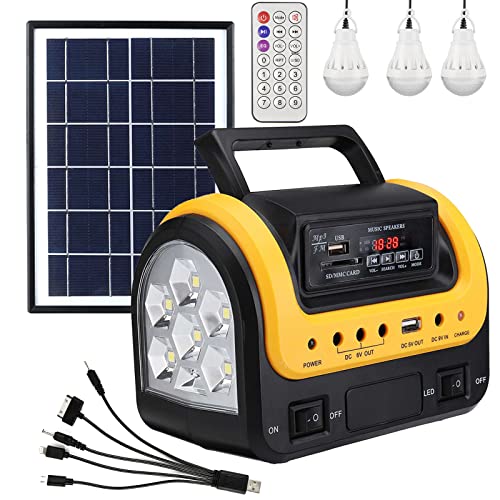
Portable 2500mAh LiFePO4 Solar Generator with 5W Panel & LED Lights - Ideal for Camping, Emergencies (Yellow)
As an Amazon Associate we earn from qualifying purchases. Product prices and availability are accurate as of the date/time indicated.
Frequently Asked Questions
Will my solar panels work during a power outage?
Usually not. Standard grid-tied systems shut off automatically during an outage for lineworker safety. Panels only supply your home if you have a battery with a backup-capable inverter or a system designed to run off-grid.
Can I connect a generator to my solar system?
Not directly through an outlet. Backfeeding the house is dangerous. A licensed electrician must install a transfer switch or interlock, and some hybrid systems have a dedicated generator input. Check your inverter manual and local code.
Is a solar battery better than a generator for outages?
It depends on the outage. Batteries are quiet, automatic, and fume-free, but their capacity is limited. A generator can run as long as you have fuel, so many homes in storm-prone areas use both.
How big a generator do I need with solar?
Size it to the loads you must run, not your solar array. Add the running watts of essentials, then account for the largest motor’s startup surge. Essentials like a fridge, lights, and electronics often fit in a few thousand watts.














