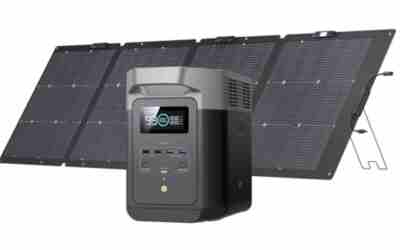
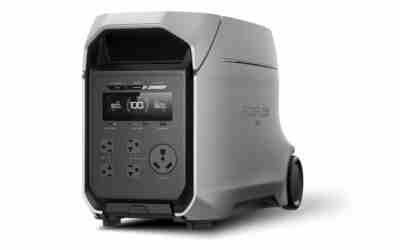
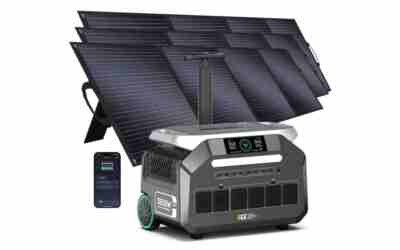
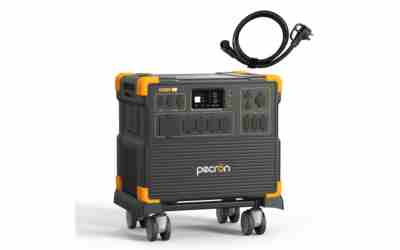
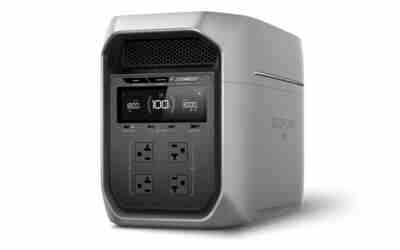
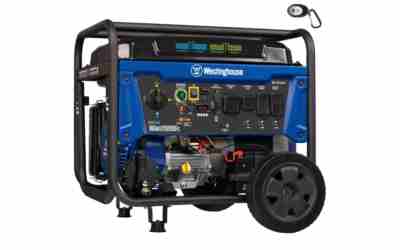
Our editorial team weighed GRECELLPOWERSTATION's published specifications and how it stacks up against similar products in the generators category. What stands out: Fast Charging, Long Hold, Compact, Simple Controls, and Reliable for Light-Medium Loads. Where it falls short: Struggles With Heating Appliances and Drains Quickly Under Heavy Load. That puts it at 8/10 on our WG Score – an excellent, well-rounded option.
 Reviewed byEthan
Choosing the right solar powered backup generators can be a daunting task, and many buyers make the mistake of focusing solely on peak wattage without considering continuous output or battery capacity. Another common pitfall is overlooking the charging time and available output ports, which can severely limit a unit’s usefulness during an actual power outage or outdoor adventure. It’s crucial to balance power delivery with portability and charging flexibility to ensure you get a generator that truly meets your needs. For more general backup power considerations, check out our guide on The 5 Best Home Backup Power Generators of 2026.
How We Narrowed Down Solar Powered Backup Generators
When selecting the top solar powered backup generators, we meticulously reviewed models based on several key criteria. Our primary focus was on battery capacity (Wh), continuous AC output (W), charging flexibility, and the inclusion of advanced features like LiFePO4 batteries for extended lifespan and efficient power management systems. We also considered the overall portability and the variety of output ports available to ensure versatility across different use cases, from camping trips to emergency home backup.
While all the selected products offer reliable solar-powered backup, the Anker SOLIX S2000 2,010Wh Power Station + 400W Panel stands out as the high-capacity option. Its 2,010Wh battery capacity is significantly larger than the other models on our list, making it a strong pick if your primary need is extended power for multiple high-draw appliances. It also comes bundled with a 400W solar panel, so you can recharge from the sun during a prolonged outage, and it runs silently and is safe to use indoors. It is a bigger investment than the smaller units here, but for home backup and longer emergencies where capacity matters most, it is a worthwhile choice.

Pros
- Lightning-fast one-hour charging outperforms competitors in real-world tests
- Exceptional battery management keeps it cool and efficient under heavy loads
- User-friendly display and app simplify monitoring and customization
- Versatile ports including high-power USB-C handle diverse devices effortlessly
- Proven reliability for RV, camping, and emergencies from thousands of users
Cons
- Weighs 23.8 lbs, making it less ideal for extended handheld carrying
- Solar panels sold separately and only compatible with Jackery models
- Fastest charge requires app activation each time
The Jackery Explorer 1000 v2 is a versatile portable power station designed for campers, RVers, off-grid adventurers, and anyone needing reliable emergency backup. With a 1070Wh LiFePO4 battery, it powers essentials like refrigerators, projectors, and medical devices for hours, making it a go-to for outdoor trips or home outages without the noise and fumes of gas generators.
Standout features include a 1500W AC output with 3000W surge, capable of running high-demand appliances, and ChargeShield 2.0 technology for one-hour full recharges via the Jackery app. Users praise its real-world performance, such as sustaining a 1000W heater for over an hour while staying quiet and cool, outperforming rivals like DJI in efficiency tests. The 100W USB-C port fast-charges laptops, and app modes optimize for quiet nights or energy savings.
Build quality shines with a durable, compact design at 23.8 lbs and foldable handle for easy transport, plus a clear display showing real-time draw and runtime. Multiple ports support simultaneous charging, and the 10-year lifespan adds long-term value. It's whisper-quiet at 30dB, ideal for indoor use as a UPS.
Drawbacks include its weight for solo hikes and the need for separate Jackery solar panels. Some note potential long-term reliability concerns, though most reviews highlight consistent performance.
Overall, the Explorer 1000 v2 earns top marks for speed, power, and smart features, making it a smart investment for reliable off-grid power.
Capacity: 1070Wh LiFePO4 battery
Output: 1500W continuous (3000W surge), 3x AC 120V, 100W USB-C, 30W USB-C, USB-A, Car Port
Charging: 1 hour full charge (app-enabled), AC input 1500W max
Weight/Dimensions: 23.8 lbs, 12.87 x 8.82 x 9.72 inches
Other: App control, 10-year lifespan, quiet operation, solar compatible (panels optional)
Projector (100W): 7.6 hours
Rice Cooker (330W): 2.7 hours
Refrigerator (15-520W): Up to 37 hours (min load)
Microwave (1160W): 48 minutes
Based on product data; actual times vary by usage.

Pros
- Long-lasting LiFePO4 battery with 10,000 cycle rating
- Compact and light for a 2kWh class power station
- Flexible charging options including solar, car and generator
- Solid 1,500W output with 3,000W surge capacity
- Solar panel included in the bundle
Cons
- No 12V DC port
- Solar panel ships separately and may arrive at a different time
- 1,500W continuous output limits very high-draw appliances
The Anker SOLIX S2000 is a portable power station built around a 2,010Wh LiFePO4 battery. It delivers 1,500W of continuous output with a 3,000W peak, and this bundle adds a 400W bifacial solar panel so you can recharge off-grid.
It is aimed at homeowners who want compact backup power for essentials such as a refrigerator, lights and a home office setup, as well as campers and outdoor users. Anker rates the fridge backup at up to 35 hours, and the UPC-style switchover of under 10 ms helps keep computers and routers running during an outage.
Design is a strong point. At 8.2 x 11.1 x 12.7 inches and 35.7 pounds, it is smaller and lighter than most 2kWh units. Eight outlets are split between the front and rear, so everyday devices and always-on appliances can be kept separate. The LFP cells are rated for 10,000 cycles, or about 15 years of use, and the unit carries a 5-year warranty.
Drawbacks are few but real. There is no 12V DC port, the solar panel ships separately from the power station, and 1,500W continuous output will not cover very heavy loads. Overall, the S2000 is a durable, portable and well-equipped choice for home backup and outdoor use.

Pros
- Exceptional 10-year LiFePO4 battery lifespan
- Versatile 6-port charging for multiple devices
- Quick recharge options including solar compatibility
- Portable size and weight for easy transport
- Surge capacity powers demanding electronics
Cons
- Limited to 300W continuous, skips high-power appliances like microwaves
- Solar panel sold separately
- No app control or built-in light
The Anker 521 Portable Power Station is a upgraded 256Wh LiFePO4 powerhouse offering 300W continuous output and 600W surge. It functions as a solar generator with optional panels, perfect for powering devices during camping, drone flights, or video production without grid access.
Targeted at outdoor enthusiasts, drone pilots, and content creators, it excels where reliability matters. Users praise its battery life for drone charging and camera power on commercial shoots, with 6 ports handling laptops, phones, and tools simultaneously.
Key strengths include fast USB-C PD output up to 60W, 2.5-hour wall recharge to 80%, and solar input for off-grid use. SurgePower and InfiniPower tech ensure robust performance and longevity in harsh conditions from -4°F to 104°F.
Build quality feels solid yet portable at 8.2 lbs, though power-saving mode is essential to avoid idle drain. It cannot handle over-300W appliances and requires initial full charge activation.
Overall verdict: Top pick for lightweight, long-lasting portable power. Delivers value for medium loads on adventures or backups.
Pros
- Fast charging and long hold on battery, easy to connect to solar panels
- Compact and lightweight, simple controls with readable screen
- Reliable for low-to-medium power devices like fans, lights, and electronics during outages or camping
- Multiple ports and flexible recharging options enhance convenience
Cons
- Struggles with heating appliances like coffee makers due to wattage limits
- Battery may drain quickly under continuous heavy load
- Solar input limited, requiring compatible panels for optimal use
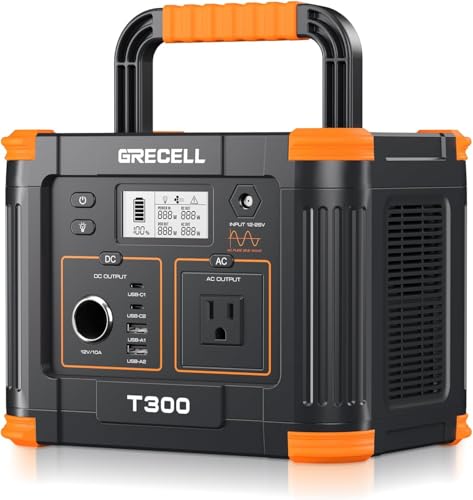
The GRECELL T300 300W Portable Power Station is a compact lithium battery backup designed for outdoor enthusiasts, travelers, and anyone needing reliable power during home blackouts. With 230.88Wh capacity and 330W continuous output (600W surge), it supports devices like laptops, tablets, phones, fans, CPAP machines, and mini-refrigerators, making it a versatile solar generator for camping or emergencies.
Standout features include a 60W PD USB-C port for rapid laptop charging, multiple QC USB-A ports, a 110V pure sine wave AC outlet, and a car port, allowing six devices to charge at once. Real-world performance shines in reviews, with users praising quick AC recharges, stable solar input via built-in MPPT, and a clear display tracking power flow. It excels at keeping essentials like TVs, modems, and lights running for hours during outages.
Build quality is solid, with a lightweight 7.3-pound frame, sturdy construction, and safety-focused upgraded BMS preventing overcharge or shorts. Silent fans maintain cool operation, and the orange design adds portability with rubberized footing for stability. Users appreciate its ease of use and long charge retention even when idle.
Drawbacks include inability to handle high-heat devices like coffee percolators, which trigger overload protection, and faster drain under sustained loads. Solar recharging works best with compatible panels up to certain wattage.
Overall, the GRECELL T300 delivers excellent value for portable power needs, earning high marks for reliability and convenience. Ideal if you prioritize lightweight backup over heavy-duty appliances.
Brand: GRECELL
Model: T300
Capacity: 230.88Wh
Output: 330W (600W surge), 110V AC pure sine wave
Ports: 1x AC, 1x USB-C 60W PD, 1x USB-C 18W, 2x USB-A 18W QC, 1x Car port
Weight: 7.3 pounds
Dimensions: 9.61"L x 6.72"W x 6.97"H
Recharge: AC, car, solar (MPPT)
Pros
- Holds charge reliably even after long storage, recharges quickly via solar, AC, or car
- Quiet operation with minimal fan noise, easy-to-read display for power status
- Versatile for camping electronics, home backups like TV and fans, praised for sturdiness and convenience
- Supports pass-through charging to use while recharging, great real-world performance for low-to-medium loads
Cons
- Not suitable for devices rated over 1000W continuous or high-heat appliances like coffee makers that may overload
- Solar input maxes at 155W, so full recharge takes time with smaller panels
- Rare reports of battery indicator issues, though customer support resolves effectively
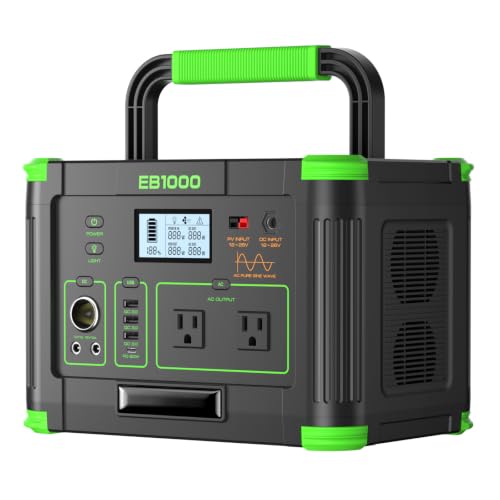
The GRECELL T-1000 is a versatile 1000W portable solar generator with 999Wh lithium-ion battery capacity, designed for outdoor enthusiasts, travelers, hunters, and anyone needing reliable home backup power during outages. It excels in powering essentials like phones, laptops, mini-fridges, CPAP devices, TVs, and lights simultaneously through its array of ports including 2 AC outlets (2000W peak), USB-C PD 60W, QC USB-A, wireless charging, and DC/car ports.
Standout features include a pure sine wave inverter for safe operation of sensitive electronics, built-in MPPT for efficient solar input up to 155W, and pass-through charging that lets you use devices while recharging. Users report strong real-world performance, such as running campsite gear for days, keeping modems alive during blackouts, or powering fridges on partly cloudy days with solar panels. The LCD screen shows input/output and battery status clearly, while quiet cooling fans and LED/SOS lighting add practicality.
Build quality is solid with a lightweight 17.8 lb metal/plastic frame that's easy to carry, rugged enough for camping, and includes protective covers for ports. Recharging is flexible via AC (under 2 hours full), car, or solar, with smart BMS ensuring safety from surges and overheat. Drawbacks include limitations on high-wattage loads over 1000W and slower solar recharges with modest panels, but it shines for its intended mid-range uses.
Overall, the GRECELL T-1000 delivers excellent value for portable power needs, earning consistent praise for reliability and ease of use. Ideal if you want a balance of capacity, portability, and versatility without excessive weight or cost.
Key Specs:
- Battery: 999Wh / 270000mAh Lithium-ion
- AC Output: 2 x 1000W (2000W Peak) Pure Sine Wave, 110V
- USB-C: 1 x PD 60W
- USB-A: 3 x QC3.0 18W
- Wireless: 10W
- DC/Car: 2 x 12V/5A, 1 x 12V/10A
- Recharge: AC, Solar (155W max MPPT), Car
- Dimensions: 11.6 x 7.9 x 7.9 inches
- Weight: 17.8 lbs
- Extras: LED Light/SOS, LCD Display
Who It's For: Campers needing multi-device power, homeowners prepping for outages, RV/travelers seeking solar backups. Runtime estimate: 999Wh x 0.85 / device watts (e.g., 8-10 hours for 100W fridge).
Pairing Tips: Use with 100-200W solar panels for best recharge. Avoid >1000W continuous loads. Turn off unused outputs to conserve battery.
Alternatives: Smaller GRECELL 500W for light use; larger 2200W for heavy appliances.
Buying Guide for 2026
Understanding Capacity and Output
When evaluating solar powered backup generators, two of the most critical specifications are Watt-hours (Wh) for battery capacity and continuous Watt (W) for AC output. Wh tells you how much energy the battery can store, while W indicates how much power it can deliver at any given moment. For example, a unit with a 1070Wh capacity, like the Jackery Explorer 1000 v2, could theoretically power a 100W appliance for approximately 10.7 hours (1070Wh / 100W = 10.7 hours). This calculation is vital for understanding how long your essential devices will run during an outage.
It’s also important to differentiate between continuous output and peak/surge wattage. Continuous output is the power a generator can sustain, while peak wattage is a temporary burst of power for starting appliances with high initial draw, like refrigerators. Always ensure the continuous output meets the requirements of your most power-hungry devices. For more robust backup solutions, consider looking into The 5 Best Home Backup Battery Generators of 2026.
Battery Technology and Lifespan
The type of battery used significantly impacts a solar generator’s lifespan and overall performance. LiFePO4 (Lithium Iron Phosphate) batteries, found in models like the Jackery Explorer 1000 v2 and Anker 521, are known for their enhanced durability and longer cycle life compared to traditional lithium-ion batteries. A LiFePO4 battery can often maintain over 70% of its original capacity after 3,000-4,000 charge cycles, potentially lasting up to 10 years or more with proper care. This makes them a more sustainable and cost-effective choice in the long run.
Beyond battery chemistry, look for units with advanced Battery Management Systems (BMS). A good BMS protects against overcharging, over-discharging, short-circuits, and extreme temperatures, ensuring both the safety of the unit and the longevity of the battery. These systems are crucial for reliable and safe operation, especially when using the generator for sensitive electronics.
Connectivity and Charging Options
A versatile solar powered backup generators should offer multiple output ports to accommodate various devices simultaneously. Look for a combination of AC outlets, USB-A and USB-C ports (especially those with Power Delivery, like the 60W USB-C PD on the GRECELL 300W and Anker 521, for faster laptop charging), and 12V DC car ports. The number and type of ports determine how efficiently you can power your gadgets, from smartphones to mini-fridges.
Recharging flexibility is equally important. Most solar generators can be recharged via a wall outlet, a car charger, and, of course, solar panels. A built-in MPPT (Maximum Power Point Tracking) controller, present in GRECELL models, optimizes solar charging efficiency, allowing the generator to extract the maximum possible power from solar panels even under varying light conditions. Fast-charging capabilities, such as the one-hour emergency charging mode on the Jackery Explorer 1000 v2, can also be a game-changer during critical situations.
Our Final Picks for 2026
Best Overall: Jackery Explorer 1000 v2 Portable Power Station: 1070Wh LiFePO4, 1500W Output, 1Hr Fast Charge, Solar Generator for Camping, RV, Emergencies
The Jackery Explorer 1000 v2 offers an exceptional balance of high capacity, powerful output, and rapid charging. With a 1,070Wh LiFePO4 battery and 1,500W AC output (3,000W surge), it’s capable of powering a wide range of appliances for extended periods. Its 10-year lifespan and one-hour fast charging make it a top-tier choice for reliability and convenience.
Skip this if: you need a more budget-friendly option for very light use or a generator with wireless charging capabilities.
View on Amazon.comBest Value: Anker 521 256Wh LiFePO4 Portable Power Station, 300W Solar Generator 600W Surge, 6 Ports PowerHouse
The Anker 521 provides excellent value with its durable 256Wh LiFePO4 battery and 300W output (600W peak), ensuring a decade of performance. It features six versatile ports, including a 60W USB-C PD, offering robust high-wattage support for essential devices. It’s an ideal choice for those seeking reliability without the premium price tag.
Skip this if: you require a significantly larger battery capacity for prolonged power outages or multiple high-drain appliances.
View on Amazon.comBest for Extended Home Backup: GRECELL 1000W Portable Solar Generator 999Wh Battery, 2000W Peak Pure Sine Wave, 60W USB-C PD – Camping Home Backup Power Station
The GRECELL 1000W Portable Solar Generator boasts a massive 999Wh capacity and 1000W continuous output (2000W peak), making it suitable for powering multiple home appliances during extended blackouts. It supports up to ten electronics at once, features an upgraded BMS, and offers three ways to recharge, including efficient solar charging with its built-in MPPT controller.
Skip this if: you prioritize extreme portability for backpacking or only need to power very small, low-wattage devices.
View on Amazon.comQuick Comparison: Side by Side
- – Lightning-Fast 1-Hour Charging.
- – Efficient Battery Management.
- – User-Friendly Display & App.
- – 10-Year LiFePO4 Lifespan.
- – 6-Port Charging.
- – Quick Recharge Options.
- – Fast Charging, Long Hold.
- – Compact, Simple Controls.
- – Reliable for Light-Medium Loads.
- – Holds Charge, Fast Recharge.
- – Quiet, Easy-Read Display.
- – Versatile Camping/Home Use.
- – Long-lasting LiFePO4 battery with 10,000 cycle rating.
- – Compact and light for a 2kWh class power station.
- – Flexible charging options including solar, car and generator.
- – Heavy at 23.8 lbs.
- – Solar Sold Separately (Jackery Only).
- – Fastest Charge Needs App Activation.
- – 300W Continuous Limit.
- – Solar Panel Sold Separately.
- – No App Control or Light.
- – Struggles With Heating Appliances.
- – Drains Quickly Under Heavy Load.
- – Limited Solar Input.
- – Not for 1000W+ Devices.
- – 155W Max Solar Input.
- – Rare Indicator Issues.
- – No 12V DC port.
- – Solar panel ships separately and may arrive at a different time.
- – 1,500W continuous output limits very high-draw appliances.
Why Trust Our Reviews
At WikiGenerators.com, our commitment is to provide unbiased, thoroughly researched recommendations for power solutions. We understand the importance of reliable backup power, whether for emergencies, outdoor adventures, or off-grid living. Our review process for solar powered backup generators involves a comprehensive analysis of product specifications, manufacturer data, and extensive user feedback. We synthesize this information to highlight key features, performance metrics, and potential limitations, ensuring our readers receive a balanced perspective.
We do not rely on hands-on testing for our recommendations. Instead, we leverage publicly available data and aggregate insights from a broad spectrum of real-world users to identify patterns in performance and user satisfaction. This data-driven approach allows us to offer a wide-ranging, up-to-date overview of the market, helping you make an informed decision based on solid evidence and collective experience.
Frequently Asked Questions
What is the difference between Watt-hours (Wh) and Watts (W)?
Watt-hours (Wh) measure the total energy capacity of a battery, indicating how long a device can run. Watts (W) measure the instantaneous power output, showing how much power a generator can deliver at any given moment. Think of Wh as the size of the fuel tank and W as the engine’s horsepower. A higher Wh means longer runtimes, while higher W means it can power more demanding appliances. For portable power considerations, you might also find our article on The 5 Best Portable Backup Generators of 2026 helpful.
Can solar powered backup generators power a refrigerator?
Many solar powered backup generators with sufficient capacity and continuous output (typically 500W or more, with a higher surge rating) can power a refrigerator. However, the duration depends entirely on the generator’s Wh capacity and the refrigerator’s power consumption. A standard refrigerator might draw around 100-200W when running, but it has a much higher surge demand when the compressor kicks on. Always check the specific wattage requirements of your refrigerator against the generator’s specifications.
How long do solar generators typically last?
The lifespan of a solar generator largely depends on its battery chemistry and how it’s maintained. Generators equipped with LiFePO4 batteries, like those from Jackery and Anker, can last 10 years or more, retaining a significant portion of their capacity after thousands of charge cycles. Units with traditional lithium-ion batteries may have a shorter lifespan, typically 500-1000 cycles. Proper care, such as avoiding extreme temperatures and not fully discharging the battery frequently, can extend its life.