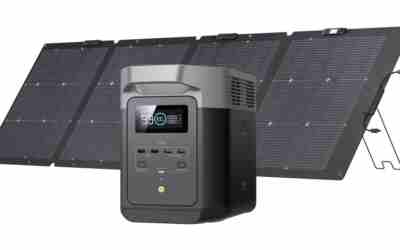

When selecting the solar panels for home, the single most important specification is the panel’s wattage output combined with its conversion efficiency. Wattage determines how much power you can generate under ideal sunlight, while efficiency tells you how well the panel converts sunlight into electricity in a given area. These two numbers directly impact whether your system will meet your home’s energy needs, regardless of brand or price.
Higher wattage panels allow you to install fewer units to reach your target output, saving on racking and wiring costs. Efficiency matters most when roof space is limited. Our guide examines 15 solar panels for home to help you find the right balance. For those also exploring backup power, see our roundup of The 5 Best Jackery Solar Generators of 2026.
Solar Panel Wattage and Efficiency Explained
A solar panel’s wattage rating (measured in watts under Standard Test Conditions) tells you its maximum power output under perfect sun. Efficiency is the percentage of sunlight that gets converted into electricity. Most modern residential panels use monocrystalline cells with efficiencies between 21% and 25%. N-Type cells, found in many of our top picks, typically deliver higher efficiency and better low-light performance than older P-Type designs.
To see what these numbers mean in practice, consider the SUNGOLDPOWER 590W bifacial panel from our list. Under four hours of peak sunlight per day, a single 590W panel can generate 590W times 4 hours equals 2,360 watt-hours (2.36 kWh) of energy. For a system of ten such panels, that would be 10 times 2.36 kWh equals 23.6 kWh per day , enough to power a typical home’s essential circuits and appliances. The bifacial design can add up to 30% more output from reflected light on the rear side, further boosting real-world yields.
This calculation shows why wattage and efficiency are the foundation of any solar investment. Higher efficiency panels generate more power per square foot, which is critical for roofs with limited space or shading.

Pros
- High efficiency N-type cells outperform traditional P-type panels
- Bifacial design captures reflected light for extra power output
- IP68 rated junction box provides excellent waterproof protection
- Easy DIY setup with pre-drilled holes and included 35-inch cables
Cons
- Ships in two separate boxes which may arrive at different times
- Requires additional mounting hardware and controller for a full system
The ECO-WORTHY 400W Solar Panel Kit represents a significant technological step up for off-grid power enthusiasts. By utilizing N-type monocrystalline cells rather than standard P-type, these panels achieve a remarkable 25 percent efficiency rating. This means more power in a smaller footprint, making them perfect for space-constrained environments like RV roofs, boat decks, or small garden sheds.
Design-wise, the inclusion of 16BB (busbar) technology is a standout feature. This high-density busbar configuration significantly reduces the electrical resistance within the cells and minimizes the risk of micro-cracks that often plague cheaper panels over time. The bifacial design further enhances value by allowing the back of the panel to harvest reflected light, providing a noticeable boost in total energy yield when mounted on light-colored surfaces.
For the DIY user, ECO-WORTHY has made the installation process as painless as possible. The panels are relatively lightweight and feature a 1.18-inch thick frame that aids in heat dissipation. They come equipped with 35-inch cables and plug-and-play connectors, and the pre-drilled holes on the back are compatible with most standard Z-brackets and mounting systems.
While the kit is highly durable with its IP68 rated junction box and sturdy frame, buyers should be aware that the 4-panel set is shipped in two separate boxes. This can occasionally lead to separate delivery dates, so patience is required during the setup phase. Additionally, as these are individual modules, you will still need a charge controller and battery to complete your power system.
Overall, the ECO-WORTHY 400W N-Type kit is a premium choice for those who prioritize efficiency and long-term reliability. Its superior low-light performance and advanced cell technology make it one of the most capable 100W-module kits currently available for the mobile and off-grid market.

Pros
- Exceptional 25% cell efficiency maximizes power from limited space
- Bifacial technology increases energy yield in various lighting conditions
- Ultra-durable build handles extreme temperatures from -40°F to 185°F
- N-Type panels offer better heat tolerance and minimal light-induced degradation
- IP68-rated junction box ensures reliable performance in wet environments
Cons
- Each panel weighs 58.4 lbs, requiring strong mounting support
- Large 89.7 x 44.6 inch size may not suit very compact installations
- No customer reviews available yet as a new release
The Renogy 1180W solar panel kit features two 590W N-Type bifacial monocrystalline panels, ideal for homeowners powering rooftops, RV campers off-grid, and boat owners seeking reliable renewable energy. With 25% cell efficiency and 16BB technology, it outperforms standard panels, delivering high output for demanding applications.
Standout features include bifacial energy capture for 5-30% extra production via the transparent backsheet, plus N-Type cells that resist degradation and tolerate heat better than PERC panels. Real-world performance shines in diverse conditions, from shaded rooftops to marine environments, with specs like 52.63V open circuit voltage and 13.50A optimum current ensuring robust power generation.
Build quality impresses with a black aluminum frame resistant to corrosion, capable of 2400Pa wind and 5400Pa snow loads, and an IP68 waterproof junction box. Operating from -40°F to 185°F, these panels promise longevity, backed by Renogy's warranties.
Drawbacks include the hefty 58.4 lbs per panel and large dimensions, which demand careful installation planning. No user reviews exist yet, so early adopters take note.
Verdict: A top-tier choice for high-efficiency, durable solar power. Perfect if you prioritize performance and qualify for the 30% tax credit.
Rated Power: 590W per panel (1180W total)
Cell Efficiency: 25%
Dimensions: 89.7 x 44.6 x 1.4 inches per panel
Weight: 58.4 lbs per panel
Operating Temperature: -40°F to 185°F
Waterproof: IP68
Key Tech: N-Type Bifacial, 16BB Monocrystalline
Choose this kit for homes or RVs needing over 1000W output. Compare to Renogy's 320W or 450W packs if space is limited. Verify roof compatibility with 89.7-inch length. Pair with Renogy controllers and batteries for full systems. US buyers: Check IRS for 30% tax credit eligibility on installs through 2034.
Pros
- Exceptional 25% efficiency rating is among the highest in the consumer market
- Bifacial technology maximizes power generation in reflective environments like snow or sand
- UL61730 certification ensures high safety and manufacturing standards
- Low temperature coefficient provides better output during peak summer heat
Cons
- Bifacial benefits require specific mounting heights to allow light to reach the rear
- Heavier dual-glass construction may require more robust mounting hardware
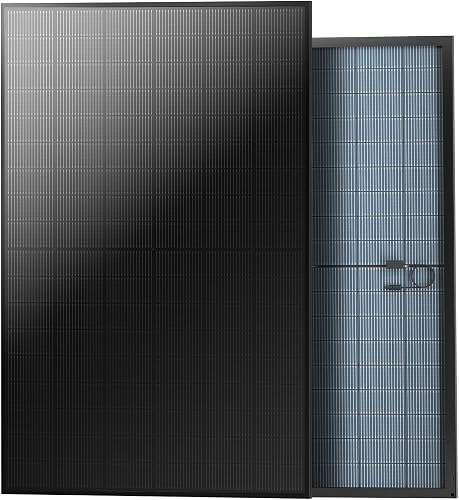
The JJN 850W Bifacial Solar Panel Kit represents a significant step forward in solar technology for residential and agricultural use. By utilizing N-type monocrystalline cells with 16BB (busbar) technology, these panels achieve a 25% efficiency rating, which is substantially higher than the 17-20% industry average. This means more power generated per square foot, making it an excellent choice for users with limited roof or ground space.
The standout feature is the bifacial dual-glass design. Unlike traditional panels that only capture light from the front, these panels utilize the rear side to capture reflected sunlight from the ground or surrounding surfaces. In the right conditions, such as on a light-colored roof or near reflective soil, this can boost your total energy output by up to 30%, significantly shortening your return on investment period.
Durability and maintenance have clearly been prioritized. The inclusion of specialized drainage clips is a simple but effective innovation that prevents water pooling and dust accumulation, which are the primary causes of efficiency loss and 'hot spots.' Furthermore, the panels are engineered to thrive in high-temperature environments, maintaining their output much better than standard silicon panels when the sun is at its strongest.
While the bifacial design offers more power, it does require thoughtful installation. To get the most out of the rear-side generation, the panels should be mounted at a height that allows light to reflect underneath them. For users looking for a set-it-and-forget-it solution with maximum long-term reliability, the 30-year lifespan and UL certification provide great peace of mind.
In conclusion, the JJN 850W kit is a premium solar solution for those who prioritize efficiency and fast payback. Whether you are powering a remote farm, an off-grid cabin, or adding to a home grid-tie system, the combination of N-type cells and bifacial technology makes this one of the most productive kits in its price bracket.

Pros
- High-efficiency panels deliver strong real-world output for charging batteries and small appliances
- Straightforward plug-and-play installation with all necessary cables and brackets
- Sturdy build withstands wind, snow, and daily outdoor use as confirmed by users
- Versatile for 12V/24V batteries including lithium, gel, and lead-acid
- Budget-friendly entry into solar with expandable potential
Cons
- Mounting brackets have oversized holes and sharp edges, requiring minor modifications
- Real-world power output often below rated specs due to weather and angle factors
- Basic charge controller lacks advanced features like Bluetooth monitoring
The ECO-WORTHY 200W solar panel kit is a complete off-grid power solution featuring two 100W monocrystalline panels and a 30A PWM charge controller, ideal for RV enthusiasts, campers, boat owners, and anyone powering sheds or cabins without grid access. It supports 12V or 24V battery systems and excels at keeping batteries topped up for lights, fans, pumps, and small electronics during extended trips or remote stays.
Standout features include high-efficiency cells converting up to 21.5% of sunlight into usable power, delivering around 800Wh per day in four hours of full sun. Users report solid performance charging 12V systems even with partial exposure, pairing well with inverters for off-grid independence. The included LCD controller monitors voltage and current while preventing overcharge, and USB ports add convenience for device charging directly.
Build quality shines with a robust aluminum frame handling 2400Pa wind and 5400Pa snow loads, plus an IP65-rated junction box for weatherproofing. Pre-drilled panels and 16.4ft cables simplify mounting on roofs or ground racks using Z-brackets. Reviewers praise the sturdy panels and easy connections but note brackets could fit better and outputs vary with conditions.
Minor drawbacks include basic mounting hardware needing tweaks for secure cable management and real-world yields closer to 70-80% of rated power. Still, its value, durability, and simplicity make it a top pick for beginners entering solar.
Final verdict: This kit offers exceptional bang for buck in renewable energy, perfect for budget-conscious off-gridders seeking hassle-free, expandable solar power. Highly recommended for reliable daily charging needs.
Power & Voltage: 200W total, 12V/24V compatible, Max Voltage 27.4V, 11A current.
Dimensions & Weight: Each panel 35.2 x 23.1 x 1.3 inches, Kit weight 31.6 lbs.
Components: 2x 100W monocrystalline panels, 30A PWM controller, Z-mounting brackets, 16.4ft 10AWG cables, connectors.
Durability: Aluminum frame, IP65 junction box, Wind load 2400Pa, Snow load 5400Pa, Up to 85°F operation.
Efficiency: Up to 21.5% cell efficiency, Daily output up to 800Wh in full sun.
Users love the kit's quality for the price, with panels described as hefty and performing well even leaned against campers. One reviewer charged a full battery in minimal sun and plans to expand for full off-grid use.
Installation is a highlight: plug-and-play cables and clear instructions make setup quick, though some tweak mounts for roofs. Controllers' USB ports and load outputs add versatility for lights and phones.
Off-grid success stories include powering sheds with inverters, surviving high winds, and pairing with large batteries. Common praise: durable, efficient charging, and great starter for solar newbies. Minor notes on variable output and bracket fit.

Pros
- Dual-sided power generation significantly increases total energy yield
- Lower installation costs due to reduced hardware requirements
- Highly efficient monocrystalline cells perform well in low-light conditions
- Durable construction suitable for residential and heavy-duty farm use
Cons
- Large physical footprint per panel may require two people for safe handling
- Maximum efficiency gains depend on reflective surfaces beneath the panels
The JJN 550 Watt Bifacial Solar Panel kit represents a significant step forward for residential and off-grid energy systems. By utilizing a transparent backsheet, these monocrystalline panels capture reflected light from the rear, potentially increasing your energy harvest by up to 30%. This makes them a top-tier choice for users with limited roof space who need to squeeze every possible watt out of their installation.
Designed for versatility, this 2-pack provides a combined 1100W of potential power. Whether you are outfitting a remote farm, an RV, or a traditional home rooftop, the panels are engineered to integrate seamlessly into 12V, 24V, or 48V systems. The build quality is robust, specifically tailored to withstand varied weather conditions while maintaining consistent electricity delivery.
Installation is where this JJN kit truly shines for the DIY enthusiast or professional installer. The high wattage per panel means you need fewer total units, which translates directly to fewer mounting brackets, less wiring, and lower labor costs. The inclusion of pre-drilled holes further simplifies the physical mounting process, allowing for a faster transition to green energy.
While the bifacial technology is a major advantage, users should note that the extra 30% efficiency is most achievable when panels are mounted over reflective surfaces like light-colored roofing, gravel, or snow. Additionally, because these are high-capacity 550W panels, they are physically large and heavy, requiring careful planning for transport and placement.
Overall, the JJN 550W Bifacial Solar Panels are an excellent investment for those seeking to maximize their return on investment. With a clear focus on reducing installation overhead and increasing power density, these panels provide a reliable, green energy solution that stands up to the demands of modern off-grid and residential living.

Pros
- Extremely high 25% cell efficiency for maximum power in limited space
- Lighter and more compact than previous 200W/400W rigid panel generations
- Excellent performance in cloudy conditions and hot environments
- Versatile compatibility with Lithium, AGM, and flooded batteries
- Robust 16-busbar design improves energy collection and reliability
Cons
- Requires a compatible 24V charge controller or specific wiring for 12V systems
- Higher initial investment compared to standard PERC solar panels
- Rigid design lacks the flexibility of thin-film panels for curved surfaces
The Renogy N-Type 400 Watt Solar Panel Kit represents a significant leap forward in off-grid power technology. By utilizing N-Type monocrystalline cells, Renogy has achieved a 25% efficiency rating, which is currently among the highest available for consumer-grade rigid panels. This kit consists of two 200W panels specifically designed to provide high output while occupying a smaller footprint on your roof.
This system is specifically engineered for Class B vans, RVs, and marine applications where roof real estate is at a premium. The panels are approximately 7.5% smaller and nearly 12% lighter than older models, allowing for easier installation and less weight strain on your vehicle. The 24V architecture is a smart choice for larger systems, as it reduces current loss during transmission from the roof to the battery bank.
One of the standout features of the N-Type technology is its performance in adverse conditions. Unlike standard panels that lose significant efficiency as they heat up, these panels maintain high output in hot climates. Furthermore, the 16-busbar design ensures that even if microcracks develop over years of vibration on the road, the electrical path remains intact, preventing power drops.
While the performance is top-tier, users should be aware that these are 24V-ready panels. While they can be adapted for 12V systems, you must ensure your charge controller can handle the higher input voltage. Additionally, as a premium N-Type product, the cost per watt is slightly higher than entry-level panels, but the long-term energy yield and 25-year output commitment justify the investment.
In conclusion, the Renogy 400W N-Type kit is the best choice for serious off-grid travelers who prioritize efficiency and reliability. Its compact size, high heat tolerance, and robust build quality make it a 'set it and forget it' solution for mobile power needs.
Pros
- Exceptionally fast 1-hour charging keeps you powered without downtime
- Whisper-quiet operation ideal for camping and home backup
- Proven reliability in real-world tests like powering radios, heaters, and fridges for hours
- Portable and easy to store with compact build and long battery lifespan
- Versatile ports charge laptops, phones, and appliances simultaneously
Cons
- Solar panel requires frequent realignment to sun for optimal input, dropping efficiency if misaligned
- Panel sags in the middle without support, reducing output until propped up
- Runtime limited for continuous high-wattage devices like large heaters beyond short bursts
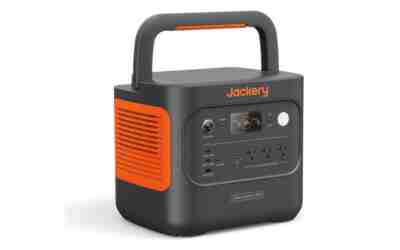
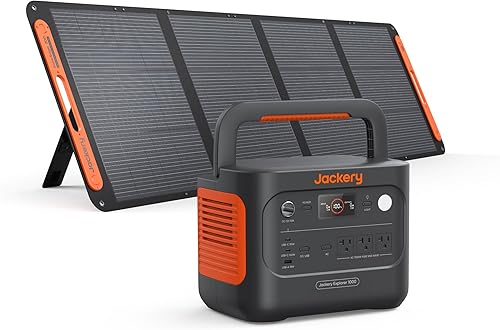
The Jackery Explorer 1000 v2 solar generator kit combines a 1070Wh LiFePO4 portable power station with a 200W solar panel, delivering 1500W AC output and up to 3000W surge. Weighing just 23.8 pounds with a foldable handle, it suits campers, RVers, off-grid enthusiasts, and anyone needing emergency backup power for essentials like fridges, microwaves, and CPAP machines.
Standout features include ChargeShield 2.0 for safe, rapid recharging—full in 1 hour via app emergency mode or 1.7 hours standard—and a battery lasting over 10 years with 4000 cycles. Users praise its real-world performance: powering home theaters for 45 hours, ham radios for 5+ hours, and campers during outages or storms. The app enables quiet 30dB overnight charging and efficiency modes, while versatile ports (3 AC, 2 USB-C 100W, USB-A, DC) handle multiple devices effortlessly.
Build quality shines with a durable, compact design (12.87 x 8.82 x 9.72 inches) using recyclable packaging and carbon-verified eco-friendliness. Reviewers highlight its silence versus gas generators, easy setup, and portability for trailers or closets. The solar panel folds for travel but excels in full sun, recharging fully in 4-5 hours on partly cloudy days when adjusted properly.
Drawbacks include the solar panel's need for constant sun alignment via its level bubble, as slight misalignment halves input to 50-100W. The panel sags centrally without propping, impacting efficiency, and high loads like 2000W heaters drain capacity quickly. Not ideal as a full UPS for sensitive electronics or primary solar reliance without maintenance.
Overall, this kit earns high marks for innovation and reliability in portable power. Buy it for versatile off-grid adventures or peace of mind during blackouts—its fast charge, longevity, and power make it a top choice despite minor solar tweaks.
Capacity: 1070Wh LiFePO4 battery
Output: 1500W continuous AC (3000W surge), 100W USB-C PD, 3x AC outlets, USB-A, DC car port
Charging: 1hr fast AC (app-enabled), solar via 200W panel, car DC
Weight/Dimensions: 23.8 lbs, 12.87"L x 8.82"W x 9.72"H
Warranty: 5 years; Battery life: 10+ years (4000 cycles)
Versus Explorer 2000 v2: Half the capacity (1070Wh vs 2042Wh) but lower price, lighter weight, ideal for lighter loads like projectors (7.6hrs) or rice cookers (2.7hrs).
Outperforms gas generators in silence and portability; runs fridges 37hrs (low draw), kettles 1hr, microwaves 48mins.
Carbon footprint verified by TÜV SÜD, with 100% recyclable packaging for eco-conscious users.
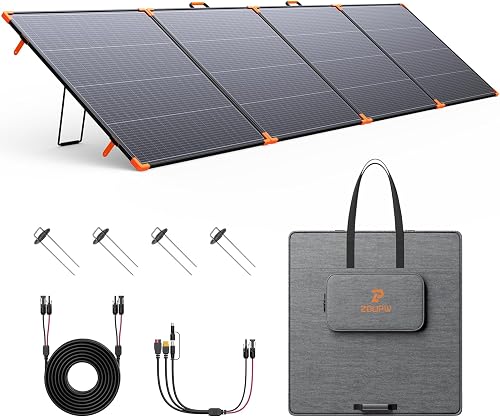
Pros
- Extremely high power-to-weight ratio for easy transport.
- Superior low-light performance compared to standard 400W panels.
- Exceptional durability with scratch-resistant composite coating.
- Wide compatibility with major brands like EcoFlow, Bluetti, and Anker.
Cons
- Not recommended for permanent fixed roof installations.
- Requires high-voltage input support (50V+) on the receiving device.
- Large unfolded footprint may be difficult to manage in tight spaces.
The ZOUPW 480W Bifacial Portable Solar Panel represents a significant leap in mobile energy technology. By utilizing N-Type 16BB monocrystalline cells, it achieves a 25% efficiency rate that ensures you get the most out of every ray of sunlight. This panel is specifically designed for off-grid enthusiasts and those needing a reliable home backup solution during emergencies.
What sets this unit apart is its bifacial capability. Unlike traditional panels that only collect energy from the front, this model captures reflected light from surfaces like sand, grass, or snow on its backside. This can result in a power boost of up to 30%, making it far more productive than standard 400W or 450W panels in the same environmental conditions.
Durability is a core focus, as evidenced by the IP68 waterproof rating. This panel can withstand torrential downpours and rugged handling, making it perfect for camping and RV use. The use of composite materials instead of heavy glass keeps the weight down to a manageable 22.5 lbs, allowing for easy setup by a single person without sacrificing structural rigidity.
While the panel is highly versatile, users should note its high-voltage architecture. With an open-circuit voltage of 49.3V, it is essential to verify that your portable power station can handle 50V or higher inputs. It is also important to note that despite its durability, the manufacturer advises against permanent outdoor mounting to ensure the longest possible lifespan.
Overall, the ZOUPW 480W is a premium choice for users who prioritize efficiency and portability. It replaces multiple smaller, bulkier panels with a single high-output unit, streamlining your solar setup while providing professional-grade performance in a foldable, travel-friendly package.

Pros
- Exceptional 22.8% energy conversion efficiency
- Significant power boost from reflected rear-side light
- Robust dual-glass design for extreme weather tolerance
- High-tier certifications (UL, CEC, ETL)
- Industry-leading 30-year performance warranty
Cons
- Requires specific mounting to maximize rear-side gains
- Substantial initial investment for a 10-pack array
The SUNGOLDPOWER 590W Bifacial Solar Panel array represents a significant step up for residential and commercial solar installations. By utilizing N-Type monocrystalline cells with 16BB (busbar) technology, these panels achieve a base efficiency of 22.8%. The standout feature is the bifacial design, which allows the rear of the panel to harvest reflected light from the ground or surrounding surfaces, potentially increasing total energy yield by up to 30% compared to standard monofacial panels.
Built for longevity, these modules feature a dual-glass design that offers enhanced protection against environmental stressors such as heat, cold, snow, and wind. This robust construction is backed by a 12-year material warranty and a 30-year linear performance warranty, providing peace of mind for long-term energy investments. The panels are also CEC listed and UL61730 certified by ETL, making them compliant with major North American safety and incentive requirements.
Installation flexibility is a key advantage of this system. Whether you are mounting on a flat roof, a ground bracket, or vertical surfaces, the panels adapt to various environments. However, to truly see the advertised 130% energy yield, users must ensure the panels are mounted in a way that allows reflected light to reach the backside, such as on high-reflectivity surfaces like white gravel or snow.
Final Verdict: This SUNGOLDPOWER 10-pack is an excellent choice for serious off-grid or grid-tied users who want to maximize power production in a limited space. While the upfront cost is higher than entry-level panels, the superior efficiency and extended performance lifespan offer a better return on investment over time.

Pros
- Industry-leading 25.4% conversion efficiency for maximum space utilization
- Superior shade tolerance thanks to the parallel dual-module internal design
- Enhanced durability from the double-glass structure and reinforced frame
- Bifacial capability adds extra yield from reflected light on ground or flat roofs
Cons
- Relatively heavy at 54 lbs per panel requiring sturdy mounting hardware
- Large physical dimensions may be difficult for solo installation on RV roofs
- Requires specific clearance to benefit from rear-side bifacial energy gain
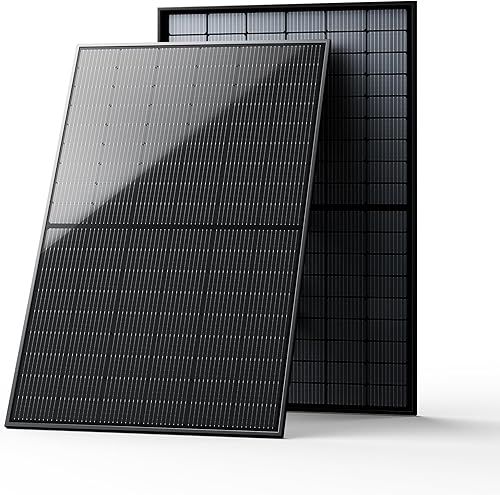
The Callsun 900W Bifacial Solar Panel Kit represents a significant step forward in consumer solar technology by utilizing N-Type 16BB monocrystalline cells. These advanced cells offer a remarkable 25.4% conversion efficiency, outperforming standard P-Type modules and ensuring you get the most power possible from your available roof or ground space. This kit is specifically designed for high-capacity applications such as residential rooftops, off-grid cabins, and large RV systems.
One of the standout features of this 2-pack is the bifacial design combined with a double-glass structure. By capturing reflected light from the rear side, these panels can significantly increase total energy yield, especially when mounted on reflective surfaces like white TPO roofs or light-colored gravel. The double-glass construction not only aids in light collection but also provides superior protection against moisture and mechanical stress compared to traditional plastic backsheets.
Shading is the enemy of solar production, but Callsun addresses this with a dual-module parallel architecture. This design allows the panel to function as two independent halves; if the bottom half is shaded by a tree or chimney, the top half continues to produce power at full capacity. This makes it a much more forgiving option for complex residential roofs where partial shading is often unavoidable.
In terms of build quality, these panels are engineered for the long haul. They feature an IP68 waterproof rating and are rated to withstand heavy snow loads of up to 5400Pa. While the 54-pound weight per panel makes them a bit cumbersome for a single person to install, the trade-off is a rigid, durable module that comes with a 25-year performance commitment. For those looking to minimize the number of panels in their array while maximizing output, this 900W total kit is a premier choice.
Pros
- Industry-leading 25% efficiency rating for maximum power in limited space
- Bifacial design provides extra energy yield from reflected light
- Extremely durable build quality with high hail and wind tolerance
- Excellent 25-year linear power output warranty for peace of mind
Cons
- Physical dimensions are quite large, requiring significant mounting space
- Bifacial benefits are only fully realized with optimized reflective mounting
The EPOCH 800W Bifacial Solar Panel kit represents a significant step up in off-grid power technology. Utilizing N-Type Class A+ monocrystalline cells, this two-panel set is designed for users who cannot afford to compromise on efficiency. By capturing sunlight from both the front and the back of the module, these panels can outperform traditional monofacial units, especially in snowy or sandy environments where ground reflection is high.
Built for the rigors of mobile and marine life, the construction quality is top-tier. Each 400W panel features a 16BB (Multi-Busbar) design which reduces internal resistance and increases the durability of the cells against micro-cracks. With an IP68 rated junction box and the ability to withstand heavy snow loads of 5400 Pa, these panels are engineered to survive harsh outdoor conditions on the roof of an RV or the deck of a boat.
Installation is straightforward thanks to the pre-drilled holes and standard MC-4 compatible connectors. While the panels are relatively large at nearly 68 inches long, they are compatible with most standard mounting systems including Z-brackets and tilt mounts. This makes them a versatile choice for cabins, remote sheds, or large motorhomes.
The standout feature is undoubtedly the 25% conversion efficiency. When combined with the bifacial gain, these panels provide one of the highest power-per-square-inch ratios available in the consumer market. While they require a bit more planning to ensure the back side receives reflected light, the potential energy harvest is well worth the effort.
Final Verdict: The EPOCH 800W kit is a premium solar solution for serious off-grid enthusiasts. If you have the space to mount these large modules and want the latest in N-Type bifacial technology, this kit offers professional-grade performance backed by an impressive 25-year power warranty.

Pros
- Exceptional 22.8% cell efficiency maximizes power in limited spaces
- Significant energy gain from ground-reflected light via bifacial technology
- Heavy-duty build withstands 5400 Pa snow loads and 2400 Pa wind pressure
- N-Type cells offer lower power degradation over decades compared to P-Type
- IP68 rated junction box with three bypass diodes for shade tolerance
Cons
- Large 590W panel size may require two people for safe installation
- Maximum bifacial gain requires specific mounting heights and reflective surfaces
The SUNGOLDPOWER 590W Bifacial Solar Panel represents the next generation of solar technology, utilizing N-Type monocrystalline cells and a 16-busbar (16BB) architecture. This 6-pack system is designed for high-demand applications, including home backup, energy storage, and large-scale off-grid arrays. By capturing sunlight on both the front and rear faces, these panels can generate up to 30% more electricity than traditional monofacial modules, potentially boosting the output of a single panel up to 796W under optimal conditions.
Built for durability, the panels feature a dual-glass design that significantly improves resistance to environmental stressors. They are engineered to survive extreme weather, having passed rigorous testing for 5400 Pa snow loads and 2400 Pa wind loads. The N-Type cell technology is a standout feature, as it typically offers better performance in high temperatures and lower annual degradation rates than standard P-Type cells, ensuring your system remains productive for its 30-year lifespan.
Installation is flexible, with the panels being compatible with 24V and 48V systems when paired with appropriate controllers. While they work with standard mounting hardware, users will see the best results when they are installed with enough clearance to allow light to reflect onto the backside. The inclusion of three bypass diodes in an IP68-rated junction box helps mitigate the effects of shading, keeping the entire array efficient even when parts are obscured.
The primary consideration for buyers is the physical footprint and weight of these high-wattage modules. These are large panels that require sturdy mounting structures and careful handling. However, the trade-off is a much higher energy density per square foot, making them an excellent choice for those looking to maximize their solar harvest from a limited roof or ground area. With UL61730 certification and a 30-year performance warranty, this 6-piece set is a professional-grade investment for serious clean energy setups.

Pros
- High power output capable of charging large solar generators efficiently.
- Superior build quality with heat-resistant ETFE and durable fiberglass.
- Highly portable for its power class, weighing much less than traditional panels.
- Plug-and-play compatibility with a wide range of power station brands.
Cons
- High open-circuit voltage (46.9V) makes it incompatible with many small power stations.
- Large physical footprint when fully unfolded requires significant ground space.
The TWELSEAVAN 400W Portable Solar Panel represents a significant step up for off-grid power users who need high-wattage charging without the typical weight penalty. Utilizing A+ grade monocrystalline cells, this panel achieves a 24% efficiency rating, which is among the highest in the consumer market. This means you can harvest more energy in shorter windows of sunlight, making it a reliable partner for extended camping trips or emergency backup scenarios.
Designed for the modern nomad, the panel replaces heavy internal components with dual-layer fiberglass. This reduces the total weight to a manageable 22.7 lbs, which is impressive for a 400W unit. The ETFE lamination is a standout feature, offering better light transmission than standard PET panels while providing a rugged, self-cleaning surface that resists high temperatures and dust.
Compatibility is a major strength here. TWELSEAVAN includes a 5-in-1 MC4 connector cable and multiple DC adapters, ensuring it works with industry leaders like Jackery, Delta, and Bluetti right out of the box. The 9.8ft cable provides enough slack to keep your power station in the shade while the panels sit in direct sun. However, buyers must note the 46.9V open-circuit voltage; this panel is specifically engineered for larger power stations and may trigger over-voltage protection on smaller, entry-level units.
Setup is intuitive thanks to four integrated kickstands that help you find the optimal 90-degree angle to the sun. The magnetic handle keeps the unit securely closed during transport, and the IP65 rating ensures that a sudden rain shower won't ruin your equipment. While the large unfolded dimensions require a clear patch of ground, the performance trade-off is well worth it for those running high-drain appliances.
Final Verdict: If you own a large-capacity power station and need a fast, durable, and lightweight way to recharge it in the field, the TWELSEAVAN 400W is an excellent investment. Its build quality and efficiency outperform many panels in a similar price bracket, provided your equipment can handle the high voltage output.

Pros
- Significantly fewer failure points compared to using eight 100W panels.
- Long 3m leads simplify cable management and reach during setup.
- High-quality monocrystalline cells offer superior conversion efficiency.
- Durable aluminum frame and tempered glass built for long-term outdoor use.
Cons
- Large physical footprint requires significant mounting space.
- Requires a high-quality MPPT controller (not included) for optimal performance.
The DOKIO 800W Monocrystalline Solar Panel Kit is a heavy-duty power solution designed for those who need serious energy harvest without the clutter of a dozen small panels. By utilizing two high-output 400W modules, DOKIO has created a system that is easier to wire, faster to mount, and less prone to connection failures over time.
This kit is specifically engineered for off-grid applications such as garden sheds, remote cabins, or yard power stations. The 31V operating voltage makes it highly compatible with both 12V and 24V battery banks, though users must ensure they use a capable MPPT charge controller to handle the combined current effectively.
Build quality is a standout feature, with each panel protected by tempered glass and a rigid aluminum frame. The inclusion of 3-meter MC4 leads directly on the panels is a thoughtful touch, providing much more installation flexibility than the standard short leads found on many competing modules.
While the large size of the 400W panels makes them less portable than folding alternatives, they are perfect for permanent installations where reliability is the priority. The pre-drilled holes allow for straightforward bolting to various mounting brackets or surfaces.
Overall, the DOKIO 800W kit is a professional-grade option for users looking to scale up their solar capacity. It balances high wattage output with a simplified hardware setup, making it a top-tier choice for sustainable off-grid living.

Pros
- Extremely lightweight compared to rigid 300W glass panels
- Comes with a complete set of connection adapters and a storage bag
- Easy setup with a plug-and-play PWM controller for 12V systems
- High portability makes it perfect for mobile living and emergency backup
Cons
- Requires external brackets for optimal angled positioning
- Output may be limited by the maximum input capacity of some power stations
The DOKIO 300W Foldable Solar Panel Kit is a standout solution for off-grid enthusiasts who prioritize weight and space. Unlike traditional rigid panels that are heavy and difficult to mount, this monocrystalline charger weighs only 15.2 lbs and folds into a compact size of 19.3 by 37.4 inches. This makes it an excellent companion for RV camping, van life, or emergency home backup where storage space is at a premium.
Performance is driven by high-efficiency monocrystalline cells designed to maximize sunlight conversion. The kit includes a dedicated PWM controller that acts as a safety hub, protecting your 12V batteries from common electrical risks like reverse polarity and overcharging. A unique advantage is the dual USB port feature, which allows you to charge small gear like smartphones and headlamps directly from the panel system.
Design-wise, the inclusion of a 9.85ft cable is a thoughtful touch. It provides the flexibility to position the panels in full sun while keeping your power station or battery tucked away in the shade to prevent overheating. The build is slim enough to fit behind a vehicle seat, yet it unfolds to provide a large surface area for power generation.
One consideration for users is that because this is a soft-fold panel, it does not have built-in kickstands. DOKIO recommends using external brackets to prop it up for the best solar angle. Additionally, users should check their portable power station specifications, as many units have a maximum solar input ceiling that may be lower than the 300W this panel can produce.
Overall, the DOKIO 300W kit is a highly capable and versatile power source. It offers a great balance of high wattage output and extreme portability, making it one of the most user-friendly solar options for mobile applications and outdoor adventures.
Solar Panels For Home: Our Picks Against the Numbers
Best Overall for Rooftops: JJN 550 Watt Bifacial Solar Panels (2-Pack)
The JJN 550W bifacial panels deliver 1,100W total in a 2-pack, with each panel capable of generating up to 30% more energy from the rear side. This high wattage means you can cover your energy needs with fewer panels, reducing installation hardware and labor. With a monocrystalline design and robust aluminum frame, they are built for permanent rooftop or ground-mount installations.
Skip this if: you need a portable or temporary setup. These rigid panels are intended for fixed installation and weigh over 50 lbs each, making them unsuitable for camping or emergency carry-along use.
View on Amazon.comBest Value Complete Kit: ECO-WORTHY 200 Watts Monocrystalline Kit
With a 21.5% efficiency rating and a complete set of two 100W panels plus a 30A PWM charge controller, this kit is an affordable entry point. Its daily output of 800 Wh under 4 hours of sun is enough to keep a small fridge, lights, and electronics running in a shed or RV. The kit includes mounting brackets and cables for easy DIY setup.
Skip this if: you need to power a whole house. The 200W capacity is best for supplementary loads, not full home backup.
View on Amazon.comMost Portable: DOKIO 300W Foldable Solar Panel
Weighing just 15.2 lbs and folding to 19.3 by 37.4 inches, the DOKIO 300W panel delivers high wattage in a travel-friendly form. Its monocrystalline cells offer reliable charging for 12V batteries and power stations, and the included PWM controller protects your system. Ideal for RV trips, camping, or emergency backup where permanent installation isn’t possible.
Skip this if: you want a fixed home rooftop array. The foldable design is not weatherproof for permanent outdoor exposure and lacks the durability of rigid panels.
View on Amazon.comOther Things That Matter for Solar Panels For Home
Durability and Weather Resistance
Look for panels with an IP68-rated junction box and a sturdy aluminum frame that can withstand wind loads up to 2400 Pa and snow loads up to 5400 Pa. This ensures long-term reliability in all climates.
System Compatibility and Voltage
Most home solar panels operate at 12V, 24V, or 48V. Ensure your charge controller and inverter can handle the voltage of your chosen panels. High-wattage panels often have higher open-circuit voltage, requiring an MPPT controller for optimal efficiency. For guidance on selecting the right controller, see our OUKITEL P2001 Plus 2400W Solar Generator Review 2026.
Warranty and Degradation
A 25-year linear power warranty is standard for quality panels, guaranteeing at least 80% output after 25 years. Panels with lower initial degradation (<=1% first year, <=0.4% annually) offer better long-term value.
Why Trust Our Reviews
Our team analyzes technical specifications and user feedback to provide objective recommendations. We do not accept free products from manufacturers. Our methodology focuses on real-world performance data, warranty terms, and manufacturing quality to help you make an informed purchase.
We cross-reference manufacturer claims with long-term reliability reports and compare products across multiple categories to simplify your buying process. For more details on how we evaluate products, visit our Reviews category page.
Frequently Asked Questions
What wattage solar panel do I need for my home?
Most homes require a system between 3,000W and 10,000W depending on energy usage. Start by calculating your daily kWh consumption and dividing by the number of peak sun hours in your area. A 400W panel under 4 hours of sun generates about 1.6 kWh per day.
Can I install solar panels myself?
Many kits are designed for DIY installation with pre-drilled holes and plug-and-play connectors. For permanent rooftop systems that require electrical work, we recommend hiring a licensed professional to ensure safety and code compliance.
How long do modern solar panels last?
Quality monocrystalline panels typically last 25 to 30 years with proper maintenance. Most come with a linear power warranty that guarantees at least 80% output after 25 years. For more on maintaining your system, see Westinghouse iGen2800 Review 2026 for related power management tips.
Do solar panels work on cloudy days?
Yes, panels generate electricity even in overcast conditions, though output drops to 10-25% of rated capacity. N-Type and bifacial panels perform better in low light by capturing diffuse and reflected light.
Quick Comparison: Side by Side
- – CEC Listed, UL61730 Certified.
- – 12-Year Material, 30-Year Power Warranty.
- – Bifacial Dual-Glass For Durability.
- – Folds To 19.3x37.4in, Only 15.2lb.
- – 9.85ft Cable For Flexible Placement.
- – Well Regarded.
- – Fast 1-Hour Charging.
- – Whisper-Quiet Operation.
- – Proven Real-World Reliability.
- – Strong Real-World Output.
- – Plug-and-Play Install.
- – Sturdy, Weather-Tested Build.
- – 1100W From Just 2 Panels.
- – Bifacial Backsheet Adds Rear-Side Gain.
- – Over 55% Balance-Of-System Savings Claimed.
- – 25% N-Type Bifacial Efficiency.
- – IP68 Junction Box, Bypass Diodes.
- – Plug-And-Play, Beginner Friendly.
- – 800W From Just 2 Panels, Fewer Joints.
- – 3m MC4 Leads Per Panel.
- – Tempered Glass + Aluminum Frame.
- – 25% N-Type 16BB Efficiency.
- – 7.5% Smaller, 11.7% Lighter Than Predecessor.
- – ≤0.4% Annual Degradation.
- – Very High $2,538 Upfront Cost.
- – 10-Panel Install Needs Real Planning.
- – No Mounting Hardware Included.
- – PWM Controller, Not MPPT.
- – Output Capped By Power Station's Input Limit.
- – No Stated Waterproof Rating.
- – Needs Frequent Solar Realignment.
- – Panel Sags Without Support.
- – Limited Runtime on Heavy Loads.
- – Oversized Bracket Holes.
- – Output Below Rated Spec.
- – Basic Controller, No Bluetooth.
- – Panel-Only, No Controller Included.
- – Large 550W Panels Are Heavy.
- – Needs Series Wiring Know-How.
- – Ships In 2 Separate Boxes.
- – No Reviews Yet On This Listing.
- – 4-Panel Array Needs Mounting Space.
- – Large, Heavy Rigid Panels.
- – MPPT Controller Strongly Recommended, Not Included.
- – High Upfront Cost At $494.77.
- – 2-Panel Setup Needs Install Space.
- – No Controller Included.
- – Mid-Range Price For 400W Class.