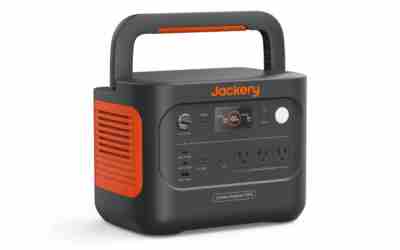
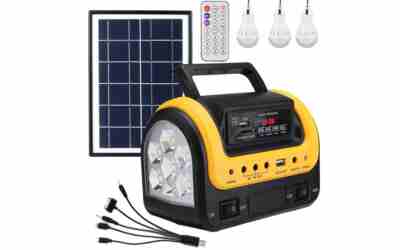
Our editorial team weighed 's published specifications and how it stacks up against similar products in the generators category. What stands out: 3,000+ Cycle LiFePO4 Battery, 1800W Output, 15 Outlets, and Includes 220W Bifacial Panel. Where it falls short: Heavy at 58 lbs and Ships Separately From Panel. That puts it at 8.9/10 on our WG Score – an excellent, well-rounded option.
 Reviewed byEthan
Navigating the market for portable power stations, especially during sales events like Black Friday, can be tricky. Many buyers make the mistake of focusing solely on peak wattage, overlooking sustained output capabilities or battery chemistry, which are crucial for long-term reliability and performance. Another common pitfall is neglecting the importance of charging speed and input options, which can significantly impact usability when time is of the essence or off-grid power is limited. For more insights into how different types of power solutions work, check out our guide on heavy-duty solar generators.
How We Narrowed Down Portable Power Stations
Our selection process for the portable power stations focused on a blend of battery capacity, output versatility, charging efficiency, and overall durability, based on specs and user feedback. We prioritized models featuring LiFePO4 (LFP) batteries for their extended lifespan and enhanced safety compared to other battery types. Products with high AC output and multiple charging options, including robust solar input, were also given preference to ensure they could handle a wide range of devices and scenarios.
While most of our picks excel in higher capacity and output, we included the Apowking 146Wh Solar Generator as a budget-friendly and highly portable option. Though its 100W rated output and 146Wh capacity are considerably lower than the larger EcoFlow models, it stands out for its integrated 40W solar panel and compact design, making it a viable choice for light-duty camping or as a personal power bank where portability is paramount over raw power.

Pros
- Long-lasting LiFePO4 battery with exceptional 3000+ cycle lifespan
- High 1800W output supports most appliances with 15 outlets
- Includes 220W bifacial solar panel for immediate off-grid use
- App integration and fast charging enhance user convenience
- Expandable capacity up to 3kWh for versatile applications
Cons
- At 58 lbs, it is somewhat heavy for solo handheld portability
- Power station and solar panel ship separately
- No specified peak wattage beyond 1800W running output
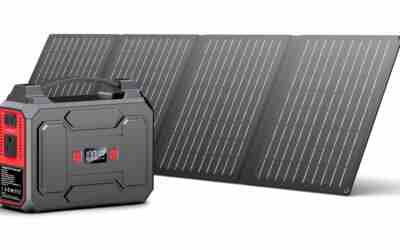
The EF ECOFLOW Delta 2 is a versatile portable power station paired with a 220W bifacial solar panel, delivering 1024Wh of LiFePO4 battery capacity and 1800W AC output. Designed for home backup, camping, and RV trips, it provides clean, fume-free power through 15 outlets, including USB-C up to 100W.
Ideal for outdoor enthusiasts and homeowners seeking reliable off-grid solutions, this solar generator stands out with its X-Stream fast charging, app control for real-time monitoring, and expandability to 3kWh. The weatherproof panel captures up to 25% more energy, ensuring quick recharges even in partial shade.
Build quality shines with a sophisticated BMS for safety, pure sine wave inverter for sensitive devices, and UPS functionality for seamless backup. At 15.7 x 8.3 x 11.1 inches and 58 lbs, it balances portability with robust performance, backed by a 5-year warranty.
Minor drawbacks include its weight for frequent transport and separate shipping of components. Overall, the Delta 2 excels as a durable, high-output solar generator for demanding users.
Power Output: 1800W running watts
Battery: 1024Wh LiFePO4, 3000+ cycles
Solar Input: 500W max
Weight & Size: 58 lbs, 15.7 x 8.3 x 11.1 inches
Outlets: 15 versatile outlets
Features: App Control, Fast Charging, Pure Sine Wave, UPS, Solar Compatible

Pros
- Lightning-fast 56-minute full charge with 1500W AC input
- Durable LiFePO4 battery with 4000 cycles and 10-year lifespan
- Powers 13 devices simultaneously via abundant outlets
- Expandable up to 5kWh with EcoFlow ecosystem
- IP65 weatherproofing for outdoor reliability
Cons
- Weighs 27.5 pounds, making it less portable for solo carrying
- Solar panel required separately for solar charging option
- New release with no customer reviews yet available
The EcoFlow DELTA 3 is a compact yet powerful 1024Wh portable power station designed for home backup, camping, and RV use. Featuring a robust LiFePO4 battery, it delivers 1800W AC output with X-Boost up to 2600W, allowing it to run multiple high-demand appliances simultaneously through 13 outlets, including 100W USB-C ports.
Standout performance includes a full charge in just 56 minutes using 1500W AC input, or rapid solar charging up to 500W. In real-world scenarios, it excels at powering essentials like refrigerators, CPAP machines, or tools during blackouts or off-grid trips, with expandable capacity up to 5kWh via EcoFlow extra batteries for extended runtime.
Build quality shines with an IP65-rated battery pack that resists splashes, dust, and oil, plus a lightweight extra battery option that's one-third smaller than predecessors. Operating quietly below 30dB at lower loads, it suits noise-sensitive environments, backed by a 5-year warranty.
Drawbacks include its 27.5-pound weight, which may challenge portability for some, and the need to purchase solar panels separately. Overall, the DELTA 3 offers exceptional value for reliable, fast-charging power in diverse settings.
Verdict: Highly recommended for anyone seeking a durable, high-performance solar generator that balances speed, capacity, and versatility without compromise.
Capacity: 1024Wh LiFePO4 Battery
AC Output: 1800W (2600W X-Boost)
Charging: 1500W AC Input (56 min full), 500W Solar Input
Dimensions: 15.7 x 8 x 11.2 inches
Weight: 27.5 pounds
Outlets: 13 Total (including 100W USB-C)
Expandability: Up to 5kWh with EcoFlow Batteries
Durability: 4000 Cycles to 80%, IP65 Rated

Pros
- Lightning-fast charging keeps you powered during critical times
- Exceptional build quality and durability praised in reviews for marine and off-grid use
- Quiet fans and no emissions allow safe indoor operation
- Powers high-demand devices like fridges for days on a single charge
- Intuitive app and display for easy monitoring and control
Cons
- Weighs 50 pounds, challenging to move solo for some users
- Occasional app connectivity issues require software updates
- Solar panels sold separately for full off-grid capability
The EF ECOFLOW DELTA 2 Max is a high-capacity portable power station designed for home backup, RV camping, outdoor adventures, and professional uses like filmmaking or boat maintenance. With 2048Wh LFP battery and 2400W output (expandable to 3400W via X-Boost), it powers nearly all household appliances, from fridges running for over 24 hours to power tools and heaters.
Standout performance includes world-leading charging: 80% in 43 minutes with AC and solar, or 1.1 hours on AC alone. Reviewers rave about its reliability, with one running a mini-fridge for 53 hours and a freezer for 26 hours. The quiet 30dB operation and app control make it ideal for overnight use without disturbance, while expandability to 6kWh prepares users for extended blackouts.
Build quality feels premium and rugged, with a 10-year battery lifespan from 3000 cycles. It's lighter than competitors at 50 pounds yet robust for harsh environments. The app provides real-time stats, though some note initial Bluetooth setup needs updates.
Drawbacks include its weight for frequent transport and lack of included solar panels. Still, for versatile, fume-free power without gas generator hassles, it excels.
Verdict: A top-tier solar generator for anyone needing fast, expandable, and quiet backup power. Highly recommended for preppers, campers, and homeowners facing outages.
Capacity: 2048Wh LFP Battery (3000 cycles to 80%)
Output: 2400W Continuous, 3400W X-Boost, 15 Outlets
Charging: 80% in 43 Min (AC+Solar), 1.1 Hr AC, 2.3 Hr Solar
Dimensions: 12.2 x 9.7 x 20 inches, 50 lbs
Special Features: Expandable to 6kWh, 30dB Quiet, App Control, Indoor Safe
Users praise its speed and power: 'Charged to 80% in under an hour, handles multiple appliances flawlessly' (5 stars). Sailboat owners love its portability and durability in marine settings. Off-grid fans note it outperforms competitors like Bluetti in runtime and recharge speed for fridges and freezers.
Common theme: Beastly performance for home backup and camping, with quiet operation and long battery life standing out.

Pros
- Lightweight and portable at 3.3lbs, easy to carry for camping or emergencies
- Includes 40W foldable solar panel and all cables for immediate use
- Multiple fast-charging USB ports and AC/DC outputs handle diverse devices
- Built-in flashlight with SOS adds emergency utility
- Positive feedback on quick customer service and real-world charging performance
Cons
- Solar panel may underperform in low-light conditions or with incompatible generators
- Limited to 100W continuous power, not for high-wattage appliances
- Occasional reports of unit charging issues after extended use
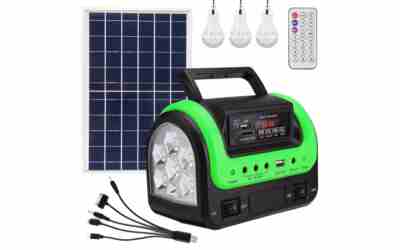
The Apowking R100 is a compact 146Wh portable solar generator designed for campers, RV enthusiasts, and anyone needing reliable backup power during outages or off-grid adventures. Paired with a 40W foldable solar panel, it offers versatile charging for essentials like phones, laptops, tablets, fans, and lights, making it ideal for short trips or emergency kits rather than whole-home backup.
Standout features include seven output ports: two 110V AC outlets (100W rated, 200W peak), multiple USB options with quick charge, and a DC port for car accessories. Users praise its real-world performance, like fast phone charging via solar on sunny days and full recharges in a few hours from AC or car. The built-in dual LED flashlight with SOS mode proves handy for nighttime emergencies, while the BMS ensures safe operation with temperature and voltage control.
Build quality impresses with a sturdy, lightweight 3.3lb body and cooling vents to prevent overheating. The digital display shows battery status clearly, and its backpack-friendly size enhances portability. Most reviews highlight excellent value, though some note slower solar input in shade and minor compatibility quirks with other panels.
Drawbacks include power limits that exclude heavy appliances and isolated complaints about solar efficiency or longevity. Overall, this generator is a budget-friendly, feature-packed choice for portable power needs.
Verdict: Buy the Apowking R100 if you want an affordable, all-in-one solar solution for daily essentials during camping or blackouts. It's not for high-demand use but excels where convenience and solar readiness matter.
Capacity: 146Wh / 39600mAh Lithium Ion
Output: 100W Rated / 200W Peak; 2x AC 110V, USB-A/C ports, 1x DC 9-12.6V/10A
Input: Solar (40W panel included), AC adapter, Car charger
Weight: 3.3 pounds; Dimensions: 7.6 x 3.7 x 6.1 inches
Extras: Dual LED flashlight (3 modes), BMS safety, 1-year warranty
Apowking 146Wh solar generator, 40W solar panel, AC power adapter, car charging cable, carport output cable, user manuals (2).
Buying Guide for 2026
Understanding Battery Capacity and Output
When selecting a portable power station, battery capacity (measured in Watt-hours, Wh) and AC output (measured in Watts, W) are critical. Capacity dictates how long a device can run, while output determines what devices can be powered. For instance, a 100W appliance connected to a 1024Wh power station, like the EF ECOFLOW Delta 2, could theoretically run for over 10 hours (1024Wh / 100W = 10.24 hours), assuming no power loss. Consider your typical power needs for camping, RV trips, or home backup to match the capacity and output to your devices. For powering specific electronics like projectors, you might want to consider models designed for that purpose, as highlighted in our review of portable power stations for projectors.
Charging Speed and Input Options
Fast charging capabilities can be a game-changer, especially in situations where grid power is intermittent or unavailable for long periods. Many modern portable power stations, like the EcoFlow DELTA 3, boast impressive charging times, reaching an 80% charge in as little as 30 minutes with combined AC and solar input. Look for models that offer multiple input methods, including AC wall outlets, car charging, and solar panel compatibility. High solar input wattage is particularly beneficial for off-grid use, allowing for quicker recharges from the sun.
Battery Chemistry and Lifespan
The type of battery chemistry significantly impacts a power station’s lifespan and safety. LiFePO4 (LFP) batteries, found in many premium models, offer a much longer cycle life (e.g., 3000-4000 cycles to 80% capacity) compared to traditional lithium-ion batteries. This translates to years of reliable use before significant degradation. Additionally, LFP batteries are generally more stable and safer, making them a preferred choice for portable power solutions. Understanding these differences can help you find a generator that lasts, much like understanding the nuances of inverter generators for home use.
Our Final Picks for 2026
Best Overall: EF ECOFLOW DELTA 2 Max: 2400W 2048Wh LFP Portable Solar Generator, 80% Charge in 43 Min, Home Backup & RV Power
The EF ECOFLOW DELTA 2 Max stands out for its robust 2048Wh capacity and impressive 2400W AC output, capable of powering 99% of household devices. Its advanced LFP battery chemistry ensures a 10-year lifespan with 3000 cycles to 80% capacity, far exceeding industry averages. The ability to fuel up to 80% in just 43 minutes with combined AC and solar input makes it exceptionally efficient for rapid recharging.
Skip this if: you need a lighter, more compact unit for minimal power needs or a significantly lower budget.
View on Amazon.comBest Value: EF ECOFLOW Delta 2 Solar Generator with 220W Panel – 1024Wh LiFePO4, 1800W Output for Camping, RV, Home Backup
The EF ECOFLOW Delta 2 offers an excellent balance of capacity and features for its class. With a 1024Wh LFP battery and 1800W AC output, it can handle most camping and home backup needs. The included 220W bifacial solar panel enhances its value, providing clean, green charging on the go. Its 3000+ cycle life ensures long-term durability.
Skip this if: you require a significantly higher capacity or faster charging than its 500W solar input allows.
View on Amazon.comBest for Ultra-Portability: Apowking 146Wh Solar Generator 200W Peak/100W Rated Power Station with 40W Solar Panel – Portable for Camping, Home Backup
For those prioritizing extreme portability and integrated solar charging, the Apowking 146Wh Solar Generator is an ideal choice. It comes with a built-in 40W solar panel and offers a 146Wh capacity, perfect for charging smaller devices like phones, tablets, and laptops. Its compact size and dual LED flashlights make it a versatile companion for outdoor adventures or minor power outages.
Skip this if: you need to power high-wattage appliances or require extensive battery capacity for extended periods.
View on Amazon.comQuick Comparison: Side by Side
- – 3,000+ Cycle LiFePO4 Battery.
- – 1800W Output, 15 Outlets.
- – Includes 220W Bifacial Panel.
- – 56-Minute Full Charge.
- – 4,000-Cycle, 10-Year Battery.
- – Powers 13 Devices at Once.
- – Lightning-Fast Charging.
- – Exceptional Build for Marine/Off-Grid.
- – Quiet, No Emissions, Indoor-Safe.
- – Lightweight at 3.3 lbs.
- – Includes 40W Solar Panel & Cables.
- – Multiple Fast-Charging Ports.
- – Heavy at 58 lbs.
- – Ships Separately From Panel.
- – No Peak Wattage Specified.
- – Heavy at 27.5 lbs.
- – Solar Panel Sold Separately.
- – No Reviews Yet.
- – Heavy at 50 lbs.
- – Occasional App Connectivity Issues.
- – Solar Panels Sold Separately.
- – May Underperform in Low Light.
- – 100W Continuous Limit.
- – Occasional Charging Issues Over Time.
Why Trust Our Reviews
Our recommendations are the result of extensive research into product specifications, manufacturer claims, and genuine user feedback. We analyze key performance indicators such as battery type, capacity, output wattage, charging times, and the range of ports available to ensure our selections meet a variety of needs and use cases. We strive to provide unbiased, data-driven insights to help you make informed purchasing decisions.
Frequently Asked Questions
What is the difference between Watt-hours (Wh) and Watts (W) for portable power stations?
Watt-hours (Wh) measure the battery’s total energy storage capacity, indicating how long it can supply power. Watts (W), on the other hand, measure the instantaneous power output or consumption, determining what devices can be run simultaneously. A higher Wh rating means longer runtime, while a higher W rating means more powerful appliances can be supported.
Are LiFePO4 (LFP) batteries better than traditional lithium-ion batteries?
For portable power stations, LiFePO4 (LFP) batteries are generally considered superior due to their longer cycle life, improved safety, and better thermal stability. They can withstand significantly more charge and discharge cycles before degrading, offering a longer operational lifespan compared to conventional lithium-ion batteries. This makes them a great choice for devices like the ones we reviewed, including the best CPAP portable power stations.
Can I use solar panels from a different brand with my portable power station?
It depends on the power station. Many portable power stations use standard connectors like MC4, allowing for compatibility with various solar panel brands. However, it’s crucial to ensure that the voltage and wattage of the third-party solar panel are within the input specifications of your power station to avoid damage and ensure efficient charging. Always check the manufacturer’s guidelines for compatibility.