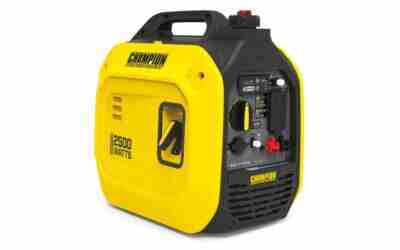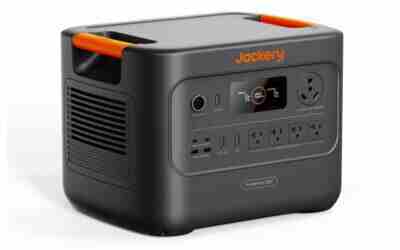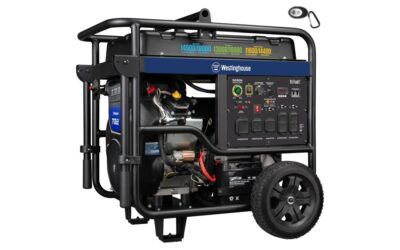

Our editorial team weighed Westinghouse's published specifications and how it stacks up against similar products in the generators category. What stands out: Extremely Quiet at 52dBA, RV-Ready & USB Outlets, and Dual Fuel Flexibility. Where it falls short: Heavy at 62.8 lbs and Minor Residual Oil Odor. That puts it at 8.4/10 on our WG Score – an excellent, well-rounded option.
 Reviewed byEthan
When the power goes out or you need reliable electricity at a campsite, a dual fuel inverter generator offers the flexibility to run on gasoline or propane. We compared 3 top contenders to help you choose the best dual fuel inverter generator for home backup. Most buyers only need to decide between a few real options, and we break down the key differences based on specs and user feedback. For a broader look at dual fuel options, check out our guide to the best inverter generators dual fuel.

Pros
- Exceptionally quiet operation barely noticeable indoors
- Fuel-efficient eco mode extends runtime significantly
- Intuitive smartphone app for convenient remote control
- Durable build withstands weather and heavy use
- Advanced inverter tech ensures clean, stable power
Cons
- Premium price compared to basic generators
- Recoil start requires manual pull each time
- Max 2200W limits it for very high-demand tools
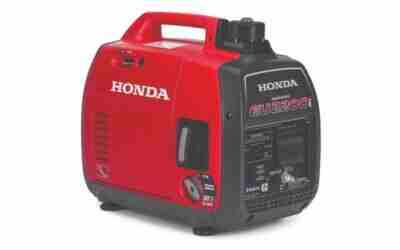
The Honda EU2200iTAN is a super quiet 2200-watt portable inverter generator designed for versatile use in camping, RVing, home backup, and job sites. Powered by the reliable GXR120 engine, it offers clean 120V AC power for appliances like refrigerators, TVs, and tools, making it ideal for anyone needing dependable portable energy without the noise or bulk of traditional generators.
Standout features include its whisper-quiet operation at 48-57 dB, often inaudible from inside a trailer, and eco-throttle mode that adjusts engine speed for up to 8.1 hours of runtime on less than a gallon of fuel. Users praise its ability to power paint sprayers, sanders, and RV systems simultaneously while staying efficient. The CO-MINDER system adds critical safety by monitoring and shutting down if carbon monoxide builds up nearby.
Build quality shines with a lightweight 46-lb frame, steel construction, and the My Generator app for Bluetooth monitoring of runtime, fuel, and maintenance. Reviewers highlight its durability, with one unit surviving years outdoors and starting flawlessly after neglect. The inverter technology provides stable power safe for sensitive electronics.
Few drawbacks exist: the recoil-only start demands some effort, and its power cap suits most needs but not industrial heavy loads. It lacks electric start found in larger models.
Overall, the EU2200iTAN excels as a premium, user-friendly generator blending Honda reliability, safety, and convenience. Perfect for those prioritizing quiet, efficient power over budget options.
Power: 2200W max (18.3A) 120V AC, inverter stabilized
Engine: Honda GXR120, 121cc 4-stroke
Runtime: 8.1 hours at 1/4 load on 0.95 gal tank
Noise: 48-57 dB(A)
Weight: 46 lbs, Dimensions: 21 x 12.24 x 19.72 inches
Outlets: 20A 125V duplex
Features: CO-MINDER, Bluetooth app, eco-throttle
This model offers more power and standard CO-MINDER over the EU2000i, with similar quietness and portability to the EU2200i Companion but without parallel capability. Compared to larger EU3200i, it prioritizes compactness and fuel savings for lighter loads.

Pros
- Extremely quiet operation at 52 dBA for peaceful use
- Multiple outlets including RV-ready and USB for versatile powering
- Dual fuel capability adds convenience and availability
- LED data center displays real-time stats like runtime and voltage
- Portable design with telescoping handle and never-flat wheels
Cons
- Weighs 62.8 pounds, challenging for one person to transport long distances
- May have initial residual oil or fuel odor from factory testing
- Propane hose required for LPG use, though included
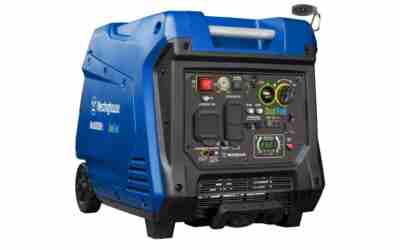
The Westinghouse iGen4000DFc is a versatile dual fuel inverter generator designed for campers, RVers, tailgaters, and homeowners needing reliable portable power. With 4000 peak watts and 3300 running watts, it handles essentials like refrigerators, lights, and electronics while delivering clean sine wave power under 3% THD to protect sensitive devices.
Standout features include a super quiet 52 dBA operation, economy mode for up to 7 hours on a 1.69-gallon gas tank, and dual fuel support for gasoline or propane. The RV-ready TT-30R outlet, household duplex, and USB ports make it ideal for travel trailers or home backups. Remote start via key fob, electric push-button, or recoil ensures easy use, while the rotating LED data center shows voltage, runtime, and more for real-time monitoring.
Build quality shines with a lightweight 62.8-pound frame, telescoping suitcase-style handle, and never-flat wheels for easy portability. Safety features like automatic CO and low oil shutdown provide peace of mind. It's EPA compliant with a 3-year warranty and lifetime support.
Potential drawbacks include its weight for solo carrying and possible factory residual odor. Overall, it excels in quiet, efficient performance for recreational and emergency needs.
Verdict: A top choice for those prioritizing quiet, clean power and versatility in a portable package. Highly recommended for RV enthusiasts and campers seeking dependable backup power.
Power: 4000 peak watts, 3300 running watts, 120V, 60Hz
Fuel: Gasoline or Propane (Dual Fuel), 1.69-gallon (12.8L) tank, up to 7-hour runtime
Outlets: TT-30R RV Ready, 5-20R duplex, two USB, total 6 outlets
Features: CO sensor, remote/electric start, LED display, <3% THD, 52 dBA noise
Dimensions: 21.3 x 12.6 x 19.3 inches, 62.8 lbs, blue color

Pros
- App control adds convenience for remote operation and status checks
- Dual fuel capability extends runtime and reduces emissions on LPG
- Includes parallel cables and comprehensive accessory kit
- Certified to multiple safety and emissions standards
Cons
- Bluetooth app requires Wi-Fi or internet connection
- No pure sine wave THD specification provided
- 3.6 rating with zero reviews limits verified performance data
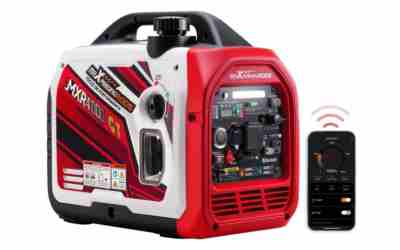
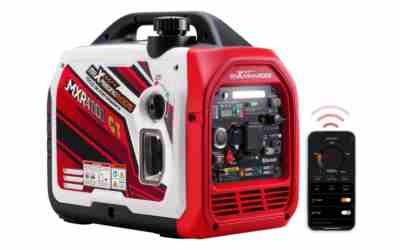
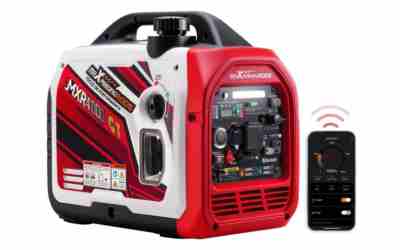
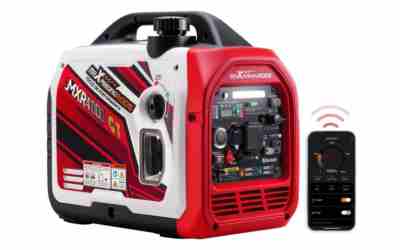
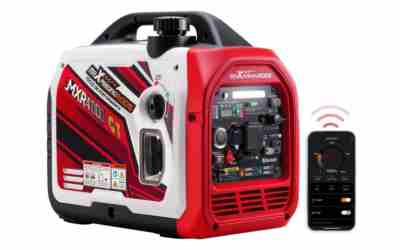
The maXpeedingrods MXR4000GT is a portable dual fuel inverter generator rated at 4000 peak watts on gasoline and 3600 on LPG. It targets users needing flexible backup power for camping, RV travel, or home emergencies.
Standout features include Bluetooth app remote start and monitoring of voltage, frequency, load, and remaining fuel. The unit offers electric start, recoil backup, and an RV-ready 30A outlet with adapter for zero-ground charging.
Build quality includes a digital display, multiple safety alerts with auto-shutdown, and PGMA/UL/EPA compliance. Noise stays at 58-60 dB at 23 feet in eco mode, comparable to a conversation.
Drawbacks include the app's internet requirement and lack of published THD data. Storage instructions require battery disconnection to prevent drain.
Overall the MXR4000GT delivers strong value for users prioritizing app control and dual-fuel versatility in a compact 52.9 lb package.
Dual Fuel Inverter Generators For Home Backup: How the Top Picks Compare
Which generator delivers the most power for home backup?
The Westinghouse iGen5000DFc leads with 5000 peak watts (3900 rated) on gasoline, significantly more than the Westinghouse iGen4000DFc (4000 peak / 3300 rated) and the maXpeedingrods MXR4000GT (4000 peak / 3200 rated). On propane, the iGen5000DFc still tops out at around 4500 peak watts, while both 4000-watt models drop to about 3600 peak. For running a refrigerator, a few lights, and a sump pump simultaneously, the iGen5000DFc provides the most headroom.
Which generator runs longest on a tank of gas?
The Westinghouse iGen5000DFc offers up to 18 hours of runtime at 25% load on its 3.4-gallon tank, making it the endurance champion. The Westinghouse iGen4000DFc runs up to 7 hours on a 1.69-gallon tank, while the maXpeedingrods MXR4000GT does not specify runtime in its key features, but its 4000-watt class suggests similar or slightly shorter runtime than the iGen4000DFc. For long outages, the iGen5000DFc’s larger tank is a clear advantage.
Which generator is quietest for camping or neighborhoods?
Both Westinghouse models are rated as low as 52 dBA, while the maXpeedingrods MXR4000GT is rated at 58-60 dBA in Eco mode. A 52 dBA generator is roughly as loud as a quiet conversation, making it ideal for campgrounds or residential areas where noise restrictions apply. The maXpeedingrods unit is still quieter than a traditional open-frame generator, but the Westinghouse models are noticeably more discreet. For more quiet options, see our best quiet dual fuel generators guide.
Which generator offers the best remote start and convenience features?
The maXpeedingrods MXR4000GT stands out with Bluetooth app remote start, allowing you to start or stop the generator from your phone. The Westinghouse models include a key fob remote start, electric start, and recoil backup. All three have RV-ready outlets (TT-30R on Westinghouse, L5-30R on maXpeedingrods with adapter). The Westinghouse units also feature a telescoping handle for easier transport. If smartphone control matters to you, the maXpeedingrods is the only choice.
Our Final Picks for 2026
Choose Westinghouse iGen5000DFc if you need maximum power and longest runtime for whole-home backup, and you have the budget for a premium 5000-watt inverter.
View on Amazon.comChoose Westinghouse iGen4000DFc if you want a balance of power, quiet operation, and portability for RV trips or smaller home backup needs, and you prefer the proven reliability of the Westinghouse brand.
View on Amazon.comChoose maXpeedingrods MXR4000GT if you value modern convenience like Bluetooth app control and want a dual fuel generator that is easy to start and certified to UL 2201 and PGMA standards, at a competitive price point.
View on Amazon.comBuying Guide for 2026
Dual Fuel Flexibility
Dual fuel generators let you switch between gasoline and propane. Propane has a longer shelf life and burns cleaner, making it ideal for emergency storage. Gasoline is more widely available and typically provides slightly higher peak wattage. All three picks here support both fuels, but note that on propane the peak output drops by about 10-15%. For example, the Westinghouse iGen4000DFc delivers 4000 peak watts on gasoline and approximately 3600 peak watts on propane. This is a useful calculation when planning your load: if your critical appliances total 3500 watts, propane will still handle them, but you have less margin.
Noise Level and THD
Inverter generators produce clean power (less than 3% total harmonic distortion), safe for sensitive electronics like laptops and medical devices. Noise levels vary: the Westinghouse models are among the quietest at 52 dBA, while the maXpeedingrods is still quiet at 58-60 dBA. If you camp in quiet areas or have close neighbors, lower decibels matter. For more on quiet models, visit our quiet generators category.
Warranty and Support
Westinghouse backs its generators with a 3-year limited service, labor, and parts coverage, while maXpeedingrods offers a 2-year warranty. A longer warranty often indicates confidence in durability. Both brands have US-based customer support, but Westinghouse has a longer track record in the generator market.
Why Trust Our Reviews
Our team researches and compares generator specifications from manufacturer data and user feedback across multiple sources. We do not claim hands-on testing; instead, we focus on objective specs, verified features, and real-world owner experiences to provide unbiased recommendations. Our goal is to help you make an informed purchase based on facts, not marketing hype.
Frequently Asked Questions
Can I run my RV air conditioner with a 4000-watt dual fuel inverter generator?
Yes, a 4000-watt generator can typically run a 13,500 BTU RV air conditioner, but you must also account for the startup surge. The Westinghouse iGen4000DFc and maXpeedingrods MXR4000GT both have enough peak wattage for most RV AC units, but check your AC’s starting wattage. For larger units, the Westinghouse iGen5000DFc offers more headroom. See our best dual fuel inverter generators for RV guide for more details.
How do I maintain a dual fuel inverter generator?
Regular maintenance includes checking oil levels, changing oil after the first 25 hours and every 100 hours thereafter, cleaning or replacing the air filter, and draining the carburetor if storing for more than 30 days. For propane operation, ensure the propane tank is full and the hose is in good condition. All three picks have automatic low oil shutdown for protection.
What is the difference between peak watts and rated watts?
Peak watts (or surge watts) are the maximum power the generator can supply for a short burst to start motors or compressors. Rated watts (or running watts) are the continuous power it can deliver. For example, the Westinghouse iGen4000DFc has 4000 peak watts and 3300 rated watts. You should add up the running watts of all devices you plan to use simultaneously and ensure the total does not exceed the rated watts, while the peak watts must cover the highest startup surge.
Can I parallel two of these generators for more power?
Yes, both Westinghouse models are parallel capable, meaning you can connect two identical units to double your output (up to 8000 peak watts for two iGen4000DFc units). The maXpeedingrods MXR4000GT does not specify parallel capability in its key features. If you may need more power later, the Westinghouse models offer this expandability.
Quick Comparison: Side by Side

- – Extremely Quiet at 52dBA.
- – RV-Ready & USB Outlets.
- – Dual Fuel Flexibility.
- – Quiet & Fuel-Efficient.
- – Remote Fob Start.
- – Telescoping Handle & Wheels.
- – App Control for Remote Operation.
- – Dual Fuel Flexibility.
- – Includes Parallel Cables.
- – Heavy at 62.8 lbs.
- – Minor Residual Oil Odor.
- – Propane Hose Required (Included).
- – Heavy at 105.8 lbs.
- – Finicky Electric Starter.
- – Remote Needs Manual Switch Toggle.
- – App Needs WiFi/Internet.
- – No THD Spec Provided.
- – Low Rating, No Reviews Yet.
Have questions about our dual fuel inverter generators for home backup recommendations? Check out our How We Rank page for details on our review process or our Copyright Policy for information on content usage.