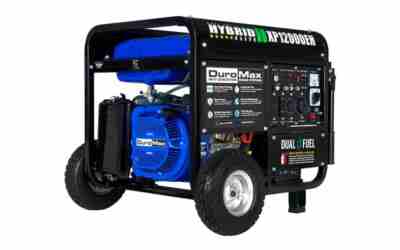
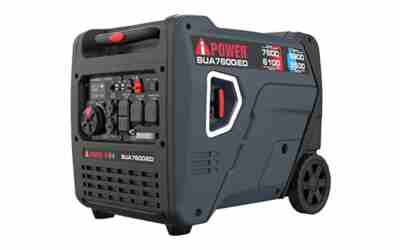
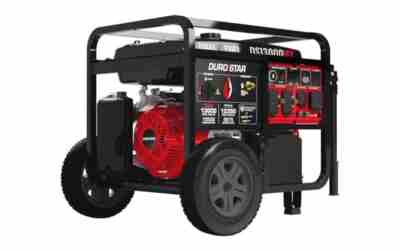
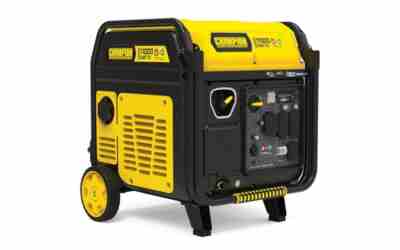
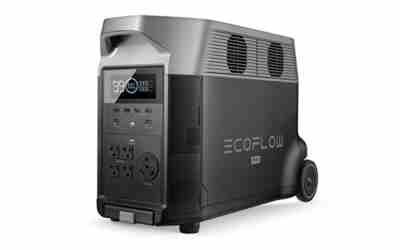
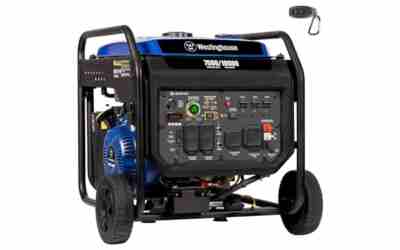
Our editorial team weighed PulsarProducts's published specifications and how it stacks up against similar products in the generators category. What stands out: Strong Power for AC/Job Tools, Versatile Outlet Selection, and Parallel Capability. Where it falls short: Occasional Solenoid Failures and Wheels May Arrive Bent. That puts it at 7.4/10 on our WG Score – a solid, dependable choice.
 Reviewed byEthan
When a multi-day grid outage leaves your neighborhood in the dark, or you are parked at a remote campsite without hookups, a reliable dual fuel generator in the 4000-7000 watt range can keep your essentials running. Whether you need to power your RV’s air conditioner during a summer road trip or run a refrigerator and a few lights at a job site, having a generator that runs on both gasoline and propane offers flexibility and peace of mind. We have compared 5 top models to help you find the right fit for your situation. For more options, check out our guide to home backup generators in the 2000-4000 watt range.

Pros
- Multiple outlets including RV, USB, and 120V/240V for versatile powering
- Wheels and telescoping handle ease transport despite sturdy build
- Eco-mode adjusts fuel use for maximum efficiency
- Low-oil shutdown and overload protection guard your gear
- Three-year warranty backs long-term reliability
Cons
- At 99.2 pounds, it requires two people for loading
- Parallel kit for linking units sold separately
- 2.9-gallon tank limits gas runtime to about 6 hours at half load
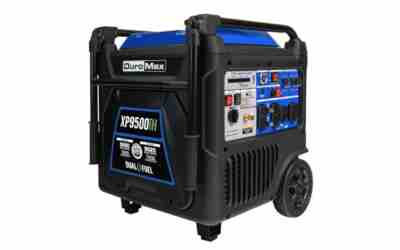
The WEN DF680iX stands out as a versatile 6800-watt dual fuel inverter generator designed for RVers, campers, tailgaters, hunters, and electric vehicle owners. It runs on gasoline for 5100 rated watts or propane for 4500, providing clean, stable power free of spikes that harms electronics. With keyless electric start and a recoil backup, it fires up quickly for home backup or remote outings.
Key features shine in real-world use: the CO Watchdog sensor detects dangerous fumes and shuts down automatically for family safety, while fuel shutoff uses remaining carburetor fuel to prevent clogs and extend lifespan. Operating at just 64 decibels at quarter load, it stays unobtrusive during camping. The eco-mode optimizes fuel by adjusting engine speed to plugged-in loads, and bonded-neutral 240V setup enables Level 2 EV charging off-grid. Up to 6.1 hours runtime on gas or 9 on a 20-pound propane tank at half load keeps power flowing.
Build quality reflects WEN's decades of expertise, with a durable 224cc engine, onboard wheels, telescoping handle, and a panel packed with RV TT-30R, L14-30R 240V, USB ports, and more. Total harmonic distortion stays below 1.2% even at full load, ensuring safe operation for tablets, monitors, and appliances. Low-oil and overload protections add peace of mind.
Potential drawbacks include its 99.2-pound weight, which demands careful handling, and the need for a separate parallel kit to combine units. The 2.9-gallon tank suits most day trips but may require refueling for extended full-load use.
Overall, the DF680iX excels as a quiet, safe, portable powerhouse for outdoor enthusiasts and backup needs. Its feature set and clean power make it a smart choice for anyone prioritizing reliability without the roar of traditional generators.
Wattage: 5100 watts rated (6800 surge on gas)
Fuel Type: Gasoline or Propane
Engine: 224cc with electric start
Runtime: Up to 6.1 hours at half load on gas
Noise Level: 64 dB at quarter load
Outlets: 8 total including RV TT-30R, L14-30R, USB
Weight: 99.2 pounds | Dimensions: 22.8 x 16.6 x 19.7 inches
Warranty: 3 years limited

Pros
- Versatile dual fuel options prevent fuel shortages
- Easy push-button start with remote fob
- Multiple outlets for household and RV use
- Long runtime reduces refueling needs
- Backed by 3-year warranty and lifetime support
Cons
- Conventional generator may produce noticeable noise
- Requires minimal assembly out of the box
- Heavier build suits stationary backup more than frequent transport
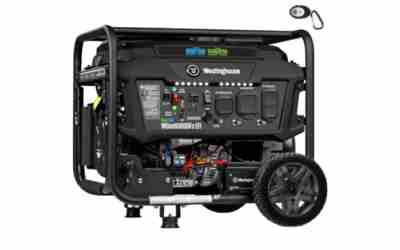
The Westinghouse WGen5300DF is a robust dual fuel portable generator designed for home backup, RV camping, and emergency power. It delivers 5300 running watts on gasoline (6600 peak) or 4800 on propane (5900 peak), powered by a reliable 274cc 4-stroke OHV engine. Perfect for running air conditioners, refrigerators, sump pumps, and other essentials during blackouts.
Ideal for homeowners, RVers, and off-grid enthusiasts seeking dependable power without extension cord hassles. Standout features include a transfer switch ready L14-30R outlet for whole-home connection, RV-ready TT-30R, and a 120/240V selector for high-voltage appliances like well pumps. Remote electric start with key fob and auto choke make it user-friendly.
Build quality shines with a hardened steel frame, built-in fuel gauge, and automatic low oil shutdown for safety and durability. It comes plug-and-play with oil, funnel, propane hose, and toolkit. Runtime reaches 14.5 hours on a 4.7-gallon tank at 50% load.
Drawbacks include typical generator noise and weight that favors semi-stationary use. Overall, the WGen5300DF offers excellent value for versatile, high-wattage backup power with strong Westinghouse support.
Power Output: 5300 running watts (gas), 6600 peak; 4800 running (propane), 5900 peak.
Engine: 274cc 4-Stroke OHV.
Fuel Tank: 4.7 gallons, up to 14.5 hours runtime.
Outlets: L14-30R (transfer switch), TT-30R (RV), 5-20R duplex (household).
Features: Remote start, 120/240V switch, EPA compliant.

Pros
- Dual fuel flexibility for extended runtime options
- Low noise level suitable for residential areas
- Strong warranty with lifetime technical support
- Portable design with wheels and handle
Cons
- Heavy at over 280 pounds
- Parallel kit sold separately
- Limited runtime data provided by manufacturer
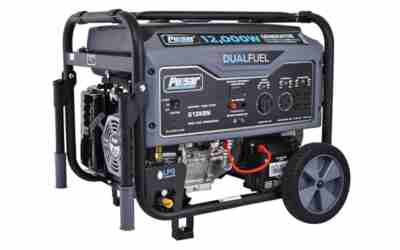
The GENMAX GM9000iEDC is a dual fuel inverter generator designed for home backup, RV camping, and job site applications. It provides 9000W peak and 7600W running watts from a 458cc engine.
Users benefit from gas or propane operation, remote start, and low 62 dBA noise levels. The unit includes CO detection and supports parallel connection for increased capacity.
Build quality focuses on portability with wheels and a steel handle alongside a 5-in-1 digital display. The 6.9 gallon tank supports extended use while the EPA and CARB compliance meets regulatory standards.
Drawbacks include significant weight and the need to purchase a parallel kit separately. Overall it delivers reliable performance for users requiring quiet dual fuel power.

Pros
- Tri-fuel flexibility with 6000 running watts on gasoline
- Clean pure sine wave power suitable for sensitive electronics
- Multiple start methods, including automatic start during outages
- Built-in CO sensor and EPA certification
Cons
- Running output drops to 5500 watts on propane and 4800 watts on natural gas
- Noise level is not listed in the source data
- Large footprint at 24 x 18.9 x 20.87 inches
The GENMAX GM8000iETC is an 8000-watt tri-fuel inverter generator designed for home backup, camping, and RV use. It runs on gasoline, propane, or natural gas, and a dedicated selector switches between them. Gasoline provides 8000 surge watts and 6000 running watts, propane provides 7250 surge and 5500 running watts, and natural gas provides 6500 surge and 4800 running watts.
The generator produces pure sine wave power with 3% or less total harmonic distortion, which makes it suitable for laptops, phones, and medical equipment. A powered 312cc 4-stroke OHV engine drives the unit, and it includes a digital display that shows running hours, load level, fuel level, amps used, overload status, and low oil warnings.
Starting options include push-button electric, a remote key fob, Bluetooth app control, and a recoil backup. A 2-wire automatic start function can run the unit during power outages, which suits unattended operation. The outlet panel includes a 120V/240V 14-50R outlet for EVs and large tools, a 120V L5-30R outlet, two 120V 5-20R GFCI outlets, and USB A/C ports. The unit also supports parallel operation.
A built-in CO sensor adds a safety feature, and the generator is EPA certified for sale in the USA. The package includes a dual-purpose screwdriver, oil funnel, remote control key, and spark plug socket wrench. The listing describes a 3-year limited warranty with ongoing technical support.
The GENMAX GM8000iETC suits buyers who want fuel flexibility and clean power for sensitive devices. Its listed dimensions of 24 x 18.9 x 20.87 inches make it a sizable unit, and the source data does not include a noise rating or weight, so buyers should confirm those details before purchase.

Pros
- Impressive power output handles AC units, microwaves, and job site tools
- Versatile outlets including USB, GFCI, RV, and 120/240V options
- Parallel capability doubles output for larger needs
- Digital display shows voltage, load, and runtime for easy monitoring
- Quick starts on both fuels after proper break-in
Cons
- Electric start solenoid failures reported, often fixed with simple replacements
- Wheels may arrive bent, affecting mobility
- Runs slightly louder than some premium brands like Honda
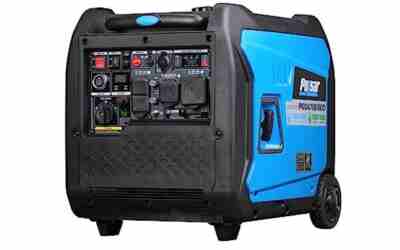
The Pulsar PGDA70BiSCO stands out as a 7,250-watt peak dual fuel inverter generator powered by a 312cc 4-stroke engine, ideal for RVers, campers, homeowners seeking emergency backup, and professionals on job sites. It runs on gasoline or propane, providing up to 8.5 hours at half load from a 3.6-gallon tank, with clean power under 3% THD safe for laptops, TVs, and medical devices.
Key features include super quiet 62dB operation, remote electric and recoil starts, and a suite of outlets: two GFCI 120V, 120/240V L14-30R, RV TT-30R, plus USB-A/C. Users praise its brute strength powering full campers with AC and lights, flawless low-idle response, and stable voltage frequency. Parallel capability lets you link units for more power, while the CO Sentry and low oil shutdown add safety layers.
Build quality features an enclosed frame, digital control center, and easy-access drains for maintenance. Reviewers note reliable performance after break-in with ethanol-free fuel and frequent oil changes, though some faced initial electric start glitches fixed by reconnecting plugs or replacing solenoids. Wheels and minor assembly issues appear occasionally but do not impact core function.
Despite a few starter hiccups and perceived noise versus top-tier rivals, this generator delivers exceptional value with robust output, fuel versatility, and quiet efficiency. It earns high marks for real-world reliability in demanding scenarios, making it a smart pick for those prioritizing power without breaking the bank.
Power: 7250 peak/6000 running watts (gas), 6500/5500 (propane)
Fuel & Runtime: Dual fuel (gas/propane), 3.6 gal tank, 8.5 hrs @ 1/2 load
Starts: Remote, electric, recoil (battery included)
Outlets: 2x 120V GFCI 20A, 1x 120/240V 30A L14-30R, 1x 120V TT-30R RV, USB-A/C
Dimensions & Weight: 24.3 x 19.3 x 21.8 inches, 118 lbs
Other: 62dB, CO sensor, parallel ready, 3-year warranty
Which Dual Fuel Generators 4000-7000 Watts Fit Your Situation?
You need backup power for your home during an outage
The Westinghouse WGen5300DF earns its place among the best dual fuel generators 4000-7000 watts with 6,600 peak watts, runs on gasoline and propane. It stands out because it has an RV-ready outlet, electric start makes it easy to fire up. It is a well-reviewed option that covers the needs most buyers have for this type of product.
Before you buy, check the current price and full specifications of the Westinghouse WGen5300DF on Amazon and compare it with the other picks above to match your power needs.
View on Amazon.comYou are RVing and need to power your rig
The Pulsar PGDA70BiSCO is an excellent choice for RVers needing substantial power. With 6000 running watts on gasoline and an RV-ready TT-30R outlet, it can comfortably run your RV’s air conditioner, microwave, and other appliances. Its super quiet operation at 62dB makes it a more considerate option for campgrounds compared to conventional generators.
Skip this if: you are looking for the absolute quietest option for noise-restricted campgrounds. While quiet for its power class, dedicated inverter generators under 3000 watts might be even quieter. Check out our guide to inverter generators over 3000 watts for more options.
View on Amazon.comYou need a generator for job site power
For running power tools like a circular saw, compressor, and lights at a job site, the WEN DF680iX is a versatile choice. It offers 5100 running watts on gasoline and includes a 120V/240V L14-30R receptacle, providing flexibility for various heavy-duty tools. Its fuel shutoff feature also helps prolong the carburetor’s life, a benefit for frequent use.
Skip this if: you primarily need a very basic, budget-friendly unit without inverter technology.
View on Amazon.comYou need a super quiet option for camping or sensitive electronics
The GENMAX GM8000iETC 8000W Tri-Fuel Inverter Generator stands out for its inverter technology, which delivers clean power for sensitive electronics like laptops and TVs. It runs on gasoline, propane, or natural gas, so you can pick whatever fuel is available. It is also RV ready and includes a CO sensor for added safety.
Skip this if: you need maximum power output in this range. With 3300 rated watts, it’s excellent for essentials but might struggle with multiple high-demand appliances simultaneously. For higher wattage quiet options, explore our quiet 3500 watt generators guide.
View on Amazon.comBuying Guide for 2026
Starting vs. Running Watts
Generators have two power ratings: starting (surge) watts and running (continuous) watts. Starting watts cover the extra power needed when motors kick on, such as an RV air conditioner or a refrigerator compressor. To size a generator, add up the running watts of everything you plan to power simultaneously, then ensure the generator’s running wattage meets or exceeds that total. For a typical home backup scenario, a refrigerator (700 running watts), a few lights (200 watts), and a sump pump (800 watts) total 1700 running watts, well within the 4500 running watt capacity. But if you also want to run a microwave (1000 watts) and a space heater (1500 watts), you are at 4200 watts, still within range, but with little headroom.
Fuel Type: Gasoline vs. Propane
Dual fuel generators let you run on either gasoline or propane. Gasoline is widely available and provides slightly more power, while propane burns cleaner, has a longer shelf life, and is easier to store. For instance, the Pulsar PGDA70BiSCO offers 6000 running watts on gasoline but 5500 running watts on propane, demonstrating a typical power reduction when using propane. If you plan to use propane, look for a model that includes a propane hose and regulator.
Run Time and Fuel Tank Capacity
Run time determines how long your generator will run on a full tank before needing a refill. That means at around 2250 watts (half of 4500), you can run for over 12 hours. For a 3-day outage, you would need roughly 6 gallons of gasoline (since you will refill daily), so plan your fuel storage accordingly. In contrast, the GENMAX GM8000iETC, with its tri-fuel design, runs on gasoline, propane, or natural gas, so you can switch fuel sources or connect to a natural gas line for extended use instead of relying on a single tank.
Portability and Outlets
Most generators in this range come with wheel and handle kits for easy transport. The outlet panel is crucial; look for a variety that matches your needs. Common outlets include standard 120V 20-amp, RV-ready 120V 30-amp TT-30R, and transfer-switch-ready 120V 30-amp NEMA L5-30R twist lock receptacles. Higher wattage models like the Pulsar PGDA70BiSCO and WEN DF680iX also include 120V/240V L14-30R outlets, which are essential for powering larger appliances or connecting to certain transfer switches for whole-home backup.
Why Trust Our Reviews
At WikiGenerators.com, we focus on providing objective, data-driven recommendations. Our team analyzes manufacturer specs, user feedback, and industry standards to evaluate each generator. We do not claim to have performed hands-on testing of every model; instead, we rely on verified specifications and real-world buyer experiences to identify top performers. Our goal is to help you make an informed purchase decision based on your specific needs.
Frequently Asked Questions
Can I run a 30-amp RV on a 4500-watt generator?
Yes, a 4500-watt generator can power a 30-amp RV, which typically draws up to 3600 watts (30 amps x 120 volts). However, you may need to manage your power usage to avoid overloading the generator, especially if running the air conditioner and microwave simultaneously.
What is the difference between starting watts and running watts?
Starting watts (surge watts) are the extra power needed for a few seconds when an appliance with a motor starts up, such as a refrigerator or air conditioner. Running watts (continuous watts) are the steady power needed to keep the appliance running. Always ensure the generator’s starting wattage can handle the surge of your largest motor, and that its running wattage covers the total load of everything running at once.
How long will a GENMAX GM9000iEDC run on a full tank?
The Westinghouse WGen5300DF earns its place among the best dual fuel generators 4000-7000 watts with 6,600 peak watts, runs on gasoline and propane. It stands out because it has an RV-ready outlet, electric start makes it easy to fire up. It is a well-reviewed option that covers the needs most buyers have for this type of product.
Is a dual fuel generator better than a single fuel generator?
A dual fuel generator offers flexibility: you can use gasoline when it is readily available, or propane for cleaner burning and longer storage. This can be especially useful during emergencies when fuel availability may be uncertain. However, dual fuel models may cost slightly more than single fuel equivalents. For more on fuel options, see our guides section.
Do I need a transfer switch to use a generator with my home?
For safely powering your home’s circuits, a transfer switch is recommended. It prevents backfeeding, which can endanger utility workers and damage your generator. Many models, like the WEN DF680iX, have transfer-switch-ready outlets (e.g., L14-30R or L5-30R) that connect directly to a transfer switch. For a simpler setup, you can also use heavy-duty extension cords to plug in individual appliances.
Quick Comparison: Side by Side
- – Dual Fuel Flexibility.
- – Push-Button & Remote Start.
- – Household/RV Outlets.
- – Tri-fuel flexibility with 6000 running watts on gasoline.
- – Clean pure sine wave power suitable for sensitive electronics.
- – Multiple start methods, including automatic start during outages.
- – Dual Fuel Flexibility.
- – Low Noise Level.
- – Strong Warranty & Support.
- – Versatile RV/USB/120-240V Outlets.
- – Wheels & Telescoping Handle.
- – Eco-Mode Fuel Efficiency.
- – Strong Power for AC/Job Tools.
- – Versatile Outlet Selection.
- – Parallel Capability.
- – Noticeable Noise Level.
- – Minor Assembly Required.
- – Better for Stationary Use.
- – Running output drops to 5500 watts on propane and 4800 watts on natural gas.
- – Noise level is not listed in the source data.
- – Large footprint at 24 x 18.9 x 20.87 inches.
- – Heavy at 280+ lbs.
- – Parallel Kit Sold Separately.
- – Limited Runtime Data Provided.
- – Heavy at 99.2 lbs.
- – Parallel Kit Sold Separately.
- – ~6-Hour Runtime at Half Load.
- – Occasional Solenoid Failures.
- – Wheels May Arrive Bent.
- – Slightly Louder Than Premium Brands.
Have questions about our dual fuel generators 4000-7000 watts recommendations? Check out our 4,000 to 7,999 Watts category page for details on our review process or our guides section for information on content usage.