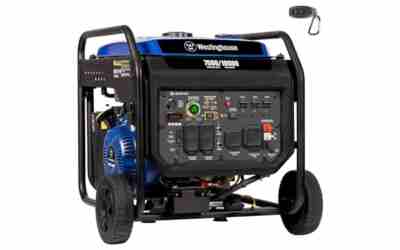
If you are comparing best 5000 watt solar generators, the Jackery Solar Generator 5000 Plus is the best overall pick, combining 5,040Wh of LiFePO4 storage with 7,200W of 120V/240V output. Its 0ms online UPS mode switches to stored power during blackouts, which makes it the strongest fit for whole-home backup. Shorter outages and smaller loads may suit a lighter unit, so also read the best solar generator for blackouts guide before you decide.

Pros
- Exceptional app for intuitive setup, monitoring, and energy management
- Reliable runtime for critical devices like oxygen concentrators and heat presses
- Rugged build with wheels and handle for portability despite weight
- Outstanding customer service with proactive support
- Fast solar compatibility keeps power flowing off-grid
Cons
- Heavy at 99 pounds, challenging to move without wheels
- No built-in dust/water covers for outlets
- Occasional reports of charging errors requiring support
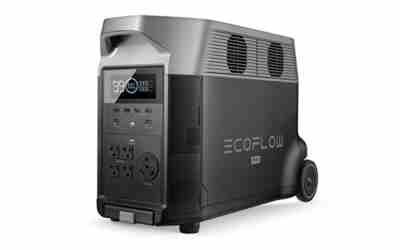
The EcoFlow DELTA Pro 3600Wh is a high-capacity portable power station designed for demanding users needing robust backup power for home outages, RV camping, off-grid living, or professional mobile setups. With its LiFePO4 battery chemistry, it offers long-lasting safety and up to 4000 cycles of life, making it suitable for both residential and commercial applications where reliability is key.
Standout features include a 3600W AC output expandable to 4500W via X-Boost, powering heavy-duty appliances like refrigerators, tools, or medical equipment without issue. Users praise its real-world performance, such as running heat presses at markets or oxygen concentrators for over 10 hours on a single charge. Fast X-Stream charging refills it in 2.7 hours from a wall outlet, or via solar in under 3 hours with 1600W input, while the intuitive app provides remote monitoring and customization for optimal energy use.
Build quality is solid with a rugged ABS exterior, collapsible handle, and wheels for maneuverability, though its 99-pound weight demands two people for initial transport. Multiple ports including five AC outlets, USB-C 100W, and Anderson ensure versatility, and quiet fanless operation suits indoor emergencies.
Drawbacks include the heft making solo repositioning tough and lack of outlet covers for dusty environments. Rare firmware or overload issues have been noted but resolved via support.
Overall, the DELTA Pro delivers exceptional value for power-intensive needs, earning high marks for performance and support. It's a top choice for proactive power independence.
Capacity: 3600Wh LiFePO4 battery
Output: 3600W AC (7200W surge, X-Boost 4500W), 5x 120V outlets
Charging: 2.7H AC (1800W), 2.8H solar (1600W max), car/EV options
Ports: 15 total (USB-A/C, DC, car, Anderson)
Weight/Dims: 99 lbs, 25"L x 11.2"W x 16.4"H
Extras: App control, expandable to 25kWh


Pros
- Massive expandable capacity up to 60kWh for extended outage support
- Dual 120V/240V output powers diverse appliances and equipment
- 0ms Online UPS ensures uninterrupted power for critical devices
- LiFePO4 battery offers superior safety and longevity
- Quiet, emission-free alternative to traditional generators
Cons
- Incompatible for parallel use with smaller Jackery models like E2000 Plus
- Older Jackery solar panels require a specific adapter
- Smart transfer switch works only with this model, up to two units
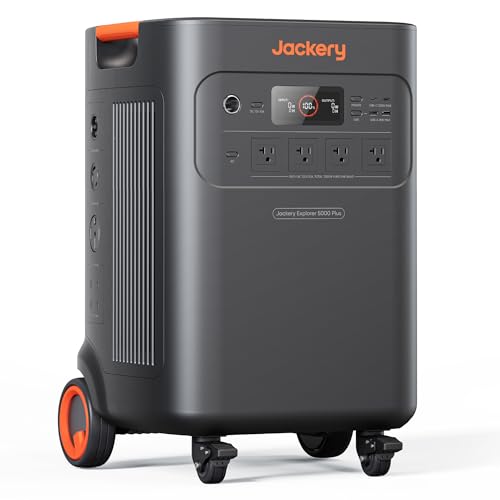
The Jackery Solar Generator 5000 Plus is a high-capacity portable power station designed for homeowners seeking robust whole-home backup during power outages. With a base 5040Wh LiFePO4 battery expandable to 60kWh, it delivers reliable energy for essentials like refrigerators, lights, and heavy appliances, making it ideal for regions prone to blackouts or off-grid living.
Standout features include 7200W AC output at 120V/240V for powering dryers, water pumps, and ovens, plus 0ms UPS mode that switches instantly to battery power, protecting sensitive electronics. Real-world performance shines in extended outages, supporting average households for over a day on a single unit or up to 15 days when fully expanded. The smart app provides remote monitoring and optimization like off-peak charging to cut costs.
Build quality emphasizes portability despite its power, with a quiet under 30dB fan and zero-emission solar charging for indoor use. It integrates well with Jackery solar panels and offers RV compatibility, though setup with the optional smart transfer switch adds seamless whole-home automation.
Drawbacks include incompatibility for parallel operation with other Jackery stations like the E2000 Plus and the need for adapters on older solar panels, which may complicate expansions for existing users.
Overall, the 5000 Plus excels as a premium solar generator for serious backup needs, offering unmatched capacity and smart features that justify its investment for outage-prone households.
Capacity: 5040Wh (expandable to 60kWh)
AC Output: 7200W (120V/240V dual voltage)
Battery Type: LiFePO4
UPS Mode: 0ms response time
Noise Level: Under 30dB
Connectivity: WiFi/Bluetooth app control, compatible with Jackery solar panels
Not compatible for parallel use with E2000 Plus, E1000 Plus, or their packs due to differing specs. Works with all current Jackery solar panels; older 60W/100W/200W models need a 7909-to-8082 adapter.
Smart Transfer Switch is exclusive to 5000 Plus (up to 2 units), supporting 240V/30A (7200W) across 12x 120V or 6x 240V circuits. Third-party transfer switches may work if interfaces match, but lack smart features.
Our Top Picks for 2026
Best Expandable Capacity: Anker SOLIX F3000 Portable Power Station, 3,072Wh
The Anker SOLIX F3000 starts at 3,072Wh of LiFePO4 storage and can be expanded to 24kWh with extra batteries, the largest growth path among the six models. Its 3kWh starting capacity keeps essential appliances running for about 10 hours, and it accepts 2,400W of solar recharging through portable or rigid panels. Pass-through charging at 3,600W lets you recharge from a 120V generator while still running appliances at full power.
Skip this if: you need more capacity out of the box, since its 3,072Wh starting capacity is below the 5,040Wh units in this list.
View on Amazon.comBest Fast Charging: EcoFlow DELTA Pro 3600Wh Portable Power Station
The EcoFlow DELTA Pro recharges its 3600Wh LFP battery in 1.8 hours on 240V outlets at 3000W, and in 2.7 hours on 1800W wall outlets. Its 3600W AC output can be boosted to 4500W with X-Boost, and two units can be paired for 7200W. Five 120V AC outlets and five charging methods, including solar and car outlets, make it a flexible choice for home backup and RV trips.
Skip this if: you need 240V split-phase output at the outlets, since the listed AC outlets are 120V.
View on Amazon.comBest Peak Power: GRECELL S5 4000W Portable Power Station 5040Wh LiFePO4 Solar Generator
The GRECELL S5 pairs 5,040Wh of LiFePO4 capacity with 4000W continuous output and a 7000W peak rating, so short surges above the running load are covered. It has 16 outlets, including 6 AC outlets, and recharges in 1.5 hours with its 1800W AC input. Its EPS switchover is listed at less than 20ms, which suits sensitive electronics such as CPAP machines and refrigerators during outages.
Skip this if: you want to expand far beyond the starting battery, since it reaches 10.08kWh with an extra battery, well below the 60kWh figure listed for the Jackery.
View on Amazon.comBest Split-Phase Output: OSCAL PowerMax 6000 Solar Generator, 6000W 120V/240V Split Phase
The OSCAL PowerMax 6000 offers 6000W of AC output with a 9000W surge rating and 120V/240V dual voltage, which suits heavier household loads. It stores 3600Wh in a LiFePO4 battery and charges from 0 to 100% in 1.44 hours with 2200W AC input. The solar input is rated at 2400W, and four 200W solar panels are included in the box.
Skip this if: you need more than four AC outlets, since the listed AC output ports number four.
View on Amazon.comBest Cycle Life: ABOK Ark3600 Portable Power Station 3600W, 3840Wh LiFePO4 Battery
The ABOK Ark3600 provides 3840Wh of LiFePO4 capacity, expandable up to 11520Wh, with a 3600W rated output and 4500W peak power. The EV-grade lithium iron phosphate batteries are listed at over 4000 cycles, and the unit has 15 output ports. A telescoping handle and durable wheels make it easier to move between a garage, a campsite, and an RV.
Skip this if: you need 240V split-phase output, since the listing describes AC and DC ports without a dual-voltage output.
View on Amazon.comBest Overall: Jackery Solar Generator 5000 Plus, 5040Wh LiFePO4, 7200W 120V/240V Output
The Jackery Solar Generator 5000 Plus combines 5040Wh of LiFePO4 storage with 7200W of 120V/240V output, expandable to 14400W, the highest continuous output in this group. Its 0ms online UPS mode switches to stored power during blackouts, protecting refrigerators and other critical loads. The listed charging noise is under 30dB, so it can run near living spaces. To compare it with other units in its range, browse the 4,000 to 7,999 watts category.
Skip this if: you need a compact unit for a small truck bed or cabinet, since the listing gives no weight or dimensions, so check the spec sheet before buying.
View on Amazon.comQuick Comparison: Side by Side


- —
- – Excellent App Control.
- – Reliable for Critical Devices.
- – Wheels & Handle for Portability.
- – Ultra-Fast 1.5-Hour Recharge.
- – Expandable Capacity.
- – Safe, Long-Life LiFePO4 Battery.
- – Exceptional Power & Capacity.
- – Ultra-Fast Charging, Solar Compatible.
- – Whisper-Quiet at 30dB.
- —
- – Expandable to 60kWh.
- – Dual 120V/240V Output.
- – 0ms Online UPS.
- —
- – Heavy at 99 lbs.
- – No Outlet Dust/Water Covers.
- – Occasional Charging Errors.
- – Heavy at 112 lbs.
- – Solar Panels Sold Separately.
- – Large Storage Footprint.
- – Bulky, Limited Solo Portability.
- – Needs Ample Outdoor Space for Solar.
- – May Need Initial App Troubleshooting.
- —
- – Not Parallel-Compatible With E2000 Plus.
- – Older Panels Need Adapter.
- – Transfer Switch Limited to 2 Units.
Buying Guide for 2026
Running Watts and Surge Ratings
Continuous watts decide what can run at the same time, while surge ratings only cover startup. The OSCAL lists 6000W with a 9000W surge, the GRECELL lists 4000W with a 7000W peak, and the Jackery lists 7200W. Add up the running watts of the appliances you plan to power together, then stay below the rated output. If you also want to weigh fuel-powered options, see the best budget 5000 watt generator roundup.
Battery Capacity and Runtime
Runtime equals watt-hours divided by the appliance load in watts. As a rough example, the ABOK Ark3600’s 3840Wh divided by a 190W refrigerator, the figure cited for the Anker, gives about 20 hours. Real runtime is shorter because inverters lose some energy in conversion, so treat the result as a ceiling, not a promise.
Solar Recharge Speed and Panel Matching
Solar charge speed depends on panel wattage as much as on the battery. The EcoFlow DELTA Pro lists 2.8 hours with four 400W panels, while the Anker accepts up to 2,400W of solar input. Off-grid buyers should also review the best solar generator for boondocking guide before choosing a panel array.
Expansion and Outage Switchover
Expansion limits differ widely: the Jackery scales to 60kWh, the Anker to 24kWh, and the GRECELL to 10.08kWh. Switchover speed matters for sensitive electronics, and the listings show 0ms for the Jackery, 5-8 ms for the OSCAL, and less than 20ms for the GRECELL. Match these numbers to the devices you cannot afford to lose power to.
Why Trust Our Reviews
We build these picks from published specifications and aggregated owner feedback, comparing watts, watt-hours, charge times, and noise figures across listings. We do not claim hands-on testing. When a spec is missing from a listing, we leave it out rather than estimate it, which is why some comparisons note gaps such as weight or dimensions.
Frequently Asked Questions
Is a 5000 watt solar generator enough for a whole house?
Whole-home coverage depends on your average daily energy use and which circuits you power, not wattage alone. The Jackery 5000 Plus is described as powering a whole home for over one day with a single unit, based on average daily electricity use. Calculate your own daily kilowatt-hours from utility bills before deciding.
Can these units be recharged from a generator?
Yes, but the listings differ. The Anker F3000 is the only model whose data explicitly lists recharging from a 120V generator, through its 3,600W pass-through charging. The OSCAL accepts 2200W of AC input for fast charging, which helps when you pair it with a generator that can sustain that load.
How do I know if a unit can run my appliances?
Add the running watts of the appliances you will run together and keep that total under the rated AC output. Use surge ratings only to cover startup. For smaller loads, a lighter option may fit, and the best 3000 watt generator for camping guide covers that range.
Are these solar generators quiet?
Solar-charged units are generally quieter than fuel generators because they have no combustion engine. The Jackery lists charging noise under 30dB, but the other listings do not publish a decibel figure, so compare those specifications directly before buying.