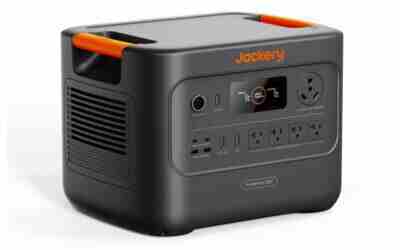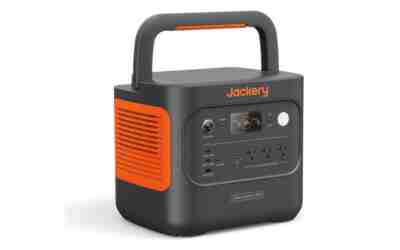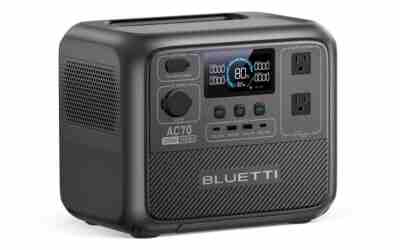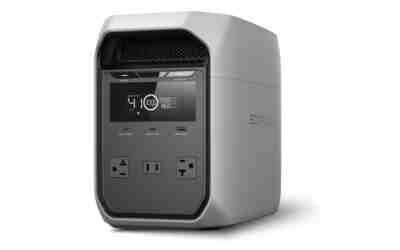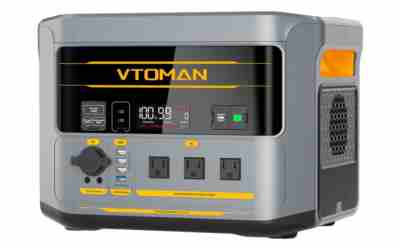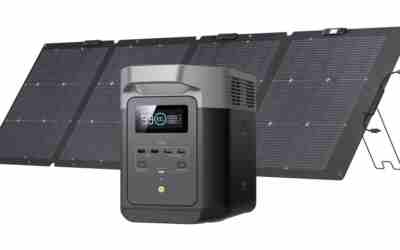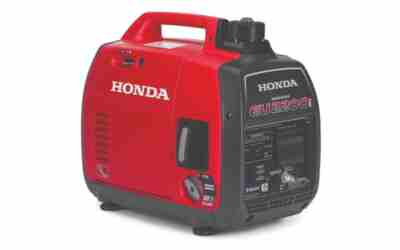

Our editorial team weighed Baldr's published specifications and how it stacks up against similar products in the generators category. What stands out: Portable at 18.5 lbs, Powers CPAP Two Full Nights, and 3-Way Recharging. Where it falls short: May Auto-Shutoff at Low Loads and Not for Sustained High-Draw Loads. That puts it at 8/10 on our WG Score – an excellent, well-rounded option.
 Reviewed bySarah Watts
When shopping for a portable power station, many buyers fixate on peak wattage or the biggest battery capacity they can find, assuming that more is always better. But that mindset often leads to hauling a heavy, oversized unit that you rarely use to its full potential. The Baldr 808wh with 808Wh capacity takes a different approach, prioritizing portability and practical power in a lightweight 18.5 lb package. Based on specs and user feedback, this unit aims to be the sweet spot for campers, photographers, and home backup users who need reliable power without the back strain.
In this review, we break down the Baldr 808wh’s specs, pros, cons, and real-world suitability. We compare it against the OUKITEL P2001 Plus 2400W Solar Generator and other alternatives to help you decide if this is the right power station for your needs. We base our analysis on manufacturer specifications and aggregated user feedback, not hands-on testing.
Our Verdict
The Baldr 808wh is a lightweight, portable power source with 808Wh capacity and 1000W pure sine wave output. It is ideal for camping, photo shoots, and light home backup, but its capacity is limited for heavy appliances. If you need more power, consider a larger unit.
- Ultra-portable at 18.5 lbs
- 1000W pure sine wave output (2000W surge)
- 60W USB-C PD fast charging
- ECO mode for energy saving
- 808Wh capacity may be limiting for high-drain devices
- Solar recharge requires separate panel purchase
Specifications
| Spec | Value | Spec | Value |
|---|---|---|---|
| Battery Capacity (Wh) | 808Wh | Battery Type | NiMH Rechargeable |
| Battery Lifespan | 500–1000 cycles; 3–5 year lifespan (estimated) | AC Output (W) | 1000 |
| Peak Output (W) | 2000 | Output Voltage | 120V |
| Solar Input (W) | 120W max solar input | Recharge Time | 6.7 hours via AC; 16.5 hours via car |
| Runtimei | ~2.8h for camping | Outlets & Ports | 1 outlets/ports |
| Parallel Capable | No | Weight | 13.4 lbs |
| Dimensions | 9.1 x 6.6 x 7 in | Noise Level | quiet (~30dB) |
| RV Ready | Yes | Certifications | FCC, CE, RoHS, UN38.3, MSDS |
| In the Box | Charger, Generator, Manual | Warranty | 2 Years |
In-Depth Review of the Baldr 808wh
When evaluating a portable power station, the key criteria are not just peak watts but the real-world capacity (Wh), the quality of the inverter (pure sine wave vs modified), the number and type of outlets, and how quickly you can recharge. Portability also matters if you plan to move it around. We apply these filters to the BALDR 1000W below.
Battery Capacity and Power Output
The BALDR 1000W packs an 808Wh lithium battery with a 1000W pure sine wave inverter (2000W surge). This means it can run devices up to 1000W continuously, like a mini-fridge (typically 60-100W), a CPAP machine (around 30-60W), or power tools. For example, a 100W mini-fridge would run for roughly 8 hours on a full charge (808Wh / 100W = 8.08 hours). However, if you need to power a 1500W space heater, this unit will not handle it. The pure sine wave output is a plus for sensitive electronics like laptops and medical devices.
Portability and Build Quality
At 18.5 lbs, the BALDR is significantly lighter than many competitors, making it easy to carry to campsites or photo shoots. The reinforced flip-up handle adds convenience. Users report that the build feels sturdy, though the plastic casing is not designed for extreme drops. The unit is fire and drop proof according to the manufacturer, but it is still wise to handle it with care.
Charging Options and Speed
The BALDR can be recharged three ways: AC wall outlet (6.7 hours), solar panel (8.4 hours with 120W input), or car outlet. The MPPT solar controller optimizes solar charging, but you need to purchase a solar panel separately. The 60W USB-C PD port is a highlight, charging a MacBook Pro 16″ 50% faster than standard chargers, according to the manufacturer. This is a practical feature for photographers and remote workers.
Outlets and Connectivity
The unit offers multiple outlets: AC outlets, USB-A (18W Quick Charge 3.0), USB-C PD, and a car port. You can power 7+ devices simultaneously, which is great for group camping or running multiple tools. However, note that the total draw must stay under 1000W, so you cannot run a high-wattage appliance alongside others without tripping the inverter. The ECO mode helps reduce standby power drain, extending battery life during long trips.
Battery Longevity and Certifications
The BALDR uses a lithium battery with a 7-level BMS protection system, which safeguards against overcharge, overcurrent, and short circuits. The manufacturer offers a 24-month warranty and lifetime customer support. While the exact lifespan is not specified, lithium batteries typically last 500-1000 charge cycles. This is a trade-off: the compact size limits capacity, so heavy users may need to recharge more often, potentially shortening battery lifespan over time.
How It Compares
Quick Comparison: Alternatives

- – Portable at 18.5 lbs.
- – Powers CPAP Two Full Nights.
- – 3-Way Recharging.
- – May Auto-Shutoff at Low Loads.
- – Not for Sustained High-Draw Loads.
- – Slower Off-Brand Support.
Comparison Analysis
vs OUKITEL P2001 Plus (Competitor): The OUKITEL P2001 Plus offers a much larger 2048Wh capacity and 2400W output, which is a clear win for power-hungry devices like full-size refrigerators or power tools. However, it is considerably heavier and bulkier, making the BALDR the better choice for portability. If you need extended runtime for home backup, the OUKITEL is the better pick; if you prioritize carrying ease, stick with the BALDR. Read our OUKITEL P2001 Plus review for more.
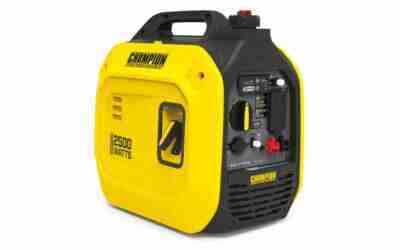
vs Champion 201169 (Competitor): The Champion 201169 is a gas-powered generator with a much higher output, designed for heavy-duty home backup. It runs on fuel, so it is not a direct alternative for indoor or silent use. The BALDR is quieter and emissions-free, making it safer for indoor emergency power. However, the Champion can run for days on a tank of gas, while the BALDR’s battery is limited to 808Wh. If you need continuous power for days, the Champion is the better choice; for short outages or camping, the BALDR wins on convenience.
Is It Right for You?
Consider Something Else If…
- You need to power high-wattage appliances like a 1500W heater or full-size refrigerator; the 808Wh capacity and 1000W limit will not suffice.
- You require long runtime for multi-day off-grid trips without access to recharging; the battery will deplete quickly under heavy use.
- You want solar charging out of the box; the BALDR does not include a solar panel, adding to the initial cost.
Best For
- Campers and RVers who need a lightweight power source for lights, phones, and small appliances.
- Photographers and videographers who need to charge cameras, drones, and laptops in the field, thanks to the 60W USB-C PD.
- Homeowners looking for a quiet, emission-free backup for CPAP machines, routers, and medical devices during short outages.
- DIYers and contractors who need portable power for tools up to 1000W on job sites.
Final Verdict
The main limitation of the BALDR 1000W is its 808Wh capacity, which may be insufficient for high-drain devices or extended outages. However, its lightweight design, 1000W pure sine wave output, and fast USB-C charging make it a versatile option for many users.
Other trade-offs include the need to purchase a solar panel separately and the lack of expansion options. But for its intended use cases, the BALDR delivers solid performance in a portable package.
If you prioritize portability and have moderate power needs, the BALDR is a great choice. If you need more capacity, consider the OUKITEL P2001 Plus or a gas generator like the Champion 201169. Check our Champion 201169 review for a fuel-based alternative.
View on Amazon.comFrequently Asked Questions
How long does the Baldr 808wh take to charge?
According to the manufacturer, it takes about 6.7 hours via AC wall outlet and 8.4 hours with a 120W solar panel. Car charging is also possible but takes longer.
How many appliances can it run simultaneously?
The BALDR can power 7+ devices at once, as long as the total wattage stays under 1000W. It has multiple AC, USB-A, USB-C, and car outlets.
How long will the battery last before replacement?
The lithium battery is not specified, but typically lasts 500-1000 charge cycles. The 24-month warranty covers defects, and the BMS protects against overcharging.
Can the BALDR 1000W power a refrigerator?
Yes, a mini-fridge drawing around 60-100W can run for roughly 8 hours on a full charge (808Wh / 100W = 8.08 hours). A full-size fridge may exceed the 1000W limit.
Is it compatible with solar panels?
Yes, it supports solar charging via a 120W input with MPPT optimization. However, the solar panel is not included and must be purchased separately.