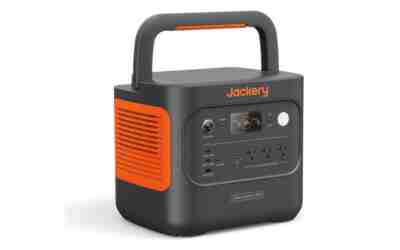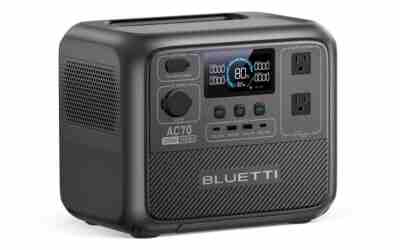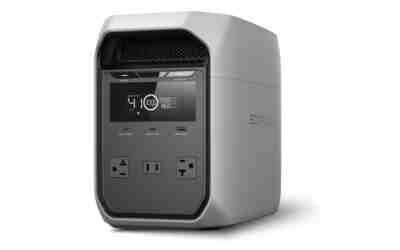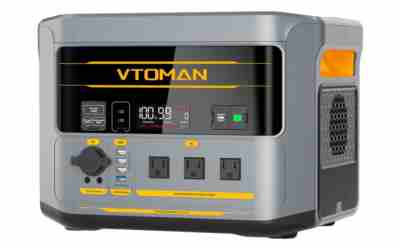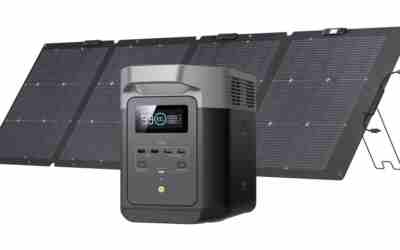

Our editorial team weighed 's published specifications and how it stacks up against similar products in the generators category. What stands out: 10-Year LiFePO4 Lifespan, 6-Port Charging, and Quick Recharge Options. Where it falls short: 300W Continuous Limit and Solar Panel Sold Separately. That puts it at 8.2/10 on our WG Score – an excellent, well-rounded option.
 Reviewed byEthan
Finding a reliable power source for short camping trips or emergency backup can be a challenge in the crowded Reviews category. The Sin Keu 260wh enters the fray as a compact, long-lasting solution designed for those who prioritize durability over raw scale. According to the manufacturer, this unit is built to provide over a decade of consistent performance, making it a standout choice for users who want a ‘set it and forget it’ power backup for their mobile devices and small appliances.
In this sin keu 260wh review for 2026, we will dive deep into the technical specifications, port variety, and charging efficiency of the Anker 521. We also compare it against top-tier alternatives like the EF ECOFLOW RIVER 3 Plus, the ZeroKor 300W Solar Generator, and the BLUETTI Elite 30 V2. By looking at aggregated user feedback and manufacturer data, we aim to determine if this PowerHouse lives up to its name. For more options, check out our guide on The 5 Best Small Generators For Home of 2026.

Anker 521 256Wh LiFePO4 Portable Power Station, 300W Solar Generator 600W Surge, 6 Ports PowerHouse







Our Verdict
The Anker 521 is a highly durable entry-level power station that excels in longevity thanks to its LiFePO4 battery chemistry. While it lacks the high surge capacity of larger units, its 10-year lifespan and 5-year warranty make it a premier choice for reliable, lightweight portable power.
- InfiniPower technology for 10-year lifespan
- LiFePO4 batteries offer 3,000+ cycles
- Compact and impact-resistant design
- Worry-free 5-year full device warranty
- Limited 256Wh capacity for high-drain tools
- Slower AC recharge compared to X-Stream tech
Specifications
| Spec | Value | Spec | Value |
|---|---|---|---|
| Battery Capacity (Wh) | 256Wh | Battery Type | LiFePO4 |
| Battery Lifespan | 3000–4000 cycles; 8–10 year lifespan (estimated) | AC Output (W) | 300 |
| Peak Output (W) | 600 | Output Voltage | 110V |
| Solar Input (W) | DC/Anderson, max 75W (SOLIX C300) | Recharge Time | ~1.2 hrs |
| Runtimei | ~1.8h for travel | Outlets & Ports | 2 outlets and ports: 1 car power output |
| Parallel Capable | No | Weight | 8.16 lbs |
| Dimensions | 8.5 x 5.67 x 8.33 in | Noise Level | quiet (~30dB) |
| RV Ready | Yes | Certifications | FCC, IC, UL 2743, CE, RoHS, UN38.3 |
| In the Box | SOLIX C300 Power Station (288Wh), AC wall adapter (65W), Car charging cable (12V/cigarette), User manual | Warranty | 2-year manufacturer warranty |
Battery Capacity and Power Output
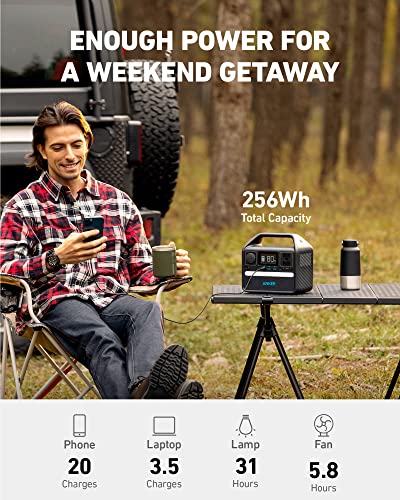
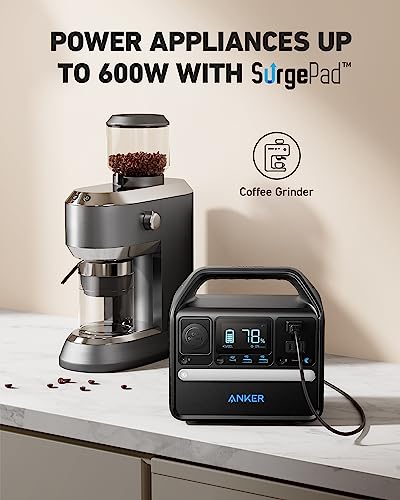
The Anker 521 features a 256Wh capacity, which users report is ideal for keeping smartphones, tablets, and laptops charged during weekend excursions. With a 300W continuous output and SurgePower technology that manages peaks up to 600W, it can handle small appliances like CPAP machines or LED lights without issue. However, users should note that it is not intended for high-wattage kitchen appliances or power tools. For those needing more overhead, you might explore VTOMAN Jump 600X Portable Power Station Review 2026.
Portability and Build Quality
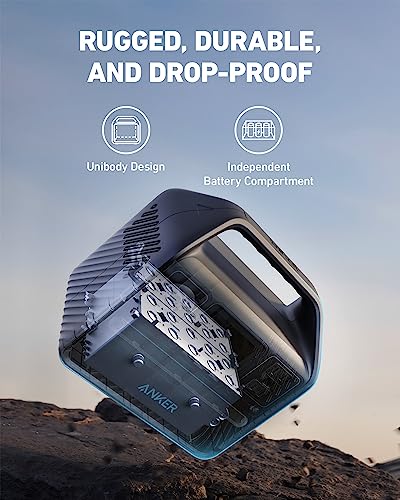
At just under 10 lbs, the Anker 521 is designed for one-handed carry. The build quality is a significant selling point; the manufacturer highlights a drop-proof structural design and industry-standard components that contribute to its decade-long performance rating. The integrated handle and compact dimensions make it easy to pack into a trunk for camping or store in a closet for emergency home backup.
Charging Options and Speed
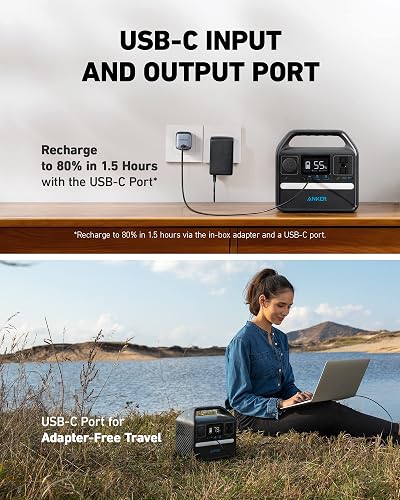
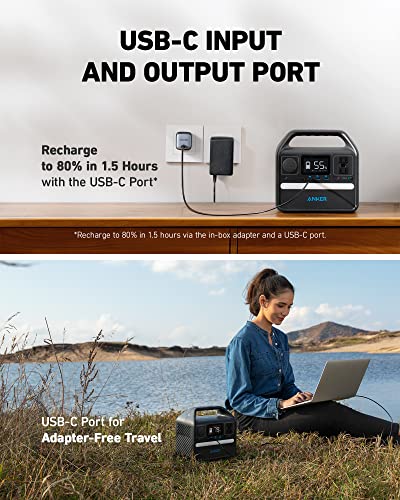
Recharging the Anker 521 is straightforward. Using the included DC adapter and a 60W USB-C PD cable simultaneously, users can reach an 80% charge in approximately 2.5 hours. It also supports solar charging, allowing it to function as a solar generator when paired with compatible panels. This flexibility is vital for outdoor enthusiasts who may not have access to a wall outlet for several days.
Outlets and Connectivity
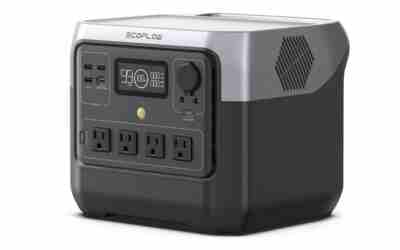
The unit serves as a versatile multi-device hub with 6 available ports. It includes two AC outlets, two USB-A ports, one 60W USB-C port, and a car outlet. The inclusion of a high-speed USB-C port is particularly useful for modern laptop users, as it eliminates the need for bulky power bricks. According to user feedback, the port layout is intuitive, though the proximity of the AC outlets can be tight for larger plugs.
Battery Longevity and Certifications
Longevity is where the Anker 521 truly shines. By utilizing LiFePO4 (Lithium Iron Phosphate) battery chemistry, the unit is rated for 3,000 charging cycles before reaching 80% capacity. Combined with smart temperature control that monitors heat up to 100 times per second, the InfiniPower system ensures the internal electronics remain stable over years of use.
How It Compares
Quick Comparison: Anker 521 vs Alternatives
- – 10-Year LiFePO4 Lifespan.
- – 6-Port Charging.
- – Quick Recharge Options.
- – Lightning-Fast UPS Response.
- – 7 Versatile Outlets.
- – 3,000-Cycle, 10-Year Battery.
- – Compact at 5 lbs.
- – Pure Sine Wave AC Output.
- – Integrated Solar Panel.
- – Lightweight & Compact.
- – Fast 0-80% Charge in 45 Min.
- – Quiet at 30dB, Smart Cooling.
- – 300W Continuous Limit.
- – Solar Panel Sold Separately.
- – No App Control or Light.
- – Modest 286Wh Base Capacity.
- – 600W Continuous / 1200W Surge.
- – Slightly Bulky for Handheld Carry.
- – Slow Solar, Best for Maintenance.
- – 300W Max Output.
- – Not for Heavy Heating Elements.
- – Modest 288Wh Capacity.
- – Solar Ships Separately.
- – Only Two AC Outlets.
Head-to-Head: How Does It Stack Up?
When compared to the EF ECOFLOW RIVER 3 Plus (Competitor), the Anker 521 offers a more modest 300W output vs the EcoFlow’s 600W (1200W surge). However, the Anker focuses heavily on lifespan and simplicity, whereas the EcoFlow adds complexity with app control and UPS features. If you require rapid 1-hour AC charging, the EcoFlow is the better pick, but for long-term battery health and a simpler interface, the Anker remains a strong contender. See our The 5 Best 1000 Watt Solar Generators of 2026 for larger capacity comparisons.
Against the BLUETTI Solar Generator Elite 30 V2 (Competitor), the Anker 521 holds its own in build durability, though the BLUETTI offers a higher 1500W ‘power lifting’ mode for resistive loads. The BLUETTI also boasts a faster 70-minute full recharge time. Buyers should choose the Anker if they prefer the 5-year warranty and a proven track record of thermal stability, while the BLUETTI is better for those needing to run slightly heavier appliances occasionally.
Finally, the ZeroKor 300W Solar Generator (Competitor) provides a higher initial value by including a 40W solar panel in the kit. However, the ZeroKor uses standard Lithium-ion batteries rather than the Anker’s LiFePO4, meaning the Anker will likely last three to four times as many years. If you need a complete kit for a single season, ZeroKor is budget-friendly, but for a decade of use, the Anker 521 is the superior investment.
Is It Right for You?
Best For
- Weekend campers needing to charge phones and laptops multiple times.
- CPAP users looking for a reliable, quiet overnight power source.
- Emergency preparedness kits where battery shelf-life and cycle count are critical.
- Users who prefer a long 5-year warranty for peace of mind.
Consider Something Else If…
- You need to power high-wattage devices like coffee makers or hair dryers (Consider the ALL-Power 3300W Peak Power Quiet Inverter Generator).
- You require ultra-fast AC recharging in under 90 minutes.
Final Verdict
The Anker 521 stands out as a premier entry-level power station because it doesn’t cut corners on battery chemistry. While many competitors in this price range use standard lithium-ion, Anker’s commitment to LiFePO4 ensures that this 256Wh unit will remain functional long after others have lost their capacity. Its SurgePower technology and diverse port selection provide enough utility for most outdoor and emergency scenarios.
The primary trade-off is charging speed and raw capacity. If you are looking for a unit to power a full-sized refrigerator or a heater, this is not the right choice. However, as a portable hub for electronics, it is exceptionally well-engineered and durable.
Ultimately, we recommend the Anker 521 for the ‘value over time’ buyer. It may not have the highest wattage in the category, but its 10-year lifespan makes it one of the most cost-effective portable power solutions on the market today.
View on Amazon.comFrequently Asked Questions
How long does the Anker 521 take to charge?
According to the manufacturer, you can recharge the station to 80% in under 2.5 hours by using the included adapter and a USB-C port simultaneously. For more on charging tech, visit our By Features page.
What devices can the Anker 521 power?
With a 300W continuous output, it can power smartphones, laptops, LED lights, and CPAP machines. It is not suitable for devices exceeding 300W, such as microwaves or space heaters.
How long will the battery last before it needs replacement?
The LiFePO4 battery is rated for 3,000 full charge cycles. This typically equates to about 10 years of everyday use before the capacity drops to 80% of its original rating.
Is the Anker 521 compatible with solar panels?
Yes, it supports solar input via the DC port. While the solar panel is optional and sold separately, it allows the unit to function as a sustainable outdoor generator.
Browse All Models

Pros
- Compact and portable at just 5 lbs for easy transport
- Versatile outlets including pure sine wave AC for sensitive electronics
- Integrated solar panel charges unit and other devices simultaneously
- Built-in flashlight with SOS mode praised in camping reviews
- Fast USB charging options for phones and tablets
Cons
- Solar recharge is slow, better for maintenance than quick top-ups
- Limited to 300W max, unsuitable for high-draw appliances like hair dryers
- Not ideal for devices needing air compressors or heavy heating elements
The ZeroKor 300W portable solar generator is a compact power solution pairing a 280Wh lithium-ion battery station with a 40W foldable solar panel, ideal for campers, RV enthusiasts, and anyone facing home outages. It delivers 110V AC power alongside USB, DC, and QC ports to run phones, laptops, tablets, and small fans without noise or fumes.
Standout features include pure sine wave AC outlets for safe device use, an SOS flashlight for emergencies, and the ability to charge the unit or other gear via solar. Reviews highlight its camping reliability, with users noting the panel's dual-charging capability and solid performance for off-grid needs, though solar recharges take time.
Build quality shines in its 5 lb lightweight frame and rugged design suited for -10°C to 40°C temps, with BMS safeguards against shorts and overloads. Multiple ports handle daily essentials efficiently, making it a practical pick for portable power.
Drawbacks include slower solar input and a 300W cap that rules out heat-heavy appliances. Still, for moderate loads, it excels.
Verdict: A top choice for eco-conscious adventurers seeking dependable, portable backup power without complexity.
Power: 300W rated AC output (550W starting), 110V, 60Hz, 2.73A.
Battery: 280Wh lithium-ion, solar/AC/DC rechargeable.
Ports: 2x 110V AC, DC (9-12.6V/10A), 3x USB-A (5V/3A), QC3.0 USB, USB-C.
Dimensions: 8.5 x 6.7 x 4.1 inches, 5 lbs.
Features: BMS protection, LED flashlight (reading/SOS), runtime up to 7 hours.

Pros
- Lightning-fast UPS response safeguards sensitive electronics
- Versatile 7 outlets handle family devices from phones to fridges
- Long-lasting LiFePO4 battery endures 3000 cycles or 10 years
- Durable IP54-rated build resists water, fire, and drops
- Compact 10.4 lb design enhances portability
Cons
- Base 286Wh capacity suits light to moderate loads, needs expansion for heavy prolonged use
- Continuous output caps at 600W despite 1200W surge capability
- 10.4 lb weight may feel bulky for extended handheld carrying
The EcoFlow RIVER 3 Plus is a versatile portable power station designed for campers, remote workers, and anyone needing reliable off-grid or backup power. With a 286Wh LiFePO4 battery expandable to 858Wh via extra batteries, it powers essentials like laptops, fridges, and gaming consoles, making it a go-to for outdoor adventures or home emergencies.
Standout features include a pro-grade <10ms UPS for seamless switchover during outages, protecting NAS servers and desktops with auto-save alerts. It delivers steady 600W continuous and 1200W surge output across 7 outlets, doubles runtime for sub-100W devices, and recharges fully in 1 hour via AC or 1.5 hours solar. Real-world tests show it running a car fridge for 3.6 hours or a game console for over 2 hours on a single charge.
Build quality shines with a compact 9.2 x 9.1 x 5.8-inch frame weighing 10.4 lbs, IP54 water resistance, fire-retardant shell, and drop-proof durability up to 3 feet. Ultra-quiet at <30dB, it's unobtrusive even nearby, while Bluetooth/Wi-Fi app control offers remote monitoring, timed charging, and power-saving modes for effortless management.
Potential drawbacks include the base capacity limiting heavy loads without expansion and moderate weight for true one-hand portability. Still, its efficiency and safety features like X-Guard outweigh these for most users.
Overall, the RIVER 3 Plus earns high marks for blending power, portability, and smart tech, delivering exceptional value for backup needs and outdoor power.
Capacity: 286Wh (expandable to 858Wh)
Output: 600W continuous, 1200W surge (X-Boost), 7 outlets (3 AC UPS, 2 USB-A, USB-C, car port)
Recharge: 1hr AC, 1.5hr solar (220W input)
Battery: LiFePO4, 3000 cycles to 80% capacity
Dimensions/Weight: 9.2 x 9.1 x 5.8 in, 10.4 lbs
Other: <30dB noise, <10ms UPS, IP54 protection, app control
Run times on base 286Wh (extend with extra batteries):
NAS Server (40W): 5.2 hours
Car Fridge (60W): 3.6 hours
Game Console (100W): 2.2 hours
Refrigerator (400W): 31 minutes
Desktop (600W): 21 minutes
Pros
- Exceptional 10-year LiFePO4 battery lifespan
- Versatile 6-port charging for multiple devices
- Quick recharge options including solar compatibility
- Portable size and weight for easy transport
- Surge capacity powers demanding electronics
Cons
- Limited to 300W continuous, skips high-power appliances like microwaves
- Solar panel sold separately
- No app control or built-in light
The Anker 521 Portable Power Station is a upgraded 256Wh LiFePO4 powerhouse offering 300W continuous output and 600W surge. It functions as a solar generator with optional panels, perfect for powering devices during camping, drone flights, or video production without grid access.
Targeted at outdoor enthusiasts, drone pilots, and content creators, it excels where reliability matters. Users praise its battery life for drone charging and camera power on commercial shoots, with 6 ports handling laptops, phones, and tools simultaneously.
Key strengths include fast USB-C PD output up to 60W, 2.5-hour wall recharge to 80%, and solar input for off-grid use. SurgePower and InfiniPower tech ensure robust performance and longevity in harsh conditions from -4°F to 104°F.
Build quality feels solid yet portable at 8.2 lbs, though power-saving mode is essential to avoid idle drain. It cannot handle over-300W appliances and requires initial full charge activation.
Overall verdict: Top pick for lightweight, long-lasting portable power. Delivers value for medium loads on adventures or backups.

Pros
- Lightweight and compact design ideal for travel
- Fast charging options with 0-80% in 45 minutes via AC
- Quiet operation at 30dB with smart cooling
- Multiple output ports including 140W PD for devices
- Customizable UPS modes for flexible backup needs
Cons
- 288Wh capacity limits runtime for high-power devices
- Solar panel ships separately, requiring coordination
- Only two AC outlets may limit simultaneous device use
The BLUETTI Elite 30 V2 is a lightweight 288Wh LiFePO4 portable power station bundled with a 60W solar panel, designed for campers, road trippers, outdoor enthusiasts, and those needing reliable home backup during outages. At just 9.5 pounds and backpack-sized, it delivers on-the-go power for daily essentials like phones, laptops, lights, and small appliances without the bulk of traditional generators.
Standout features include 600W continuous AC output with 1500W surge lifting power, enabling it to handle demanding devices briefly. The 10ms UPS function switches to battery power almost instantly during blackouts, with four customizable modes like PV Priority for solar-heavy areas. UltraCell technology and smart cooling reduce power consumption by 50%, extending runtime, while 8 charging methods—from 380W AC wall charging to car, solar, and even lead-acid battery—offer flexibility. App control via Bluetooth or Wi-Fi allows remote monitoring, and it recharges fully in 5.5 hours with the included 60W panel.
Build quality shines with a durable LiFePO4 battery offering 3000+ cycles, low 30dB noise, and rugged dimensions of 9.8x7x6.6 inches. Nine output ports, including 140W PD USB-C, cover diverse needs, and the efficient inverter ensures 90%+ performance. It adapts well to extreme conditions thanks to upgraded cooling.
Drawbacks include the modest 288Wh capacity, best for light to moderate loads rather than heavy prolonged use, and the solar panel shipping separately. With only two AC outlets, it suits solo or small-group scenarios over large setups.
Overall, the Elite 30 V2 excels as an entry-level solar generator for portable, eco-friendly power. Ideal for anyone prioritizing convenience and reliability in camping, emergencies, or daily off-grid needs—highly recommended for its efficiency and versatility.
Capacity: 288Wh LiFePO4 (3000+ cycles)
AC Output: 2×120V (600W total, 1500W surge)
Inputs: AC 380W max, Solar 200W max, Car, Lead-Acid
Ports: 9 total (incl. 140W PD USB-C)
Dimensions: 9.8 x 7 x 6.6 inches, 9.5 lbs
Special Features: 10ms UPS, App Control, 30dB Noise, UltraCell Tech
The Elite 30 V2 supports 8 methods: AC (380W, 0-100% in 70 mins), Solar (200W max, 5.5 hrs with 60W panel), Car (12/24V), Lead-Acid Battery, BLUETTI Charger 1, and combinations like AC+Solar. Use included cables for 60W panel; others may need separate solar cable. Efficiency formula: Runtime = 288Wh × 0.95 DoD × 0.90 Inverter ÷ (Device Power + Idle ~5-9W).