Our editorial team weighed Takki's published specifications and how it stacks up against similar products in the generators category. What stands out: Includes 21W Solar Panel, Versatile Output Ports incl. 110V AC, and Extremely Portable, Under 3 lbs. Where it falls short: 80W Continuous Limit and Not for Simultaneous Charge & Use. That puts it at 7.9/10 on our WG Score – a solid, dependable choice.
 Reviewed bySarah Watts
When selecting the ideal portable power station for use in Ireland, the most critical specification to consider is the combination of its Watt-hour (Wh) capacity and its AC output capability. These two metrics dictate how long the unit can power your devices and which devices it can power. While brand and price are certainly factors, a power station that doesn’t meet your essential power needs is ultimately impractical. Understanding these core specifications ensures you choose a unit that can handle everything from charging your phone on a camping trip to keeping essential appliances running during a power cut. For more insights into portable power solutions, check out our guide on The 5 Best Portable Power Stations For Projector of 2026.
Watt-hour (Wh) Capacity & AC Output Explained
Watt-hour (Wh) capacity indicates the total energy a portable power station can store. A higher Wh rating means the unit can supply power for a longer duration. AC output, measured in Watts (W), tells you the maximum continuous power the station can deliver to AC-powered devices. It’s crucial to match the power station’s AC output to the wattage requirements of the devices you intend to use. For example, a power station with a 500W AC output can run devices that draw up to 500 watts continuously.
To put this into perspective, consider the ALLWEI 500W Solar Generator Kit with a 512Wh LiFePO4 Power Station. If you were to power a typical 60W portable mini-fridge, this 512Wh capacity unit could theoretically run it for approximately 8.5 hours (512 Wh / 60 W = 8.53 hours). This calculation provides a practical understanding of how Wh capacity translates into real-world usage, helping you determine if a particular power station meets your specific duration needs. Always factor in appliance startup surges and efficiency losses for a more conservative estimate.

Pros
- Powerful output in a surprisingly small, lightweight package
- Fast charging for phones, laptops, and tablets
- Durable build with anti-collision corners and reliable performance
- Versatile ports and solar compatibility for outdoor adventures
- Stable pure sine wave power with no noise
Cons
- Only one AC outlet limits simultaneous high-power use
- Solar panel not included
- Capacity suits light-duty devices, not high-drain appliances
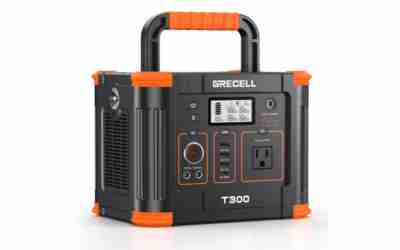
The GRECELL T300 is a compact 300W portable power station with 288Wh lithium battery capacity, designed for outdoor enthusiasts, campers, RV travelers, and home emergency backups. It excels at powering multiple devices like phones, laptops, fans, mini-fridges, and projectors simultaneously through its array of ports, making it a versatile solar generator for off-grid adventures.
Standout features include a 330W continuous output with 600W surge capability via pure sine wave AC, ensuring safe operation for sensitive electronics. Users praise its 60W USB-C PD for rapid laptop charging, multiple quick-charge USB-A ports, and compatibility with solar panels via built-in MPPT controller. Real-world tests show it running small appliances steadily, charging phones multiple times, and maintaining quiet operation with efficient cooling fans during extended use.
Build quality impresses with a sturdy handle, reinforced corners for durability, and an intuitive LCD screen displaying battery level, input/output wattage. At 8.2 pounds and portable dimensions, it's easy to carry, and the upgraded battery management system provides overload, overcharge, and short-circuit protection for peace of mind.
Minor drawbacks include just one AC outlet and no included solar panel, which may require add-ons for full off-grid setups. Capacity limits it from high-drain items like kettles.
Overall, the GRECELL T300 delivers exceptional value as a reliable, portable power solution, earning high marks for performance in camping, travel, and outages. Ideal if you need compact backup without bulk.
Key Specs:
- Wattage: 288Wh
- Output: 330W Running / 600W Peak
- Ports: 1 AC, 1 USB-C PD 60W, 3 USB-A QC 18W, 1 Car, 2 DC
- Recharge: AC, Solar (MPPT), Car
- Weight: 8.2 lbs
- Dimensions: 12.72"L x 7.68"W x 8.46"H
- Warranty: 2 Years
- Model: T300

Pros
- Holds charge reliably even during extended storage, as noted by multiple users
- Quiet operation with smart fan that activates only when needed
- Multiple recharging options including solar compatibility enhance versatility
- Sturdy build and comfortable handle make it truly portable
- Powers small appliances and electronics effectively without issues
Cons
- Cannot sustain devices over 500W like coffee makers or heaters, leading to overload shutdowns
- Max input limited to around 150W, slowing recharge with some panels
- Battery drains if AC output left on without loads
The GRECELL T-500 is a compact 500W (peak 1000W) portable power station with 519Wh lithium-ion battery capacity, designed for outdoor enthusiasts, RV campers, and home emergency preparedness. It excels at powering up to 10 devices simultaneously through its array of outputs: 2 pure sine wave 110V AC outlets, USB-A QC3.0 ports, USB-C PD 60W, DC ports, car port, and wireless charger. Ideal for road trips, fishing, climbing, or blackouts, it keeps phones, laptops, fans, routers, TVs, and CPAP machines running reliably.
Standout performance includes fast charging for devices and real-world runtime for low-to-medium power needs, with users praising its ability to hold charge over long periods and recharge efficiently via wall, car, or 100W solar panels. The LCD screen provides clear visibility of battery levels, power in/out, and modes, while the built-in BMS ensures safe operation with protections against overvoltage, short circuits, and overheating. Reviewers highlight its quiet smart fan and effectiveness for campsite essentials like lights and mini Starlink, though it shines most for non-heating appliances under 500W.
Build quality impresses with a lightweight 14lb frame, solid handle, and durable plastic exterior measuring 11.6 x 7.9 x 7.9 inches. The LED light with strobe/SOS functions adds utility for emergencies. Included accessories like cables and a storage bag enhance usability. Some users note the need to turn off unused outputs to preserve battery, but overall, it feels sturdy and portable.
Drawbacks include inability to handle high-wattage heating devices like coffee percolators, which trigger safety shutdowns, and a 150W input cap that limits super-fast solar recharges. Rare complaints mention quick drain under light loads in defective units, but customer support resolves issues promptly.
Verdict: A strong value for portable backup power, well-regarded for reliability in camping and emergencies. Buy if you need lightweight versatility without high-power demands; upgrade for heaters or faster inputs.
Capacity: 519Wh / 140400mAh
Output: 500W continuous (1000W peak), 2x AC 110V, 3x USB-A 18W, 1x USB-C 60W, 2x DC 12V/5A, Car 12V/10A, Wireless 10W
Weight: 14.1 lbs | Dimensions: 11.6 x 7.9 x 7.9 inches
Recharge: Solar (6-9hrs 100W), Wall (6-7hrs), Car (7-8hrs)
Other: Pure sine wave, BMS safety, LCD display, LED light/SOS, 2-year warranty

Pros
- Exceptional battery longevity with LiFePO4 and BMS safety system
- Versatile 9 output ports handle phones, laptops, CPAP, fans, and tools
- Quick charging options including solar, AC, and car for non-stop power
- Compact and portable for easy transport in camping or emergencies
Cons
- Solar charging slows without direct full sun exposure
- Auto-sleep mode may shut off with very low-draw devices
- Occasional reports of inconsistent performance or capacity drain
The ALLWEI 500W solar generator kit pairs a 512Wh LiFePO4 portable power station with a 100W solar panel, making it a versatile solution for off-grid camping, RV adventures, home backups, and emergency power needs like running CPAP machines during outages. Its 500W output with 1000W surge handles fans, mini fridges, laptops, and tools effectively, while multiple charging methods ensure quick top-ups.
Standout features include the ultra-long-lasting LiFePO4 battery with over 3000 cycles and built-in BMS for safety, plus a 10ms UPS function that prevents data loss on PCs or servers. Real-world performance shines in sunny conditions for solar recharging phones and fridges, as noted by boondock campers, though it excels most with direct sunlight or AC/car inputs for faster results.
Build quality is solid with a lightweight 13-pound frame and intuitive controls, though the fan runs noticeably loud under load and some users report tighter DC port fits. Design prioritizes portability at 11.7x7.7x7.7 inches, fitting easily in vehicles or tents.
Drawbacks include slower solar rates in shade and rare capacity inconsistencies, but these are minor for most users. Overall, this kit delivers reliable, green power for outdoor enthusiasts and backup seekers, earning strong praise for value and ease.
Battery: 512Wh LiFePO4, 3000+ cycles
Output: 500W (1000W surge), 2 AC, USB-C PD100W/27W, 2 USB-A QC3.0, 2 DC 5521, Car port
Charging: AC 2.5-3.5hrs (Q mode), Solar 6.5-7.5hrs, Car 4.5-5.5hrs
Dimensions: 11.7 x 7.7 x 7.7 inches, 13 lbs
Other: UPS <10ms, Pass-through charging, 0-40°C operation
Ideal for RV camping, home outages, or outdoor use powering up to 50W fans for 9+ hours. Pair with direct sun for best solar efficiency; use AC for speed. Avoid overloads over 500W by resetting via front button. Maintain >30% battery for longevity. Compatible with 12-24V solar panels.

Pros
- Multiple output ports including 2 AC outlets for broad device compatibility
- Lightweight and compact for superior portability
- Three flexible recharging methods including solar compatibility
- Integrated LED light with multiple modes enhances utility
- 24-month warranty and reliable lithium battery performance
Cons
- 88Wh capacity insufficient for all-night CPAP use or high-power devices
- Solar panel sold separately
- AC output limited to 120W continuous for larger appliances
The HOWEASY H120 is a compact 88Wh portable power station designed for outdoor enthusiasts, campers, hunters, and anyone needing emergency backup power. Weighing just 2.3 pounds and measuring 6.6 x 4 x 3 inches, it delivers 120W continuous power (240W peak) through eight outlets, including two 110V AC sockets, making it perfect for charging phones, laptops, fans, lights, and other low-to-medium power devices during off-grid adventures or blackouts.
Standout features include quick-charge USB ports, a 18W USB-C output, two 12V DC ports, and a bright LED flashlight with steady, flashing, and SOS modes for visibility in the dark. It recharges via AC adapter, compatible solar panels (15V-24V), or car charger, offering flexibility and a cycle life exceeding 1500 charges. Real-world performance shines for short-term use, like powering a mini fan or lights for hours, with an LED display providing clear battery and output status.
Build quality is solid with a durable lithium battery, BMS protection system, and airline-approved size for travel. The hidden handle adds convenience without bulk. However, its capacity limits runtime for power-hungry items, and solar charging requires a separate panel purchase.
Overall, the H120 excels as a reliable, portable companion for day trips and emergencies, earning high marks for versatility and ease of use. Ideal if you need lightweight power without complexity.
Capacity: 88Wh (24,000mAh)
Output: 120W continuous (240W peak), 2x 110V AC, 1x USB-C (18W), 2x QC3.0 USB, 1x USB-A, 2x DC 12V
Inputs: AC adapter (DC 15V/1.5A), Solar (15-24V/1.5A), Car charger
Dimensions: 6.6 x 4 x 3 inches, Weight: 2.3 lbs
Other: LED flashlight (3 modes), Working temp: 14F-104F, Cycle life: >1500
Check your device's max power against 120W; total load under 240W peak. Runtime formula: 88Wh x 0.85 / device watts. Best for camping lights, fans, chargers; not full CPAP nights. Pair with 20-60W solar panel for off-grid recharging. Calibrate BMS by full charge/discharge if display seems off.

Pros
- Includes foldable 21W solar panel for sustainable recharging
- Multiple output ports including 110V AC for versatile device compatibility
- Extremely portable at under 3 lbs with backpack-friendly size
- Integrated LED lighting with SOS mode for safety
- Fast charging options via AC adapter or solar
Cons
- Limited to 80W continuous power, auto-cuts off higher loads
- Not recommended for simultaneous charging and powering devices
- Small 88.8Wh capacity suits light use, not heavy appliances
The Takki SP81 Solar Generator is a compact 88.8Wh portable power station paired with a 21W foldable solar panel, designed for campers, hikers, RV enthusiasts, and anyone facing home power outages. Weighing just 2.29 lbs for the station and 0.92 lbs for the panel, it delivers reliable backup power for phones, laptops, small TVs, and lights without the bulk of traditional generators.
Standout features include two 110V AC outlets rated at 80W continuous (120W peak), eight total ports for USB, QC3.0, PD, and DC outputs, plus an LED flashlight with SOS mode and light panel. In real-world use, it charges smartphones 4+ times or laptops 1-2 times, recharges via solar in 5-7 hours to 80%, or via AC adapter in 2 hours. The 23% efficient solar panel unfolds to capture sunlight effectively during outdoor adventures.
Build quality shines with a durable ABS shell in orange black, compact dimensions of 5.7 x 3 x 4.13 inches, and operation from 14F to 104F. It feels sturdy for its size, with easy-fold solar panel that packs flat. Accessories like AC adapter, cigarette lighter, and manual enhance usability.
Drawbacks include the 80W limit, which protects the unit but restricts higher-power devices, and advice against charging while powering others to preserve lifespan. Capacity suits emergencies or light loads, not prolonged heavy use.
Overall, the Takki SP81 excels as an affordable, portable solar solution for off-grid needs and backups. Ideal if you prioritize mobility and solar independence over high wattage.
Capacity: 88.8Wh (equiv. 24,000mAh)
AC Output: 80W continuous, 120W peak, 110V
Ports: 2x AC, 2x USB-A QC3.0 (18W), 2x USB-A (2.4A), 1x USB-C PD (18W), 1x DC (10A)
Solar Panel: 21W, >23% efficiency, foldable
Weight: Power station 2.29 lbs, panel 0.92 lbs
Dimensions: Station 5.7 x 3 x 4.13 in; Panel folded 8.18 x 10.78 x 0.78 in
1x 88.8Wh Portable Power Station, 1x 21W Foldable Solar Panel Set, 1x AC Adapter, 1x Cigarette Lighter, 1x User Manual.
Portable Power Stations: Our Picks Against the Numbers
High Capacity & Solar Integration: ALLWEI 500W Solar Generator Kit with 100W Panel, 512Wh LiFePO4 Power Station, 1000W Surge for RV Camping CPAP Home Backup
With a robust 512Wh capacity and 500W continuous AC output (1000W surge), the ALLWEI power station is designed for extended use and can handle multiple devices simultaneously. Its inclusion of a 100W solar panel makes it an excellent choice for off-grid applications or prolonged power outages, offering sustainable recharging options.
Skip this if: you need a unit that is ultra-compact and lightweight for very short trips, as its capacity makes it slightly heavier than smaller models.
View on Amazon.comVersatile Mid-Range Power: GRECELL 500W Portable Power Station 519Wh Solar Generator Peak 1000W 10-Port for Camping RV Emergency Backup
The GRECELL 500W Portable Power Station offers a substantial 519Wh capacity and 500W AC output, making it ideal for a wide range of applications from camping to home backup. Its ability to power up to 10 devices simultaneously provides excellent versatility for various power needs.
Skip this if: your primary need is for the absolute fastest charging times from an AC outlet, as some models may offer quicker wall-charging speeds.
View on Amazon.comCompact and Portable: GRECELL T300 300W Portable Power Station 288Wh Solar Generator, 600W Peak, 60W USB-C PD, Pure Sine Wave for Camping RV Travel
The GRECELL T300 features a 288Wh capacity and 300W AC output, striking a balance between portability and power. Its lighter weight and compact design make it highly suitable for shorter outdoor excursions or as a personal backup power source for smaller electronics and CPAP machines.
Skip this if: you require sustained power for high-wattage appliances like a portable refrigerator for an extended period.
View on Amazon.comQuick Comparison: Side by Side
- – Long-Lasting LiFePO4 With BMS.
- – 9 Versatile Output Ports.
- – Quick Multi-Method Charging.
- – Powerful Output, Small Package.
- – Fast Multi-Device Charging.
- – Durable Anti-Collision Design.
- – Holds Charge Reliably.
- – Quiet Smart Fan.
- – Multiple Recharging Options.
- – 2 AC Outlets.
- – Lightweight & Compact.
- – 3 Recharging Methods.
- – Includes 21W Solar Panel.
- – Versatile Output Ports incl. 110V AC.
- – Extremely Portable, Under 3 lbs.
- – Slower Without Direct Sun.
- – Auto-Sleep at Low Draw.
- – Occasional Inconsistent Performance.
- – Only One AC Outlet.
- – Solar Panel Not Included.
- – Best for Light-Duty Devices.
- – Not for Devices Over 500W.
- – 150W Max Input.
- – Drains If AC Left On Idle.
- – Modest 88Wh Capacity.
- – Solar Panel Sold Separately.
- – 120W AC Output Limit.
- – 80W Continuous Limit.
- – Not for Simultaneous Charge & Use.
- – Modest 88.8Wh Capacity.
Other Things That Matter for Portable Power Stations
Portability and Design
Beyond capacity, the physical aspects of a portable power station are crucial. Consider the weight and dimensions, especially if you plan to carry it frequently for camping, hiking, or other outdoor activities. Features like integrated handles or a rugged casing can significantly enhance usability. A compact design ensures it doesn’t take up too much space in your vehicle or home.
Output Ports and Charging Options
The variety of output ports available on a power station determines its versatility. Look for models with multiple AC outlets, USB-A, USB-C (especially with Power Delivery for laptops), and DC ports to accommodate all your devices. Furthermore, consider the recharging options. Most units can be charged via a wall outlet, car charger, or solar panels. The efficiency of solar charging, often supported by built-in MPPT controllers, can be a game-changer for extended off-grid adventures. For those needing specific power solutions, explore options like The 5 Best CPAP Portable Power Stations of 2026.
Battery Type and Lifespan
The type of battery used significantly impacts a power station’s lifespan and safety. LiFePO4 (Lithium Iron Phosphate) batteries, found in models like the ALLWEI 500W, offer superior longevity with thousands of charge cycles and enhanced safety compared to traditional lithium-ion batteries. While they might slightly increase the unit’s weight, the long-term durability and reliability often outweigh this consideration for many users.
Why Trust Our Reviews
Our commitment at WikiGenerators.com is to provide comprehensive and unbiased reviews to help you make informed decisions. We meticulously analyze product specifications, evaluate key features, and synthesize user feedback from a wide range of sources to highlight the strengths and potential trade-offs of each portable power station. Our recommendations are based on a thorough understanding of what makes a product perform reliably and efficiently in real-world scenarios.
We do not engage in hands-on testing but instead leverage extensive data points and expert insights to present you with a balanced perspective. Our goal is to empower you with the knowledge needed to choose the best portable power station for your specific needs, whether for emergencies, outdoor adventures, or simply as a reliable backup.
Frequently Asked Questions
How long can a portable power station run my devices?
The runtime of a portable power station depends on its Watt-hour (Wh) capacity and the wattage of the devices you are powering. To estimate, divide the power station’s Wh capacity by the device’s wattage. For example, a 500Wh power station running a 50W device could last approximately 10 hours. Always account for some power loss during conversion.
Are solar panels necessary for a portable power station?
While not strictly necessary, solar panels significantly enhance the versatility and sustainability of a portable power station, especially for extended off-grid use or during prolonged power outages. They allow you to recharge the unit using renewable energy, reducing reliance on traditional power sources. Many models, such as those featured in The 5 Best Indoor Solar Generators of 2026, come with solar charging capabilities.
What’s the difference between Watt-hours (Wh) and Watts (W)?
Watt-hours (Wh) measure the total energy stored in a battery, indicating how long a device can run. Watts (W) measure the instantaneous power a device consumes or a power station can output. Think of Wh as the size of the fuel tank and W as the rate of fuel consumption.