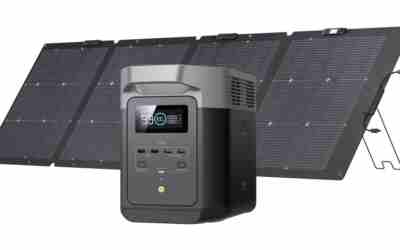

Whether you are outfitting a marine vessel for a long voyage, setting up a stealthy van conversion, or simply looking for a lightweight way to keep your batteries topped off while camping, the one spec that most determines whether a flexible solar panel purchase works out is its daily energy output in watt hours (Wh). This number directly tells you how much power you can expect to harvest each day under typical sunlight, which is far more actionable than brand name or price alone. A panel that claims 200W but only delivers 500Wh per day in real conditions will leave you with dead batteries sooner than a smaller panel with a higher daily yield. For a deeper look at portable power solutions, check out our OUKITEL P2001 Plus 2400W Solar Generator Review 2026.
Daily Energy Output Explained
Daily energy output is simply the amount of electricity a solar panel can produce over a full day of sunlight, measured in watt hours (Wh). It accounts for the panel’s wattage, its conversion efficiency, and real world factors like sun angle and temperature. For flexible panels, this metric is especially important because their thin profile can lead to higher operating temperatures, which slightly reduces output. A panel with a higher daily Wh number will charge your batteries faster and run your devices longer.
To make this concrete, consider the Renogy 200W Flexible Solar Panel (ASIN B0BF4VHWJP). Based on its specifications, it can deliver an average of 1000Wh per day when exposed to 5 hours of direct sunlight. That means it can run a 50W DC refrigerator for 20 hours straight, or charge a 100Ah 12V battery from empty to full in about 1.2 days. This calculation uses the panel’s own stated daily output and a common appliance load, giving you a real world expectation. Higher daily output means less dependence on cloudy days and more flexibility in your off grid setup.

Pros
- Exceptional 25% energy conversion rate maximizes power in limited space
- Highly durable fiberglass and ETFE layers prevent delamination
- Flexible enough for extreme 270-degree curved surface mounting
- Lightweight design is easy to handle and install by a single person
- Pre-attached 2.95ft cables simplify the wiring process
Cons
- High open circuit voltage (36V) may be incompatible with some small 12V power stations
- Adhesive and mounting tape are not included in the package
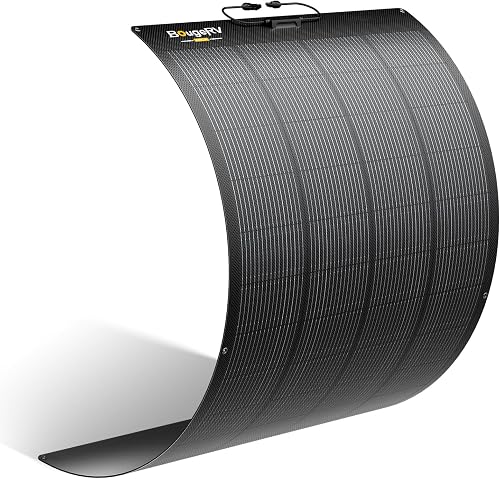
The BougeRV Arch Pro 200W Fiberglass Flexible Solar Panel represents a significant upgrade over traditional semi-flexible panels. By replacing standard PET materials with a seven-layer fiberglass and ETFE structure, BougeRV has solved the common issue of delamination, ensuring a much longer lifespan for mobile users. This panel is specifically designed for those who demand high performance from a lightweight, low-profile energy solution.
What sets the Arch Pro apart is the N-type 16BB cell technology, which achieves a 25% conversion efficiency. This means you get more power out of a smaller footprint, which is critical for RV roofs and marine applications where space is at a premium. The anti-shading technology via upgraded bypass diodes is another standout feature, allowing the panel to maintain stable output even when partially obstructed by trees or equipment.
The build quality is exceptional, featuring a sand-proof and scratch-resistant ETFE surface that is also self-cleaning. Its flexibility is unmatched, capable of bending up to 270 degrees, allowing it to contour to the most aerodynamic parts of a vehicle or the curved deck of a boat. At only 7.9 lbs, it adds negligible weight to your setup while providing substantial charging power.
Potential buyers should note the specific electrical parameters; with an open circuit voltage of 36V, you must ensure your solar charge controller or portable power station can handle the input. While it is perfect for 24V systems, 12V users will need an MPPT controller capable of stepping down the voltage. Additionally, you will need to source your own adhesive or VHB tape for installation.
Overall, the BougeRV Arch Pro is a premium solar solution for serious off-grid enthusiasts. It combines durability, extreme flexibility, and top-tier efficiency into a package that justifies its price point for anyone looking to build a reliable mobile power system.

Pros
- Extremely lightweight and easy to transport
- Conforms to curved surfaces where rigid panels fail
- Virtually invisible low-profile design
- Highly durable against extreme weather conditions
- Efficient monocrystalline solar cell technology
Cons
- Flexible design may be more susceptible to heat build-up than tilted rigid panels
- Requires specific adhesive or mounting for permanent curved installation
The Renogy 100W Flexible Solar Panel represents a significant leap in off-grid power technology, specifically addressing the challenges of mounting solar on non-flat surfaces. Unlike traditional glass-and-aluminum panels, this monocrystalline unit uses advanced polymers to achieve a bendable form factor. This makes it a premier choice for owners of teardrop trailers, Airstreams, and boats where aerodynamics and aesthetics are high priorities.
What sets this panel apart is its incredible weight reduction. Weighing 70% less than standard panels, it significantly lowers the center of gravity for vehicles and makes one-person installation a reality. At only a tenth of an inch thick, it offers a stealthy appearance that is hardly noticeable once laid flat, which is a major advantage for van lifers who prefer to stay inconspicuous.
Durability is often a concern with flexible units, but Renogy has engineered this panel to withstand the elements. It is rated to handle intense wind and heavy snow loads, ensuring longevity despite its thin profile. The monocrystalline cells ensure you get reliable 12V charging even in space-constrained environments.
While the panel is exceptionally versatile, users should be aware that flat-mounting flexible panels can lead to higher operating temperatures compared to rigid panels with air gaps. However, for those who need power on a curved roof or want to minimize weight, the trade-off is well worth it. It is a robust, high-performing solution for modern mobile power needs.
For best results, ensure the surface is thoroughly cleaned before mounting. While the panel is flexible, avoid over-bending or creating sharp kinks which can damage the internal cells. Use high-quality marine-grade adhesive or heavy-duty VHB tape for a secure, permanent bond on RV and boat surfaces.

Pros
- Exceptional 22% efficiency rating for faster battery charging
- Durable ETFE surface offers better longevity than cheaper PET alternatives
- Significant weight reduction improves vehicle fuel economy and handling
- Highly aerodynamic profile reduces wind drag on moving vehicles
- Maintains high power output even after decades of continuous use
Cons
- Flexible panels generally have a shorter warranty than rigid aluminum frame models
- Requires careful handling during installation to avoid micro-cracking the cells
- Higher price point compared to standard rigid 200W monocrystalline panels
The Renogy 200W Flexible Solar Panel represents a significant leap in off-grid power technology, specifically designed for applications where traditional rigid panels fail. By utilizing high-efficiency monocrystalline PERC cells, this panel achieves a 22% conversion rate, ensuring you get the most energy possible from every square inch of sunlight. This makes it a perfect match for RVers, van lifers, and sailors who have limited roof or deck space but high power demands.
What sets this panel apart is its incredible physical versatility. It can flex up to 240 degrees, allowing it to contour perfectly to the curved roof of an Airstream, the deck of a yacht, or the uneven surface of a camper van. At roughly half the weight of a traditional glass-and-aluminum panel, it is easy to transport and can be installed without drilling holes into your vehicle, using only industrial-grade adhesives or mounting tape.
The build quality is engineered for the elements. The ETFE surface is not only more durable than standard PET plastics but also offers better light transmittance for improved performance. With an IP67 waterproof rating for the junction box and connectors, it is built to withstand heavy rain, snow, and high winds. The inclusion of 9 bus-bars and bypass diodes ensures that even if part of the panel is shaded by a tree branch or mast, the rest of the panel continues to produce power efficiently.
While flexible panels are a premium solution, they do require a bit more care during the initial mounting phase to prevent cell damage. However, the trade-off in weight savings and aesthetics is unmatched. For those seeking a sleek, low-profile solar setup that doesn't compromise on performance, the Renogy 200W Flexible Panel is a top-tier investment for sustainable off-grid living.

Pros
- Extremely easy to install on irregular or curved surfaces
- Significant weight savings for weight-sensitive vehicles like small vans
- Highly weather-resistant withstanding 5400 Pa snow loads
- Low profile design is nearly invisible when mounted flat
Cons
- Requires silicone structural adhesive for mobile mounting
- Lower wattage output compared to larger 100W or 175W flexible alternatives
The Renogy 50W Flexible Solar Panel is a specialized off-grid solution designed to go where traditional glass panels cannot. Its standout feature is its extreme flexibility, capable of bending up to 248 degrees. This makes it an essential component for Airstream owners, boaters, and van lifers who need to utilize every inch of their curved roof space without compromising on aerodynamics or aesthetics.
Weighing in at less than 3 pounds, this panel solves the common issue of weight distribution on smaller vehicles and vessels. It is roughly 70% lighter than conventional rigid panels, significantly simplifying the transportation and installation process. Despite its thin profile, it is built to endure, with a rugged construction that handles high wind and heavy snow loads effectively.
Performance-wise, the monocrystalline cells provide efficient energy conversion for 12V systems. It is particularly well-suited for maintaining battery levels in marine environments or powering small electronics in a teardrop trailer. The IP68 rating provides peace of mind that the unit can handle splashing and heavy downpours during water activities.
One important consideration is the mounting method. While it features grommets, Renogy recommends using silicone structural adhesive for mobile applications to ensure the panel remains secure at highway speeds. This adds a step to the installation but results in a much cleaner, more permanent bond to the vehicle.
Ultimately, if you are looking for a high-quality, durable, and nearly invisible solar solution for a curved surface, the Renogy 50W Flexible Panel is a top-tier choice. Its blend of portability and resilience makes it a reliable partner for any mobile off-grid setup.

Pros
- Highly adaptable to irregular and curved mounting surfaces
- Significantly lighter than traditional rigid glass solar panels
- ETFE layer is more durable and efficient than standard PET coatings
- Easy to expand by connecting multiple units in series or parallel
Cons
- Requires specific sealant adhesive for mobile mounting on flat roofs
- Needs careful installation to ensure proper ventilation and heat dissipation
The DOKIO 400W Flexible Solar Panel Kit is a modern solution for off-grid enthusiasts who need power without the bulk of traditional hardware. By utilizing four 100W monocrystalline panels, this system provides a substantial 400W output while maintaining a thin profile. The use of ETFE (Ethylene Tetrafluoroethylene) instead of PET for the top layer is a significant upgrade, offering better light penetration and increased longevity against the elements.
This kit is specifically designed for mobile applications where weight and aerodynamics are critical. Because these panels can flex up to a 30-degree arc, they conform easily to the roofs of camper vans, trailers, and boat decks. At only 16.5 lbs for the set, they are much easier to handle during installation compared to heavy, glass-encased alternatives.
Performance-wise, the 18V output is optimized for 12V battery charging, though the panels can be wired in series for 24V systems depending on your charge controller. The monocrystalline cells ensure you get the most wattage possible per square inch, which is vital when roof space is limited on a vehicle or vessel.
One important consideration for users is the mounting process. Unlike rigid panels that use Z-brackets for airflow, these semi-flexible panels require sealant adhesive for mobile use. It is crucial to follow the manufacturer's advice regarding ventilation to prevent heat buildup, which can decrease efficiency and potentially damage the mounting surface over time.
Overall, the DOKIO 400W kit is a high-value choice for those prioritizing portability and ease of installation. It delivers reliable off-grid power in a package that is tough enough to handle marine environments and versatile enough for any DIY solar project.
Pros
- Superior 23% energy conversion efficiency
- Highly versatile bendable structure for uneven surfaces
- Rugged IP67 weatherproofing for marine use
- Extremely lightweight and easy to handle
- Simple plug-and-play setup with MC4 connectors
Cons
- Does not include controller or battery
- Surface can be prone to scratching compared to rigid glass
- Limited to 100W output per individual panel
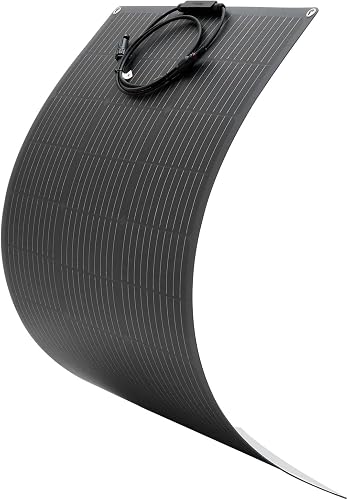
The VEVOR 100W Flexible Solar Panel is a standout choice for off-grid enthusiasts who need power where traditional rigid panels simply won't fit. Utilizing high-grade monocrystalline cells, it achieves an impressive efficiency rating of at least 23%, ensuring you get the most out of every hour of sunlight. Its primary appeal lies in its flexibility, allowing it to conform to the aerodynamic curves of an RV, the deck of a boat, or the roof of a small cabin.
Built for the elements, this panel features an IP67 protection rating, making it fully waterproof and dustproof. It is designed to operate in temperatures ranging from freezing cold to intense heat, providing peace of mind for those traveling through diverse climates. The lightweight construction is a significant advantage for mobile applications where every pound of weight matters.
Installation is straightforward thanks to the pre-drilled holes, which support various mounting methods including screws, cable ties, or specialized adhesives. The built-in MC4 connector ensures compatibility with most standard solar controllers and battery systems, though users should note that the controller and battery must be purchased separately.
While the flexible design is its greatest strength, users should be mindful that these panels are thinner than glass-encased models and require careful handling to avoid surface abrasions. However, for those seeking a low-profile, high-efficiency energy source for marine or automotive use, the VEVOR 100W panel offers an excellent balance of performance and adaptability.
Final Verdict: A highly efficient and durable solar solution for anyone needing a lightweight, bendable power source for curved mounting surfaces in off-grid environments.
Pros
- Superior durability with UV-resistant ETFE coating over standard plastic
- Aerodynamic low-profile design at only 0.1 inch thickness
- High power-to-weight ratio ideal for small campers and vans
- Broad compatibility with both 12V and 24V battery systems
- Excellent performance in low-light conditions due to high cell efficiency
Cons
- Flexible panels generally have shorter lifespans than rigid glass panels
- Limited to 30 degree bend which may not fit extremely tight curves
- Requires careful handling during installation to avoid cell micro-cracks
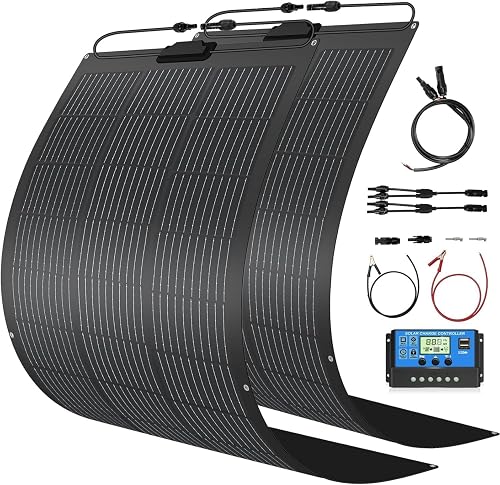
The MHZSJLW 800W Flexible Solar Panel Kit is a high-performance power solution designed specifically for mobile and off-grid applications where traditional rigid panels are impractical. By utilizing two 400W monocrystalline panels, this kit provides a substantial energy harvest for RVs, camper vans, and marine vessels. The standout feature is the ETFE coating, which significantly outperforms cheaper PET alternatives in terms of light transmission, thermal tolerance, and UV resistance.
For owners of curved-roof vehicles or boats, the 30-degree flexibility is a game changer. At only 0.1 inches thick and weighing 4.4 pounds per panel, these units maintain the aerodynamics of your vehicle while adding minimal weight. This design eliminates the need for heavy mounting brackets or invasive drilling into the roof, as they can be secured using the pre-drilled holes or industrial adhesive pads.
Durability is a key focus, with an IP68 waterproof rating and salt spray corrosion protection making it suitable for coastal and marine environments. While flexible panels are historically less durable than glass, the ETFE layer and 25-year output guarantee provide peace of mind for long-term users. It integrates easily with popular charge controllers from brands like Renogy or Victron to charge 12V or 24V battery banks.
The main drawback to consider is that flexible panels require careful installation to avoid micro-cracks in the silicon cells, and they may not last as long as rigid panels in extreme heat. However, for users prioritizing weight savings and ease of installation on non-flat surfaces, the trade-off is well worth it. Overall, this kit is a top-tier choice for modern nomads seeking efficient, lightweight solar power.

Pros
- Superior 23% conversion efficiency with 9BB cell technology
- Exceptional flexibility for mounting on irregular or curved surfaces
- Highly durable ETFE construction offers better heat dissipation
- Extremely thin 0.1-inch profile reduces wind resistance
- Easy DIY installation with pre-drilled holes and PV connectors
Cons
- Flexible design is more susceptible to cell damage if walked upon
- Requires specific adhesives or hardware for secure mounting on high-speed vehicles
The NewArrival 100W Flexible Solar Panel represents a significant upgrade for mobile power users. By utilizing 9-busbar (9BB) monocrystalline cells, this panel minimizes the space between busbars, which reduces internal resistance and lowers the risk of microcracks that often plague flexible panels. With a conversion efficiency reaching 23%, it maximizes energy harvest even in limited space, making it a powerhouse for 12V systems.
Design-wise, this panel is built for the elements. The use of ETFE (Ethylene Tetrafluoroethylene) rather than cheaper PET plastics provides better light transmission and significantly higher resistance to thermal stress and UV degradation. The TPT back panel further aids in heat dissipation, ensuring the cells stay cool and efficient during peak summer sun. At only 4.4 pounds, it eliminates the weight penalty associated with traditional aluminum-framed glass panels.
Installation is straightforward thanks to the included PV connectors and pre-drilled metal grommets. Its ability to bend up to a 17.7-inch radius allows it to follow the contours of an Airstream, a yacht deck, or a teardrop trailer without the need for complex mounting brackets. The IP67-rated junction box provides peace of mind against heavy rain and sea spray.
While the panel is rugged, users should remember that flexible panels are not intended to be walked on, as localized pressure can damage the silicon cells. However, for those looking to add solar to irregular surfaces where rigid panels simply won't fit, the NewArrival 100W is a top-tier contender that balances efficiency, weight, and durability.
For best results, ensure the mounting surface is clean and dry. While the panel includes pre-drilled holes for mechanical fastening, many RV and boat owners prefer high-strength marine adhesive or VHB tape for a hole-free installation. Always ensure there is a small air gap if possible, or use the TPT backing to your advantage by mounting on surfaces that help dissipate heat. Connect the panel to a compatible 12V PWM or MPPT charge controller before connecting to your battery bank.
Pros
- Extremely lightweight at just 2.3 pounds for easy handling
- ETFE coating is more durable and weather-resistant than PET
- High flexibility allows mounting on irregular or curved surfaces
- Easy expansion via standard MC4 connector cables
- Low profile design reduces wind resistance on moving vehicles
Cons
- Requires specific sealant adhesive for secure mobile mounting
- Not intended as a permanent replacement for rigid residential roofing
- Performance can be affected if over-bent beyond the 30 degree limit
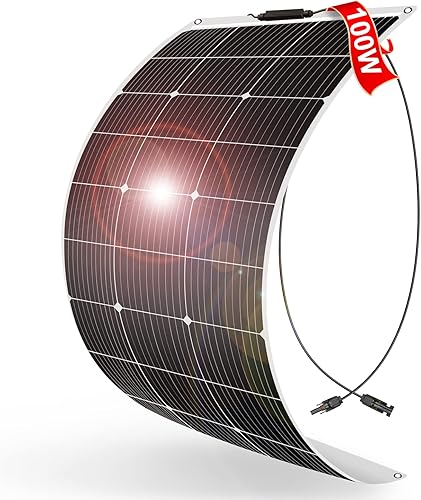
The DOKIO 100W Flexible Solar Panel represents a significant step up from traditional glass panels for mobile users. Utilizing N-Type monocrystalline cells, this panel delivers efficient 18V output designed specifically for 12V battery charging. Its standout feature is the ETFE (Ethylene Tetrafluoroethylene) construction, which is far more rugged and UV-resistant than the cheaper PET films often found in budget flexible panels.
Weighing only 2.3 pounds, this panel is exceptionally easy to manage during installation. Because it is only 0.03 inches thin, it maintains a sleek profile on top of vans or boats, minimizing wind drag and aesthetic impact. The ability to flex up to a 30-degree arc makes it one of the few viable options for the curved surfaces found on modern campers and marine vessels.
The inclusion of MC4 connectors and bypass diodes shows a focus on practical performance. The bypass diodes are critical for mobile use, as they prevent a single shaded leaf or roof rack bar from completely shutting down the panel's output. For those looking to scale their power, these panels can be easily daisy-chained in series or parallel to meet higher energy demands.
While the panel includes grommets, users should note that for mobile applications like an RV roof, DOKIO recommends using a sealant adhesive to prevent wind lift. It is also important to ensure proper ventilation beneath the panel to prevent heat buildup, as flexible panels can run hotter than raised rigid panels. Overall, this is a top-tier choice for hikers, campers, and sailors who prioritize weight savings and surface adaptability.
Flexible Solar Panels: Our Picks Against the Numbers
Best Overall: BougeRV Arch Pro 200 Watts Anti-Shading N-Type Fiberglass Flexible Solar Panel
With a 25% conversion efficiency and 200W rating, this panel is designed to maximize daily energy output in limited space. Its N type cells and bypass diodes ensure stable performance even in partial shade, so you get closer to the theoretical 1000Wh per day. The fiberglass construction adds durability without sacrificing flexibility.
Skip this if: your budget is tight. This is a premium option, and the VEVOR 100W panel offers a lower cost per watt for those who need less power.
View on Amazon.comBest Value: VEVOR Flexible Solar Panel 100W
At 100W and 23% efficiency, this panel delivers around 500Wh per day under good sun. That is enough to keep a small fridge running or charge a 50Ah battery daily. Its IP67 rating and ETFE coating make it a durable choice for the price, and it pairs well with smaller power stations like those in our BailiBatt Portable Power Station 300W Review.
Skip this if: you need to power heavy appliances. The 800W kit is better for high demand setups.
View on Amazon.comBest for Large Systems: 800W Solar Panel Kit (2x400W)
This kit combines two 400W panels for a total of 800W, capable of producing up to 4000Wh per day in optimal conditions. That is enough to run a full size refrigerator, lights, and electronics simultaneously. The ETFE coating and 24% efficiency cells make it a robust choice for off grid cabins or large RVs.
Skip this if: you have limited roof space. The 800W kit requires significant area; a single 200W panel may be more practical for small vans.
View on Amazon.comOther Things That Matter for Flexible Solar Panels
Surface Material: ETFE vs PET
The outer layer of a flexible panel determines its longevity. ETFE (ethylene tetrafluoroethylene) is highly resistant to UV, scratches, and salt spray, making it ideal for marine and RV use. PET is cheaper but yellows and delaminates faster. Most panels in our list use ETFE, which is a wise investment for long term use. For more on choosing the right type, visit our By Type page.
Flexibility and Bend Radius
Not all flexible panels bend the same. Some can curve up to 270 degrees, while others are limited to 30 degrees. Exceeding the rated bend radius can cause micro cracks in the cells, killing performance. Always measure your mounting surface curvature before buying. The BougeRV Arch Pro bends up to 270 degrees, fitting tight curves on boat decks or van roofs.
Installation and Mounting Options
Most flexible panels come with pre drilled grommets for screws or zip ties, but many users prefer adhesive mounting for a clean look. Industrial strength VHB tape or silicone glue works well on flat roofs. Ensure good heat dissipation by leaving a small air gap or mounting on a heat dissipating surface. For more installation tips, see our By Use guide.
Why Trust Our Reviews
At WikiGenerators, our review process is based on a rigorous analysis of technical specifications and an aggregation of long term user feedback. We do not accept free products for testing; instead, we focus on objective data such as conversion rates, material durability, and manufacturer reliability. Our goal is to provide a transparent overview of the market to help you make an informed decision for your power needs.
Our team spends dozens of hours researching the latest advancements in solar technology and power management. We also maintain a wide range of guides on related technology, such as our curated list of the best Jackery solar generators, to help you build a more efficient and connected lifestyle.
Frequently Asked Questions About Flexible Solar Panels
How do I calculate how many watts I need from a flexible solar panel?
Start by listing all devices you want to power and their daily watt hour consumption. Then divide that number by the average peak sun hours in your location (typically 4 to 6). That gives you the minimum panel wattage required. For example, if you need 1000Wh per day and get 5 sun hours, you need at least a 200W panel. Our By Power page can help you match panels to your needs.
Can I use flexible solar panels on a car roof?
Yes, as long as the panel can bend to match the roof curve and is securely mounted. Many panels in this list are designed for vehicle roofs. Ensure the panel is rated for the curvature and use adhesive or grommet mounting. Avoid walking on the panel to prevent cell damage.
How long do flexible solar panels last?
Flexible panels typically last 5 to 15 years, depending on the material and environment. ETFE panels last longer than PET ones. Proper installation with ventilation and avoiding physical stress can extend their life. For comparison, rigid panels often exceed 25 years, but flexible panels offer weight and aerodynamic advantages for mobile use.
Do flexible solar panels work in cloudy weather?
Yes, but at reduced output. Monocrystalline panels with high efficiency (like those with PERC or N type cells) perform better in low light. Panels with bypass diodes also handle partial shading better. On overcast days, expect 10 to 25% of the rated output. For more tips, check out our By Features page.
Quick Comparison: Side by Side

- – 1000Wh/Day Output Potential.
- – Half-Cut PERC Cells, 22% Efficiency.
- – Bends 240°, Half The Rigid Weight.
- – Half-Cut PERC Cells, 22% Efficiency.
- – Bends Up To 240°, 1/3 Rigid Weight.
- – IP67 Waterproof Junction Box.
- – 9BB Cells, Up To 23% Efficiency.
- – Bends To 45cm Radius.
- – Only 4.4lb, 0.1in Thin.
- – 25% N-Type 16BB Efficiency.
- – Upgraded Bypass Diodes For Low-Light.
- – Ultra-Thin 2.5mm, Only 7.94lb.
- – 25% N-Type Efficiency, Bends To 270°.
- – Double Fiberglass Layer Resists Cracks.
- – Only 8.82lb, 2.5mm Thin.
- – 23% Efficiency Monocrystalline Cells.
- – Budget-Friendly At $58.90.
- – IP67 Rated, -20°C To 65°C Range.
- – 800W From Just 2 Flexible Panels.
- – Bends To 30°, Only 4.4lb Per Panel.
- – IP68 Waterproof, Salt-Spray Resistant.
- – Ultra-Light At Just 2.3lb, 0.03in Thin.
- – Budget-Friendly At $59.77.
- – Series/Parallel Expansion Ready.
- – No Controller Included.
- – Pricier Than 100W Flexible Model.
- – Flexible Cells Shorter-Lived Than Rigid.
- – No Charge Controller Included.
- – Flexible Cells Run Hotter Over Time.
- – Short 2.3ft Connector Cables.
- – Budget Brand, Fewer Reviews.
- – No Controller Included.
- – ETFE Coating Less Durable Than Glass.
- – 36V Open-Circuit May Not Fit All Stations.
- – Flexible Panels Run Hotter Long-Term.
- – Check Compatibility Before Buying.
- – 28V Circuit May Not Fit All Stations.
- – Mid-Range Price At $249.99.
- – Check Compatibility Before Buying.
- – No Reviews Yet On This Listing.
- – No Controller Included.
- – Semi-Flexible Panels Shorter-Lived Than Rigid.
- – 2-Year Materials Warranty Shorter Than Rigid Rivals.
- – Flexible Panels Run Hotter Long-Term.
- – No Controller Included.
- – Only Bends To 30°, Limited Flex.
- – No Controller Included.
- – Thin Build Less Durable Than Rigid Glass.