

What to know about generators comes down to three things: pick the right type, size it to your load, and run it outdoors.
Which generator types are there, and how do they differ?
| Type | Fuel | Noise | Runtime | Best for |
|---|---|---|---|---|
| Conventional portable | Gasoline; some run propane or natural gas | Loud (about 85 dB per ConsumerAffairs) | As long as you keep refueling | Furnace fan, fridge and sump pump during multi-day outages |
| Inverter | Gasoline or dual fuel | Quieter than conventional | Engine speed follows the load, so light loads stretch a tank | Laptops, TVs, camping, modest home loads |
| Dual fuel | Gasoline and propane | Varies by model | Set by tank or cylinder size | Storm prep with a fuel backup |
| Portable power station | Internal battery, recharged from a wall outlet, car or panels | Silent | Limited by battery watt-hours | Phones, CPAP, routers, short outages |
| Solar generator | Power station plus solar panels | Silent | Recharges in daylight, weather-dependent | Small loads over several days |
Runtime and decibel figures differ by model, so read the manufacturer spec sheet. Whole-house standby generators are a separate category: they are permanently installed and usually run on the home’s natural gas line or propane.
How do you add up running and starting watts?
Running (rated) watts are what an appliance draws continuously. Starting (surge) watts are the brief extra draw a motor needs for a moment at startup. Read both numbers on each appliance’s label.
| Appliance (in this example) | Running watts | Starting watts | Extra at startup |
|---|---|---|---|
| Refrigerator | 700 | 2,100 | 1,400 |
| Furnace fan | 600 | 1,200 | 600 |
| Lights | 150 | 150 | 0 |
| Router and chargers | 100 | 100 | 0 |
| Total | 1,550 | — | — |
These wattages are rough estimates for illustration; your labels govern.
- Add every running watt you will use at once: 700 + 600 + 150 + 100 = 1,550 W.
- Add only the largest startup extra, because motors rarely start at the same instant: 1,550 + 1,400 = 2,950 W peak.
- Add about 20% headroom: 1,550 × 1.2 = 1,860 running watts, and 2,950 × 1.2 = 3,540 starting watts.
In this example, a generator rated at least 1,860 running and 3,540 starting watts covers the load. Your own appliance list will give different totals.
Is a fuel generator or a power station better for home backup?
- Fuel generator: handles big, long-running loads such as a furnace blower or well pump and keeps going as long as you refuel. It makes exhaust and noise, so it must stay outdoors.
- Power station or solar generator: no exhaust, no fuel and silent, so it is the only type that can sit inside the home. Its limit is battery capacity: when the watt-hours are gone, you recharge.
- Standby generator: starts on its own and draws from the home’s gas line, so fuel supply rarely runs out, but it needs professional installation.
Fuel choice matters for portables. Gasoline is easy to find but goes stale in storage, propane stores well, and natural gas comes from the house line where the model supports it.
What are the key generator safety rules?
- Outdoors only: run a portable generator at least 20 feet from the house, exhaust pointed away from doors, windows and vents (CPSC). Some manuals list shorter distances; follow the stricter figure and check your manual for placement and grounding.
- Never in enclosed spaces: not in a garage, basement, crawlspace, shed or porch, even with doors open. The CPSC reports more than 80 deaths a year from portable generator carbon monoxide.
- CO alarms: install battery or plug-in alarms outside sleeping areas and on every floor, and test them monthly.
- No backfeeding: never plug a generator into a wall outlet. Connect to the house only through a transfer switch or interlock installed by a licensed electrician under local permit rules, or use heavy-duty outdoor-rated cords straight to appliances.
- Refueling: shut the engine off and let it cool first, and keep fuel in approved containers away from ignition sources.
- Weather: keep it dry but never fully enclosed.
Which generator type should you pick, and how do you keep it ready?
- Phones, CPAP, a router, short outages: a power station, or a solar generator if you want recharging without fuel.
- Electronics plus modest home loads, quieter running: an inverter generator.
- Fridge, furnace fan and pump for days: a portable generator whose running and starting ratings exceed your own calculated totals.
- Fuel flexibility: dual fuel.
- Frequent long outages and whole-house power: a professionally installed standby unit.
Upkeep that decides whether it starts: check the oil before each run, add fuel stabilizer to stored gasoline, and test-run it on the schedule in your manual.
Our Top Picks
Ready to shop? These are the top-rated options from our related roundup, Best Home Generators Options For Backup Power of 2026.

Westinghouse iGen2800 2800 Peak Watt Super Quiet Lightweight Portable Inverter Generator - Gas Powered, Parallel Ready
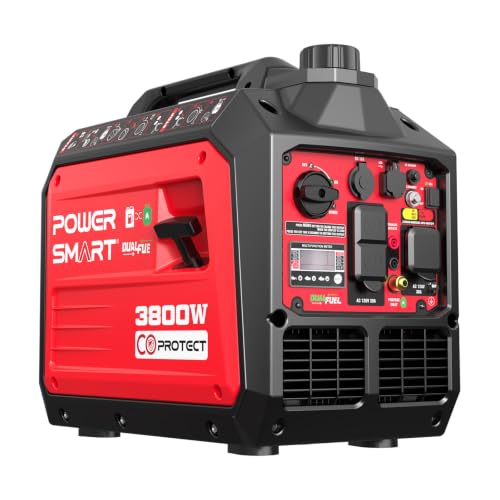
PowerSmart 3800 Watt Dual Fuel Inverter Generator Quiet Portable Gas Propane with CO Sensor RV Ready

WEN GN5602X 5600W Portable Generator Electric Start RV-Ready CO Sensor 4500 Running Watts
As an Amazon Associate we earn from qualifying purchases. Product prices and availability are accurate as of the date/time indicated.
Frequently Asked Questions
Can I run a generator in the rain?
Only under a manufacturer-approved open-sided cover or generator tent that lets exhaust blow freely away from the house. A closed shed or tarp wrapped around the unit traps carbon monoxide.
What should I do if my CO alarm sounds while the generator is running?
Get everyone outside to fresh air immediately and call 911. Do not go back in until responders clear the house, and shut the generator off only if you can do it from outdoors.
Can I charge a power station from a generator?
Yes, plug the station’s wall charger into the generator’s outlet. An inverter generator is the best match because its output is clean, and the generator itself still stays outdoors.
Will a small portable generator start my well pump?
Only if its running and starting ratings both exceed the pump’s label figures. Deep-well pump motors have large startup surges, so read the pump label before you connect anything.
{“@context”: “https://schema.org”, “@type”: “FAQPage”, “mainEntity”: [{“@type”: “Question”, “name”: “Can I run a generator in the rain?”, “acceptedAnswer”: {“@type”: “Answer”, “text”: “Only under a manufacturer-approved open-sided cover or generator tent that lets exhaust blow freely away from the house. A closed shed or tarp wrapped around the unit traps carbon monoxide.”}}, {“@type”: “Question”, “name”: “What should I do if my CO alarm sounds while the generator is running?”, “acceptedAnswer”: {“@type”: “Answer”, “text”: “Get everyone outside to fresh air immediately and call 911. Do not go back in until responders clear the house, and shut the generator off only if you can do it from outdoors.”}}, {“@type”: “Question”, “name”: “Can I charge a power station from a generator?”, “acceptedAnswer”: {“@type”: “Answer”, “text”: “Yes, plug the station’s wall charger into the generator’s outlet. An inverter generator is the best match because its output is clean, and the generator itself still stays outdoors.”}}, {“@type”: “Question”, “name”: “Will a small portable generator start my well pump?”, “acceptedAnswer”: {“@type”: “Answer”, “text”: “Only if its running and starting ratings both exceed the pump’s label figures. Deep-well pump motors have large startup surges, so read the pump label before you connect anything.”}}]}













