

Our editorial team weighed Anker's published specifications and how it stacks up against similar products in the generators category. What stands out: Ultra-Fast Charging, High Output, Quiet Under Load, Indoor-Friendly, and Intuitive App With UPS Controls. Where it falls short: No Battery Expansion Option and Slower Charging Below 20°C. That puts it at 8.7/10 on our WG Score – an excellent, well-rounded option.
 Reviewed bySarah Watts
Portable generators are safe only outdoors, far from the house and with working CO alarms inside, and never in a garage, even with the door open.
The four main hazards of a portable generator
- Carbon monoxide (CO): The CPSC estimates about 85 US consumers die each year from CO poisoning caused by portable generators. The gas is odorless, and it can linger for hours after the engine is shut off.
- Fire and burns: The engine and exhaust stay hot, and gasoline vapors ignite easily.
- Electrocution: Wet ground, damaged cords and wet hands create shock risk.
- Backfeed: Plugging a generator into a wall outlet sends power back into the utility lines, which endangers line workers and neighbors.
Where to run a portable generator
Run it outdoors, in open air, on level ground, with the exhaust pointed away from your home and your neighbors’ homes.
- Never run one in a garage, basement, crawl space, shed or on a covered porch. Open doors, open windows and fans do not clear the CO, according to the CPSC.
- Distance: Many safety guides give 20 feet from the house as a minimum, and some advise 25 feet. Your manual sets the distance for your model, so follow it.
- Distance is not enough on its own. A NIST study found that a generator 15 feet from open windows still let CO into the house. Wind direction, exhaust direction and closed windows, doors and vents matter as much as the number of feet.
Pre-start safety checklist
- Check CO alarms. Install battery-powered or plug-in alarms with battery backup on every level and outside bedrooms. Test them monthly, as the CPSC advises.
- Position the generator. Place it outdoors with the exhaust facing away from all buildings, then close the nearest windows and vents.
- Keep it dry. Rain and wet ground are shock hazards. Run it under an open-sided, well-ventilated canopy built for generators, never under an enclosed tarp or shelter.
- Use proper cords. Choose heavy-duty, outdoor-rated cords rated for the load, and replace any with cuts or bare wire. Plug tools into GFCI-protected outlets, and ground the generator if the manual requires it.
- Run it dry-handed and attended. Never touch the generator or cords with wet hands.
- Refuel only when cool. Shut the engine off and let it cool first. Use an approved fuel container, and store fuel outside living spaces and away from ignition sources.
Safe ways to power your home
The only safe way to feed household circuits is a transfer switch or an interlock kit installed by a licensed electrician. Both keep generator power from reaching the utility lines. Local code and permit rules apply, so ask the electrician about both.
Without either, run heavy-duty outdoor cords from the generator directly to individual appliances. Keep the cords out of doorways where they can be pinched, and keep the exhaust away from the open door or window the cord passes through.
CO-shutoff generators and what to do if an alarm sounds
Newer generators with a CO-shutoff sensor are safer. The CPSC estimates that the voluntary standards PGMA G300-2018 and UL 2201 would cut CO deaths by 87% and 100%, respectively. A shutoff sensor is a backup, not a license to run the generator near the house, so the placement rules above still apply. Battery-based portable power stations produce no exhaust at all.
If a CO alarm sounds or you feel dizzy, get a headache or feel nauseous:
- Get outside to fresh air immediately.
- Call 911 from outside.
- Do not go back in until responders say it is clear.
Our Top Picks
Ready to shop? These are the top-rated options from our related roundup, Best Portable Home Generators of 2026.
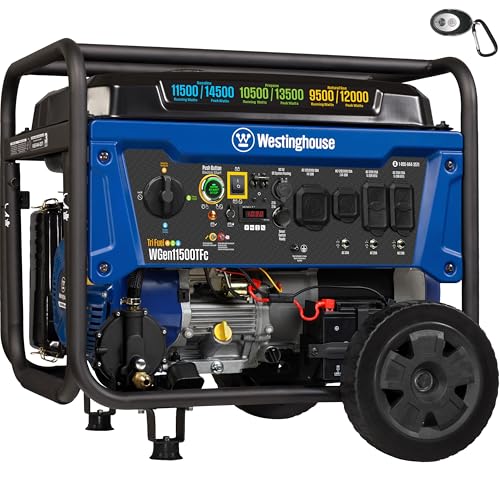
Westinghouse WGen11500TFc 14500 Peak Watt Tri-Fuel Portable Generator with Remote Start & CO Sensor

Jackery Explorer 1000 v2 Portable Power Station: 1070Wh LiFePO4, 1500W Output, 1Hr Fast Charge, Solar Generator for Camping, RV, Emergencies

Anker SOLIX C1000 Gen 2 Portable Power Station: 2000W Solar Generator, 1024Wh LiFePO4, 49-Min Fast Charge for Camping, Home Backup
As an Amazon Associate we earn from qualifying purchases. Product prices and availability are accurate as of the date/time indicated.
Frequently Asked Questions
Can I run a generator in a carport or lean-to?
No. Any roofed or walled area that is partly enclosed traps exhaust, so CO builds up near the house. Run the generator in fully open air, away from walls, with the exhaust pointed away from buildings.
Can I use a generator on an apartment balcony or townhome patio?
No. Balconies and attached patios sit right next to windows and doors, and CO drifts inside. A battery power station is the safe option for these spaces because it has no exhaust.
Can I leave a generator running while I sleep or leave home?
No. Do not leave a running generator unattended, because no one is there to catch a fuel leak, fire or overload. Shut it off, and power only what you need while you are awake and present.
Can I keep using a generator that leaks fuel or smokes?
No. Shut it off, let it cool and move it away from ignition sources. Do not run it again until a qualified small-engine repair shop has fixed the leak or fault.
{“@context”: “https://schema.org”, “@type”: “FAQPage”, “mainEntity”: [{“@type”: “Question”, “name”: “Can I run a generator in a carport or lean-to?”, “acceptedAnswer”: {“@type”: “Answer”, “text”: “No. Any roofed or walled area that is partly enclosed traps exhaust, so CO builds up near the house. Run the generator in fully open air, away from walls, with the exhaust pointed away from buildings.”}}, {“@type”: “Question”, “name”: “Can I use a generator on an apartment balcony or townhome patio?”, “acceptedAnswer”: {“@type”: “Answer”, “text”: “No. Balconies and attached patios sit right next to windows and doors, and CO drifts inside. A battery power station is the safe option for these spaces because it has no exhaust.”}}, {“@type”: “Question”, “name”: “Can I leave a generator running while I sleep or leave home?”, “acceptedAnswer”: {“@type”: “Answer”, “text”: “No. Do not leave a running generator unattended, because no one is there to catch a fuel leak, fire or overload. Shut it off, and power only what you need while you are awake and present.”}}, {“@type”: “Question”, “name”: “Can I keep using a generator that leaks fuel or smokes?”, “acceptedAnswer”: {“@type”: “Answer”, “text”: “No. Shut it off, let it cool and move it away from ignition sources. Do not run it again until a qualified small-engine repair shop has fixed the leak or fault.”}}]}













