

Our editorial team weighed maXpeedingrods's published specifications and how it stacks up against similar products in the generators category. What stands out: Lightweight (~52 lbs), Multiple Outlets, and Includes Parallel Cables & Cover. Where it falls short: No Electric Start and Tank Size Not Specified. That puts it at 7.7/10 on our WG Score – a solid, dependable choice.
 Reviewed byDaniel
A portable generator can power a house: roughly 3,500-7,500 watts runs essentials, and 10,000-12,000 running watts is needed for most whole-house setups.
What each generator size can realistically run
| Running watts | Realistically runs | Does not run |
|---|---|---|
| 3,500 W | Refrigerator, furnace fan, lights, phone and Wi-Fi chargers, a sump pump | Well pump with other loads, any air conditioner, electric range, dryer |
| 5,000 W | Everything above, plus a small well pump or a window A/C, with loads staggered | Central A/C, electric range, electric dryer |
| 7,500+ W | Essentials plus a well pump and a central A/C fitted with a soft-start kit, when other big loads are off | Range, dryer and A/C all at once |
| 10,000-12,000 W | Most of a typical home, including central A/C and a well pump, with managed loads | Every large 240V appliance running together |
These tiers are rough estimates. Motor loads such as pumps, compressors and A/C units can draw 2-4 times their running watts for a moment at startup, so the nameplate on each appliance and the generator’s running and starting ratings decide what actually works.
Can a portable generator power a whole house?
Yes, but only with a large unit and some discipline. A 10,000-12,000 running-watt generator with a 50-amp outlet is the common whole-house setup, and you still switch big loads on one at a time instead of running them together.
Choose essentials only if:
- You have a mid-size generator (3,500-7,500 W).
- Your home heats and cooks with gas and you can live without central A/C.
- Outages last hours to a few days and you want the lowest cost and fuel use.
Choose a whole-house setup if:
- You depend on central A/C or an electric well pump.
- You have an all-electric home with a 240V range, dryer or water heater you want available.
- You can have a licensed electrician install a 50-amp inlet and an interlock or transfer switch.
Load management is what makes it work. Start the largest motor first, then add the next load only after the engine settles. Run the dryer or range while the A/C is off. A soft-start device on a central A/C can cut its startup surge, which may let a smaller generator carry it.
How to connect a portable generator to a house safely
There are two safe routes, and one dangerous shortcut.
- Extension cords to individual appliances: The simplest option. Use heavy-duty, outdoor-rated cords with a wattage rating above the load, and run them through a cracked door or window, not under a closed one.
- Inlet box with an interlock kit or transfer switch: This feeds your home’s circuits from the panel. An interlock is a bracket that stops the main breaker and generator breaker from being on together. A transfer switch moves selected circuits to the generator automatically or manually. Either one must be installed by a licensed electrician.
- Backfeeding is never acceptable. Plugging a generator into a wall or dryer outlet with a male-to-male cord can energize utility lines and electrocute line workers, and it can start fires in your home.
Permits and inspections vary by location. The National Electrical Code (NEC Article 702) covers standby power equipment, and your local code and utility rules govern the installation. We do not give wiring or panel instructions here, so your electrician and local building department decide the details.
Where to put the generator to avoid carbon monoxide
Run it outdoors only, never in a garage, basement, crawl space or shed, even with the door open. Exhaust carries carbon monoxide, which is colorless and odorless.
- Follow the minimum distance from windows, doors and vents given in your generator’s manual, and point the exhaust away from the house and neighbors’ homes.
- Keep the unit on level ground, dry but not enclosed, with open airflow around it.
- Install battery-powered or battery-backup CO alarms on every level and near sleeping areas.
- If anyone feels dizzy, nauseated or has a headache, get into fresh air and call 911.
Our Top Picks
Ready to shop? These are the top-rated options from our related roundup, Best Portable Generators To Run A House of 2026.

Honda EU2200i 2200W Super Quiet Portable Inverter Generator with CO-Minder & Bluetooth App
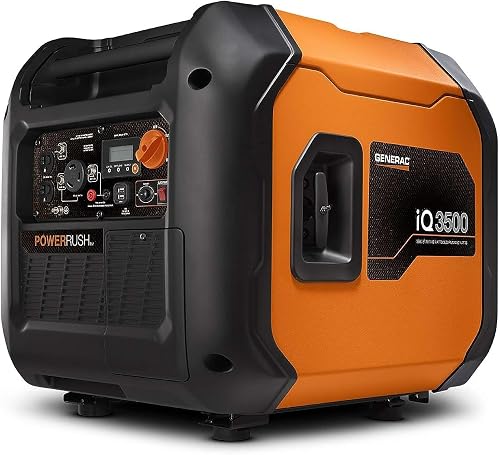
Generac iQ3500 3500W Portable Inverter Generator - Quiet, Lightweight, Electric Start, CARB Compliant for Camping & Jobsites
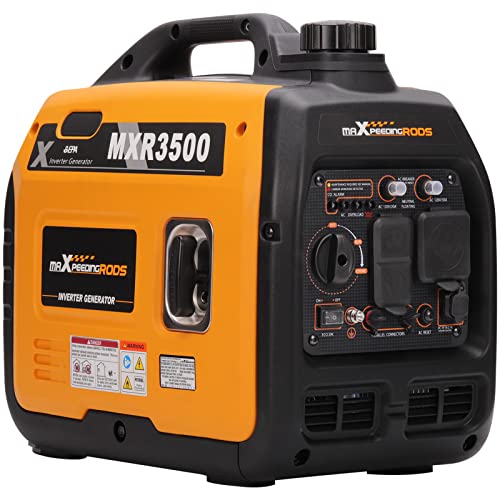
MaXpeedingrods 3500 Watt Portable Inverter Generator Gas Powered EPA Compliant
As an Amazon Associate we earn from qualifying purchases. Product prices and availability are accurate as of the date/time indicated.
Frequently Asked Questions
What should I do if the generator keeps overloading and shutting off?
Turn off every connected load, restart the generator, then add appliances one at a time, largest motor first. If it still trips, the combined load exceeds its running rating, so leave some items off.
Can I run my TV and laptop on a conventional generator?
Plug sensitive electronics into a surge protector, or use an inverter generator, which produces cleaner power. Basic open-frame generators can have voltage swings that damage computers and modern TVs.
Can I run the generator in the rain under a tarp?
Only under a generator-rated canopy or cover that is open on all sides. A closed tent or tarp traps exhaust and heat, which creates a carbon monoxide and fire hazard.
Can I run a generator all night without stopping?
You can run it overnight if the tank holds enough fuel, but you must shut it off and let it cool before refueling. Check the manual’s runtime rating at your expected load.
{“@context”: “https://schema.org”, “@type”: “FAQPage”, “mainEntity”: [{“@type”: “Question”, “name”: “What should I do if the generator keeps overloading and shutting off?”, “acceptedAnswer”: {“@type”: “Answer”, “text”: “Turn off every connected load, restart the generator, then add appliances one at a time, largest motor first. If it still trips, the combined load exceeds its running rating, so leave some items off.”}}, {“@type”: “Question”, “name”: “Can I run my TV and laptop on a conventional generator?”, “acceptedAnswer”: {“@type”: “Answer”, “text”: “Plug sensitive electronics into a surge protector, or use an inverter generator, which produces cleaner power. Basic open-frame generators can have voltage swings that damage computers and modern TVs.”}}, {“@type”: “Question”, “name”: “Can I run the generator in the rain under a tarp?”, “acceptedAnswer”: {“@type”: “Answer”, “text”: “Only under a generator-rated canopy or cover that is open on all sides. A closed tent or tarp traps exhaust and heat, which creates a carbon monoxide and fire hazard.”}}, {“@type”: “Question”, “name”: “Can I run a generator all night without stopping?”, “acceptedAnswer”: {“@type”: “Answer”, “text”: “You can run it overnight if the tank holds enough fuel, but you must shut it off and let it cool before refueling. Check the manual’s runtime rating at your expected load.”}}]}













