

Our editorial team weighed WEN's published specifications and how it stacks up against similar products in the generators category. What stands out: Ultra-Quiet & Lightweight, Reliable Cold-Weather Starts, and Clean Power for Electronics. Where it falls short: Oil Change Every 25 Hours and Minor Oil Burn Risk. That puts it at 8.4/10 on our WG Score – an excellent, well-rounded option.
 Reviewed byEthan
Yes, but only when a transfer switch isolates the neutral; a portable generator used with cords relies on its frame and needs no house-ground connection.
Decision rule by setup
Match how you use the generator to a row below. The manual and your local inspector (the authority having jurisdiction, or AHJ) override this table, and an electrician should confirm which row applies before any panel work.
| Your setup | Generator neutral | Ground action |
|---|---|---|
| Cords to tools or appliances only | Bonded to frame (the typical portable default) | The frame is the ground; no rod and no house-ground connection |
| Inlet plus 3-pole transfer switch or interlock that opens the neutral | Bonded to frame | The switch makes the generator separately derived, so it needs its bonded neutral and its own grounding electrode with a conductor to the generator |
| Inlet plus 2-pole transfer switch | Floating | Use the house neutral-ground bond; no second bond |
| Inlet plus 2-pole transfer switch | Bonded to frame | Double bonding; have an electrician fix it before use |
Portable generators fall under NEC 250.34, while the separately derived rules for the 3-pole case sit in NEC 250.30. Rod and conductor details are inspector-dependent.
Why the frame is the ground for cord-connected use
When you plug tools into the generator outlets, the generator is the whole electrical system. A fault in a tool sends current through the cord’s ground wire to the frame, and the bonded neutral completes the loop so the breaker trips. No earth connection is needed for that to work.
The ground rod does not trip breakers. Its job is to limit voltage from lightning and stray sources, and to tie the system to earth when the house is also involved. For plug-in use, a generator that came with a bonded frame is built to work as is.
If your manual explicitly calls for a rod even in this case, follow it. Some manufacturers require one more strictly than the code does.
Bonded vs floating neutral: how to check yours
A bonded-neutral generator has the neutral wire tied to the frame at the generator. A floating-neutral model leaves them separate. The manual usually states which one you have, and that is the first place to look.
To verify with a multimeter:
- Shut the generator off and unplug everything from it.
- Set the meter to continuity (or low ohms).
- Touch one probe to the neutral slot of a receptacle and the other to the ground pin or bare frame.
- Continuity (a beep or near-zero reading) means the neutral is bonded. No continuity means it floats.
Some units have a removable bonding screw or a bonding plug. Changing it can void the warranty and must follow the manual, so leave any conversion to a licensed electrician.
Why a 3-pole switch changes the answer
A transfer switch that opens the neutral as well as the two hot lines isolates the generator from the house. The generator then becomes a separately derived system and needs its own neutral-ground bond and grounding electrode. That is why sources point to a ground rod for this setup.
A 2-pole switch leaves the neutral connected to the house, so the service panel’s bond already serves the generator. A bonded generator on that switch creates a second bond, and neutral current can flow on the ground wires and metal parts. That raises shock risk and can defeat ground-fault protection.
NEC 250.30 includes a note that a generator whose grounded conductor is solidly tied to the service neutral is not separately derived. Which category you fall in depends on the switch hardware, so read the transfer switch label. For where the cord and inlet go, see where to plug a generator into your house safely.
Ground rod basics and whether the house electrode is enough
When a rod is called for, common practice is an 8 ft copper-clad rod driven fully into the soil. The conductor from the generator to the rod is typically 10 AWG or 8 AWG copper for units up to 60 A, kept clear of damage. Rock or dry soil can change the install, and the inspector decides what passes.
Do not assume the house rod will do the job for a generator parked 20 or 30 feet away. A bare wire strung across the yard is a trip and damage hazard and is not a code-approved method. Where a separate electrode is required, it is installed as part of the inlet or switch work and may need bonding to the house system, which is a licensed electrician’s call.
For the hands-on side, our guide on how to properly ground a portable generator covers the basics, and the placement question is covered in how far a generator should be from the house.
Shock risks and when to hire an electrician
Wrong bonding does not announce itself. Symptoms are quiet: a tingle on metal parts, a breaker that will not trip on a fault, or a GFCI that nuisance-trips. Treat any of these as a stop-and-inspect signal.
- Never backfeed through a male-to-male cord or a dryer outlet. It can energize utility lines and kill line workers.
- Hire a licensed electrician for any inlet, interlock, transfer switch, bonding change or new electrode, and pull the permit.
- Confirm with the AHJ and your generator manual, since both override general advice.
- Use GFCI protection on cord-connected outlets, and keep the generator outdoors, away from windows, for carbon monoxide safety.
This guide explains the logic only and is not wiring instructions for a panel connection.
Our Top Picks
Ready to shop? These are the top-rated options from our related roundup, Best Portable Inverter Generators For Home Use of 2026.

Honda EU2200i 2200W Super Quiet Inverter Generator - Portable Gas Power for Camping, RV & Home Backup, 8.1H Runtime
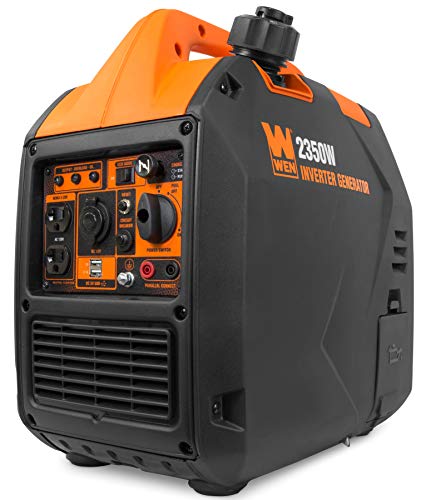
WEN 56235i 2350W Super Quiet Portable Inverter Generator - Ultra Lightweight 39lbs, Fuel Shut-Off, Clean Power for Camping RV

Westinghouse iGen4000DFc 4000 Peak Watt Dual Fuel Inverter Generator - Super Quiet RV Ready Remote Start CO Sensor
As an Amazon Associate we earn from qualifying purchases. Product prices and availability are accurate as of the date/time indicated.
Frequently Asked Questions
Can I use the house panel ground with an inlet?
Only with a 2-pole switch and a floating-neutral generator, where the house bond serves the generator. With a switch that opens the neutral, the generator needs its own bond and electrode.
Do I need a rod for a portable generator on a transfer switch?
Yes, if the switch opens the neutral, because the generator becomes separately derived and needs its own electrode. With a 2-pole switch you do not need one.
Is a generator frame ground enough in a storm?
Yes for cord-connected use, since the frame is the ground. A rod does not trip breakers or make cord use safer in a storm.
Can I unbond the neutral on my generator myself?
Only if the manual describes a bonding screw or plug and permits it. Otherwise it can void the warranty and create a safety hazard, so have a licensed electrician do the conversion.
{“@context”: “https://schema.org”, “@type”: “FAQPage”, “mainEntity”: [{“@type”: “Question”, “name”: “Can I use the house panel ground with an inlet?”, “acceptedAnswer”: {“@type”: “Answer”, “text”: “Only with a 2-pole switch and a floating-neutral generator, where the house bond serves the generator. With a switch that opens the neutral, the generator needs its own bond and electrode.”}}, {“@type”: “Question”, “name”: “Do I need a rod for a portable generator on a transfer switch?”, “acceptedAnswer”: {“@type”: “Answer”, “text”: “Yes, if the switch opens the neutral, because the generator becomes separately derived and needs its own electrode. With a 2-pole switch you do not need one.”}}, {“@type”: “Question”, “name”: “Is a generator frame ground enough in a storm?”, “acceptedAnswer”: {“@type”: “Answer”, “text”: “Yes for cord-connected use, since the frame is the ground. A rod does not trip breakers or make cord use safer in a storm.”}}, {“@type”: “Question”, “name”: “Can I unbond the neutral on my generator myself?”, “acceptedAnswer”: {“@type”: “Answer”, “text”: “Only if the manual describes a bonding screw or plug and permits it. Otherwise it can void the warranty and create a safety hazard, so have a licensed electrician do the conversion.”}}]}













