Our editorial team weighed 's published specifications and how it stacks up against similar products in the generators category. What stands out: Exceptionally Quiet, Lightweight & Durable, and Electric Start. Where it falls short: Needs Gasoline Refueling and Occasional Battery Maintenance. That puts it at 8.2/10 on our WG Score – an excellent, well-rounded option.
 Reviewed byTristan
Is a generator considered hazardous? Yes, it is a hazard whenever it is run or stored incorrectly, and the main risks are carbon monoxide (CO), fire, electric shock and fuel. Run outdoors, on dry ground, and well away from the house, a portable generator is manageable. This guide separates each hazard and ends with a checklist.
Is a generator considered hazardous? Five risks to know
The U.S. Consumer Product Safety Commission (CPSC) warns that portable generators can be hazardous, mainly through CO poisoning, electric shock or electrocution, and fire or burns. Add fuel handling and, for battery units, lithium cells, and you have the full list.
| Hazard | What goes wrong | Core rule |
|---|---|---|
| Carbon monoxide | Engine exhaust collects in or near living space | Outdoors only, exhaust pointed away, CO alarms inside |
| Fire and burns | Hot engine or exhaust ignites fuel vapor or nearby material | Shut off and cool before refueling; keep clear of combustibles |
| Shock | Wet equipment, damaged cords, or backfeeding the house wiring | Dry surface, GFCI protection, transfer switch or interlock |
| Fuel | Vapor, spills, old gasoline | Approved containers, stored outside living space |
| Lithium battery | Cell overheating in power stations | Follow the manual, keep cool, retire damaged units |
“Hazardous” means different things to different agencies
There is no single legal definition. Consumer safety (CPSC), shipping (DOT/PHMSA), waste (EPA and state agencies), and local fire codes or your insurer each use their own rules. The sections below take them one at a time.
How dangerous is carbon monoxide, and how far should a generator be from the house?
CO is the deadliest generator hazard because you cannot see or smell it. The CPSC reports that most generator CO deaths involve use indoors or in partially enclosed spaces, such as garages, basements and crawlspaces.
The common guidance, from agencies such as the Texas Department of Insurance and many manufacturer manuals, is to place the generator outdoors at least 20 feet from doors, windows and vents, with the exhaust pointed away from the building. Treat 20 feet as a minimum, not a legal guarantee. Your manual may call for more, and local code may add requirements.
What the 20-foot rule does not cover
- Wind. If the breeze carries exhaust toward the house, move the unit or turn it so the exhaust points the other way.
- Neighbors. Open windows next door count too.
- Garages and porches. A garage with the door open, a covered porch, and a carport are all partly enclosed. Do not run a generator there.
- Fans and open windows. They do not make indoor use safe.
Symptoms of CO poisoning
Headache, dizziness, weakness, nausea, vomiting, chest pain and confusion. If anyone has these while a generator is running, get everyone into fresh air and call 911. Do not go back inside to shut the unit off.
Install battery-powered or plug-in CO alarms with battery backup on every level and near bedrooms. Our portable generator safety rules cover placement and shutdown in more detail.
How do you store gasoline and a generator safely?
Gasoline is the part that makes a generator “hazardous” in storage. Its vapor is flammable and heavier than air, so it can travel along a floor to a pilot light or spark.
- Use only containers made and labeled for gasoline. Portable containers are commonly limited to 5 gallons each.
- Many local fire codes also cap total gasoline stored at a home. 25 gallons is a commonly cited figure, but it varies, so check your fire department or code office.
- Never store fuel in living space. Use a detached shed or a well-ventilated spot away from water heaters, furnaces, and other ignition sources.
- Turn the generator off and let it cool before refueling. Refuel outdoors on bare ground or concrete.
- Add fuel stabilizer if gas will sit for months. Old fuel is a starting problem more than a safety one (see our no-start troubleshooting checklist).
Worked example: how much fuel to keep
Say your manual lists about 0.4 gallons per hour at half load (check your own spec sheet, since this varies a lot by model). Running 12 hours a day uses about 4.8 gallons. Three days is roughly 15 gallons, or three 5-gallon cans. That is under the commonly cited 25-gallon figure, but confirm your local limit before stocking up.
Storing the generator itself
Let it cool fully, close the fuel valve, and keep it dry and away from heat sources. A cover helps against dust and rain, but never run the unit with a cover on or put one on a warm engine. See our generator cover picks if you store it outside.
Are power stations and solar generators less hazardous?
Yes for the biggest risks. Battery-based power stations and solar generators have no engine, so there is no exhaust and no CO, and no gasoline to spill. Most manufacturers permit indoor use, though you should confirm in the manual.
They are not risk-free. The main concerns are:
- Lithium cell overheating. Damage, defects, or heat can cause thermal runaway, which is a fire that is hard to put out.
- Heat exposure. Do not leave a unit in a hot car or in direct sun, and do not cover it while charging.
- Damaged units. Stop using one that swells, smells, or has a cracked case.
- Cords and panels. Overloaded or frayed cables are a shock and fire risk like any other equipment.
If your goal is quiet, fume-free backup power, look at our solar generators for home backup. Small units like the one in our ENGINSTAR 296Wh review suit phones, lights and a router, but not a furnace or well pump.
Is a generator a hazardous material for shipping, flights or disposal?
It depends on the context, and the answer for one is not the answer for another.
Shipping and travel
- Gas generators. A 2012 PHMSA letter classed a specific internal combustion generator under UN 3166 (engines, internal combustion). That ruling answered one question and does not cover every generator, so confirm with the carrier.
- Airlines. Generators with fuel or fuel residue are not allowed. Check the airline and FAA rules.
- Lithium power stations. FAA rules prohibit passenger batteries over 160 Wh in carry-on or checked bags. A 296Wh unit exceeds that.
- Your own vehicle. Haul it upright and secured, with the fuel valve closed and ideally the tank empty. Never carry fuel inside the passenger cabin.
Waste and disposal
In EPA rules, a “generator” is the person or business that creates hazardous waste, not the machine. At home, treat old gasoline, used oil and lithium batteries as household hazardous waste. Do not pour gas on the ground or down a drain. Use a local collection site, which varies by county.
Safety checklist to run through every time
- Place the generator outdoors, at least 20 feet from doors, windows and vents, exhaust pointed away from the house and neighbors.
- Set it on a level, dry, non-combustible surface such as concrete or gravel, not grass.
- Test that CO alarms work and have fresh batteries.
- Check for fuel leaks, damaged cords, and clear space around the engine.
- Connect appliances with grounded, outdoor-rated cords sized for the load (see choosing the right extension cord).
- Never backfeed through a wall outlet. For house circuits, use a transfer switch or interlock installed by a licensed electrician.
- Shut off and let the engine cool before every refuel.
- Store fuel in approved cans outside living space, within local limits.
- Keep the unit dry. Do not touch it with wet hands or run it in rain without a proper generator tent made for it.
Choose this if
Pick an inverter model with a CO shutoff sensor if you want an extra layer of protection. It supplements, not replaces, outdoor placement and alarms. Our best inverter generators roundup lists current options, and the spec sheet will say whether a model has CO shutoff.
Our Top Picks
Ready to shop? These are the top-rated options from our hands-on roundup, Best Whole House Gasoline Generators of 2026.

Westinghouse iGen2800 2800 Peak Watt Super Quiet Lightweight Portable Inverter Generator - Gas Powered, Parallel Ready
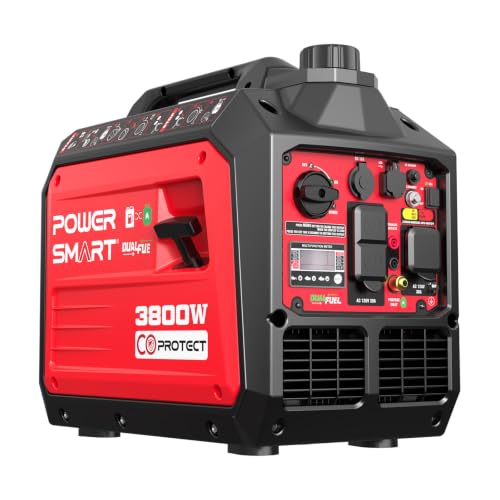
PowerSmart 3800 Watt Dual Fuel Inverter Generator Quiet Portable Gas Propane with CO Sensor RV Ready
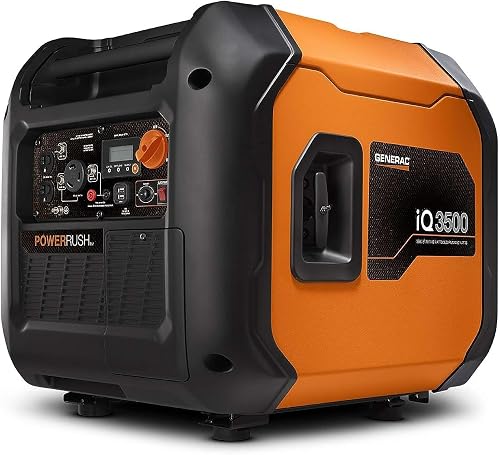
Generac iQ3500 3500W Portable Inverter Generator - Quiet, Lightweight, Electric Start, CARB Compliant for Camping & Jobsites
As an Amazon Associate we earn from qualifying purchases. Product prices and availability are accurate as of the date/time indicated.
Frequently Asked Questions
Can I run a generator in the garage with the door open?
No. The CPSC links most generator CO deaths to indoor and partially enclosed use. An open garage door does not clear exhaust fast enough, and gas can seep into the house. Always run it outdoors, away from doors, windows and vents.
Is leftover generator gasoline hazardous waste?
At home, old or contaminated gasoline is treated as household hazardous waste. Do not pour it on the ground or down a drain. Take it to a local collection site, and call your county for rules and accepted amounts.
Do I need a transfer switch to run a generator safely?
If you plan to power house circuits, yes: use a transfer switch or interlock installed by a licensed electrician to prevent backfeeding, which can electrocute utility workers. If you only plug appliances directly into the generator with proper cords, you do not need one.
Are generators allowed on airplanes?
Gas generators with fuel or fuel residue are generally not allowed. Lithium power stations over 160 Wh are also barred from passenger bags under FAA rules. For shipping, carriers apply DOT/PHMSA rules, so check with the carrier before sending one.
{“@context”: “https://schema.org”, “@type”: “FAQPage”, “mainEntity”: [{“@type”: “Question”, “name”: “Can I run a generator in the garage with the door open?”, “acceptedAnswer”: {“@type”: “Answer”, “text”: “No. The CPSC links most generator CO deaths to indoor and partially enclosed use. An open garage door does not clear exhaust fast enough, and gas can seep into the house. Always run it outdoors, away from doors, windows and vents.”}}, {“@type”: “Question”, “name”: “Is leftover generator gasoline hazardous waste?”, “acceptedAnswer”: {“@type”: “Answer”, “text”: “At home, old or contaminated gasoline is treated as household hazardous waste. Do not pour it on the ground or down a drain. Take it to a local collection site, and call your county for rules and accepted amounts.”}}, {“@type”: “Question”, “name”: “Do I need a transfer switch to run a generator safely?”, “acceptedAnswer”: {“@type”: “Answer”, “text”: “If you plan to power house circuits, yes: use a transfer switch or interlock installed by a licensed electrician to prevent backfeeding, which can electrocute utility workers. If you only plug appliances directly into the generator with proper cords, you do not need one.”}}, {“@type”: “Question”, “name”: “Are generators allowed on airplanes?”, “acceptedAnswer”: {“@type”: “Answer”, “text”: “Gas generators with fuel or fuel residue are generally not allowed. Lithium power stations over 160 Wh are also barred from passenger bags under FAA rules. For shipping, carriers apply DOT/PHMSA rules, so check with the carrier before sending one.”}}]}