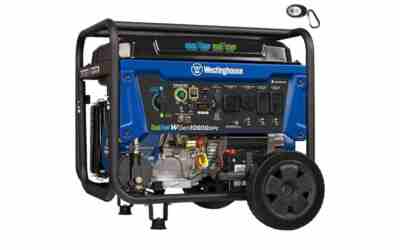
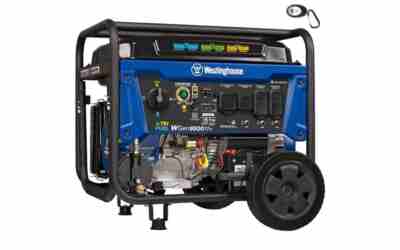
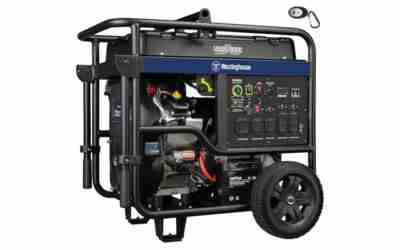
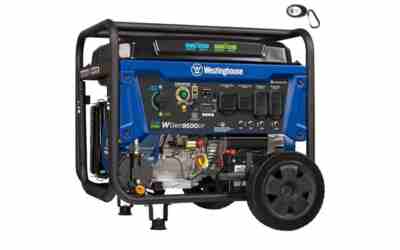
Our editorial team weighed 's published specifications and how it stacks up against similar products in the generators category. What stands out: High Power for Major Appliances, Multiple Fuel Choices, and Built-In CO Sensor. Where it falls short: Heavy at 557 lbs and Large Storage Footprint. That puts it at 8.2/10 on our WG Score – an excellent, well-rounded option.
 Reviewed bySarah Watts
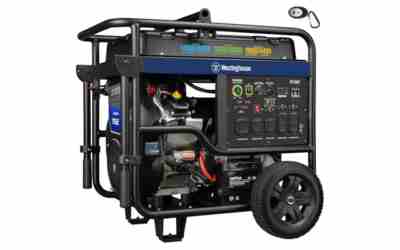
Our pick for best standby generators for commercial buildings is the Westinghouse 14500 Peak Watt Tri-Fuel Home Backup Portable Generator, Remote Electric Start, Transfer Switch Ready, because it delivers 11,500 running watts on gasoline and runs up to 19 hours on its 9.5 gallon tank. Output decides fit for a small commercial site, so this guide compares six units by running watts, fuel flexibility and outlet layout. For permanently installed backup context, see our guide to home standby generators.

Pros
- Tri-fuel versatility adapts to any fuel source available
- Powerful 550cc engine with cast iron sleeve for long-term durability
- CO sensor enhances safety by shutting down in high carbon monoxide levels
- Multiple GFCI outlets including high-amp options for appliances
- 3-year warranty and lifetime tech support
Cons
- Weighs 230 pounds, best moved by two people
- Large footprint limits single-person portability
- May arrive with residual fuel odor from factory testing
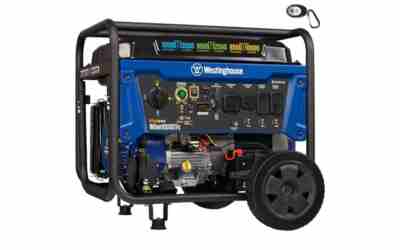
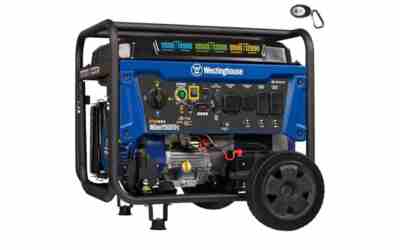
The Westinghouse WGen11500TFc stands out as a robust tri-fuel portable generator tailored for homeowners and RV owners needing dependable backup power. Capable of delivering up to 14,500 peak watts on gasoline, 13,500 on propane, and 12,000 on natural gas, it powers essentials like air conditioners, refrigerators, sump pumps, and entertainment systems simultaneously.
Key features shine in real-world use: the push-button electric start with remote key fob simplifies operation from afar, while low total harmonic distortion under 5% ensures clean power for sensitive electronics without risk of damage. Transfer switch-ready outlets (L14-30R 30A and 14-50R 50A) enable quick home integration, and the built-in CO sensor adds critical safety by auto-shutdown in hazardous conditions. Runtime reaches 19 hours on gasoline or 7 hours on a 20 lb propane tank.
Build quality impresses with a heavy-duty 550cc 4-stroke OHV engine featuring a cast iron sleeve for longevity, copper windings for cooler operation, and never-flat wheels plus a lift bracket for mobility. The VFT Data Center provides instant voltage, frequency, and hour readings, aiding maintenance.
Potential drawbacks include its 230-pound weight, which demands team effort for transport, and a bulky 27x26x26-inch frame better suited to stationary setups than frequent moves. Factory testing may leave a faint fuel odor initially.
Overall, the WGen11500TFc excels as a versatile, powerful solution for outage-prone areas, backed by a 3-year warranty and nationwide support. Ideal for those prioritizing reliability over lightweight portability.
Power Output: 14,500 peak / 11,500 running watts (gas); lower on propane/NG.
Fuel: Gasoline (9.5 gal tank), Propane (20 lb), Natural Gas.
Engine: 550cc 4-Stroke OHV with cast iron sleeve.
Features: Remote electric start, CO sensor, low THD, GFCI outlets, transfer switch ready.
Dimensions/Weight: 27.2"L x 26.1"W x 26.5"H / 230 lbs.
Warranty: 3-Year Limited.

Pros
- Versatile tri-fuel operation adapts to available fuel sources
- Transfer switch ready for quick home integration
- Long runtime and fuel gauge for reliable extended use
- Multiple outlet types including RV-ready 50A
- Includes all essentials like oil, tools, and battery charger for immediate setup
Cons
- Large size and weight limit true portability for one person
- Requires minimal assembly and initial oil fill
- Natural gas output slightly lower than gasoline
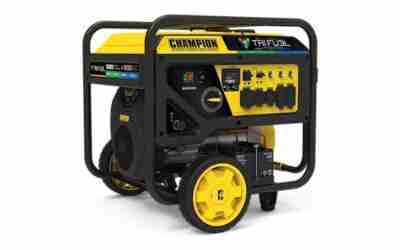
The Westinghouse WGen10500TFc is a powerhouse tri-fuel portable generator designed for homeowners, RV enthusiasts, and jobsite pros needing dependable backup power. With up to 13,500 peak watts on gasoline, it can handle major appliances like air conditioners, refrigerators, and sump pumps simultaneously, making it ideal for blackouts or off-grid living.
Standout features include remote electric start via key fob, a heavy-duty 500cc OHV engine with cast iron sleeve for durability, and a CO sensor for automatic shutdown in unsafe conditions. Real-world performance shines with up to 19 hours runtime on gas, intuitive VFT Data Center for monitoring, and transfer switch-ready outlets that simplify whole-home connections. GFCI outlets ensure safety for household use.
Build quality impresses with robust construction, never-flat wheels for mobility, and included accessories like a tool kit and oil funnel. While its size aids stability, it may challenge solo transport. Maintenance is straightforward with low oil shutdown and digital hour meter.
Drawbacks include its bulk, which suits stationary use better than frequent carrying, and slightly reduced output on natural gas. Overall, the WGen10500TFc delivers exceptional value for reliable, versatile power.
Verdict: Highly recommended for anyone prioritizing fuel flexibility and home backup readiness in a single, feature-packed unit.
Power Output: 13,500 peak / 10,500 running watts (gas); 12,500 peak / 9,500 running (propane); 10,000 peak / 8,500 running (natural gas).
Engine: 500cc 4-Stroke OHV with cast iron sleeve.
Runtime: Up to 19 hours on 9.5-gallon gas tank.
Outlets: 2x GFCI 120V 5-20R (20A), 1x L14-30R (30A), 1x 14-50R (50A RV-ready).
Starts: Remote electric, electric push-button, recoil.
Features: CO sensor, low oil shutdown, fuel gauge, VFT Data Center.

Pros
- Tri-fuel versatility adapts to available fuel sources
- Multiple GFCI-protected outlets for safe household use
- Real-time VFT data center for easy monitoring
- Wheel kit and lift bracket for better portability
- 3-year warranty and lifetime tech support
Cons
- At 215 pounds, it requires two people to move despite wheels
- Large footprint may not suit small storage spaces
- Minimal assembly and potential residual fuel odor on arrival
The Westinghouse WGen9500TFc is a powerhouse tri-fuel portable generator designed for homeowners seeking dependable backup power for their entire house. With 12,500 peak watts on gasoline (and strong performance on propane or natural gas), it easily handles major appliances like air conditioners, refrigerators, and sump pumps simultaneously via its transfer switch-ready outlets.
Standout features include effortless remote electric start via key fob, a built-in CO sensor for safety, and an intuitive control panel with VFT data displaying volts, frequency, and hours. The 457cc OHV engine delivers up to 12 hours of runtime on a 6.6-gallon tank, complete with fuel gauge and automatic low oil shutdown for worry-free operation during storms or blackouts.
Build quality shines with a durable cast iron sleeve, never-flat wheels, handle, and lift bracket for portability despite its robust frame. GFCI outlets and rubber covers add safety, while plug-and-play inclusions like oil, funnel, and tool kit minimize setup time.
Drawbacks include its hefty 215-pound weight, which demands muscle or help for positioning, and its sizable dimensions that require ample storage. Typical generator noise levels apply, though not specified here.
Overall, the WGen9500TFc excels as a versatile, feature-packed home backup solution, earning top marks for reliability and convenience. Ideal for those prioritizing safety and multi-fuel flexibility.
Power Output: 12,500 peak / 9,500 running watts (gasoline); lower on propane/natural gas.
Fuel & Runtime: Tri-fuel (gas, propane, natural gas); 6.6-gallon tank, up to 12 hours.
Engine: 457cc 4-Stroke OHV with cast iron sleeve.
Starts: Remote electric, push-button, recoil.
Outlets: 8 total, including L14-30R 30A and 14-50R 50A transfer switch ready.
Dimensions & Weight: 27.2 x 26.1 x 26.5 inches; 215 lbs.
Safety: CO sensor, GFCI outlets, low oil shutdown.

Pros
- Exceptionally quiet operation even under load, praised in reviews for minimal noise
- Easy assembly and multiple start options including remote, push-button, and recoil
- Superior clean sine wave power reduces amp draw on motors compared to non-inverter models
- Comes ready-to-run with oil, tools, battery charger, and propane hose
- Durable build with never-flat wheels, foldable handle, and heavy-duty engine
Cons
- Heavy at 187 pounds, requires two people for loading despite wheels
- Occasional shipping damage like scratches or gouges on panels reported
- Propane hose regulator connection can loosen and cause minor leaks if not checked
The Westinghouse iGen11000DFc is a powerhouse dual fuel inverter generator designed for homeowners seeking dependable backup during outages, RVers needing portable power, or jobsites requiring clean electricity. With 11,000 peak watts on gasoline (9,000 running) and 10,000 peak on propane (8,100 running), it handles major appliances like air conditioners, refrigerators, and sump pumps simultaneously via transfer switch ready outlets.
Standout features shine in real-world use: the low THD under 3% produces a pure sine wave that protects sensitive electronics and even lowers amp draw on motors, as one reviewer measured with a pool pump. Remote start via key fob, push-button, or recoil works flawlessly from day one, with up to 17 hours runtime on a 9.8-gallon tank. Reviewers love the quiet eco mode, intuitive LED data center for monitoring, and CO sensor for safety, noting easy starts without choking and smooth propane performance.
Build quality impresses with a rugged 457cc OHV engine, cast iron sleeve, automatic low oil shutdown, and fully enclosed design with never-flat wheels and foldable handle for portability. Assembly takes minutes with included high-quality tools, oil, and charger. While heavy, the mobility features make it manageable.
Drawbacks include its weight making solo transport tough, potential shipping cosmetic damage, and a propane regulator that may need tightening. Overall, the superior power quality and features outweigh minor issues.
Verdict: A top-tier inverter for reliable, clean home backup. If you prioritize quiet, safe power over open-frame bulk, this is your pick, backed by a 3-year warranty.
Power Output: 11,000 peak / 9,000 running watts (gas); 10,000 peak / 8,100 running (propane)
Fuel & Runtime: Dual fuel (gas/propane), 9.8-gallon tank, up to 17 hours
Engine: 457cc 4-Stroke OHV, electronic ignition
Outlets: 2x GFCI 120V 20A, L14-30R 30A, 14-50R 50A 120/240V
Dimensions & Weight: 30.2 x 25.2 x 26.6 inches, 187.4 lbs
Features: Remote/electric/recoil start, CO sensor, low THD, parallel capable, USB port, digital display

Pros
- Exceptional power handles large loads like 5-ton AC units with soft start
- Reliable runtime up to 8 hours on gas at 50% load
- Durable all-metal construction and 100% copper windings extend lifespan
- Easy fuel switching and versatile outlets for multiple uses
- Backed by 3-year warranty for peace of mind
Cons
- Noticeably loud operation requires placement away from living areas
- Heavy at 234 pounds, needs two people for initial setup
- Occasional reports of gasoline starting issues after initial use
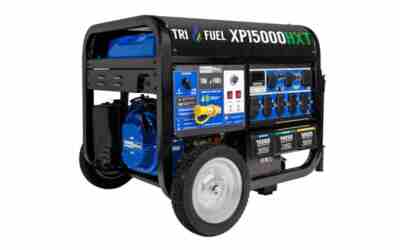
The DuroMax XP13000EH is a high-capacity dual fuel portable generator designed for homeowners, RV enthusiasts, and emergency preparedness. With 13,000 starting watts and 10,500 running watts from its 500cc OHV engine, it powers essential household appliances, central air conditioning, refrigerators, and lights, making it ideal for whole-home backup when connected via a transfer switch by a licensed electrician.
Standout features include seamless gas-to-propane switching, electric push-button start, CO alert for automatic shutdown, GFCI-protected outlets, and low oil shutdown. Real-world performance shines in reviews, where users report effortlessly running multi-ton AC units, microwaves, freezers, and electronics for hours during storms like Hurricane Helene. It delivers consistent power without issues for most sensitive devices, thanks to its robust design.
Build quality impresses with a heavy-duty all-steel frame, no-plastic components, never-flat wheels, and 100% copper windings for superior heat dissipation and longevity. At 234 pounds and compact dimensions, it's portable yet sturdy, rolling over any terrain. Safety features like individual breakers and surge protection add reliability.
Drawbacks include its noise level, which is typical for this power class and best mitigated by distancing from the house, and its weight, which may require assistance for maneuvering. Some users note gasoline starting challenges after break-in, often resolved with fuel stabilizers or propane fallback.
Overall, the XP13000EH earns high marks for value and versatility, delivering stationary-level power in a portable package. It's a smart choice for anyone prioritizing fuel flexibility and outage readiness over absolute quietness.
Power: 13,000 starting watts, 10,500 running watts
Fuel Type: Dual Fuel (Gasoline/Propane)
Engine: 500cc OHV, 14.08 HP, Electric Start
Weight: 234 lbs | Dimensions: 30"L x 29"W x 26"H
Special Features: CO Sensor, Foldable Handle, Hour Meter, Low Oil Shutdown
Outlets: Multiple including 50A transfer switch-ready, 120V GFCI
Warranty: 3 Years | EPA & CARB Approved

Pros
- High power output supports major appliances simultaneously
- Multiple fuel choices increase reliability during outages
- Built-in CO sensor adds safety monitoring
- Direct hardwire terminal block enables full home integration
- Clear digital VFT display for runtime tracking
Cons
- Heavy 557 lb weight requires multiple people for moving
- Large size limits storage in smaller spaces
- Natural gas output is lower than gasoline mode
The Westinghouse WGen20000TFc is a high-capacity tri-fuel portable generator designed for whole-home backup and demanding jobsite applications.
It delivers strong performance through a 999cc V-Twin engine and supports gasoline, propane, or natural gas, giving users flexibility when fuel supplies are limited.
Key features include remote start, multiple high-amperage outlets ready for transfer switches, low THD power for electronics, and a 125A terminal block for direct home wiring by an electrician.
The unit is built with durable components like copper windings and a cast-iron engine sleeve, though its substantial weight and size may challenge single-person handling and storage.
Overall it provides reliable high-output power with useful safety and monitoring features for homeowners or contractors who need serious backup capacity.
Our Picks for 2026
Best Overall: Westinghouse 14500 Peak Watt Tri-Fuel Home Backup Portable Generator, Remote Electric Start, Transfer Switch Ready, Gas, Propane, and Natural Gas Powered
This unit earns the overall role because it pairs 14,500 peak watts with 11,500 running watts on gasoline, then steps down to 10,500 running watts on propane and 9,500 on natural gas. Its heavy duty 550cc 4-Stroke OHV engine has a cast iron sleeve, and the listing cites up to 19 hours on a 9.5 gallon tank with a built-in fuel gauge. Remote electric start and low THD output suit phones, computers and TVs during an outage.
Skip this if: your building needs more than 11,500 running watts on gasoline, because the 28000 peak watt unit in this lineup offers 20,000 running watts.
View on Amazon.comBest Mid-Range Tri-Fuel: Westinghouse 13500 Peak Watt Tri-Fuel Home Backup Portable Generator, Remote Electric Start, Transfer Switch Ready, Gas, Propane, and Natural Gas Powered
This model earns the mid-range role with 13,500 peak and 10,500 running watts on gasoline, plus 8,500 running watts on natural gas. Its 500cc engine includes automatic low oil and carbon monoxide shutdown, and a digital hour meter tracks service. The outlet mix suits a commercial site: two GFCI 120V 20A household receptacles, one transfer switch ready 30A outlet and one 50A RV ready 120/240V outlet, all with rubber covers.
Skip this if: you need natural gas running output above 8,500 watts, since this unit is rated at that level on natural gas.
View on Amazon.comBest Entry-Level Tri-Fuel: Westinghouse 12500 Peak Watt Tri-Fuel Home Backup Portable Generator, Remote Electric Start, Transfer Switch Ready, Gas, Propane, and Natural Gas Powered
This unit suits buildings that need a dependable tri-fuel setup without the largest output. It produces 12,500 peak and 9,500 running watts on gasoline, 8,500 running watts on propane and 7,500 on natural gas, powered by a 457cc engine with a cast iron sleeve. You also get remote start with a key fob, a 12V battery charger and transfer switch ready and RV ready outlets.
Skip this if: your loads need more than 9,500 running watts on gasoline or 7,500 running watts on natural gas.
View on Amazon.comBest Clean Power for Electronics: Westinghouse 11000 Peak Watt Dual Fuel Portable Inverter Generator, Remote Electric Start, Transfer Switch Ready, Gas and Propane Powered, Low THD – Safe for Electronics, Parallel Capable, CO Sensor
This dual fuel inverter model is built for sensitive equipment. It produces 11,000 peak and 9,000 running watts on gasoline, and 10,000 peak and 8,100 running watts on propane, at less than 3% THD. A rotating LED display shows fuel level, power output, remaining run time, voltage and lifetime hours, and the unit offers remote electric start with recoil backup.
Skip this if: you need natural gas fuel, since this model is listed for gasoline and propane only. Our inverter generator guide compares fuel options across inverter models.
View on Amazon.comBest Dual Fuel Whole-Home Option: DuroMax XP13000EH 13,000-Watt Dual Fuel Portable Generator – Gas & Propane, Electric Start, Whole Home Backup Power, Transfer Switch Ready, RV & Emergency Ready
This DuroMax unit is the dual fuel choice for whole-home style backup. It delivers 10,500 running watts with a surge to 13,000 watts, powered by a 500cc OHV engine that runs on gasoline or propane. The all-metal frame and power panel, 100% copper windings and no-flat tires make it sturdy for a unit that moves between sites.
Skip this if: you want remote start or natural gas, since the listing describes a push button start and gas or propane fuel.
View on Amazon.comBest High-Output Option: Westinghouse 28000 Peak Watt Tri-Fuel Home Backup Portable Generator, Remote Electric Start, Transfer Switch Ready, Gas, Propane, and Natural Gas Powered
This is the highest-output unit in the lineup, with 28,000 peak and 20,000 running watts on gasoline, 18,000 running watts on propane and 16,000 on natural gas. Its 999cc V-Twin engine has a cast iron sleeve, and it includes two 120/240V 50A outlets, two L14-30R 30A outlets and one 120V L5-30R 30A outlet. A 125A 240V terminal block lets a licensed electrician hardwire it for larger backup loads.
Skip this if: you cannot involve a licensed electrician, since the 125A terminal block is designed for that hardwire connection.
View on Amazon.comQuick Comparison: Side by Side
- – Tri-Fuel Flexibility.
- – Powerful 550cc Cast-Iron Engine.
- – CO Sensor Auto-Shutdown.
- – Tri-Fuel Flexibility.
- – Transfer-Switch Ready.
- – Long Runtime, Fuel Gauge.
- – Tri-Fuel Flexibility.
- – GFCI-Protected Outlets.
- – Real-Time VFT Display.
- – Exceptionally Quiet Under Load.
- – Multiple Start Options.
- – Clean Sine Wave, Reduces Amp Draw.
- – Handles 5-Ton AC With Soft Start.
- – Up to 8h Runtime at 50% Load.
- – All-Metal, Copper Windings.
- – High Power for Major Appliances.
- – Multiple Fuel Choices.
- – Built-In CO Sensor.
- – Heavy at 230 lbs.
- – Large Footprint, Limited Solo Portability.
- – Minor Residual Fuel Odor.
- – Large, Limited Portability.
- – Minor Assembly & Oil Fill.
- – Lower Output on Natural Gas.
- – Heavy at 215 lbs.
- – Large Storage Footprint.
- – Minor Assembly & Fuel Odor.
- – Heavy at 187 lbs.
- – Occasional Shipping Damage.
- – Propane Connection May Loosen.
- – Noticeably Loud.
- – Heavy at 234 lbs.
- – Occasional Starting Issues.
- – Heavy at 557 lbs.
- – Large Storage Footprint.
- – Lower Output on Natural Gas.
Buying Guide for 2026
Match Running Watts to Your Load
Running watts are the output a generator sustains, while peak watts only cover short surges such as motor startup. Add the running watts of the loads you expect to run together, then compare that total with the rating for your fuel type. The 28000 peak watt unit’s 20,000 running watts exceed the 14500 unit’s 11,500 by 8,500 watts, which is the extra headroom you buy with that step up.
Size to your worst fuel, not your best. The 14500 unit drops from 11,500 running watts on gasoline to 9,500 on natural gas, a 2,000 watt reduction.
Runtime Per Gallon
The 14500 unit lists up to 19 hours on its 9.5 gallon tank. Dividing 19 hours by 9.5 gallons gives 2 hours per gallon under the conditions in the listing. Heavier loads shorten that figure, so plan fuel storage with a margin and watch the built-in fuel gauge.
Fuel Flexibility and Outlets
The Westinghouse tri-fuel units, the 12500, 13500, 14500 and 28000 models, run on gasoline, propane or natural gas, which helps when one fuel supply is interrupted. The two dual fuel models run on gasoline and propane only. Check outlets against your equipment: 120V GFCI 5-20R receptacles suit tools and small equipment, while the L14-30R 30A and 14-50R 50A connections are for transfer switch and RV style setups.
Portable Versus Permanent Standby
Every model here is listed as a portable unit. If your building needs a permanently installed standby system, these picks are a compromise. Review the permanent options in our Standby category before you decide.
Why Trust Our Reviews
Our picks are based on specs and aggregated owner feedback, comparing running watts, fuel options, runtime and outlet layout across each model. We do not claim hands-on testing, and we flag where a unit is only a compromise for a permanent standby need. If a spec is missing from a listing, we leave it out rather than estimate it.
Frequently Asked Questions
Can a portable generator back up a commercial building?
A portable unit can keep key circuits running if you size it to the load, and the 28000 peak watt model offers 20,000 running watts for larger loads. Any connection to building circuits should be made by a licensed electrician who follows local code. Portable units do not switch over automatically unless you add equipment designed for that purpose.
How long will a tri-fuel generator run?
The 14500 unit lists up to 19 hours on its 9.5 gallon tank, which works out to about 2 hours per gallon under the listed conditions. Runtime falls as load rises, so the fuel gauge is your best guide during an outage. For job-site style use cases, see our portable generator for work guide.
Should I choose propane or natural gas?
Natural gas lowers output on every tri-fuel model here, such as 9,500 running watts for the 14500 unit compared with 11,500 on gasoline. Propane sits between the two at 10,500 running watts for that same unit. Choose the fuel your site can keep available during an outage, and size the generator to the lowest rating you will need.
Do I need a licensed electrician?
Yes, for any permanent connection to building wiring. The 28000 unit’s 125A 240V terminal block is designed for a licensed electrician to hardwire the generator directly to the building. Even with transfer switch ready outlets, check local code before making any connection.