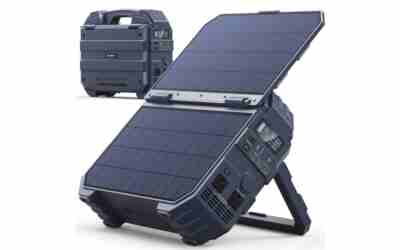
When you’re running a food truck, reliable power is essential. Whether you’re operating in a bustling city park, a remote festival, or a quiet street corner, a dependable energy source keeps your kitchen humming, your lights on, and your customers happy. That’s where solar generators for food trucks come in. These portable powerhouses offer a clean, quiet, and sustainable way to fuel your mobile culinary adventures, freeing you from the limitations of traditional generators. From powering refrigerators and blenders to keeping your POS system online, the right solar generator can make all the difference. For more options, check out our guide to The 5 Best Heavy Duty Solar Generators of 2026.
We provide from $139.99 to $977.00 across our picks of solar generators for food trucks, by November of 2026, including EcoFlow, Jackery, MARBERO.

Pros
- Lightning-fast 1-hour AC charging and efficient solar input
- Reliable UPS performance tested with computers and CPAP machines
- Powers real-world loads like arcade cabinets, fans, and heaters for hours
- Durable LiFePO4 cells with 3000+ cycles for long-term reliability
- Versatile 11 ports cover all devices from phones to small appliances
Cons
- DC outputs may overload on certain low-draw setups initially
- Fan noise becomes noticeable under heavy loads
- Solar charging time varies with sunlight conditions
The EcoFlow River 2 Max 500 is a compact portable power station designed for outdoor enthusiasts, RV travelers, and anyone needing reliable home backup power. With a 499Wh LiFePO4 battery, it excels at providing clean, stable energy for camping trips, emergencies, or daily use without the noise and fumes of traditional generators.
Standout features include 1-hour AC fast charging, up to 1000W X-Boost output to run 11 devices simultaneously, and rapid 2.3-hour solar recharge. Real-world tests from users show it powering arcade machines for 17 hours, CPAP units all night, turbo heaters for 2 hours, and even astrophotography gear flawlessly after firmware updates. The UPS mode switches to battery in under 30ms, protecting sensitive electronics like computers during outages.
Build quality is premium with a sturdy, lightweight 13.3 lb design, side handle for easy transport, and intuitive app control for monitoring. The pure sine wave inverter ensures compatibility with a wide range of appliances, from blenders to laptops.
Minor drawbacks include occasional DC output sensitivity requiring troubleshooting and fan noise under load, though customer service resolves issues promptly with replacements. Solar performance depends on conditions, but pass-through charging adds versatility.
Overall, the River 2 Max 500 delivers exceptional value for portable power needs, earning high praise for reliability and speed. Ideal if you want a future-proof solar generator that punches above its size.
Capacity: 499Wh LiFePO4 Battery
Output: Up to 1000W (X-Boost), 11 Ports (AC, USB-A/C, DC)
Charging: 1 Hour AC, 2.3 Hours Solar (220W max)
Dimensions: 10.6 x 10.2 x 7.7 inches, 13.3 lbs
Other: UPS <30ms, App Control, 5-Year Warranty

Pros
- Lightning-fast charging keeps you powered during critical times
- Exceptional build quality and durability praised in reviews for marine and off-grid use
- Quiet fans and no emissions allow safe indoor operation
- Powers high-demand devices like fridges for days on a single charge
- Intuitive app and display for easy monitoring and control
Cons
- Weighs 50 pounds, challenging to move solo for some users
- Occasional app connectivity issues require software updates
- Solar panels sold separately for full off-grid capability
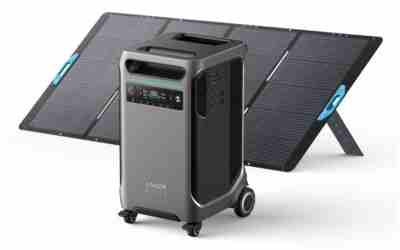
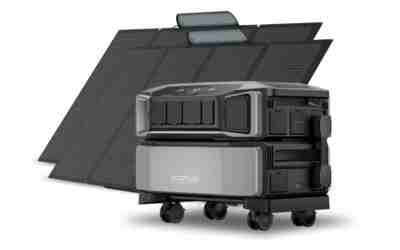
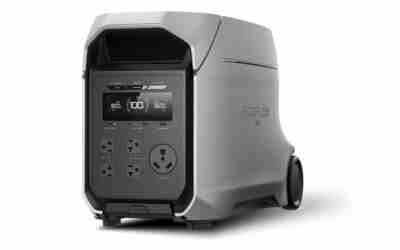
The EF ECOFLOW DELTA 2 Max is a high-capacity portable power station designed for home backup, RV camping, outdoor adventures, and professional uses like filmmaking or boat maintenance. With 2048Wh LFP battery and 2400W output (expandable to 3400W via X-Boost), it powers nearly all household appliances, from fridges running for over 24 hours to power tools and heaters.
Standout performance includes world-leading charging: 80% in 43 minutes with AC and solar, or 1.1 hours on AC alone. Reviewers rave about its reliability, with one running a mini-fridge for 53 hours and a freezer for 26 hours. The quiet 30dB operation and app control make it ideal for overnight use without disturbance, while expandability to 6kWh prepares users for extended blackouts.
Build quality feels premium and rugged, with a 10-year battery lifespan from 3000 cycles. It's lighter than competitors at 50 pounds yet robust for harsh environments. The app provides real-time stats, though some note initial Bluetooth setup needs updates.
Drawbacks include its weight for frequent transport and lack of included solar panels. Still, for versatile, fume-free power without gas generator hassles, it excels.
Verdict: A top-tier solar generator for anyone needing fast, expandable, and quiet backup power. Highly recommended for preppers, campers, and homeowners facing outages.
Capacity: 2048Wh LFP Battery (3000 cycles to 80%)
Output: 2400W Continuous, 3400W X-Boost, 15 Outlets
Charging: 80% in 43 Min (AC+Solar), 1.1 Hr AC, 2.3 Hr Solar
Dimensions: 12.2 x 9.7 x 20 inches, 50 lbs
Special Features: Expandable to 6kWh, 30dB Quiet, App Control, Indoor Safe
Users praise its speed and power: 'Charged to 80% in under an hour, handles multiple appliances flawlessly' (5 stars). Sailboat owners love its portability and durability in marine settings. Off-grid fans note it outperforms competitors like Bluetti in runtime and recharge speed for fridges and freezers.
Common theme: Beastly performance for home backup and camping, with quiet operation and long battery life standing out.

Pros
- Exceptionally fast 1-hour charging keeps you powered without downtime
- Whisper-quiet operation ideal for camping and home backup
- Proven reliability in real-world tests like powering radios, heaters, and fridges for hours
- Portable and easy to store with compact build and long battery lifespan
- Versatile ports charge laptops, phones, and appliances simultaneously
Cons
- Solar panel requires frequent realignment to sun for optimal input, dropping efficiency if misaligned
- Panel sags in the middle without support, reducing output until propped up
- Runtime limited for continuous high-wattage devices like large heaters beyond short bursts
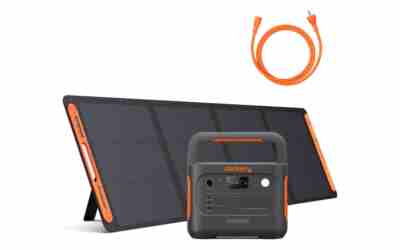
The Jackery Explorer 1000 v2 solar generator kit combines a 1070Wh LiFePO4 portable power station with a 200W solar panel, delivering 1500W AC output and up to 3000W surge. Weighing just 23.8 pounds with a foldable handle, it suits campers, RVers, off-grid enthusiasts, and anyone needing emergency backup power for essentials like fridges, microwaves, and CPAP machines.
Standout features include ChargeShield 2.0 for safe, rapid recharging—full in 1 hour via app emergency mode or 1.7 hours standard—and a battery lasting over 10 years with 4000 cycles. Users praise its real-world performance: powering home theaters for 45 hours, ham radios for 5+ hours, and campers during outages or storms. The app enables quiet 30dB overnight charging and efficiency modes, while versatile ports (3 AC, 2 USB-C 100W, USB-A, DC) handle multiple devices effortlessly.
Build quality shines with a durable, compact design (12.87 x 8.82 x 9.72 inches) using recyclable packaging and carbon-verified eco-friendliness. Reviewers highlight its silence versus gas generators, easy setup, and portability for trailers or closets. The solar panel folds for travel but excels in full sun, recharging fully in 4-5 hours on partly cloudy days when adjusted properly.
Drawbacks include the solar panel's need for constant sun alignment via its level bubble, as slight misalignment halves input to 50-100W. The panel sags centrally without propping, impacting efficiency, and high loads like 2000W heaters drain capacity quickly. Not ideal as a full UPS for sensitive electronics or primary solar reliance without maintenance.
Overall, this kit earns high marks for innovation and reliability in portable power. Buy it for versatile off-grid adventures or peace of mind during blackouts—its fast charge, longevity, and power make it a top choice despite minor solar tweaks.
Capacity: 1070Wh LiFePO4 battery
Output: 1500W continuous AC (3000W surge), 100W USB-C PD, 3x AC outlets, USB-A, DC car port
Charging: 1hr fast AC (app-enabled), solar via 200W panel, car DC
Weight/Dimensions: 23.8 lbs, 12.87"L x 8.82"W x 9.72"H
Warranty: 5 years; Battery life: 10+ years (4000 cycles)
Versus Explorer 2000 v2: Half the capacity (1070Wh vs 2042Wh) but lower price, lighter weight, ideal for lighter loads like projectors (7.6hrs) or rice cookers (2.7hrs).
Outperforms gas generators in silence and portability; runs fridges 37hrs (low draw), kettles 1hr, microwaves 48mins.
Carbon footprint verified by TÜV SÜD, with 100% recyclable packaging for eco-conscious users.
Pros
- Extremely lightweight and easy to transport for off-grid trips
- Supports fast charging via Qualcomm QuickCharge 3.0 technology
- Silent operation makes it perfect for use inside tents or near CPAP machines
- Includes car charging and solar connector cables in the package
Cons
- Limited to appliances under 100W for continuous AC usage
- Solar panel is sold separately and not included in the base kit
- Slower AC recharge time compared to high-end fast-charging units
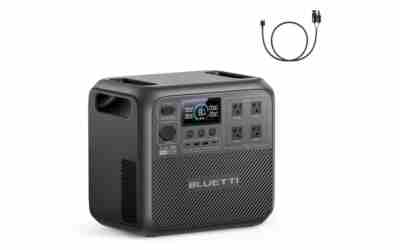
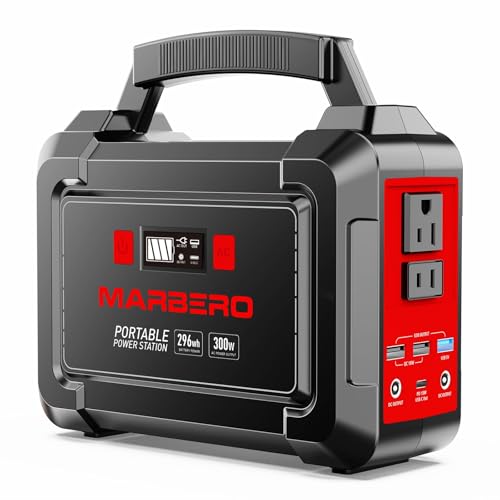
The MARBERO 350W Portable Power Station is a compact energy hub designed for users who need reliable power without the bulk. With a 296Wh (80,000mAh) capacity, it strikes a balance between portability and utility, making it a strong contender for weekend campers, outdoor photographers, and those preparing for hurricane-related power outages. Weighing only 5.7 lbs, it is one of the more portable units in the 300W peak class.
What sets this unit apart is its diverse output array. It features eight different ports, including a dedicated USB-C port and a QC3.0 port for fast-charging smartphones and tablets. For those with medical needs, it can run a CPAP machine for approximately 9 hours, providing peace of mind during overnight blackouts. The inclusion of a built-in LED flashlight with an SOS mode further emphasizes its role as a safety tool.
The build quality is centered around safety and longevity. The integrated Battery Management System (BMS) monitors voltage and temperature to prevent common battery failures. MARBERO utilizes high-quality Li-ion cells that are rated to retain 90 percent of their original capacity after 1000 cycles, offering better long-term value than generic battery banks.
However, users should note the wattage limitations. While it can peak at 350W, it is intended for devices under 100W for steady use. This means it is perfect for laptops, fans, and small TVs, but will not support high-draw appliances like coffee makers or heaters. Additionally, while it is solar-ready, you will need to purchase a compatible panel separately to utilize the off-grid charging feature.
Overall, the MARBERO 350W is an excellent entry-level power station for those who prioritize weight and multi-device charging. It delivers quiet, clean power in a user-friendly package that is easy enough for anyone to carry and operate during an emergency.

Pros
- Lightweight and portable at 3.3lbs, easy to carry for camping or emergencies
- Includes 40W foldable solar panel and all cables for immediate use
- Multiple fast-charging USB ports and AC/DC outputs handle diverse devices
- Built-in flashlight with SOS adds emergency utility
- Positive feedback on quick customer service and real-world charging performance
Cons
- Solar panel may underperform in low-light conditions or with incompatible generators
- Limited to 100W continuous power, not for high-wattage appliances
- Occasional reports of unit charging issues after extended use
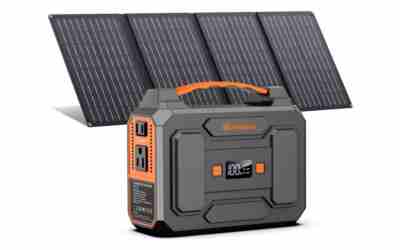
The Apowking R100 is a compact 146Wh portable solar generator designed for campers, RV enthusiasts, and anyone needing reliable backup power during outages or off-grid adventures. Paired with a 40W foldable solar panel, it offers versatile charging for essentials like phones, laptops, tablets, fans, and lights, making it ideal for short trips or emergency kits rather than whole-home backup.
Standout features include seven output ports: two 110V AC outlets (100W rated, 200W peak), multiple USB options with quick charge, and a DC port for car accessories. Users praise its real-world performance, like fast phone charging via solar on sunny days and full recharges in a few hours from AC or car. The built-in dual LED flashlight with SOS mode proves handy for nighttime emergencies, while the BMS ensures safe operation with temperature and voltage control.
Build quality impresses with a sturdy, lightweight 3.3lb body and cooling vents to prevent overheating. The digital display shows battery status clearly, and its backpack-friendly size enhances portability. Most reviews highlight excellent value, though some note slower solar input in shade and minor compatibility quirks with other panels.
Drawbacks include power limits that exclude heavy appliances and isolated complaints about solar efficiency or longevity. Overall, this generator is a budget-friendly, feature-packed choice for portable power needs.
Verdict: Buy the Apowking R100 if you want an affordable, all-in-one solar solution for daily essentials during camping or blackouts. It's not for high-demand use but excels where convenience and solar readiness matter.
Capacity: 146Wh / 39600mAh Lithium Ion
Output: 100W Rated / 200W Peak; 2x AC 110V, USB-A/C ports, 1x DC 9-12.6V/10A
Input: Solar (40W panel included), AC adapter, Car charger
Weight: 3.3 pounds; Dimensions: 7.6 x 3.7 x 6.1 inches
Extras: Dual LED flashlight (3 modes), BMS safety, 1-year warranty
Apowking 146Wh solar generator, 40W solar panel, AC power adapter, car charging cable, carport output cable, user manuals (2).
Have questions about our solar generators for food trucks recommendations? Check out our How We Rank page for details on our review process or our Copyright Policy for information on content usage.
Which Solar Generators For Food Trucks Fit Your Situation?
For the High-Demand Food Truck (Grills, Fryers, Refrigeration)
If your food truck relies on multiple high-wattage appliances like griddles, fryers, or large refrigerators, the EF ECOFLOW DELTA 2 Max is an excellent choice. With a substantial 2048Wh capacity and a 2400W output (expandable up to 6kWh), it can handle demanding loads for extended periods, ensuring your operations run smoothly even during peak hours. Its ability to power 99% of household devices makes it versatile enough for almost any food truck setup.
Skip this if: you’re looking for an ultra-portable unit for smaller, less power-intensive setups, as its larger capacity and output come with a higher weight.
View on Amazon.comFor the Compact and Agile Food Cart or Kiosk
For smaller food carts or kiosks that need to power essentials like blenders, coffee makers, or a POS system, the EcoFlow River 2 Max 500 Portable Power Station is a great fit. Weighing only 13.3lbs and offering 499Wh capacity with up to 1000W output, it provides ample power without adding significant bulk. Its 1-hour fast AC recharge and quick solar charging make it convenient for daily use.
Skip this if: your food truck requires continuous power for multiple high-wattage appliances, as its capacity might be too limited for very heavy use.
View on Amazon.comFor Extended Off-Grid Operations and Festivals
If your food truck frequently operates at multi-day festivals or remote locations without grid access, the Jackery Explorer 1000 v2 Solar Generator with 200W Panel is ideal. Its 1070Wh LiFePO4 battery and included 200W solar panel ensure reliable, long-lasting power. With a 1500W AC output and a 10-year lifespan, it’s built to sustain your operations through extended off-grid periods, making it a robust choice for serious mobile vendors.
Skip this if: you primarily operate in urban environments with easy access to grid power for recharging, as the included solar panel might be an unnecessary addition to your setup.
View on Amazon.comFor Budget-Conscious Startups or Light-Duty Needs
For food truck startups with a tight budget or those with minimal power requirements, the MARBERO 350W Portable Power Station offers a cost-effective solution. Its 296Wh capacity and 350W peak output can comfortably run lights, charge devices, and power small appliances. It’s also lightweight and compact, making it easy to transport and integrate into a smaller mobile setup. For more budget-friendly options, explore The 5 Best Diy Solar Generators of 2026.
Skip this if: your food truck has significant power demands, such as multiple heating elements or refrigeration units, as its capacity and output might be insufficient.
View on Amazon.comBuying Guide for 2026
Capacity (Watt-Hours) and Output (Watts)
The capacity of a solar generator, measured in Watt-hours (Wh), tells you how much energy it can store, while the output in Watts (W) indicates how much power it can deliver at any given moment. For a food truck, understanding these numbers is crucial. Consider your appliances: a typical food truck might run a small refrigerator (50-100W), a blender (300-500W), and lighting (20-50W). If you need to run a 500W blender for 2 hours, you’d need 1000Wh of capacity (500W x 2 hours). The EF ECOFLOW DELTA 2 Max, with its 2048Wh capacity, could power that blender for over 4 hours, or a 100W refrigerator for more than 20 hours.
It’s also important to consider surge wattage, as some appliances (like refrigerators) draw significantly more power when starting up. Ensure your chosen generator’s peak output can handle these temporary spikes. A higher capacity and output will generally mean a larger, heavier unit, so balance your power needs with portability.
Battery Type and Lifespan
Most modern solar generators utilize either LiFePO4 (Lithium Iron Phosphate) or NMC (Nickel Manganese Cobalt) batteries. LiFePO4 batteries, like those found in the EcoFlow River 2 Max 500 and Jackery Explorer 1000 v2, are known for their longer lifespan (often 3,000+ charge cycles to 80% capacity) and enhanced safety. This translates to years of reliable service, a critical factor for a business investment like a food truck. While NMC batteries can be lighter and offer higher energy density for their size, their cycle life is typically shorter.
A longer battery lifespan means less frequent replacement and better long-term value, which is particularly beneficial for commercial applications where the generator will see heavy daily use. Always check the manufacturer’s stated cycle life to estimate how many years of operation you can expect.
Portability and Charging Options
For a food truck, portability is key. You need a generator that’s easy to move, load, and unload. Consider the unit’s weight and the presence of sturdy handles or wheels. The Apowking 146Wh Solar Generator, for instance, offers a compact solution perfect for smaller setups. Beyond portability, evaluate the charging flexibility. Most solar generators can be recharged via solar panels, AC wall outlets, and car chargers. Fast charging capabilities, such as the 1-hour AC recharge on the EcoFlow River 2 Max 500, can significantly reduce downtime between shifts or events. Efficient solar charging, like the 2.3-hour recharge on the EcoFlow River 2 Max 500 with 220W solar input, allows you to top up power even during a busy workday or while parked at a sunny location. For optimal solar performance, you might also consider investing in The 5 Best Battery For Diy Solar Generators of 2026.
Quick Comparison: Side by Side
- – Lightning-Fast 1-Hour AC Charging.
- – Reliable UPS Performance.
- – Powers Real-World Loads for Hours.
- – Lightning-Fast Charging.
- – Exceptional Build for Marine/Off-Grid.
- – Quiet, No Emissions, Indoor-Safe.
- – Fast 1-Hour Charging.
- – Whisper-Quiet Operation.
- – Proven Real-World Reliability.
- – Extremely lightweight and easy to transport for off-grid trips.
- – Supports fast charging via Qualcomm QuickCharge 3.0 technology.
- – Silent operation makes it perfect for use inside tents or near CPAP machines.
- – Lightweight at 3.3 lbs.
- – Includes 40W Solar Panel & Cables.
- – Multiple Fast-Charging Ports.
- – May Overload on Low-Draw Setups.
- – Audible Fan Under Heavy Load.
- – Solar Time Varies With Sunlight.
- – Heavy at 50 lbs.
- – Occasional App Connectivity Issues.
- – Solar Panels Sold Separately.
- – Needs Frequent Solar Realignment.
- – Panel Sags Without Support.
- – Limited Runtime on Heavy Loads.
- – Limited to appliances under 100W for continuous AC usage.
- – Solar panel is sold separately and not included in the base kit.
- – Slower AC recharge time compared to high-end fast-charging units.
- – May Underperform in Low Light.
- – 100W Continuous Limit.
- – Occasional Charging Issues Over Time.
Why Trust Our Reviews
At WikiGenerators.com, our mission is to provide comprehensive and unbiased reviews to help you make informed decisions. Our recommendations for solar generators for food trucks are based on thorough research of product specifications, manufacturer data, and extensive user feedback. We analyze key features such as battery capacity, output wattage, charging speeds, battery longevity, and portability to assess each product’s suitability for various food truck needs.
We do not engage in hands-on testing but rely on a data-driven approach, comparing products objectively to highlight their strengths and weaknesses. Our goal is to present you with a clear, concise, and trustworthy guide, ensuring you find a solar generator that meets the unique demands of your mobile culinary business.
Frequently Asked Questions
How much power does a food truck typically need?
The power requirements for a food truck vary greatly depending on the appliances you use. A small truck running only lights and a POS system might need 500-1000W, while a truck with multiple refrigerators, fryers, and other heavy-duty cooking equipment could require 2000W or more continuous power, with higher surge capabilities. It’s essential to list all your appliances and their wattage to calculate your total needs.
Can solar generators power all types of food truck equipment?
Modern solar generators can power a wide range of food truck equipment, from lights and charging stations to refrigerators, blenders, and even some induction cooktops. However, very high-wattage appliances like large electric griddles or deep fryers might exceed the continuous output of smaller portable solar generators. Always check the generator’s maximum continuous output and surge capacity against your appliances’ power draw.
How long do solar generators last on a single charge for a food truck?
The runtime depends entirely on the generator’s battery capacity (Wh) and the total wattage of the appliances you’re running. For example, a 2000Wh generator running appliances that collectively draw 200W would theoretically last 10 hours (2000Wh / 200W). In practice, factors like battery efficiency and temperature can slightly reduce this. Higher capacity generators like the EF ECOFLOW DELTA 2 Max are designed for longer operational periods.
Are solar generators quiet enough for residential areas or events?
Yes, one of the significant advantages of solar generators over traditional gas generators is their near-silent operation. Since they rely on batteries and inverters, they produce no exhaust fumes and very little noise, making them ideal for use in residential neighborhoods, quiet events, or any location where noise pollution is a concern. This makes them a superior choice for Solar power needs.
What maintenance is required for a solar generator?
Solar generators require minimal maintenance compared to fuel-based generators. Key tasks include keeping the solar panels clean for optimal charging efficiency, storing the unit in a cool, dry place, and occasionally checking battery health (if the unit has an app or display for it). Avoid fully draining the battery repeatedly, as this can shorten its lifespan. Always follow the manufacturer’s specific care instructions.