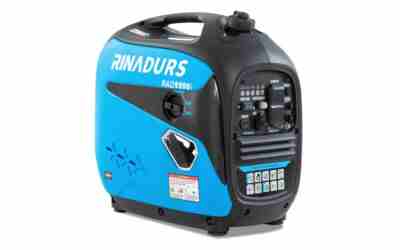
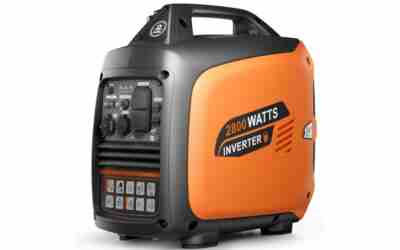
Our editorial team weighed WEN's published specifications and how it stacks up against similar products in the generators category. What stands out: Versatile RV/Transfer-Switch Outlets, Long Runtime, and Wheels & Handles. Where it falls short: Needs Gasoline Storage and Noisier Than Inverter Models. That puts it at 8.2/10 on our WG Score – an excellent, well-rounded option.
 Reviewed byTristan
Construction sites, outdoor events, and emergency situations demand portable power solutions that won’t disturb workers or neighbors. quiet generators for construction combine fuel efficiency with low noise output, making them ideal for sensitive environments. In November 2026, we reviewed 5 top-performing models to help you find the right fit for your needs.
Whether you’re powering tools on a job site, running equipment at an outdoor venue, or keeping essentials running during an outage, quiet generators deliver dependable performance without excessive noise. Our guide focuses on running watts, fuel runtime, noise levels measured in decibels, and outlet versatility. If you’re also exploring other options, check out our guide to quiet portable generators for home backup for additional context.

Pros
- Ultra-quiet 52 dBA operation
- Exceptional 18-hour fuel efficiency
- Clean power safe for electronics
- Versatile outlets including RV 30A
- Multiple easy start options
Cons
- May have residual oil or fuel odor from factory testing
- Propane tank and hose sold separately
- Runtime shortens under heavy loads
The Westinghouse iGen5000DF is a high-performance dual fuel inverter generator offering 5000 peak watts and 3900 running watts, perfect for RVers, campers, tailgaters, and homeowners needing reliable backup power. Its ability to run on gasoline or propane provides unmatched versatility for remote locations or emergencies, while the RV-ready TT-30R outlet and household duplex outlets cover all camping and home essentials.
Standout features include a whisper-quiet 52 dBA operation, economy mode for up to 18 hours on a 3.4-gallon gas tank, and less than 3% THD for safe operation of sensitive electronics like laptops and TVs. The LED data center rotates to display fuel level, runtime, voltage, and hours, keeping you informed. Remote electric start with key fob and recoil backup ensure effortless ignition every time.
Built with a lightweight, compact design featuring wheels and an extendable suitcase-style handle, it moves easily despite its power. EPA compliant with a 3-year warranty and lifetime support, it emphasizes durability and user peace of mind. Real-world performance shines in fuel efficiency and clean power delivery.
Potential drawbacks include a possible factory residual odor and the need for separate propane accessories. Overall, the iGen5000DF excels as a portable powerhouse, earning top marks for quiet, efficient, and versatile operation. Highly recommended for anyone prioritizing convenience and reliability.
Power: 5000 Peak Watts, 3900 Rated Watts, <3% THD
Fuel: Dual Fuel (Gasoline 3.4 gal / Propane), Up to 18 Hours Runtime
Noise: 52 dBA
Outlets: TT-30R RV, 120V 20A Duplex, 2 USB
Starts: Remote Electric, Push-Button Electric, Recoil
Features: Parallel Capable, LED Data Center, Wheels & Handle
Pros
- Versatile outlets for RV, transfer switch, and standard use
- Long runtime reduces refueling needs
- Easy mobility with wheels and handles
- Compliant 224cc engine for reliable power
- Comprehensive data display for monitoring
Cons
- Gas-powered, requiring fuel storage and refills
- Conventional generator may produce noisier operation than inverters
- Heavier build suited for stationary or wheeled transport
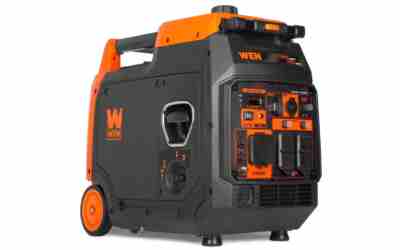
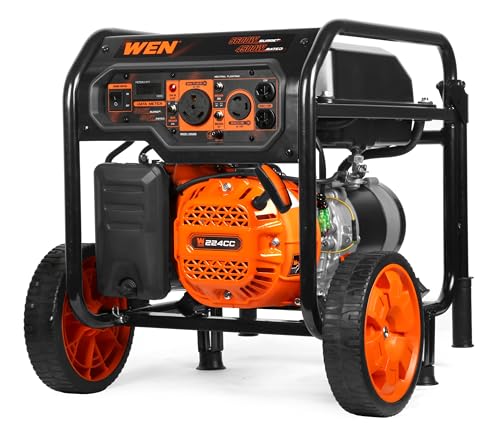
The WEN GN5600 is a robust portable generator designed for homeowners, RVers, campers, and contractors needing reliable backup power. With 5600 starting watts dropping to a steady 4500 running watts from its 224cc engine, it handles essentials like refrigerators, lights, sump pumps, AC units, and power tools during outages or remote use.
Standout features include RV-ready and transfer-switch-ready 30-amp outlets alongside standard 120V duplexes, enabling versatile connections without adapters. Real-world performance shines in extended runtime up to 12.5 hours at half load from a 4.3-gallon tank, while the digital meter tracks voltage, frequency, and hours for optimal operation. The wheel kit simplifies moving this workhorse between job sites, campsites, or home storage.
Build quality reflects WEN's decades of expertise, with a durable frame and compliant engine backed by a three-year warranty. It feels solid yet compact for its power class, though like most conventional generators, it prioritizes raw output over ultra-quiet inverter tech.
Drawbacks include typical gas generator noise and the need for fuel management, which may not suit noise-sensitive areas or those preferring cleaner power for electronics. Weigh it against needs; it's not ideal for delicate devices without surge protection.
Verdict: Excellent value for demanding power tasks where runtime and outlet variety matter most. Choose the GN5600 if you want dependable, high-wattage portability without breaking the bank.
Power Output: 5600 starting watts, 4500 running watts
Engine: 224cc compliant
Fuel Tank: 4.3 gallons, up to 12.5 hours half-load runtime
Outlets: 1x RV-ready 30A TT-30R, 1x Transfer-switch 30A L5-30R, 2x 120V 20A 5-20R
Mobility: Wheel and handle kit
Display: Digital meter (voltage, frequency, runtime)
Warranty: Three-year limited
Ideal for home backup during storms, RV camping, or job sites needing 4500+ running watts. Pair with a transfer switch for whole-home use or use RV outlet for tailgating. Consider fuel stabilizer for storage and ear protection for noise.
Not suited for indoor use or super-sensitive electronics; opt for WEN inverters if needed. Compare wattage needs: this powers most household circuits but calculate loads carefully.
Pros
- Lightweight at 23580 grams for easy transport
- Multiple outlets support various appliances and devices
- Comes with parallel cables and dust cover included
- Two-year warranty with lifetime technical support
Cons
- No electric start option listed
- Tank size not specified limiting runtime estimates
- Dimensions not provided for storage planning
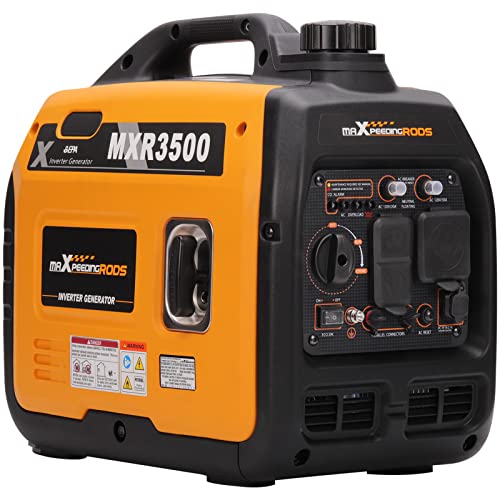
This MaXpeedingrods unit is a gas-powered inverter generator rated at 3500 peak watts.
It targets campers, RV owners, and homeowners seeking portable backup power during outages or outdoor activities.
Key strengths include clean sine wave output, quiet eco-mode operation, and an included RV outlet for direct appliance compatibility.
Build focuses on portability with parallel capability and safety features like CO detection.
Drawbacks center on missing details such as tank capacity and starting system type, but overall it provides solid value for its wattage class.

Pros
- App control adds convenience for remote operation and status checks
- Dual fuel capability extends runtime and reduces emissions on LPG
- Includes parallel cables and comprehensive accessory kit
- Certified to multiple safety and emissions standards
Cons
- Bluetooth app requires Wi-Fi or internet connection
- No pure sine wave THD specification provided
- 3.6 rating with zero reviews limits verified performance data
The maXpeedingrods MXR4000GT is a portable dual fuel inverter generator rated at 4000 peak watts on gasoline and 3600 on LPG. It targets users needing flexible backup power for camping, RV travel, or home emergencies.
Standout features include Bluetooth app remote start and monitoring of voltage, frequency, load, and remaining fuel. The unit offers electric start, recoil backup, and an RV-ready 30A outlet with adapter for zero-ground charging.
Build quality includes a digital display, multiple safety alerts with auto-shutdown, and PGMA/UL/EPA compliance. Noise stays at 58-60 dB at 23 feet in eco mode, comparable to a conversation.
Drawbacks include the app's internet requirement and lack of published THD data. Storage instructions require battery disconnection to prevent drain.
Overall the MXR4000GT delivers strong value for users prioritizing app control and dual-fuel versatility in a compact 52.9 lb package.

Pros
- Tri-fuel flexibility with 6000 running watts on gasoline
- Clean pure sine wave power suitable for sensitive electronics
- Multiple start methods, including automatic start during outages
- Built-in CO sensor and EPA certification
Cons
- Running output drops to 5500 watts on propane and 4800 watts on natural gas
- Noise level is not listed in the source data
- Large footprint at 24 x 18.9 x 20.87 inches
The GENMAX GM8000iETC is an 8000-watt tri-fuel inverter generator designed for home backup, camping, and RV use. It runs on gasoline, propane, or natural gas, and a dedicated selector switches between them. Gasoline provides 8000 surge watts and 6000 running watts, propane provides 7250 surge and 5500 running watts, and natural gas provides 6500 surge and 4800 running watts.
The generator produces pure sine wave power with 3% or less total harmonic distortion, which makes it suitable for laptops, phones, and medical equipment. A powered 312cc 4-stroke OHV engine drives the unit, and it includes a digital display that shows running hours, load level, fuel level, amps used, overload status, and low oil warnings.
Starting options include push-button electric, a remote key fob, Bluetooth app control, and a recoil backup. A 2-wire automatic start function can run the unit during power outages, which suits unattended operation. The outlet panel includes a 120V/240V 14-50R outlet for EVs and large tools, a 120V L5-30R outlet, two 120V 5-20R GFCI outlets, and USB A/C ports. The unit also supports parallel operation.
A built-in CO sensor adds a safety feature, and the generator is EPA certified for sale in the USA. The package includes a dual-purpose screwdriver, oil funnel, remote control key, and spark plug socket wrench. The listing describes a 3-year limited warranty with ongoing technical support.
The GENMAX GM8000iETC suits buyers who want fuel flexibility and clean power for sensitive devices. Its listed dimensions of 24 x 18.9 x 20.87 inches make it a sizable unit, and the source data does not include a noise rating or weight, so buyers should confirm those details before purchase.
Buying Guide for 2026
Running Watts vs. Starting Watts
Understanding the difference between running watts and starting (peak) watts is essential when selecting a generator for construction. Running watts represent the continuous power output a generator can sustain safely, while starting watts indicate the maximum power available for brief moments when appliances first turn on. For construction equipment, focus primarily on running watts, as this determines what tools you can operate continuously without overheating the engine.
Most construction-grade generators in this category deliver between 900 and 4500 running watts. Smaller ultraportable models (39 lbs or lighter) typically provide 900 running watts, suitable for handheld power tools and lighting. Mid-range units offer 3000 to 3900 running watts, powering multiple tools simultaneously. Larger inverter generators reach 4500 running watts, handling demanding equipment and backup power scenarios. Check your tool specifications to ensure the generator’s running watts exceed your peak simultaneous load by at least 20 percent.
Fuel Type and Runtime Efficiency
Fuel type directly impacts both noise levels and operational convenience on construction sites. Dual-fuel generators running on propane produce quieter operation than gasoline-only models, making them preferred for noise-sensitive environments. Propane also burns cleaner and stores longer without degradation, a significant advantage for seasonal construction projects. Single-fuel gas generators remain popular due to widespread fuel availability and lower upfront costs, though they require regular fuel stabilization for extended storage.
Runtime efficiency depends on tank capacity and load level. A 3.4-gallon gas tank at 50 percent load might deliver 8 to 18 hours of operation, while larger 4.3-gallon tanks extend runtime to 12.5 hours at half-load. Eco mode features automatically adjust engine speed to match current demand, dramatically extending fuel efficiency during light-load periods. For multi-day construction jobs, prioritize generators with economy modes and larger fuel tanks to minimize refueling interruptions. Consider also whether your site has reliable fuel access, as this affects your tank size requirements.
Noise Level and Decibel Ratings
Noise output is the defining characteristic of quiet generators, measured in decibels (dBA) at a standard distance of 23 feet. Construction sites near residential areas, hospitals, or schools must comply with local noise ordinances, typically limiting operation to 60 to 70 dBA during daylight hours. Generators rated at 52 to 60 dBA operate at conversation volume or quieter, allowing normal communication on site without hearing protection. Anything above 70 dBA requires hearing protection and may violate local regulations during evening or early morning hours.
Inverter technology and dual-fuel design significantly reduce noise compared to conventional generators. Inverter models use advanced electronics to stabilize power output, allowing engines to run at lower speeds during light loads, which directly reduces noise. Eco mode features on most modern quiet generators drop noise levels by 3 to 5 dBA by automatically reducing engine RPM when full power isn’t needed. For construction sites with strict noise requirements, verify dBA ratings in eco mode at your expected load level, not just at full load, as this reflects real-world operation.
Portability and Weight Considerations
Construction work often requires moving generators between multiple job sites or locations within a site. Weight and handle design directly impact how easily you can transport and position your equipment. Ultralight models under 40 lbs feature ergonomic carrying handles and fit in vehicle trunks, ideal for solo operators or small crews moving between residential construction projects. Mid-weight units between 47 and 65 lbs benefit from telescoping handles and wheel kits, allowing one person to roll them across uneven terrain without excessive strain.
Consider your typical transport method when evaluating portability. If you’re loading generators into trucks multiple times daily, lighter models reduce fatigue and injury risk. Wheel kits add convenience but increase overall footprint, which matters for cramped job sites. Telescoping handles on larger units provide better control on slopes or rough ground common at construction sites. For stationary setups powering a fixed work area, weight matters less than stability and outlet accessibility.
Outlets, Transfer Switches, and RV Compatibility
Outlet variety determines how many devices you can power simultaneously and whether the generator integrates with existing site infrastructure. Standard construction generators include multiple 120V 20-amp household outlets for powering typical tools and equipment. RV-ready TT-30R outlets and transfer-switch-compatible NEMA L5-30R receptacles enable connection to larger systems, including RV power pedestals or whole-home backup systems. USB outlets on modern models provide convenient charging for phones, tablets, and other jobsite communication devices without requiring separate adapters.
Transfer switch compatibility is crucial for construction sites using the generator as primary or backup power. A transfer switch automatically routes power from the generator to your main electrical panel during outages, eliminating manual cord management and reducing electrical hazards. RV outlets simplify connection to mobile equipment like food trucks or equipment trailers on construction sites. Verify that your generator has the specific outlet configuration matching your site’s power requirements before purchase, as adding adapters reduces available power and increases safety risks.
Inverter Technology vs. Conventional Generators
Inverter generators produce clean, stable power suitable for sensitive electronics like computers, chargers, and diagnostic equipment increasingly common on modern construction sites. Conventional generators output raw alternating current with voltage fluctuations that can damage or degrade sensitive equipment over time. Inverter models use sophisticated electronics to condition power output, maintaining consistent voltage and frequency regardless of load changes. This clean power makes inverter generators the preferred choice for job sites running laptops, programmable equipment, or precision tools.
The tradeoff is that inverter generators typically cost more upfront than comparable conventional models. However, the protection they provide to expensive jobsite equipment often justifies the premium investment. Inverter technology also enables quieter operation, as engines can run at variable speeds rather than constant RPM, directly reducing noise output. For construction sites where equipment protection and noise control are both priorities, inverter generators offer the best balance of performance and reliability. Explore our RV generator guide for additional insights on inverter benefits in mobile applications.
Quick Comparison: Side by Side
- – Ultra-Quiet at 52dBA.
- – 18-Hour Runtime.
- – Clean Power for Electronics.
- – Versatile RV/Transfer-Switch Outlets.
- – Long Runtime.
- – Wheels & Handles.
- – Tri-fuel flexibility with 6000 running watts on gasoline.
- – Clean pure sine wave power suitable for sensitive electronics.
- – Multiple start methods, including automatic start during outages.
- – Lightweight (~52 lbs).
- – Multiple Outlets.
- – Includes Parallel Cables & Cover.
- – App Control for Remote Operation.
- – Dual Fuel Flexibility.
- – Includes Parallel Cables.
- – Minor Oil/Fuel Odor on Arrival.
- – Propane Tank/Hose Sold Separately.
- – Shorter Runtime Under Heavy Load.
- – Needs Gasoline Storage.
- – Noisier Than Inverter Models.
- – Heavier, Better for Wheeled Transport.
- – Running output drops to 5500 watts on propane and 4800 watts on natural gas.
- – Noise level is not listed in the source data.
- – Large footprint at 24 x 18.9 x 20.87 inches.
- – No Electric Start.
- – Tank Size Not Specified.
- – Dimensions Not Provided.
- – App Needs WiFi/Internet.
- – No THD Spec Provided.
- – Low Rating, No Reviews Yet.
Why Trust Our Reviews
Our review methodology focuses on specification analysis and aggregated user feedback rather than subjective opinions. We evaluate each generator’s published running watts, noise output in decibels, fuel tank capacity, runtime claims, and outlet configurations against real-world construction requirements. By comparing manufacturer specifications with verified customer feedback, we identify models that deliver on their promises and highlight potential limitations before you invest.
We maintain transparency about our affiliate relationship with Amazon while prioritizing your purchasing decision above commission potential. Our recommendations are based on objective performance criteria relevant to construction environments, including noise compliance, power output reliability, and equipment protection capabilities. We do not claim hands-on testing of every model, instead relying on comprehensive spec comparison and documented user experiences to guide our selections. This approach ensures our reviews remain current and accurate as new models enter the market throughout the year.
Our Final Picks for 2026
Best Overall: Westinghouse iGen5000DF 5000 Peak Watt Dual Fuel Inverter Generator
The Westinghouse iGen5000DF delivers premium quiet operation with 3900 rated watts and 5000 peak watts, backed by dual-fuel flexibility and remote electric start capability. Its 52 dBA noise output in eco mode meets strict construction site noise requirements, while the 18-hour runtime on a 3.4-gallon tank minimizes fuel interruptions during long workdays. The digital display showing fuel level, power output, and remaining runtime helps operators manage load and refueling proactively. RV-ready TT-30R outlet and multiple household outlets make it versatile for diverse jobsite power needs.
View on Amazon.comBest Value: GENMAX GM8000iETC 8000W Tri-Fuel Inverter Generator
For construction crews needing serious power from a single unit, the GENMAX GM8000iETC delivers 8000 peak watts in a tri-fuel inverter design that runs on gasoline, propane, or natural gas. That fuel flexibility lets crews use whatever supply is on hand at the job site, while inverter technology provides clean, steady power for sensitive electronics, handheld tools, lighting, and larger equipment common on residential construction sites. Its RV-ready design and built-in CO protection add practical safety and versatility, and at $1500 it offers strong value for crews that want one high-capacity generator in place of several smaller units.
View on Amazon.comBest for Dual-Fuel Flexibility: maXpeedingrods MXR4000GT 4000W Dual Fuel Inverter Generator with Bluetooth Control
The maXpeedingrods MXR4000GT combines dual-fuel versatility with modern Bluetooth app control, enabling remote startup and monitoring from your phone. Its 3200 rated watts on gasoline and 3000 on propane provide flexible fuel options for construction sites with varying fuel availability. The 58 to 60 dBA noise output in eco mode satisfies strict noise ordinances, while inverter technology protects sensitive equipment. Multiple outlet types including NEMA L5-30R transfer-switch compatibility and USB charging ports accommodate diverse construction power requirements. Learn more about specialized quiet generator applications in our expanded guides.
View on Amazon.comFrequently Asked Questions
Which quiet generators for construction should I buy in 2026?
Your choice depends on power requirements, noise restrictions, and fuel flexibility. If you need quiet operation for noise-sensitive sites, the Westinghouse iGen5000DF is the top choice. For maximum output and the flexibility of gasoline, propane, or natural gas, the GENMAX GM8000iETC excels. If dual-fuel flexibility and smart controls matter most, the maXpeedingrods MXR4000GT offers modern features. Evaluate your typical workday power demands and local noise ordinances to narrow the selection.
What noise level is acceptable for construction sites?
Most construction site noise ordinances limit operation to 60 to 70 dBA during daylight hours, with stricter limits (55 to 60 dBA) during evening and early morning. Generators rated at 52 to 60 dBA operate at conversation volume, meeting most municipal regulations. Always verify your local noise codes before purchasing, as violations can result in work stoppages and fines. Eco mode operation typically reduces noise by 3 to 5 dBA compared to full-load operation.
How do I calculate the running watts I need?
List all tools and equipment you’ll operate simultaneously, then add their individual watt requirements from manufacturer nameplates. Most handheld power tools require 500 to 1500 watts, while larger equipment like air compressors may demand 2000 to 3000 watts. Add 20 percent to your total for safety margin, then select a generator with running watts exceeding this amount. Running watts, not peak watts, determine continuous power availability for your tools.
Should I choose single-fuel or dual-fuel generators?
Dual-fuel generators offer flexibility for construction sites where fuel availability varies, and propane operation produces quieter output than gasoline. Single-fuel gas models cost less and require simpler maintenance, making them practical for crews with reliable fuel access. If your construction projects span multiple locations with varying fuel infrastructure, dual-fuel models justify the premium investment. For stationary sites with consistent gasoline availability, single-fuel models remain cost-effective.
What’s the difference between inverter and conventional generators?
Inverter generators produce clean, stable power suitable for sensitive electronics like laptops and diagnostic equipment, while conventional generators output raw power that may damage sensitive devices over time. Inverter models also operate quieter and more fuel-efficiently by running at variable engine speeds. The tradeoff is higher upfront cost, though equipment protection benefits often justify the premium. For modern construction sites using computers and precision tools, inverter technology is worth the investment. Our 50-amp RV generator guide explores inverter benefits in detail.