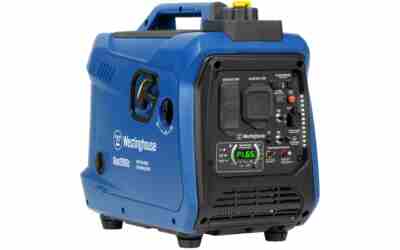
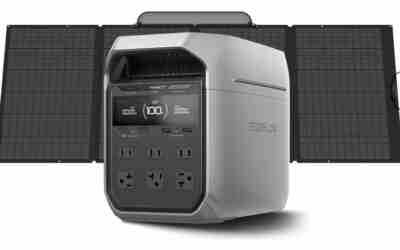
Our editorial team weighed 's published specifications and how it stacks up against similar products in the generators category. What stands out: Compact, Reinforced Carry Bag, QC3.0 & 60W USB-C, and Automatic Overload Shutoff. Where it falls short: 300W Continuous Limit and Solar Sold Separately. That puts it at 8.4/10 on our WG Score – an excellent, well-rounded option.
 Reviewed byDaniel
The best power station camping for most campers is the Anker SOLIX C300, because it pairs a 288Wh LiFePO4 battery with 300W output, 25dB operation and fast recharging in a compact body. If you want more capacity for longer trips, the DJI Power 1000 V2 steps up to 1024Wh. See our portable battery power stations for camping for more options.
Pros
- Very lightweight and compact for a 600W-class power station
- Fast AC recharge with 8 flexible charging modes including solar and car
- LiFePO4 chemistry supports long-term durability
- Seamless 10ms UPS switchover protects sensitive electronics
- High 1500W Power Lifting output for occasional heavy loads
Cons
- 288Wh capacity limits runtime for high-wattage appliances like kettles or toasters
- Power Lifting Mode is intended for short bursts rather than sustained heavy use
- Solar panel (PV60L) is a separate purchase and no solar input rating is listed
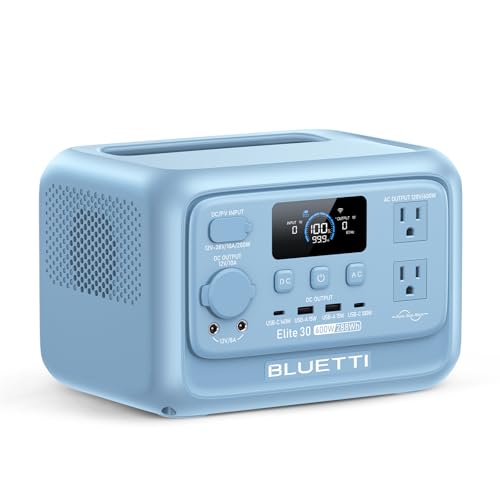
The BLUETTI Elite 30 V2 is an entry-level portable power station built around a 288Wh LiFePO4 battery. It delivers 600W of continuous AC output and weighs about 9.5 lbs, making it one of the easier units in its class to carry to a campsite, beach, or job site.
It is aimed at campers, road trippers, and households wanting a small backup source for essentials. With nine outlets and 140W PD fast charging, it can run lights, speakers, laptops, phones, a car fridge, and a CPAP machine. Power Lifting Mode raises output to 1500W, which opens the door to small heating appliances such as a kettle or toaster.
Charging is a strong point. Eight charging modes cover AC wall, solar, and car input, and the wall charger can reach 80% in 45 minutes and 100% in 70 minutes. UltraCell technology and smart cooling reduce power consumption by 50%, with low standby draw of 4.5W. The UPS mode switches in 10ms, which helps protect computers and other sensitive gear during an outage.
The main drawback is capacity. At 288Wh, high-wattage appliances will drain the battery quickly, so it is best for short bursts of heavy loads and longer runs of low-power devices. The PV60L solar panel is sold separately.
Overall, the Elite 30 V2 is a practical, portable choice for light camping, travel, and emergency backup for essential devices. Buyers who need extended runtime for larger appliances should consider a higher-capacity model.

Pros
- Lightning-fast UPS response safeguards sensitive electronics
- Versatile 7 outlets handle family devices from phones to fridges
- Long-lasting LiFePO4 battery endures 3000 cycles or 10 years
- Durable IP54-rated build resists water, fire, and drops
- Compact 10.4 lb design enhances portability
Cons
- Base 286Wh capacity suits light to moderate loads, needs expansion for heavy prolonged use
- Continuous output caps at 600W despite 1200W surge capability
- 10.4 lb weight may feel bulky for extended handheld carrying
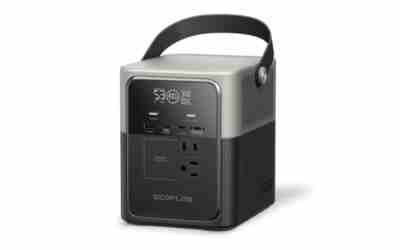
The EcoFlow RIVER 3 Plus is a versatile portable power station designed for campers, remote workers, and anyone needing reliable off-grid or backup power. With a 286Wh LiFePO4 battery expandable to 858Wh via extra batteries, it powers essentials like laptops, fridges, and gaming consoles, making it a go-to for outdoor adventures or home emergencies.
Standout features include a pro-grade <10ms UPS for seamless switchover during outages, protecting NAS servers and desktops with auto-save alerts. It delivers steady 600W continuous and 1200W surge output across 7 outlets, doubles runtime for sub-100W devices, and recharges fully in 1 hour via AC or 1.5 hours solar. Real-world tests show it running a car fridge for 3.6 hours or a game console for over 2 hours on a single charge.
Build quality shines with a compact 9.2 x 9.1 x 5.8-inch frame weighing 10.4 lbs, IP54 water resistance, fire-retardant shell, and drop-proof durability up to 3 feet. Ultra-quiet at <30dB, it's unobtrusive even nearby, while Bluetooth/Wi-Fi app control offers remote monitoring, timed charging, and power-saving modes for effortless management.
Potential drawbacks include the base capacity limiting heavy loads without expansion and moderate weight for true one-hand portability. Still, its efficiency and safety features like X-Guard outweigh these for most users.
Overall, the RIVER 3 Plus earns high marks for blending power, portability, and smart tech, delivering exceptional value for backup needs and outdoor power.
Capacity: 286Wh (expandable to 858Wh)
Output: 600W continuous, 1200W surge (X-Boost), 7 outlets (3 AC UPS, 2 USB-A, USB-C, car port)
Recharge: 1hr AC, 1.5hr solar (220W input)
Battery: LiFePO4, 3000 cycles to 80% capacity
Dimensions/Weight: 9.2 x 9.1 x 5.8 in, 10.4 lbs
Other: <30dB noise, <10ms UPS, IP54 protection, app control
Run times on base 286Wh (extend with extra batteries):
NAS Server (40W): 5.2 hours
Car Fridge (60W): 3.6 hours
Game Console (100W): 2.2 hours
Refrigerator (400W): 31 minutes
Desktop (600W): 21 minutes
Pros
- Compact dimensions and reinforced carrying bag for easy portability
- Quick Charge 3.0 and 60W USB-C for fast device powering
- Safe operating range and automatic shutoff for overload protection
- Multiple recharging options including car port
Cons
- Limited to 300W continuous output, unsuitable for high-wattage appliances
- Solar panel compatibility requires separate purchase
- Lithium-ion battery less durable long-term than LiFePO4 alternatives
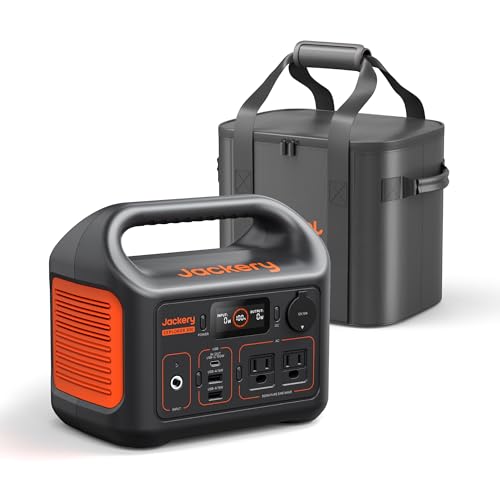
The Jackery Explorer 300 is a compact portable power station delivering 293Wh of lithium-ion battery capacity, perfect for outdoor enthusiasts, campers, travelers, hunters, and anyone facing power outages. With 300W AC output (500W peak) and ports for up to six devices, it keeps essentials like laptops, phones, drones, and small coolers running off-grid.
Standout features include two pure sine wave AC outlets for clean power to sensitive gear, a 60W USB-C PD port, Quick Charge USB-A, and a 12V car outlet. Real-world performance shines in scenarios like tent camping or van life, providing about 4.3 hours for a 60W device. Fast recharging via AC in 4 hours or solar in 5.5 hours (panel separate) adds versatility, with pass-through charging enabled.
Build quality impresses with its 7.1 lbs weight, 9.1x5.2x7.8in size, and included carrying bag for protection and easy carry. The design handles 14-104°F temperatures reliably.
Drawbacks include the 300W limit, which shuts off under overload, and no included solar panel. Still, for moderate needs, it excels.
Verdict: Ideal for light to medium portable power demands; a reliable, user-friendly choice for adventures and emergencies.
Capacity: 293Wh (20.4Ah, 14.4V)
Outputs: AC 110V 300W (500W peak); USB-A 5V 2.4A & Quick Charge 3.0; USB-C 60W PD; Car 12V 10A 120W
Weight: 7.1 lbs | Dimensions: 9.1x5.2x7.8in
Recharge Time: 4 hours AC; 4.5 hours car; 5.5 hours 100W solar
Operating Temp: 14-104°F | Battery: Lithium-ion

Pros
- Fast 37-minute recharge to 80%
- High 2600W output for demanding appliances
- Very quiet operation at as low as 26 dB
- Long-life LFP battery with intelligent BMS protection
- Fast 10ms UPS switchover for backup use
Cons
- MPPT and car charging modules are not built in, so solar or car charging needs a separate adapter
- Weight is not listed in the product data, so portability is hard to judge
- Warranty details are inconsistent: the listing specs show 1 year while the feature text mentions 5 years
The DJI Power 1000 V2 is a portable power station built around a 1024Wh LFP battery and a 2600W output rating. It is designed to run common appliances such as kettles, cookers, projectors, saws and drills, which makes it useful for camping, DIY projects and outdoor work.
It suits campers, RV and camper van owners, creators working on location and households that want compact backup power. Charging is a highlight, with a 0 to 80% recharge in 37 minutes. Noise can drop as low as 26 dB, and the seamless UPS function switches in 10ms to keep devices running during an outage. Two USB-C ports deliver 140W each, for 280W total.
On build and safety, the unit uses an intelligent BMS, sub-nano coating and a flame-retardant housing. The LFP chemistry is stated to last 10 years. It measures 17.64 x 8.85 x 9.05 in and has a black plastic body. The box includes the power station and an AC power cable.
There are drawbacks to consider. MPPT and car charging modules are not built in, so connecting a solar panel or car battery requires a separate compatible adapter. The weight is not given in the available data, and the warranty is described as 1 year in the specifications but 5 years in the feature text, so buyers should confirm the terms before purchase.
Overall, the DJI Power 1000 V2 is a strong choice for anyone who values fast charging, quiet running and high output in a compact LFP power station. It fits best for buyers who mainly charge from the wall and are willing to add accessories for solar or vehicle charging.
Our Top Picks for 2026
Best Overall: Anker Portable Power Station SOLIX C300, 288Wh LiFePO4 Battery, 300W (600W Surge) Solar Generator
The Anker SOLIX C300 earns the top spot by balancing size, port variety and quiet. It offers 288Wh, 300W output with a 600W surge, and eight ports including two 140W USB-C. It emits just 25dB from 3.3 ft, which suits a quiet tent, and it recharges to 80% in about 50 minutes from a wall outlet. Its LiFePO4 cells are rated for 3,000 cycles.
Skip this if: you need to run anything above 300W, since the AC outlets share a 300W total.
View on Amazon.comBest for Higher Output: BLUETTI Elite 30 V2 Portable Power Station 288Wh 600W LFP Solar Generator
The BLUETTI Elite 30 V2 doubles the continuous output of the compact pack, with 600W running power and a 1500W surge through Power Lifting Mode. It weighs 9.4 lbs, stores 288Wh and charges from 0 to 80% in 45 minutes using its 380W wall input. That makes it the pick when a small kettle-class or tool load joins your camp kit.
Skip this if: weight matters most, because it is about 2 lbs heavier than the Jackery Explorer 300.
View on Amazon.comBest Expandable: EF ECOFLOW Portable Power Station RIVER 3 Plus, 286Wh LiFePO4 Battery
The EcoFlow RIVER 3 Plus is the one to buy if your needs may grow. It starts at 286Wh and expands to 858Wh with extra batteries, delivers a steady 600W with 1200W surge through X-Boost, and offers seven outlets. AC charging reaches 100% in about one hour, and it runs under 30 dB with a 3,000-cycle LiFePO4 battery.
Skip this if: you want a single pack with big capacity now, since the extra batteries are separate purchases.
View on Amazon.comLightest Pick: Jackery Explorer 300 and Carrying Bag, 292Wh
The Jackery Explorer 300 is the easiest to carry at 7.5 lbs, with 292Wh and a 300W rated output (600W peak). It includes a carrying bag, two AC outlets, a 100W USB-C PD port and a 120W car port. Its LiFePO4 chemistry is rated for over 4,000 cycles to 70% capacity, a strong figure for a pack this size.
Skip this if: you want a fast wall recharge, as the listed solar time is about 2.8 hours to 80% with a 100W panel.
View on Amazon.comBest for Long Trips: DJI Power 1000 V2 Portable Power Station, 1024Wh LFP Battery
The DJI Power 1000 V2 is the capacity leader, with 1024Wh, more than three times the other four. It recharges to 80% in 37 minutes, runs as low as 26 dB, and switches to UPS in 10ms. Dual 140W USB-C ports give 280W total for laptops and cameras, and a 5-year warranty backs it. It suits van camping and multi-day basecamps. For fridge loads, see our power stations for a camping fridge.
Skip this if: you carry gear on foot, because a 1024Wh pack is a poor match for backpacking-style trips.
View on Amazon.comQuick Comparison: Side by Side

- – Compact at 4.1kg.
- – 8 Versatile Ports.
- – Ultra-Fast 140W Two-Way Charging.
- – Very lightweight and compact for a 600W-class power station.
- – Fast AC recharge with 8 flexible charging modes including solar and car.
- – LiFePO4 chemistry supports long-term durability.
- – Lightning-Fast UPS Response.
- – 7 Versatile Outlets.
- – 3,000-Cycle, 10-Year Battery.
- – Compact, Reinforced Carry Bag.
- – QC3.0 & 60W USB-C.
- – Automatic Overload Shutoff.
- – Fast 37-minute recharge to 80%.
- – High 2600W output for demanding appliances.
- – Very quiet operation at as low as 26 dB.
- – Hand Strap Sold Separately.
- – Limited Solar Panel Compatibility.
- – 300W May Not Suffice for High-Draw.
- – 288Wh capacity limits runtime for high-wattage appliances like kettles or toasters.
- – Power Lifting Mode is intended for short bursts rather than sustained heavy use.
- – Solar panel (PV60L) is a separate purchase and no solar input rating is listed.
- – Modest 286Wh Base Capacity.
- – 600W Continuous / 1200W Surge.
- – Slightly Bulky for Handheld Carry.
- – 300W Continuous Limit.
- – Solar Sold Separately.
- – Less Durable Than LiFePO4.
- – MPPT and car charging modules are not built in, so solar or car charging needs a separate adapter.
- – Weight is not listed in the product data, so portability is hard to judge.
- – Warranty details are inconsistent: the listing specs show 1 year while the feature text mentions 5 years.
Buying Guide for 2026
Capacity and Runtime
Capacity in watt-hours sets how long you can run gear. Divide Wh by the load in watts for a rough runtime. A 288Wh pack running a 30W device lasts about 9.6 hours before conversion losses, while the 1024Wh DJI running the same load lasts about 34 hours. Real runtime is lower, so treat these as upper limits.
Output and Surge
Camp gear is mostly small: phones, lights, laptops, drones and fans. The 300W units from Anker and Jackery handle these easily. The BLUETTI and EcoFlow give 600W continuous, which opens the door to small cooking or tool loads. Check the starting surge of anything with a motor. For emergency use at home as well, read our power stations for camping and emergencies.
Weight, Noise and Recharging
Weight ranges from 7.5 lbs for the Jackery to 9.4 lbs for the BLUETTI, so all the small packs are easy to carry. Noise matters in a tent: Anker lists 25dB, DJI 26dB and EcoFlow under 30dB. Fast wall charging helps when you stop at a motel or visit a car outlet, while solar input extends a longer stay. Our guide to solar powered camping generators covers panel pairing.
Why Trust Our Reviews
We build these rankings from manufacturer specs, feature comparisons and aggregated owner feedback, not from hands-on testing. We weigh capacity, usable output, weight, noise, recharge speed and battery lifespan, and we state a clear trade-off for every pick so you can match it to your own trips.
Frequently Asked Questions
How many watt-hours do I need for a weekend of camping?
For phones, lights and a camera, a 288Wh pack is usually enough for a weekend, especially with a solar panel. If you add a laptop or a small fridge, the 1024Wh DJI Power 1000 V2 or an expanded EcoFlow RIVER 3 Plus at 858Wh gives more margin.
Can I recharge these with solar panels?
Yes, the Anker, BLUETTI, EcoFlow and Jackery all list solar charging. Anker recommends its 100W or 60W panels, BLUETTI lists the PV60L, and Jackery quotes about 2.8 hours to 80% with a 100W panel. Match the panel to the brand listed.
Why does LiFePO4 matter for a camping power station?
LiFePO4 cells last many more charge cycles than older lithium types. Anker and EcoFlow list 3,000 cycles, while Jackery lists over 4,000 cycles to 70%. That means years of regular trips before capacity drops noticeably.
Are these suitable for RV camping?
They work for lights, fans and electronics in a camper, but none are meant for an air conditioner. For bigger RV loads, compare options in our 30 amp RV generators guide.