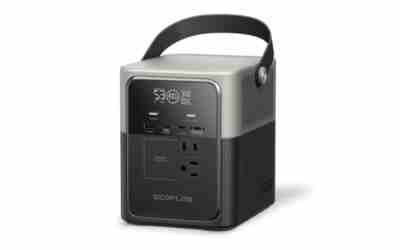
Our editorial team weighed EFECOFLOW's published specifications and how it stacks up against similar products in the generators category. What stands out: Fast Charging & Solar Compatible, Durable LFP, 400+ Cycles, and Seamless App Integration. Where it falls short: Fan Noise During Rapid Charging and Handles Affect Compact Storage. That puts it at 8.9/10 on our WG Score – an excellent, well-rounded option.
 Reviewed byEthan
Planning your next adventure or preparing for unexpected outages? Having a reliable power source can make all the difference. Portable power stations offer a versatile solution, providing clean energy for everything from charging your devices on a road trip to powering essential appliances during a blackout. In this guide, we’ve meticulously reviewed the 3 best portable power stations for travel of 2026, focusing on their capacity, output, and portability to help you choose the perfect companion for your travels. Whether you’re exploring remote campsites or simply need a backup for your RV, our insights will help you find a power station that keeps your gear running smoothly.
Our comprehensive analysis for November 2026 delves into the critical features that make a portable power station ideal for travel, including fast-charging capabilities, expandable battery options, and robust safety features. We’ve considered a range of models, including those from portable power stations, ensuring a diverse selection to meet various needs and budgets. From compact units perfect for a weekend getaway to more powerful systems capable of handling extended trips, we aim to equip you with the knowledge to make an informed decision.

Pros
- Exceptional fast charging and solar compatibility praised in long-term reviews
- Durable build with LFP battery holding capacity after 400+ cycles
- Seamless app integration for real-time monitoring via WiFi or Bluetooth
- Powers heavy loads like microwaves, fridges, and tools reliably
- Expandable and modular for customized capacity needs
Cons
- Fan noise during rapid AC charging
- Protruding handles may affect compact storage
- Occasional app refresh needed for latest data
The EcoFlow DELTA 2 is a versatile portable power station designed for home backup, camping, RVs, and off-grid living. With a 1024Wh LiFePO4 battery, it delivers 1800W AC output (2600W X-Boost) across 15 outlets, powering everything from refrigerators and microwaves to tools and electronics without noise or fumes. It's ideal for users wanting scalable, reliable energy solutions beyond basic phone chargers.
Standout features include 7x faster charging (0-100% in 80 minutes via AC), up to 500W solar input, and expandability to 3kWh with compatible extra batteries like DELTA 2 EB or DELTA 3 EB. Real-world performance shines in reviews: one user ran a 65-inch TV, fan, modem, and phones for over 4 hours; another built an off-grid cabin powering tools and Starlink after 13 months and 400 cycles with no capacity loss. Solar integration ensures resilience during extended outages.
Build quality is robust at 27 pounds with protective rubber bumpers, a clear display, and intuitive app control for settings and monitoring. The LFP chemistry offers 3000+ cycles and safety via BMS. Users appreciate the seamless connectivity and durability, though fast charging activates noisy fans, and handles protrude slightly.
Minor drawbacks include rare app glitches requiring refresh and one report of early failure. Overall, the DELTA 2 excels in reliability and versatility, earning high praise for turning backups into comprehensive power systems. Verdict: Highly recommended for dependable, expandable off-grid power.
Capacity: 1024Wh LFP battery, expandable to 3kWh. Output: 1800W AC (2600W X-Boost), 100W USB-C. Inputs: 1200W AC, 500W solar. Dimensions: 15.7 x 8.3 x 11.3 inches. Weight: 27 pounds. Ports: 15 total. Cycles: 3000+. Voltage: 120V.
Compatible extra batteries: DELTA 2 EB (1024Wh), DELTA 2 Max EB (2048Wh), DELTA 3 EB (1024Wh). Solar priority over smart generator DC; AC from generator takes precedence. App enables custom charging settings. Pairs well with 400W solar panels for extended runtime.

Pros
- Ultra-fast charging and accurate real-time display for easy monitoring
- Versatile outputs power everything from tools to fridges without issues
- Durable build handles professional and outdoor demands reliably
- Quiet operation compared to gas generators, safe for indoor use
- Expandable design future-proofs for larger needs
Cons
- Weighs 27.8 pounds, requiring some effort to transport
- Fans get loud during fast charging sessions
- Input port door can be stiff to open
The OUPES Mega 1 is a versatile portable power station designed for home backup, camping, road trips, and professional applications like events or mobile work setups. With a 1024Wh LiFePO4 battery, 2000W continuous output, and 4500W surge capacity, it powers demanding appliances, tools, and electronics reliably off-grid or during outages.
Standout features include revolutionary 36-minute charging to 80% via AC, expandable capacity up to 5kWh, and professional <20ms UPS for seamless failover. Users praise its real-world performance: running DJ setups for hours, keeping fridges and lights going through blackouts, and supporting solar recharging for extended adventures. The informative display and app control provide precise power tracking, while multiple ports (AC, USB-C PD 100W, USB-A, DC) ensure broad compatibility.
Build quality feels premium and durable, with a compact 15.1 x 9.1 x 11.6-inch footprint and sturdy handles for portability despite the weight. The LiFePO4 cells offer superior safety, longevity, and thermal stability over standard lithium batteries.
Drawbacks include the 27.8-pound heft, which may challenge lighter users, and louder fans on fast charge. A few note the port door's stiffness.
Overall, the Mega 1 delivers exceptional value for reliable, high-power portable energy. Ideal for anyone needing fast, expandable backup without gas hassles; pair with solar for ultimate off-grid freedom.
Capacity: 1024Wh LiFePO4 battery, expandable to 5kWh
Output: 2000W continuous (4500W surge), 120V AC pure sine wave
Charging: 0-80% in 36 mins AC, supports 800W solar, app control
Ports: 4 AC, 2 USB-C PD 100W, 4 USB-A QC3.0, 12V DC, car port
Dimensions: 15.1"L x 9.1"W x 11.6"H, 27.8 lbs
Warranty: 5 years
Users rave about its power for DJ gear, fridges, and tools during camping and outages, with one noting over 5 hours on full setups. Fast charging and accurate displays stand out, as does silent operation indoors.
Professionals love the surge handling for lights, cameras, and laptops on shoots. Expandability excites many for future upgrades.
Minor notes: Great for truck camping but heavy for frequent carries; fans audible on turbo charge.

Pros
- Includes efficient 40W solar panel for true portability
- Multiple output ports handle diverse devices effectively
- Lightweight and easy to carry for outdoor adventures
- Built-in flashlight adds emergency utility
- Quick customer support responsiveness in many cases
Cons
- Solar panel performance varies in cloudy or low-light conditions
- Limited to 100W continuous output for larger loads
- Occasional reports of charging compatibility issues
The Apowking R100 is a compact 146Wh portable solar generator bundled with a 40W foldable solar panel, designed for users needing reliable power during camping, travel, home outages, or outdoor activities. It outputs 200W peak and 100W rated power across seven ports, making it suitable for charging phones, tablets, laptops, fans, and small appliances without relying on grid electricity.
Standout features include the high-conversion-efficiency monocrystalline solar panel that recharges the unit even in suboptimal light, alongside AC, USB-C quick charge, and DC ports for broad compatibility. Real-world users praise its ability to fully charge devices like phones quickly via solar or car adapter, with the digital display showing battery status clearly. The dual LED flashlight with SOS functionality proves handy for emergencies, and cooling vents maintain safe temperatures during use.
Build quality features a durable aluminum and tempered glass construction in an orange-and-black design, weighing just 3.3lb for easy portability in backpacks. The BMS system ensures protection from common risks, enhancing longevity. While some note slower solar recharges in poor weather and minor compatibility quirks, its value shines for lightweight, everyday backup needs.
Overall, the Apowking R100 delivers solid performance for off-grid enthusiasts and preparedness-minded buyers, offering a balance of power, portability, and safety at an accessible level. Ideal if you want a no-fuss solar kit without bulk.
Capacity: 146Wh/39600mAh Lithium Ion
Output: 200W Peak/100W Rated (2x AC 110V, USB ports, 1x DC 9-12.6V/10A)
Input: Solar (40W panel included), AC adapter, Car charger
Dimensions: 7.5"L x 3.7"W x 6.1"H; Weight: 6.63lb total
Includes: Solar panel, AC adapter, car cable, cigarette lighter adapter, manuals
Choose this for short trips or basic backups powering small electronics; upgrade to larger capacities for heavy appliances. Test solar input in your typical conditions. Verify device wattage stays under 100W continuous. Great starter solar generator for beginners.
Buying Guide for 2026
Battery Capacity (Wh) & Chemistry (LFP/NMC)
The core of any portable power station is its battery. Capacity, measured in Watt-hours (Wh), dictates how long your devices can run or how many recharges you can get. For travel, a higher Wh count means more freedom from wall outlets, but also potentially more weight. Consider your typical power needs for your trips – a weekend camper might need less than someone on an extended RV journey. Battery chemistry is also crucial, with LiFePO4 (LFP) becoming increasingly popular due to its longer lifespan (more charge cycles) and enhanced safety compared to traditional NMC batteries. While LFP batteries might be slightly heavier for the same capacity, their durability and reliability make them an excellent choice for frequent travelers.
When evaluating capacity, think about the devices you plan to power. A smartphone recharge uses significantly less energy than running a mini-fridge or a laptop. Many manufacturers provide estimates of how many times certain devices can be charged, which can help you gauge the appropriate capacity. The choice between LFP and NMC often comes down to a trade-off between cycle life and energy density. For most travel applications, the longevity and stability of LFP batteries provide a compelling advantage, ensuring your investment lasts for many adventures to come.
AC Output & Surge Power
The AC output, measured in watts, determines which appliances your power station can run. This is especially important for travel, as you might need to power anything from small electronics to kitchen appliances. Look for a continuous output that matches or exceeds the wattage requirements of your most power-hungry devices. Additionally, pay attention to the surge power rating. Some appliances, like coffee makers or power tools, require a brief burst of higher wattage when they start up. A good portable power station will have a surge capacity that can handle these temporary spikes, preventing overload and ensuring smooth operation.
For sensitive electronics, ensure the power station provides a pure sine wave output. This ensures a clean, stable electrical current, similar to what you get from a wall outlet, preventing damage to delicate gadgets. Many modern power stations designed for travel prioritize both high continuous output and robust surge capabilities, making them versatile for a wide range of uses, from charging camera batteries to running a portable fan in your tent. Consider your specific needs – do you just need to charge phones, or do you plan on running larger appliances like a portable projector? For other portable power options, check out our guide on best portable power stations for projector.
Recharge Speed & Methods
For travel, how quickly and conveniently you can recharge your power station is paramount. Fast-charging technology has become a significant differentiator, allowing some units to reach 80% capacity in under an hour via AC input. This is invaluable when you have limited time between destinations or need to quickly top up before heading out. Beyond AC, consider other charging methods like solar input, car charging, and USB-C PD. Solar charging, in particular, offers unparalleled freedom in off-grid scenarios, allowing you to replenish your power station using the sun’s energy.
The efficiency of solar charging depends on the maximum solar input wattage the power station can handle and the quality of your solar panels. Look for models with an advanced MPPT (Maximum Power Point Tracking) charge controller, which optimizes solar input for faster and more efficient charging. Car charging is another convenient option for travelers, allowing you to charge on the go. The more versatile the charging options, the more adaptable your power station will be to different travel environments and unexpected situations, ensuring you’re never left without power.
Portability & Durability
Given the “portable” in portable power station, weight and form factor are critical considerations for travel. A compact and lightweight design makes it easier to carry in and out of vehicles, lug to a campsite, or store efficiently in an RV. Look for ergonomic handles, robust casing materials, and a design that can withstand the bumps and jostles of travel. While larger capacities often mean heavier units, manufacturers are constantly innovating to pack more power into smaller, more manageable packages. Consider if you’ll be carrying it long distances or simply moving it from your car to a nearby spot.
Durability also extends to the internal components and overall build quality. Power stations used for travel will inevitably face varied weather conditions and potential impacts. Features like dust and water resistance (though not immersion-proof) can add significant peace of mind. A well-built unit not only lasts longer but also performs more reliably in challenging outdoor environments. Checking user reviews for comments on build quality and real-world resilience can provide valuable insights into a power station’s true portability and durability for your travel needs.
Quick Comparison: Side by Side
- – Fast Charging & Solar Compatible.
- – Durable LFP, 400+ Cycles.
- – Seamless App Integration.
- – Ultra-Fast Charging, Real-Time Display.
- – Versatile Outputs.
- – Durable for Pro/Outdoor Use.
- – Includes 40W Solar Panel.
- – Versatile Output Ports.
- – Lightweight & Easy to Carry.
- – Fan Noise During Rapid Charging.
- – Handles Affect Compact Storage.
- – Occasional App Refresh Needed.
- – Heavy at 27.8 lbs.
- – Loud Fans During Fast Charging.
- – Stiff Input Port Door.
- – Varies in Cloudy/Low-Light Conditions.
- – 100W Continuous Limit.
- – Occasional Charging Compatibility Issues.
Why Trust Our Reviews
At WikiGenerators.com, our commitment is to provide unbiased and thoroughly researched recommendations for power solutions. Our reviews for the best portable power stations for travel are not based on hands-on testing, but rather on a rigorous analysis of product specifications, manufacturer data, and extensive aggregation of user feedback from various platforms. We delve into hundreds of customer reviews and expert opinions to identify common strengths, weaknesses, and real-world performance insights for each product. This methodology allows us to offer a comprehensive and objective perspective, highlighting what truly matters to users in practical scenarios.
As an Amazon affiliate site, transparency is paramount. While we may earn a commission from qualifying purchases made through our links, our editorial integrity remains uncompromised. Our primary goal is to empower you with accurate and reliable information to make the best purchasing decisions for your needs. We focus on delivering value by distilling complex technical details into understandable insights, ensuring you receive well-rounded recommendations based on specs and user feedback, rather than promotional claims.
Our Final Picks for 2026
Best Overall: EcoFlow DELTA 2 Portable Power Station: 1024Wh LFP Battery, 1800W Output, Solar Generator for Home Backup, Camping, RVs
The EcoFlow DELTA 2 stands out with its impressive 1024Wh LiFePO4 battery, offering a 3000+ cycle life for lasting durability. It boasts an incredibly fast AC charging speed, reaching 80% in just 50 minutes, and can expand its capacity up to 3kWh with extra batteries. With 1800W AC output and 15 outlets, it can power nearly all your essential devices during travel, making it a versatile choice for camping and RVs.
View on Amazon.comBest Value: OUPES Mega 1 2000W Portable Power Station: 1024Wh LiFePO4 Solar Generator, Expandable to 5kWh, UPS for Camping & Home Backup
The OUPES Mega 1 offers exceptional value with its rapid 36-minute 0-80% AC recharge time and the ability to expand capacity up to 5kWh. Its 2000W continuous output (4500W surge) handles professional-grade appliances, while the integrated UPS function provides reliable home backup. The LiFePO4 battery ensures a 3500+ lifecycle, making it a durable and smart investment for diverse travel needs.
View on Amazon.comBest for Light Travel: Apowking 146Wh Portable Solar Generator with 40W Panel, 200W Peak Power Station for Camping, Home Backup, Outdoors
For those needing a compact and budget-friendly option, the Apowking 146Wh portable solar generator is ideal. It comes with a 40W solar panel included, offering a convenient all-in-one solution for lighter power needs. With 100W rated (200W peak) AC output and 7 outlets, it’s perfect for charging smaller devices like phones, tablets, and drones during short camping trips or outdoor adventures. Its built-in LED flashlight adds to its utility.
View on Amazon.comFrequently Asked Questions
Which portable power stations for travel should I buy in 2026?
The best portable power stations for travel for you depends on your specific travel needs. Consider the battery capacity required for your devices, the AC output wattage for your appliances, and the importance of fast-charging and solar capabilities. For heavy users, look for higher Wh and Watt outputs, while lighter travelers might prioritize compact size and included solar panels.
What is the typical lifespan of a portable power station battery?
The lifespan of a portable power station battery is typically measured in charge cycles. LiFePO4 (LFP) batteries, commonly found in premium models, offer 3000+ full charge cycles before their capacity degrades significantly. This translates to many years of reliable use, even with frequent charging. NMC batteries usually have a shorter lifespan, around 500-1000 cycles.
Can I use a portable power station to run an RV?
Yes, many portable power stations are well-suited for RV use, especially those with higher capacities (1000Wh+) and strong AC output. They can power lights, charge devices, and even run smaller appliances like mini-fridges or fans. For more extensive RV power needs, consider models with expandable battery options to increase total capacity and runtime. You might also find our guide on best 50 amp portable generators useful for larger power requirements.
Are solar panels necessary for portable power stations?
While not strictly necessary, solar panels significantly enhance the utility of a portable power station for travel, especially in off-grid scenarios. They allow you to recharge your unit using renewable energy, extending your runtime indefinitely as long as there’s sunlight. Many power stations are designed to be compatible with various solar panels, offering flexibility in your setup.