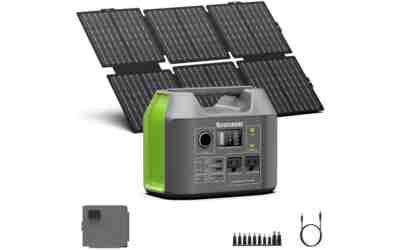
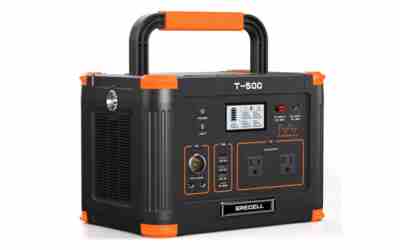
Our editorial team weighed BLUETTI's published specifications and how it stacks up against similar products in the generators category. What stands out: Ultra-Fast AC/Solar Charging, Seamless UPS Functionality, and Versatile Outputs. Where it falls short: Heavy at 35 lbs and ~20W Idle Consumption. That puts it at 8.5/10 on our WG Score – an excellent, well-rounded option.
 Reviewed byTristan
When selecting the ideal DIY solar generators online course, the most critical factor to consider is the combination of battery capacity (measured in Watt-hours, Wh) and AC output (measured in Watts, W). These two specifications directly determine how long you can power your devices and what types of appliances you can run. A high capacity ensures extended operation, while sufficient AC output guarantees compatibility with your essential electronics and tools. Prioritizing these metrics over brand or price can prevent the frustration of an underpowered or quickly depleted system, ensuring your investment truly meets your off-grid or emergency power needs.
For those interested in building their own solar power solutions, understanding these core principles is key. Explore our guide on The 5 Best Diy Solar Generators of 2026 to learn more about assembling your custom setup.
Battery Capacity and AC Output Explained
Battery capacity, expressed in Watt-hours (Wh), tells you how much energy the power station can store. A higher Wh rating means it can power devices for longer. AC output, measured in Watts (W), indicates the maximum power a generator can deliver to connected appliances at any given moment. You need to match the continuous wattage of your devices to the generator’s AC output. For instance, a small laptop might draw around 50W, while a mini-fridge could require 100W or more.
To put this into perspective, consider the Anker SOLIX C1000 with its 1056Wh capacity and 1800W output. If you were to power a 100W mini-fridge, theoretically, the Anker SOLIX C1000 could run it for approximately 10.56 hours (1056 Wh / 100 W = 10.56 hours). This calculation provides a practical understanding of how battery capacity translates into real-world usage, helping you choose a solar generator that aligns with your specific power demands.

Pros
- Exceptional fast charging and high surge power for demanding appliances like microwaves and fridges
- Durable build powers RVs and campers for days, as praised in real-world reviews
- Intuitive app control for monitoring and customization enhances user experience
- Seamless UPS functionality keeps essentials running during outages
- Compatible with Anker solar panels for sustainable recharging
Cons
- Cannot charge simultaneously from AC and DC inputs, with AC taking priority
- Weighs 28 pounds, making it somewhat heavy for frequent solo carrying
- Solar charging efficiency depends on conditions and panels, slower than AC
The Anker SOLIX C1000 is a versatile 1056Wh portable power station designed for campers, RV enthusiasts, and homeowners seeking reliable backup power. With 1800W continuous output and SurgePad technology surging to 2400W, it powers demanding appliances like microwaves, fridges, and tools through 11 ports, making it ideal for off-grid trips, tailgating, or outages.
Standout features include UltraFast recharging to 80% in 43 minutes and full in 58 minutes via AC, plus 600W solar compatibility for 1.8-hour solar full charges. Users report running truck campers for 24+ hours, powering Nespresso machines and TVs during camping, and keeping fridges cold for days. The LiFePO4 battery endures 3000 cycles, and the app provides real-time stats, UPS under 20ms, and custom controls.
Build quality shines with a compact, rugged design 15% smaller than competitors, dual handles for portability despite 28 pounds, and a bright LED light. Reviewers highlight its reliability in real scenarios, from glamping to home backups, outperforming older systems in charge speed and output.
Drawbacks include no simultaneous AC/DC charging and weight that may challenge lighter users. Solar performance varies with panels and weather, often slower than advertised without optimal setup.
Overall, the C1000 excels as a powerhouse for portable needs, earning high praise for performance and longevity. Buy it if you need fast, robust power without gas hassles.
Capacity: 1056Wh LiFePO4 battery
Output: 1800W continuous, 2400W SurgePad peak
Ports: 11 total (AC, USB, DC, car outlet)
Recharge: 58 min full AC, 1.8 hrs 600W solar
Dimensions: 14.8 x 8.07 x 10.5 inches, 28.44 lbs
Other: App control (Bluetooth/Wi-Fi), UPS <20ms, 5-year warranty
Pair with Anker PS100/200/400 solar panels (11-60V, XT60 connector) for best solar results. Use SurgePad for heat-heavy devices, not precision tools. Estimate runtime: 1056Wh x 0.9 efficiency / device watts. Ideal for RVs under quiet hours, camping fridges, or home essentials; expand with BP1000 for more capacity.

Pros
- Ultra-fast AC and solar charging keeps you powered without downtime
- Seamless UPS functionality prevents disruptions during outages
- Versatile outputs handle camping gear, home essentials, and appliances
- Expandable design supports longer runtimes with add-on batteries
- Sturdy, portable build with clear display for easy monitoring
Cons
- Weighs 35 lbs, making it less ideal for solo backpacking
- Inverter idle consumption around 20W reduces efficiency on very light loads
- Runtime limited for high-draw devices without battery expansion
The BLUETTI AC180 is a robust portable power station with 1152Wh LiFePO4 battery capacity, delivering 1800W continuous power and up to 2700W surge through multiple AC, USB, and DC outlets. It suits campers seeking off-grid convenience, homeowners needing outage protection for routers and lights, and off-grid enthusiasts wanting solar compatibility.
Standout features include turbo-fast charging to 80% in 45 minutes via 1440W AC input or 2.8-3.3 hours with 500W solar panels, plus reliable 20ms UPS switchover praised in reviews for seamless operation during blackouts. Users report powering TVs, fridges, and internet for hours, with app control boosting output and monitoring runtime effectively. Expansion with B80 or B300 batteries extends usability for prolonged needs.
Build quality shines with a compact 13.4 x 9.7 x 12.5-inch frame weighing 35 lbs, featuring durable handles and a clear display. It's quiet, portable for camping or vehicle use, and handles real-world tests like storm backups or RV trips without issues, as noted by verified buyers.
Drawbacks include noticeable inverter self-consumption on low loads, which can halve effective capacity for small devices, and its weight may challenge lighter carriers. Proper cabling is needed for optimal efficiency.
Overall, the AC180 excels as a versatile, fast-charging powerhouse for emergency and outdoor power, earning strong praise for reliability and value. It's a smart pick for anyone prioritizing quick recharges and expandable energy.
Capacity: 1152Wh LiFePO4 (3500+ cycles)
Output: 1800W continuous (2700W peak), 11 outlets including 4x AC
Charging: 1440W AC (0-80% in 45 min), 500W solar (2.8-3.3 hrs)
Inputs: AC, solar (12-60V), car
UPS: 20ms switchover
Dimensions: 13.4 x 9.7 x 12.5 in, 35.3 lbs
Extras: App control, expandable, 5-year warranty

Pros
- Includes 60W solar panel for free eco-friendly recharging
- Multiple output ports including quick-charge USB and 110V AC
- Built-in protections and cooling fan for reliable long-term use
- Lightweight at 5lbs with carry-friendly dimensions
- High solar conversion efficiency even in low light
Cons
- Max 300W output limits use with high-power appliances like hair dryers
- Not fully waterproof junction box on solar panel requires dry storage
- Battery best maintained at 60-80% to avoid protection mode
The ZeroKor 300W portable solar generator is a compact 280Wh power station bundled with a 60W foldable solar panel, perfect for campers, RV travelers, and anyone needing reliable off-grid power for small devices like phones, laptops, and projectors. Its pure sine wave 110V AC outlet handles up to 300W, making it ideal for outdoor adventures where traditional outlets are unavailable.
Standout features include versatile charging options via AC wall, car cigarette lighter, or the high-efficiency 20.5% monocrystalline solar panel, plus outputs like 2x AC, DC, 3x USB-A, and quick-charge USB-C. The built-in LED flashlight with reading and SOS modes adds emergency utility, while the BMS system provides short-circuit, overload, and overheating protections with an auto-cooling fan for safe performance.
Build quality shines in its durable ABS construction and lightweight 5.1lb portable design (8.5x6.7x4.1 inches), easy to tote in a backpack. Real-world use excels for low-to-medium power needs during tent camping or van life, recharging fully via solar in optimal conditions or wall in hours.
Drawbacks include the 300W limit, unsuitable for heat-generating devices like coffee makers, and the need to keep the solar panel's junction box dry. Regular charging prevents deep discharge protection.
Overall, this is a smart buy for eco-conscious outdoor enthusiasts seeking an all-in-one solar power solution with strong value from the included panel and protections. Highly recommended for weekend warriors.
Power Output: 300W Max AC (110V Pure Sine Wave), DC (9-12.6V/10A), USB-A (5V/3A x3), QC USB (5V/3A, 9V/2A), USB-C
Battery: 280Wh Lithium-ion, Weight 5.1 lbs, Dimensions 8.5"L x 6.7"W x 4.1"H
Inputs: AC Wall, Car Charger, 60W Solar Panel (Foldable, 20.5% Efficiency)
Features: BMS Protections, LED Flashlight (SOS/Reading), Operating Temp -10°C to 40°C
Included: Power Station, 60W Solar Panel, AC Adapter, Car Cable, Cigarette Lighter Adapter, Manuals

Pros
- Pure sine wave ensures stable, quiet power for electronics
- Versatile 3-way charging keeps you powered on the go
- Lightweight and portable with clear LCD for easy monitoring
- Reliable for CPAP backup and small appliances per user reviews
- Long battery life supports multiple device charges
Cons
- Limited to 300W devices; not for microwaves or heaters
- Solar panel sold separately
- Cooling fan audible during heavy loads
The EnginStar R300 is a compact 296Wh portable power station designed for campers, travelers, RV enthusiasts, and anyone needing reliable emergency backup. Weighing just 6.5 pounds with dimensions of 9 x 5.5 x 7.6 inches, it delivers 300W pure sine wave AC power alongside USB, USB-C, and DC outputs, making it perfect for running CPAP machines, charging laptops, phones, cameras, and small appliances like fans or mini fridges during outages or off-grid trips.
Standout features include its multipport setup for simultaneous charging and three recharging methods: wall outlet in about 7 hours, car charger on the road, or compatible solar panels for true off-grid use. Users praise its real-world performance, powering devices for hours—such as CPAP for 4+ hours or multiple lamps through an 8-hour outage—while the LCD screen provides clear input/output monitoring. Pure sine wave output ensures sensitive electronics run smoothly without damage, and protections against overloads and short circuits add peace of mind.
Build quality is solid for the price, with a durable housing, integrated LED light, and smooth port operation, though it's not fully rugged for extreme wet or dusty conditions without extra protection. Reviewers highlight its value as a UPS replacement and compare it favorably to pricier competitors for flexibility and display clarity.
Drawbacks include the 300W limit excluding high-draw items and the need for a separate solar panel purchase. Fan noise occurs under load, and full recharges take time.
Verdict: A top pick for portable power needs in camping, emergencies, or travel, offering excellent balance of capacity, portability, and safety for everyday off-grid reliability.
Capacity: 296Wh / 80000mAh Lithium-ion
AC Output: 300W / 110V Pure Sine Wave (2 outlets)
Other Outputs: DC 12V/8A, 24V/3A; USB 5V/3.1A (2); USB-C 18W
Weight: 6.5 lb | Dimensions: 9 x 5.5 x 7.6 in
Charging: Wall (7 hrs), Car, Solar (panel separate)
Operating Temp: -4°F to 113°F
Pros
- Highly portable and lightweight for outdoor use
- Versatile ports and passthrough charging handle phones, laptops, CPAP effectively
- Multiple recharging options including efficient solar panel
- Pure sine wave output protects sensitive devices
- Comprehensive display aids in monitoring performance
Cons
- 300W limit excludes high-draw appliances like microwaves
- Ports exposed, requiring protection in wet or dusty conditions
- Runtime around 4 hours for CPAP, not all-night without recharge
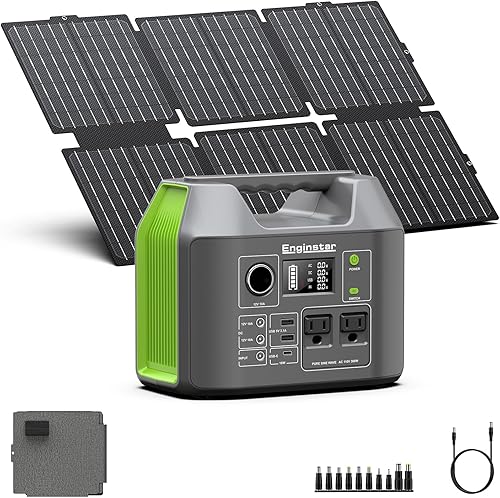
The ENGINSTAR R300 is a compact 300W portable solar generator paired with a 60W foldable monocrystalline solar panel, delivering 296Wh capacity from its lithium battery pack. Ideal for campers, RVers, van lifers, and home emergency backup, it powers phones, laptops, CPAP machines, radios, and small appliances safely via pure sine wave AC outlets.
Standout features include eight output ports for simultaneous charging, three input methods for quick recharges, and a high-efficiency solar panel that folds laptop-sized for easy carry. Users praise its real-world performance: running multiple lamps for 8 hours on minimal battery, supporting CPAP for 4 hours, or acting as a UPS replacement without interruptions. The LCD screen provides detailed input/output data, surpassing competitors in usability.
Build quality is solid with a 6.5-pound lightweight shell, smooth ports, and quiet operation under light loads, though the fan activates during heavy use. Safety systems prevent damage from overloads or shorts, and the battery endures 1000+ cycles. Drawbacks include vulnerability to weather exposure and power limits for intensive needs.
Overall, this power station excels as a reliable, versatile companion for off-grid adventures and outages, offering excellent value with its included solar panel and robust features.
Wattage: 300W (starting and running)
Capacity: 296Wh / 80000mAh
Ports: 2x 110V AC (pure sine wave), DC 12V/24V, USB-A (5V/3.1A), USB-C (18W)
Dimensions: 9.05 x 7.48 x 5.5 inches, 6.5 lbs
Charging: Solar (12-25V, panel included), AC wall, car 12V
Features: Digital display, short circuit protection, super quiet, USB ports
1x ENGINSTAR 300W Portable Power Station, 1x 60W Foldable Solar Panel, 1x AC Charger, 1x Car Charger Cable, 1x 10-in-1 Connector, 4x Hooks, 1x User Manual.
DIY Solar Generators Online Course: Our Picks Against the Numbers
High Capacity & Output for Demanding Use: Anker SOLIX C1000 1800W Portable Power Station
The Anker SOLIX C1000 stands out with an impressive 1056Wh battery capacity and a robust 1800W AC output (2400W peak). This means it can comfortably power a wide range of appliances, from essential electronics to more power-hungry tools, for extended periods. Its ability to achieve 80% charge in just 43 minutes also ensures minimal downtime.
Skip this if: you only need to power very small devices or are on a very tight budget and don’t require such high capacity or output.
View on Amazon.comBalanced Performance with Fast Charging: BLUETTI AC180 Portable Power Station
The BLUETTI AC180 offers an excellent balance with its 1152Wh LiFePO4 battery and 1800W AC output (2700W peak). Its standout feature is the incredibly fast charging, reaching full capacity in just 1 hour via AC input, making it highly convenient for quick turnarounds between uses. The surge capability also provides extra flexibility for devices with higher startup power.
Skip this if: you prioritize the absolute highest continuous output over rapid AC charging.
View on Amazon.comCompact and Panel-Included Convenience: ZeroKor 300W Portable Solar Generator with 60W Foldable Panel
The ZeroKor 300W Portable Solar Generator comes with a 280Wh battery and a 300W AC output, bundled with a 60W foldable solar panel. This integrated package makes it an excellent choice for users seeking a complete, ready-to-go solar solution for lighter power needs, such as charging smartphones, tablets, and small camping lights. Its comprehensive port selection adds to its versatility.
Skip this if: you need to power high-wattage appliances or require a significantly larger battery capacity for extended off-grid living.
View on Amazon.comOther Things That Matter for DIY Solar Generators Online Course
Portability and Design
Beyond raw power metrics, the physical characteristics of your solar generator are crucial, especially for DIY enthusiasts or those on the go. Consider the unit’s weight and dimensions, as these directly impact its ease of transport and storage. A compact and lightweight design is invaluable for camping, RV trips, or simply moving the generator around your home or workshop. Features like integrated handles, durable casings, and even built-in flashlights (as seen in models like the ZeroKor) contribute significantly to user convenience and overall utility.
Battery Chemistry and Lifespan
The type of battery used profoundly affects the generator’s lifespan and safety. LiFePO4 (Lithium Iron Phosphate) batteries, found in models like the Anker SOLIX C1000 and BLUETTI AC180, are highly favored for their durability, offering thousands of charge cycles and improved thermal stability compared to traditional lithium-ion batteries. This longer lifespan means your investment will last for many years, making it a more sustainable and cost-effective choice in the long run. Understanding battery maintenance is also key to maximizing longevity; for more insights, see our article on The 5 Best Battery For Diy Solar Generators of 2026.
Charging Flexibility and Efficiency
A versatile solar generator should offer multiple recharging options. While solar input is central to these systems, the ability to recharge via AC wall outlets, car ports, and even other generators provides crucial flexibility. Fast-charging capabilities, like those offered by the BLUETTI AC180, can significantly reduce downtime. Additionally, look for high solar conversion efficiency in accompanying panels, ensuring you capture as much energy as possible from the sun. Features such as MPPT controllers also optimize solar charging, regardless of weather conditions.
Quick Comparison: Side by Side
- – Fast Charging, High Surge Power.
- – Powers RVs for Days.
- – Intuitive App Control.
- – Ultra-Fast AC/Solar Charging.
- – Seamless UPS Functionality.
- – Versatile Outputs.
- – Pure Sine Wave, Quiet Power.
- – 3-Way Charging.
- – Lightweight, Clear LCD.
- – Highly Portable & Lightweight.
- – Versatile Ports, Pass-Through Charging.
- – Efficient Solar Recharging.
- – Can't Charge AC & DC Simultaneously.
- – Heavy at 28 lbs.
- – Solar Charging Slower Than AC.
- – Heavy at 35 lbs.
- – ~20W Idle Consumption.
- – Limited Runtime Without Expansion.
- – 300W Device Limit.
- – Solar Panel Sold Separately.
- – Audible Fan Under Heavy Load.
- – 300W Output Limit.
- – Ports Exposed, Needs Protection.
- – ~4h CPAP Runtime, Not All-Night.
Why Trust Our Reviews
At WikiGenerators.com, our mission is to provide comprehensive and unbiased reviews to help you make informed decisions about power solutions. Our recommendations for the DIY solar generators online course are meticulously compiled based on extensive research into product specifications, manufacturer data, and critical user feedback. We analyze key performance indicators such as battery capacity, AC output, charging efficiency, and overall build quality to evaluate each model’s suitability for various applications.
We understand that investing in a solar generator is a significant decision, and our goal is to simplify the process by highlighting the most reliable and effective options available. Our commitment to accuracy and transparency ensures that you receive trustworthy advice, empowering you to choose a solar generator that perfectly aligns with your specific needs and budget, all without making claims of hands-on testing.
Frequently Asked Questions
What is the primary advantage of a DIY solar generator online course?
A DIY solar generator online course primarily offers the advantage of customization and cost savings. By learning to assemble your own system, you can tailor the components (such as battery capacity and inverter size) to your exact power requirements, often at a lower cost than purchasing a pre-built unit. It also provides a deeper understanding of how your system works, which can be invaluable for troubleshooting and maintenance, enhancing your overall energy independence. You can find more information on related topics in our guide to Solar generators.
How do I determine the right battery capacity for my DIY solar generator?
To determine the right battery capacity, you need to calculate the total wattage of all the devices you plan to power and estimate how long you’ll need to run them. For example, if you plan to power devices totaling 100W for 5 hours, you’ll need at least 500Wh of battery capacity (100W x 5h = 500Wh). It’s always advisable to choose a generator with a slightly higher capacity than your calculated need to provide a buffer for unexpected usage or lower efficiency.
Are LiFePO4 batteries essential for DIY solar generators?
While not strictly essential, LiFePO4 batteries are highly recommended for DIY solar generators due to their superior lifespan (more charge cycles), enhanced safety, and stable performance compared to other lithium-ion chemistries. Their longevity means fewer replacements and a more reliable power source over many years, making them a wise investment for any serious DIY solar project.
Can a DIY solar generator power an entire home?
Most portable DIY solar generators are designed for smaller-scale applications like camping, RVs, or emergency backup for essential appliances. Powering an entire home typically requires a much larger, more complex, and often grid-tied solar array with significant battery storage, which goes beyond the scope of a typical portable DIY setup. However, a well-designed DIY system can certainly cover critical loads during an outage.