The most common mistake in portable power station shopping is treating the big number on the box as a promise of runtime. A 600W rating only tells you the most you can plug in at once. The watt-hour figure decides how long the unit keeps running, and many buyers learn that only after a small battery empties quickly under a heavy load. BailiBatt DW601S 293Wh Power Station is a useful case study. According to the manufacturer, it pairs a 600W pure sine wave AC output with a 293Wh lithium battery in a 7.7 lb body. That makes it a compact, grab-and-go unit rather than a long-duration backup system.
This review is based on manufacturer specs, listing details and the trade-offs those specs imply. We do not claim hands-on or lab testing. We cover capacity, output, ports, charging and battery care, then compare BailiBatt DW601S 293Wh Power Station with EcoFlow RIVER 2, Anker 521 and GRECELL 999Wh, with MARBERO 148Wh also in the lineup. For more picks in this category, browse our Reviews archive.
Our Verdict
BailiBatt DW601S 293Wh Power Station is a compact 7.7 lb power station that pairs a 600W pure sine wave AC outlet with a 293Wh lithium battery and a 100W USB-C PD port. According to the manufacturer, it suits camping and light backup use as long as your combined load stays under 600W. It is built for portability and port variety, not for long runtimes or heavy appliances.
- 600W pure sine wave AC output for appliances up to 600W combined
- 7 output ports, including a 100W USB-C PD port
- 293Wh lithium battery in a 7.7 lb body
- Clear LCD screen shows operating status
- Built-in BMS monitors voltage, current and temperature
- Only one AC outlet, and the total of all devices must stay under 600W
- Car charger cable is not included
- AC output must be switched on by holding the AC button for three seconds
- Needs a top-up every 1-2 months during storage
- Listing gives no recharge time, cycle life or solar input details
Specifications
| Spec | Value | Spec | Value |
|---|---|---|---|
| AC Output (W) | 600 watts | Peak Output (W) | 600 watts |
| Output Voltage | 120 volts | Outlets & Ports | 7 |
| In the Box | portable power station, 1*AC adapter, 1*user manual, 12 months warrant |
BailiBatt DW601S 293Wh Power Station In-Depth Review
Before looking at individual features, it helps to decide which questions matter for a unit this size. The useful filters are watt-hours against the runtime you need, continuous output against your heaviest single device, the weight you are willing to carry, how many AC outlets you actually need, how it recharges, and what long-term battery care it demands. Marketing checkboxes such as ‘pure sine wave’ or ‘LCD display’ matter less than those basics. We read BailiBatt DW601S 293Wh Power Station against that list below, including the places where the listing is quiet.
Battery Capacity and Power Output
The listing states a 293Wh capacity and a 600W pure sine wave AC output. Pure sine wave output is the cleaner waveform that most electronics prefer, and the manufacturer says it lets most daily-use appliances up to 600W run. The caveat is that this ceiling applies to the total of all connected devices, not to each one.
Here is what those two numbers mean together. Running at the full 600W, 293Wh lasts about 0.49 hours, or roughly 29 minutes, before any conversion losses. A steady 50W load such as a small fan or a laptop and router setup works out to about 5.9 hours on paper (293 divided by 50). Real runtimes will be shorter because inverters and batteries lose some energy. The 600W figure is best treated as headroom for brief or moderate loads, not as a promise of long runtimes with big appliances. For more on matching output to loads, see our By Power hub.
Portability and Build Quality
The manufacturer lists a weight of 7.7 lbs. Spread over 293Wh, that is roughly 38Wh of stored energy per pound, a reasonable figure for a compact unit meant to travel in a car trunk, a tent or a closet shelf. The listing describes the lightweight design and the battery pack as grade-A. It does not give dimensions, an ingress rating or a drop-test claim, so we will not describe it as rugged.
The clear LCD screen is a practical touch. It shows operating status, so you can see what the unit is doing without guessing. The built-in BMS (battery management system) monitors voltage, current and temperature, which is the baseline protection you should expect from any lithium power station.
Charging Options and Speed
The box includes an AC adapter and a user manual. The listing excerpt we have does not state a recharge time or a solar input rating, and those are the figures many buyers compare first. The package notes also say the car charger cable is not included, which suggests car charging may be possible with a separately bought cable. Confirm compatibility on the Amazon page before counting on it.
This is a genuine gap compared with rivals that publish fast-charge and solar figures. If you plan to recharge from solar panels on multi-day trips, check the full listing and the manual first. If you mostly recharge from a wall outlet between outings, the missing figures matter less.
Outlets and Connectivity
Port variety is a strength. The manufacturer lists seven outputs: one 600W/120V AC outlet, one 100W PD USB-C port, one 24W PD USB-C port, two fast charge 3.0 ports, one car port and one DC port. The 100W USB-C PD port is the standout, since it can feed a laptop that supports USB-C charging without an AC adapter.
The trade-off is the single AC outlet. If you need to run two mains devices at once, you will need a power strip, and the combined draw must stay under 600W. The AC output also has to be switched on or off by pressing the AC button for three seconds. That is a small quirk, but it will surprise anyone who expects an instant switch.
Battery Longevity and Certifications
The listing calls the cells a lithium battery pack and does not state the chemistry, a cycle-life figure or any safety certifications. That leaves longevity unquantified. What the manufacturer does state is a storage habit: recharge the unit at least once every 1-2 months if it is not in use. That is common advice for lithium packs, but it means this is not a unit you can leave in a cupboard for a year and expect to be full when the power goes out.
The BMS protections are reassuring on paper. Without published cycle counts or certifications, though, we cannot compare its lifespan with units that advertise thousands of cycles. Treat the manufacturer’s safety claims as claims, and look at the warranty terms on the listing before buying.
How It Compares
Quick Comparison: Alternatives

- – Pure sine wave AC output suits sensitive electronics.
- – Wide port selection including 100W USB-C PD.
- – Light and compact for its 600W output rating.
- – 1-Hour Fast AC Charging.
- – 10-Year LiFePO4 Lifespan.
- – Lightweight & Portable.
- – 10-Year LiFePO4 Lifespan.
- – 6-Port Charging.
- – Quick Recharge Options.
- – Holds Charge, Fast Recharge.
- – Quiet, Easy-Read Display.
- – Versatile Camping/Home Use.
- – 293Wh capacity limits runtime for higher-wattage appliances.
- – Car charger cable is not included in the package.
- – Needs recharging every 1-2 months during storage.
- – Fan Noise During Fast Charging.
- – Only One USB-C Port.
- – Best for Light-Medium Loads.
- – 300W Continuous Limit.
- – Solar Panel Sold Separately.
- – No App Control or Light.
- – Not for 1000W+ Devices.
- – 155W Max Solar Input.
- – Rare Indicator Issues.
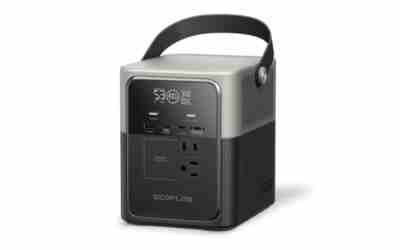
EcoFlow RIVER 2 (Competitor). BailiBatt DW601S 293Wh Power Station offers more stored energy, at 293Wh against the RIVER 2’s 256Wh, which is about 14% more. Both list a 7.7 lb weight and up to 600W of output. The RIVER 2 wins on published charging and longevity specs. It lists a 1 hour AC recharge, solar recharging in as fast as 2.3 hours with 110W input, and LFP cells rated for more than 3000 cycles to 80%, plus a 5-year service plan. BailiBatt DW601S 293Wh Power Station publishes none of those figures. Skip BailiBatt DW601S 293Wh Power Station and get the RIVER 2 instead if fast recharging, solar use or a long battery life matters more to you than 37Wh of extra capacity.
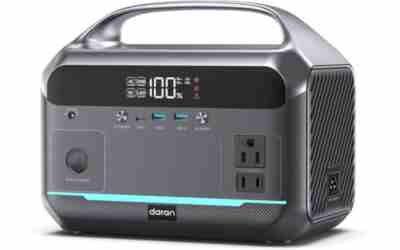
Anker 521 (Competitor). BailiBatt DW601S 293Wh Power Station has the stronger output on paper: 600W continuous against the Anker 521’s 300W (600W peak), and a 100W USB-C PD port against its 60W. It also has the larger battery, 293Wh against 256Wh. The Anker 521 wins on documented durability and support. It lists LiFePO4 cells with up to 10 years of performance, a 5-year warranty and a car charging cable in the box, which BailiBatt DW601S 293Wh Power Station lacks. Choose the Anker 521 if you only run small loads and want proven battery longevity. For a deeper look at what a larger Anker unit offers, read our Anker SOLIX C1000 review.
GRECELL 999Wh (Competitor). This is a different class of unit. The GRECELL lists 999Wh, about 3.4 times the 293Wh in BailiBatt DW601S 293Wh Power Station, and a 1000W output with a 2000W peak. It also lists more connectivity, including 2 AC sockets, 3 USB QC ports, 2 DC 12V ports, a cigarette lighter port and wireless charging, plus a built-in MPPT controller for solar. BailiBatt DW601S 293Wh Power Station wins on its 100W USB-C PD port against the GRECELL’s 60W and on being a smaller, compact-class unit. Skip BailiBatt DW601S 293Wh Power Station and get the GRECELL if you need longer runtimes, more than 600W, or two AC outlets, and you can accept a bigger battery.
Is It Right for You?
Consider Something Else If…
- You need more than one AC outlet or loads near 600W for long periods. The listing has a single AC outlet, and the 293Wh battery empties in about half an hour at full output.
- You want published recharge times, solar input specs or cycle-life figures. The listing excerpt provides none of them, so a spec-forward rival is a safer pick. Our BLUETTI Elite 100 V2 review shows what a larger, more fully documented unit looks like.
- You will store the unit for long stretches. The manufacturer asks for a recharge every 1-2 months, and the car charger cable is not included.
Best For
- Campers and road-trippers who want a 7.7 lb unit for phones, cameras, lights and a laptop.
- Remote workers who value the 100W USB-C PD port for charging a USB-C laptop away from an outlet.
- Households wanting light backup for routers, small fans and chargers within the 600W combined limit.
- Buyers who want a mix of ports (AC, two USB-C, fast charge 3.0, car and DC) in one small box.
Final Verdict
The key caveat is that BailiBatt DW601S 293Wh Power Station is a compact unit with a 293Wh battery, so its 600W output can only be used for short bursts before the battery runs down. Within those limits it has real strengths. It offers pure sine wave AC output, a 100W USB-C PD port, seven ports in total, a 7.7 lb weight and a clear LCD screen, which suits portable, everyday use.
The remaining trade-offs are worth weighing honestly. There is only one AC outlet, the AC output needs a three-second button press, the car charger cable is not included, and the unit needs a top-up every 1-2 months in storage. The listing also leaves out recharge time, solar input and cycle-life data, so you have to take the BMS protections and grade-A battery description on trust.
Buy BailiBatt DW601S 293Wh Power Station if you want a small, easy-to-carry station for electronics and light loads and you will recharge it regularly. Pick the EcoFlow RIVER 2 or Anker 521 if documented charging speed, solar specs and long battery life matter more. Step up to the GRECELL 999Wh if you need much longer runtimes or higher output.
View on Amazon.comStill deciding? See how it stacks up in our buying guides:
Frequently Asked Questions
How long does the BailiBatt DW601S 293Wh Power Station take to charge?
The listing excerpt does not state a recharge time. The package includes an AC adapter, so check the full Amazon listing and the manual for the exact figure before you buy.
How many devices can the BailiBatt DW601S 293Wh Power Station run at once?
It has seven output ports, but the manufacturer says the total of all combined devices must stay under 600W. It has only one AC outlet, so extra mains devices need a power strip.
How long will the battery last before replacement?
The listing describes a grade-A lithium battery pack with a built-in BMS but gives no cycle-life figure. The manufacturer recommends recharging it at least once every 1-2 months when not in use.
Can the BailiBatt DW601S 293Wh Power Station charge a laptop?
Yes, if your laptop charges over USB-C. It has a 100W PD USB-C port and a second 24W PD port, plus the 600W AC outlet. As an example, a 60W laptop charger draw would give about 4.9 hours from 293Wh on paper, before losses.
Is the BailiBatt DW601S 293Wh Power Station compatible with solar panels?
The listing excerpt does not state a solar input rating, so confirm it with the manufacturer before pairing panels. To find models that publish solar specs, browse our By Features hub.
Browse All Models

Pros
- Exceptional 1-hour fast charging via AC
- Durable LiFePO4 battery with 10-year lifespan
- Lightweight and easy to carry anywhere
- Versatile ports including 2x 300W AC outlets
- Strong app integration for monitoring
Cons
- Fan noise audible during fast charging
- Single USB-C port limits simultaneous charging
- Best for low-to-medium power devices, not heavy appliances long-term
The EcoFlow RIVER 2 is a versatile portable power station designed for campers, RV travelers, outdoor enthusiasts, and home emergency backup. With 256Wh capacity and LiFePO4 battery chemistry, it powers essentials like phones, cameras, drones, laptops, fans, and mini fridges, offering runtimes from hours to days depending on device wattage.
Standout features include X-Stream 1-hour AC recharge, up to 600W output with X-Boost for handling surges, and fast solar input for off-grid use. Users praise its real-world performance, such as recharging e-bikes in sheds, sustaining camping gadgets for a week, or acting as UPS for routers during outages, with seamless 30ms switching. The app provides detailed monitoring, enhancing usability.
Build quality shines with a lightweight 7.7 lbs design, sturdy handle, and advanced BMS for safety. Reviewers highlight its compact size, quiet operation under load, and premium feel, making it ideal for sheds, trips, or teleworking.
Drawbacks include fan noise during rapid charging and a single USB-C port, which may require prioritization. It suits low-to-medium loads best, not prolonged high-wattage use.
Overall, the RIVER 2 delivers exceptional value for portable, reliable power, earning high marks for speed, longevity, and convenience. Perfect for anyone seeking a gateway to sustainable off-grid living.
Capacity: 256Wh LiFePO4 battery
Output: Up to 600W AC (2 outlets), multiple USB ports including USB-C
Recharge: 1 hour AC, 2.3 hours solar (110W input), car/USB-C options
Weight/Dimensions: 7.7 lbs (3.5 kg), 9.6 x 8.4 x 5.5 inches
Other: App control, UPS mode (30ms switch), 5-year warranty

Pros
- Exceptional 10-year LiFePO4 battery lifespan
- Versatile 6-port charging for multiple devices
- Quick recharge options including solar compatibility
- Portable size and weight for easy transport
- Surge capacity powers demanding electronics
Cons
- Limited to 300W continuous, skips high-power appliances like microwaves
- Solar panel sold separately
- No app control or built-in light
The Anker 521 Portable Power Station is a upgraded 256Wh LiFePO4 powerhouse offering 300W continuous output and 600W surge. It functions as a solar generator with optional panels, perfect for powering devices during camping, drone flights, or video production without grid access.
Targeted at outdoor enthusiasts, drone pilots, and content creators, it excels where reliability matters. Users praise its battery life for drone charging and camera power on commercial shoots, with 6 ports handling laptops, phones, and tools simultaneously.
Key strengths include fast USB-C PD output up to 60W, 2.5-hour wall recharge to 80%, and solar input for off-grid use. SurgePower and InfiniPower tech ensure robust performance and longevity in harsh conditions from -4°F to 104°F.
Build quality feels solid yet portable at 8.2 lbs, though power-saving mode is essential to avoid idle drain. It cannot handle over-300W appliances and requires initial full charge activation.
Overall verdict: Top pick for lightweight, long-lasting portable power. Delivers value for medium loads on adventures or backups.
Pros
- Holds charge reliably even after long storage, recharges quickly via solar, AC, or car
- Quiet operation with minimal fan noise, easy-to-read display for power status
- Versatile for camping electronics, home backups like TV and fans, praised for sturdiness and convenience
- Supports pass-through charging to use while recharging, great real-world performance for low-to-medium loads
Cons
- Not suitable for devices rated over 1000W continuous or high-heat appliances like coffee makers that may overload
- Solar input maxes at 155W, so full recharge takes time with smaller panels
- Rare reports of battery indicator issues, though customer support resolves effectively
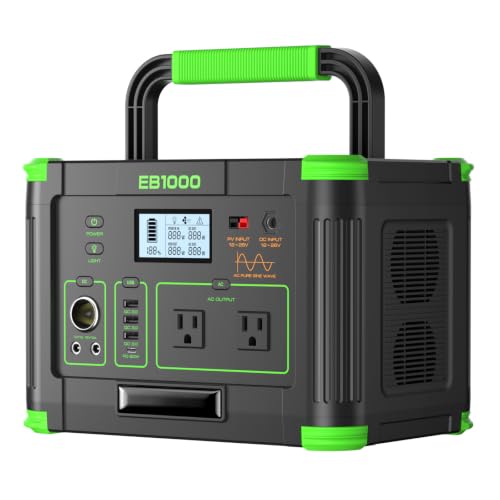
The GRECELL T-1000 is a versatile 1000W portable solar generator with 999Wh lithium-ion battery capacity, designed for outdoor enthusiasts, travelers, hunters, and anyone needing reliable home backup power during outages. It excels in powering essentials like phones, laptops, mini-fridges, CPAP devices, TVs, and lights simultaneously through its array of ports including 2 AC outlets (2000W peak), USB-C PD 60W, QC USB-A, wireless charging, and DC/car ports.
Standout features include a pure sine wave inverter for safe operation of sensitive electronics, built-in MPPT for efficient solar input up to 155W, and pass-through charging that lets you use devices while recharging. Users report strong real-world performance, such as running campsite gear for days, keeping modems alive during blackouts, or powering fridges on partly cloudy days with solar panels. The LCD screen shows input/output and battery status clearly, while quiet cooling fans and LED/SOS lighting add practicality.
Build quality is solid with a lightweight 17.8 lb metal/plastic frame that's easy to carry, rugged enough for camping, and includes protective covers for ports. Recharging is flexible via AC (under 2 hours full), car, or solar, with smart BMS ensuring safety from surges and overheat. Drawbacks include limitations on high-wattage loads over 1000W and slower solar recharges with modest panels, but it shines for its intended mid-range uses.
Overall, the GRECELL T-1000 delivers excellent value for portable power needs, earning consistent praise for reliability and ease of use. Ideal if you want a balance of capacity, portability, and versatility without excessive weight or cost.
Key Specs:
- Battery: 999Wh / 270000mAh Lithium-ion
- AC Output: 2 x 1000W (2000W Peak) Pure Sine Wave, 110V
- USB-C: 1 x PD 60W
- USB-A: 3 x QC3.0 18W
- Wireless: 10W
- DC/Car: 2 x 12V/5A, 1 x 12V/10A
- Recharge: AC, Solar (155W max MPPT), Car
- Dimensions: 11.6 x 7.9 x 7.9 inches
- Weight: 17.8 lbs
- Extras: LED Light/SOS, LCD Display
Who It's For: Campers needing multi-device power, homeowners prepping for outages, RV/travelers seeking solar backups. Runtime estimate: 999Wh x 0.85 / device watts (e.g., 8-10 hours for 100W fridge).
Pairing Tips: Use with 100-200W solar panels for best recharge. Avoid >1000W continuous loads. Turn off unused outputs to conserve battery.
Alternatives: Smaller GRECELL 500W for light use; larger 2200W for heavy appliances.

Pros
- Versatile outputs support a wide range of devices from phones to small appliances
- Multiple recharging options including efficient solar for true portability
- Compact, lightweight design ideal for travel and outdoor activities
- High solar efficiency and smart safeguards enhance reliability
- Complete kit with all adapters and manual included
Cons
- 148Wh capacity limits runtime for high-power devices like larger appliances
- 40W solar panel recharges slowly in low light or cloudy conditions
- Entry-level 200W output not suited for heavy-duty continuous use
The MARBERO 148Wh Solar Generator kit pairs the M822 portable power station with a 40W foldable solar panel, ideal for campers, hikers, fishers, and anyone needing backup power during outages or off-grid trips. This electric generator provides 200W continuous output (270W peak) through diverse ports, keeping essentials like phones, laptops, cameras, and lights running without fuel hassles.
Standout features include multiple outputs: two AC sockets, QC3.0 USB-A, USB-C PD (18W), standard USB-A, and DC port, powering various devices efficiently. The solar panel's 21.5-23.5% conversion rate and smart chip deliver optimal charging speeds while preventing overcharge or overload. Real-world performance shines for light to moderate loads, with solar recharging viable in sunlight and wall/car options for quick top-ups in 7-8 hours.
Design prioritizes portability with the 3.3lb station (7.6x3.6x5.4 inches) and 2.3lb panel (folds to 8x10x1 inches), made from durable ABS plastic. Safety features like short circuit and over-voltage protection add peace of mind, and the complete kit includes all necessary cables and adapters.
Drawbacks include the modest 148Wh capacity, which suits short trips but not extended heavy use, and solar-only recharging that depends on good weather. The 200W limit also means it's best for smaller gadgets rather than power-hungry tools.
Overall, this MARBERO kit earns high marks for portability and value in outdoor and emergency scenarios, making it a smart pick for adventurers seeking lightweight, solar-ready power.
Capacity: 148Wh | Output: 200W (270W peak) | Weight: Power station 3.3lbs, Solar panel 2.3lbs
Ports: 2x AC, 2x USB-A QC3.0, 2x USB-A, 1x USB-C PD, 1x DC | Recharge: AC (7-8hrs), Solar, Car
Solar Efficiency: 21.5-23.5% | Battery: Lithium Ion | Warranty: 12 months
1x MARBERO M822 Portable Power Station, 1x 40W Folding Solar Panel, 1x Power Adapter, 1x Cigarette Lighter Adapter, 1x User Manual.