Our editorial team weighed AIVOLT's published specifications and how it stacks up against similar products in the generators category. What stands out: Ultra-Quiet Performance, Easy Remote Start, Portable, and Clean Power for Sensitive Devices. Where it falls short: Rare Propane Shutdown Reported and Parallel Kit Sold Separately. That puts it at 7.7/10 on our WG Score – a solid, dependable choice.
 Reviewed byDaniel
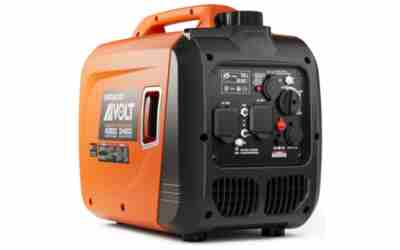
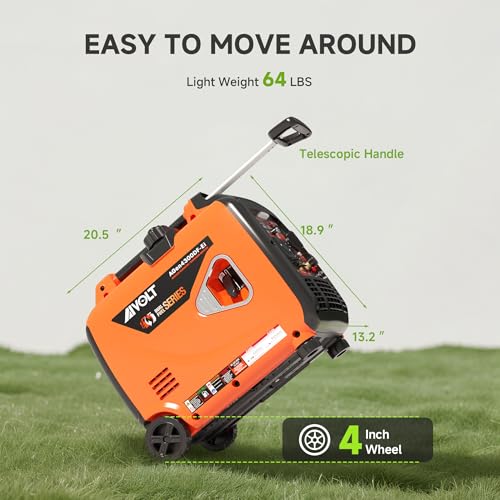
The spec that matters most on a portable generator is how many watts it can deliver, and AIVOLT Dual Fuel Inverter Generator is rated at 4300 surge watts. In plain terms, that is the short burst ceiling the unit can reach when a motor or compressor kicks on. It puts this model in the compact inverter class, built for RV campsites, tailgating and basic home backup rather than whole-house loads. According to the manufacturer, it pairs that output with dual fuel flexibility, a 53 dBA noise rating and a 64 lb body with built-in wheels, so it aims to be both capable and easy to live with.
In this review we break down the specs and aggregated user feedback to show what that 4300 watt figure means in practice. We do not claim hands-on or lab testing. We cover fuel runtime, noise, portability, outlets and safety, then compare AIVOLT Dual Fuel Inverter Generator against the Westinghouse WGen10500TFc, the Westinghouse WGen9500DF and the Westinghouse iGen11000DFc. If you want a second opinion on the brand first, see our AIVOLT Portable Inverter Generator review.

AIVOLT 4300W Dual Fuel Inverter Generator with Remote Start, Wheels, 53dBA Ultra-Quiet for RV Camping Home Backup


Our Verdict
AIVOLT Dual Fuel Inverter Generator is a compact, quiet dual fuel inverter generator with 4300 surge watts, a 53 dBA rating and remote start. It suits RV camping and light home backup well, especially if you value low noise and long propane runtime. It is not the right pick if you need to run large 240V loads or a whole home.
- Dual fuel: gasoline (11.5 hrs) or propane (34 hrs) at 25% load
- Quiet 53 dBA operation
- Only 64 lbs with built-in wheels and telescoping handle
- Key fob remote, electric and recoil start
- CO auto-shutoff and low oil protection, UL2201 and EPA certified
- 4300 watt surge ceiling is modest next to larger home backup units
- Parallel kit for doubling power is sold separately
- Quoted runtimes are at 25% load, not full load
Specifications
| Spec | Value | Spec | Value |
|---|---|---|---|
| Running Watts | 3300 | Peak Watts | 4300 |
| Fuel Type | Dual Fuel (Gasoline/Propane) | Engine | Internal Combustion Engine |
| Tank Size | 4.76 gal | Runtime | up to 34 hours |
| Noise Level (dB) | 53 dB | Inverter Technology | Yes |
| Parallel Capable | Yes | Starting System | Remote Start, Electric Start, Recoil Start |
| Outlets & Ports | 1 outlets/ports | Weight | 64 lbs |
| Dimensions | 20.5 x 13.2 x 18.9 in | RV Ready | Yes |
| Certifications | EPA | In the Box | LPG hose with regulator, Tool Kit |
| Warranty | 2-year manufacturer warranty |
4300 Surge Watts: What the Lead Number Really Gives You
Every generator listing leads with a wattage figure, but the surge number is only half the story. Surge watts describe the brief peak the unit can supply for a few seconds, which is what motors, compressors and pumps draw when they start. At 4300 surge watts, AIVOLT Dual Fuel Inverter Generator sits at the small end of the dual fuel field. That is the sweet spot for campers, RV owners with a single air conditioner, tailgaters and people who want to keep essentials running during an outage.
Here is a simple conversion to put that number in context. Household power at 120V is delivered as current, and dividing 4300 watts by 120 volts gives roughly 35.8 amps of peak capacity. The unit also has a dedicated 30A outlet, and a 30A circuit at 120V tops out at 3600 watts (30 x 120). So even before you consider running limits, the outlet itself is sized for loads up to about 3600 watts, which fits RV shore power style connections. According to the manufacturer, that outlet is meant to power air conditioners and microwaves in an RV.
The practical takeaway is to budget your loads. Add up the running watts of what you want powered at once, then allow extra headroom for the starting surge of the biggest motor. Because the listing data we reviewed highlights the surge figure and runtimes at 25% load, treat 4300 watts as a ceiling rather than a continuous target. If your plan involves a well pump, a large 240V appliance or a full panel, the larger Westinghouse models covered below are a better match.
Fuel Type and Runtime
AIVOLT Dual Fuel Inverter Generator is a dual fuel unit, so you can run it on gasoline or propane. The manufacturer quotes 11.5 hours on gasoline and 34 hours on propane, both at 25% load. Dividing 34 by 11.5 gives about 2.96, which means the propane figure is nearly three times the gasoline figure under the same light load. For an extended outage or a long camping weekend, that gap is the main reason to keep a propane tank on hand.
It also ties back to the lead metric. Runtime at 25% load means you are drawing a quarter of capacity, which is enough for lights, a phone charger, a laptop and a small fridge, but not for a full RV air conditioning cycle all night. Heavier loads will shorten both numbers, so plan fuel accordingly. Propane also stores well and avoids the stale fuel problems that gasoline can develop in a generator that sits for months, which is a common concern for backup use. If portability and fuel flexibility are your priorities, our guide to the best lightweight dual fuel generators shows how other models stack up.
Noise Level
The listing claims 53 dBA, which the manufacturer describes as lower than a normal conversation. Inverter technology helps here because the engine can slow down when demand is light. For comparison, the PowerSmart 4400W in our product set is listed at 76 dB measured from 23 feet at 25% load. The two figures were not necessarily measured under identical conditions, so we do not claim a direct match, but the 23 dB difference on paper is large. As a rule of thumb, every 10 dB step is perceived as roughly a doubling of loudness, so a gap this size suggests a very different experience at a quiet campsite.
Users who want a generator that will not bother neighbors or fellow campers tend to prioritize this spec, and it is one of the strongest arguments for choosing this model over a larger open-frame unit. Keep in mind that noise rises with load, so the 53 dBA rating is best read as a light-load figure.
Portability and Build
At 64 lbs with built-in wheels and a telescoping handle, AIVOLT Dual Fuel Inverter Generator is designed to be rolled rather than lifted. That makes a real difference when you are moving it across gravel, grass or a campsite, and it is notably more manageable than the large frame generators that rely on a wheel kit and two people. The trade-off for that light body is the modest power ceiling covered earlier. Compared with the 4300 watt lead metric, the weight is a fair exchange for a unit that one person can reposition easily.
Starting is flexible too. The listing describes three ways to start the engine: a key fob remote, electric start and recoil. The remote is especially handy in an RV, since you can fire up the unit from inside the cabin. The warranty is listed as 2 years, which gives some peace of mind for a compact unit that will see regular transport.
Outlets and Safety Features
The dedicated 30A outlet is the headline connection for RV owners, and it is what allows the generator to feed a camper with air conditioning and a microwave as described by the manufacturer. The product page also references a control panel, a data center display and a CO alert, which help you keep an eye on output and safety at a glance.
On safety, the generator is listed as UL2201 and EPA certified, with carbon monoxide auto-shutoff and low oil protection. The CO shutoff is a meaningful feature because it can cut the engine if dangerous levels build up, which matters for unattended or semi-sheltered operation. You should still place any generator outdoors and well away from windows and doors. For expansion, a second unit can be connected through a parallel kit, but that kit is sold separately, so factor it into your plans if you expect to need more than 4300 watts later.
How It Compares
Quick Comparison: Alternatives
- – Ultra-Quiet Performance.
- – Easy Remote Start, Portable.
- – Clean Power for Sensitive Devices.
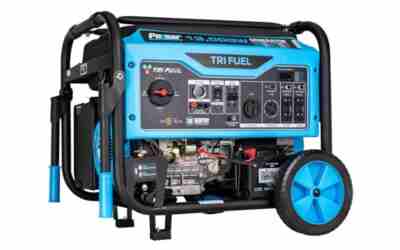
- – Tri-Fuel Flexibility.
- – Transfer-Switch Ready.
- – Long Runtime, Fuel Gauge.
- – Powerful 457cc Engine.
- – Dual Fuel Flexibility.
- – Multiple Start Options.
- – Exceptionally Quiet Under Load.
- – Multiple Start Options.
- – Clean Sine Wave, Reduces Amp Draw.
- – Rare Propane Shutdown Reported.
- – Parallel Kit Sold Separately.
- – Limited Long-Term Reviews.
- – Large, Limited Portability.
- – Minor Assembly & Oil Fill.
- – Lower Output on Natural Gas.
- – Heavy at 210 lbs.
- – 74dB Noise Level.
- – Lower Peak Watts on Propane.
- – Heavy at 187 lbs.
- – Occasional Shipping Damage.
- – Propane Connection May Loosen.
Westinghouse WGen10500TFc (Competitor). On the lead metric, AIVOLT Dual Fuel Inverter Generator offers 4300 surge watts against 13,500 peak watts on gasoline for the WGen10500TFc, about 3.1 times as much. The WGen10500TFc also adds natural gas as a third fuel, uses a 500cc engine and includes a 50A RV outlet. Choose it if you want true whole-house backup capability; choose AIVOLT Dual Fuel Inverter Generator if portability and quiet matter more than raw capacity. Our roundup of the best dual fuel electric generators covers more options in this class.
Westinghouse WGen9500DF (Competitor). The WGen9500DF is listed at 12,500 peak watts on gasoline and 11,200 on propane, roughly 2.9 times the surge figure of AIVOLT Dual Fuel Inverter Generator. Both run on gasoline or propane and both have remote start, but the WGen9500DF adds a 50A outlet and a 457cc engine, while AIVOLT Dual Fuel Inverter Generator focuses on a 30A outlet in a far lighter package. It is the better fit for transfer switch home backup, while AIVOLT Dual Fuel Inverter Generator is easier to carry and tuck into an RV.
Westinghouse iGen11000DFc (Competitor). The iGen11000DFc lists 11,000 peak watts on gasoline, about 2.6 times the 4300 surge watts of AIVOLT Dual Fuel Inverter Generator, with a THD under 3% and a CO sensor. Both are inverter dual fuel designs with remote start, so the real difference is scale. Pick the iGen11000DFc for home backup with sensitive electronics at high wattage, and AIVOLT Dual Fuel Inverter Generator for a lighter, quieter option for camping and lighter loads.
Is It Right for You?
Best For
- RV owners who want a 30A outlet and key fob remote start for the camper, within a 4300 surge watt budget.
- Campers and neighbors-conscious users who value the 53 dBA noise rating.
- Anyone who needs long unattended runtime, with 34 hours on propane at 25% load.
- Buyers who want a 64 lb generator with built-in wheels and a telescoping handle that one person can move.
Consider Something Else If…
- You need to power a whole home or large 240V appliances, since 4300 surge watts is a modest ceiling.
- You plan to double output with a parallel kit but do not want to buy it separately.
- You expect to run heavy loads for the full runtime, because the quoted hours apply at 25% load.
Final Verdict
The 4300 surge watt rating is the foundation of AIVOLT Dual Fuel Inverter Generator, and it buys you enough capacity for an RV air conditioner, small appliances and essential home backup. Around that figure, the manufacturer builds a strong package: dual fuel flexibility, 53 dBA operation, remote start, a 30A outlet, CO shutoff and a 64 lb body on wheels. For a compact unit, that is a well-rounded feature set and good value positioning for campers and light backup users.
The trade-offs are clear. The surge ceiling is small compared with larger dual fuel units, the parallel kit costs extra, and the runtime figures are quoted at a light 25% load. If you push the generator close to its limit, expect shorter run times and louder operation.
Against the alternatives we reviewed, AIVOLT Dual Fuel Inverter Generator is the better choice when portability, quiet and RV use matter most. If your priority is the largest possible wattage for home backup, the Westinghouse models with 11,000 to 13,500 peak watts are the better fit.
View on Amazon.comStill deciding? See how it stacks up in our buying guides:
Frequently Asked Questions
How loud is AIVOLT Dual Fuel Inverter Generator?
The manufacturer lists 53 dBA, which it describes as lower than a normal conversation. Noise typically rises with load, so treat that figure as a light-load rating.
How long does it run on a tank of fuel?
At 25% load, the manufacturer quotes 11.5 hours on gasoline and 34 hours on propane. Heavier loads will reduce those times.
Can I connect two units together?
Yes, the listing says a second unit can be connected through a parallel kit to boost wattage. The kit is sold separately.
Does it have safety features for unattended use?
It is listed as UL2201 and EPA certified, with carbon monoxide auto-shutoff and low oil protection. Always run it outdoors and away from windows and doors.
Is it easy to move around?
It weighs 64 lbs and has built-in wheels and a telescoping handle. For other compact options, see our best dual fuel suitcase generators.
Browse All Models

Pros
- Versatile tri-fuel operation adapts to available fuel sources
- Transfer switch ready for quick home integration
- Long runtime and fuel gauge for reliable extended use
- Multiple outlet types including RV-ready 50A
- Includes all essentials like oil, tools, and battery charger for immediate setup
Cons
- Large size and weight limit true portability for one person
- Requires minimal assembly and initial oil fill
- Natural gas output slightly lower than gasoline
The Westinghouse WGen10500TFc is a powerhouse tri-fuel portable generator designed for homeowners, RV enthusiasts, and jobsite pros needing dependable backup power. With up to 13,500 peak watts on gasoline, it can handle major appliances like air conditioners, refrigerators, and sump pumps simultaneously, making it ideal for blackouts or off-grid living.
Standout features include remote electric start via key fob, a heavy-duty 500cc OHV engine with cast iron sleeve for durability, and a CO sensor for automatic shutdown in unsafe conditions. Real-world performance shines with up to 19 hours runtime on gas, intuitive VFT Data Center for monitoring, and transfer switch-ready outlets that simplify whole-home connections. GFCI outlets ensure safety for household use.
Build quality impresses with robust construction, never-flat wheels for mobility, and included accessories like a tool kit and oil funnel. While its size aids stability, it may challenge solo transport. Maintenance is straightforward with low oil shutdown and digital hour meter.
Drawbacks include its bulk, which suits stationary use better than frequent carrying, and slightly reduced output on natural gas. Overall, the WGen10500TFc delivers exceptional value for reliable, versatile power.
Verdict: Highly recommended for anyone prioritizing fuel flexibility and home backup readiness in a single, feature-packed unit.
Power Output: 13,500 peak / 10,500 running watts (gas); 12,500 peak / 9,500 running (propane); 10,000 peak / 8,500 running (natural gas).
Engine: 500cc 4-Stroke OHV with cast iron sleeve.
Runtime: Up to 19 hours on 9.5-gallon gas tank.
Outlets: 2x GFCI 120V 5-20R (20A), 1x L14-30R (30A), 1x 14-50R (50A RV-ready).
Starts: Remote electric, electric push-button, recoil.
Features: CO sensor, low oil shutdown, fuel gauge, VFT Data Center.

Pros
- Powerful 457cc engine handles heavy startup loads like motors and appliances reliably
- Dual fuel capability reduces maintenance and allows indefinite propane storage
- Multiple start options including remote ensure convenience in any weather
- Transfer switch ready outlets simplify whole-home backup setup
- Durable cast iron sleeve and 3-year warranty provide long-term peace of mind
Cons
- Weighs 210 pounds, requiring two people to flip for wheel assembly
- Operates at 74 decibels, typical for its power class but noticeable outdoors
- Propane output slightly lower than gasoline at 11,200 peak watts
The Westinghouse WGen9500DF is a robust dual fuel portable generator designed for home backup, jobsites, or RV use, delivering 12,500 peak watts on gasoline and 11,200 on propane. Homeowners facing frequent outages or needing reliable power for essentials like refrigerators, air conditioners, and well pumps will find it indispensable, especially with its transfer switch compatibility for safe, direct connection to household circuits.
Standout features include remote electric start up to 260 feet, push-button operation, and recoil backup, praised in reviews for effortless startups even in cold weather. The 457cc OHV engine powers heavy loads smoothly, with users reporting it runs entire homes seamlessly. Dual fuel flexibility lets you switch fuels on the fly, and up to 12 hours runtime on gas keeps you covered. GFCI outlets and VFT data center provide safety and real-time monitoring of voltage, frequency, and hours.
Build quality shines with a cast iron cylinder sleeve, automatic low oil shutdown, and never-flat wheels for portability. Reviewers highlight sturdy construction, easy assembly, and included accessories like oil, propane hose, and tool kit. It meets EPA and CARB standards, with rubber outlet covers adding protection.
Drawbacks include its 210-pound weight, which demands care during setup, and 74 dB noise level suitable for outdoor use but not silent. Some note minor packaging oil residue or manual errors, though performance remains strong.
Overall, the WGen9500DF excels as a value-packed powerhouse for emergency preparedness, backed by a 3-year warranty. It outperforms competitors in power and versatility, earning high praise for reliability and ease.
Power Output: 9,500 running / 12,500 peak watts (gas); 8,500 running / 11,200 peak (propane)
Engine: 457cc 4-Stroke OHV, 16.76 HP
Fuel Capacity: 6.6 gallons gas; propane hose included
Outlets: 2x GFCI 120V 20A, L14-30R 30A, 14-50R 50A RV
Dimensions: 27.2"L x 26.1"W x 26.5"H; Weight: 210 lbs
Runtime: Up to 12 hours at 50% load
Warranty: 3-Year Limited

Pros
- Exceptionally quiet operation even under load, praised in reviews for minimal noise
- Easy assembly and multiple start options including remote, push-button, and recoil
- Superior clean sine wave power reduces amp draw on motors compared to non-inverter models
- Comes ready-to-run with oil, tools, battery charger, and propane hose
- Durable build with never-flat wheels, foldable handle, and heavy-duty engine
Cons
- Heavy at 187 pounds, requires two people for loading despite wheels
- Occasional shipping damage like scratches or gouges on panels reported
- Propane hose regulator connection can loosen and cause minor leaks if not checked
The Westinghouse iGen11000DFc is a powerhouse dual fuel inverter generator designed for homeowners seeking dependable backup during outages, RVers needing portable power, or jobsites requiring clean electricity. With 11,000 peak watts on gasoline (9,000 running) and 10,000 peak on propane (8,100 running), it handles major appliances like air conditioners, refrigerators, and sump pumps simultaneously via transfer switch ready outlets.
Standout features shine in real-world use: the low THD under 3% produces a pure sine wave that protects sensitive electronics and even lowers amp draw on motors, as one reviewer measured with a pool pump. Remote start via key fob, push-button, or recoil works flawlessly from day one, with up to 17 hours runtime on a 9.8-gallon tank. Reviewers love the quiet eco mode, intuitive LED data center for monitoring, and CO sensor for safety, noting easy starts without choking and smooth propane performance.
Build quality impresses with a rugged 457cc OHV engine, cast iron sleeve, automatic low oil shutdown, and fully enclosed design with never-flat wheels and foldable handle for portability. Assembly takes minutes with included high-quality tools, oil, and charger. While heavy, the mobility features make it manageable.
Drawbacks include its weight making solo transport tough, potential shipping cosmetic damage, and a propane regulator that may need tightening. Overall, the superior power quality and features outweigh minor issues.
Verdict: A top-tier inverter for reliable, clean home backup. If you prioritize quiet, safe power over open-frame bulk, this is your pick, backed by a 3-year warranty.
Power Output: 11,000 peak / 9,000 running watts (gas); 10,000 peak / 8,100 running (propane)
Fuel & Runtime: Dual fuel (gas/propane), 9.8-gallon tank, up to 17 hours
Engine: 457cc 4-Stroke OHV, electronic ignition
Outlets: 2x GFCI 120V 20A, L14-30R 30A, 14-50R 50A 120/240V
Dimensions & Weight: 30.2 x 25.2 x 26.6 inches, 187.4 lbs
Features: Remote/electric/recoil start, CO sensor, low THD, parallel capable, USB port, digital display

Pros
- Impressive power output handles multiple appliances simultaneously
- Extended runtime supports prolonged use without interruptions
- Super quiet operation suitable for noise-sensitive environments
- Multiple safety features including CO detection enhance user protection
- Compact and lightweight design aids portability
Cons
- Recoil start requires manual effort, no electric option
- 76dB noise level may still be audible in very quiet settings
- Gas-powered setup needs proper fuel handling and storage
The PowerSmart 4400-Watt Portable Inverter Generator is a gas-powered powerhouse designed for homeowners facing power outages, RVers, and campers needing dependable electricity on the go. With 4400W surge and 3600W rated output from its 223cc OHV engine, it effortlessly powers refrigerators, lights, tools, and more, making it ideal for emergency backup or outdoor adventures.
Standout features include a 1.6-gallon fuel tank delivering up to 10 hours at 25% load and 5.1 hours at 50%, economy mode for fuel efficiency, and super quiet 76dB operation at 23 feet. Real-world performance shines in its clean inverter power for sensitive electronics, auto-throttle for optimal speed, and versatile outputs like 120V AC, 5V USB, and 12V DC. Safety is prioritized with a CO sensor, low oil shutdown, and overload protection, all in an EPA-compliant package.
Build quality feels durable with a compact 19.3 x 16.9 x 16.5-inch frame weighing 61 lbs, easy to lift and store. The recoil start is straightforward, though it demands a firm pull. While portable, its gas reliance means planning for fuel, and the noise, while low for its class, suits most but not ultra-quiet needs.
Minor drawbacks like manual starting and moderate weight do not overshadow its value. This generator earns high marks for balancing power, quietness, and portability, delivering excellent performance for everyday emergencies and recreation. Verdict: A top pick for reliable, user-friendly portable power.
Power: 4400W surge, 3600W rated, 120V, 30A max AC, 60Hz
Engine: 223cc 4-stroke OHV, recoil start, 1.6-gal fuel tank, 20.3 fl.oz oil capacity
Runtime: 10 hours at 25% load, 5.1 hours at 50% load
Noise: 76dB at 23 feet
Outputs: AC 120V, USB 5V, DC 12V
Dimensions: 19.3 x 16.9 x 16.5 inches, 61.29 lbs
Pros
- Ultra-quiet performance praised in reviews for campground and home use
- Easy remote start and portability make it user-friendly for RV and outdoor setups
- Clean power output safely charges sensitive devices like cameras and laptops
- Long propane runtime provides extended backup without frequent refueling
Cons
- One review reported unexpected shutdown on propane after short use
- Parallel kit required separately for dual-unit operation
- Limited long-term reliability data due to few reviews
The AIVOLT 4300W Dual Fuel Inverter Generator is a portable powerhouse designed for RV camping, home backup, and outdoor adventures. It runs on both gasoline and propane, delivering 4300 peak watts on gas and 3900 on propane, with a rated output of 3300W gas or 2900W propane. Ideal for users needing clean, stable power for appliances, electronics, and RVs, its pure sine wave inverter technology ensures less than 3% THD to protect sensitive devices.
Standout features include three starting methods: remote key fob for couch-side convenience, electric push-button, and manual recoil backup. Reviewers rave about its whisper-quiet 53 dBA operation at 25% load, quieter than normal conversation, and effortless mobility thanks to the 64 lb weight, durable wheels, and telescoping handle. Real-world performance shines in powering mini-fridges, lights, AC units via the 30A RV outlet, and gadgets, with up to 34 hours on propane eliminating refueling hassles during outages or trips.
Build quality feels solid with a 149cc OHV engine, EPA and UL2201 certification, and safety features like CO auto-shutoff, low oil alert, and overload protection. The control panel is intuitive with data display, USB ports, and multiple outlets. While most users report flawless runs on both fuels, one noted a propane shutdown issue, highlighting potential early reliability concerns.
Drawbacks include the optional parallel kit for expanded power and the need to add oil initially. Overall, this generator excels in convenience, quietness, and versatility, making it a strong choice for portable power needs, backed by a 2-year warranty.
Power Output: 4300W peak (gas)/3900W (LPG), 3300W rated (gas)/2900W (LPG)
Fuel & Runtime: Dual Fuel (Gasoline/Propane), 1.59 Gal tank, up to 11.5 hrs gas / 34 hrs propane at 25% load
Start & Noise: Remote/Electric/Recoil, 53 dBA ultra-quiet
Ports: 1x 120V 30A TT-30R (RV), 1x 120V 20A duplex, Dual USB
Dimensions & Weight: 20.5 x 13.2 x 18.9 inches, 64 lbs with wheel kit and handle
Safety: CO sensor auto-shutoff, low oil shutdown, overload protection, parallel capable