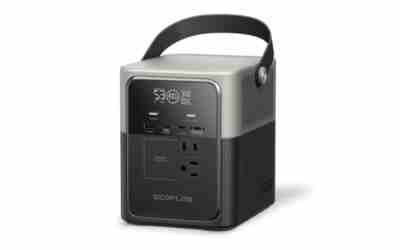
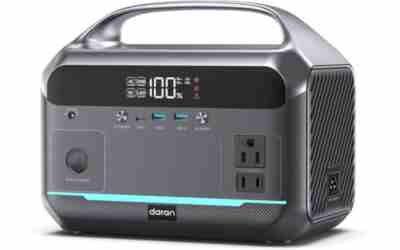
Picture the first night of a storm outage, when the refrigerator, a router, and a few phone chargers all need power at once and the grid is still down. That is the moment ABOK Ark3600 Portable Power Station is built for. According to the manufacturer, its 3840Wh LiFePO4 battery and 3600W rated output are designed to carry that kind of load, and the capacity can be expanded up to 11520Wh. This review looks at what the published specifications suggest about how the unit holds up from that first night onward. Our assessment is based on manufacturer specs and product listing details, not hands-on or lab testing.
We cover the core specifications, charging behavior, outlets, and battery life, then compare the unit against the OXSERYN 4400W Inverter Generator, the Jackery Explorer 1000 v2, and the Westinghouse iGen2800c. If you are weighing smaller battery-based options too, our guide to the best small battery powered generator is a useful starting point.
Main Product Overview

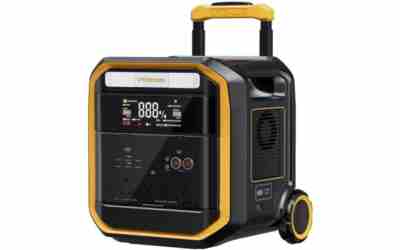
ABOK Ark3600 Portable Power Station 3600W, 3840Wh LiFePO4 Battery


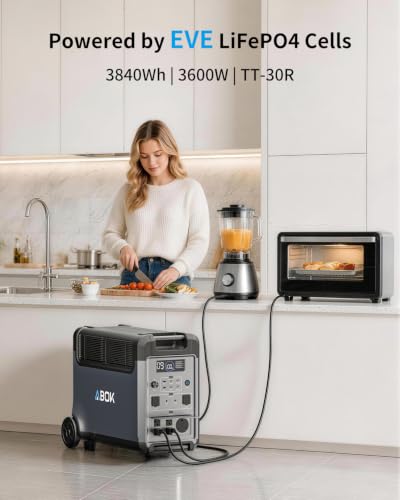
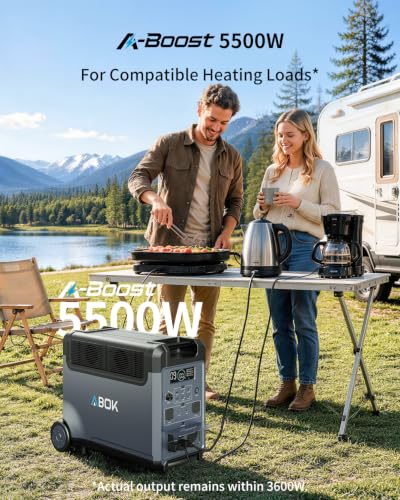
Our Verdict
On paper, ABOK Ark3600 Portable Power Station pairs 3840Wh of LiFePO4 storage with a 3600W rated output and 15 output ports, which suits home backup and RV use. The main trade-offs are the cold-weather charging limit and the need to confirm solar panel and inverter compatibility before buying.
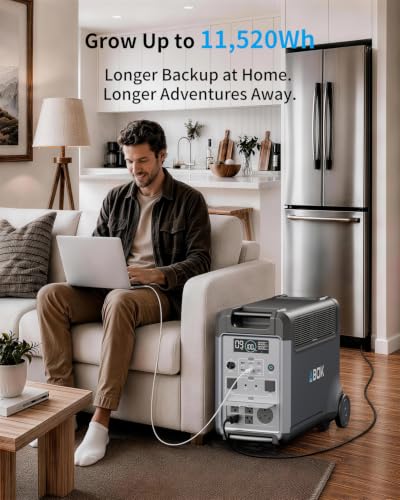
- 3840Wh capacity, expandable up to 11520Wh
- 3600W rated output with 4500W peak power
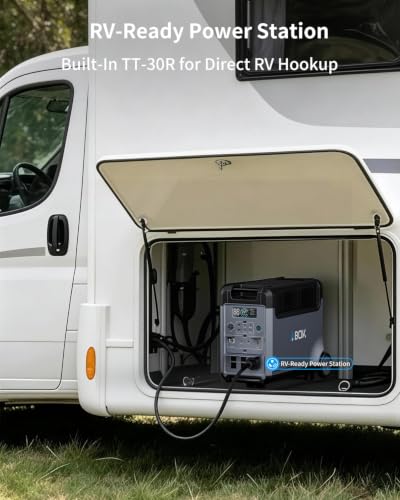
- 15 output ports, including 1 x 30A AC and 4 x 20A AC
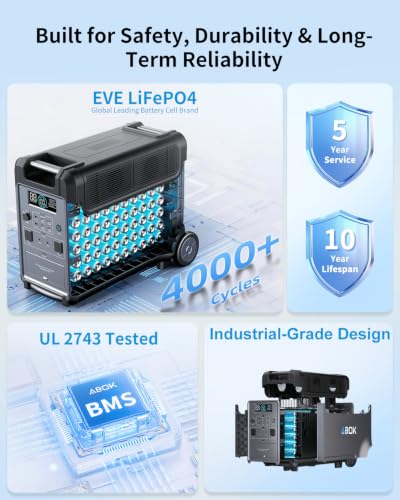
- Over 4000 cycles with LiFePO4 chemistry
- Telescoping handle and durable wheels
- Charging should stay above 32°F (0°C)
- Solar panels and inverters must be checked for compatibility
Specifications
| Spec | Value | Spec | Value |
|---|---|---|---|
| Battery Capacity (Wh) | 3840Wh | Battery Type | LiFePO4 |
| Battery Lifespan | 4000 cycles; 10+ year lifespan | AC Output (W) | 3600 |
| Peak Output (W) | 7200 | Output Voltage | 120V |
| Solar Input (W) | MC4, max 600W, 3600Wh | Recharge Time | Fully charged within 1.29 hours |
| Runtimei | ~9.3h for RV use | Outlets & Ports | 15 outlets and ports: 3 USB-C ports, 2 USB-A ports, 1 car power output |
| Parallel Capable | No | Weight | 92 lbs |
| Dimensions | 21.6 x 12.6 x 18.5 in | Noise Level | quiet (~30dB) |
| RV Ready | No | Certifications | FCC, UL 2743, CE, RoHS, UN38.3 |
| In the Box | AC Charger Cable, Ark3600 Power Station, Cigarette Lighter Cable, MC4 to XT90 Cable, User Manual | Warranty | 3-year warranty |
In-Depth Review
Ownership of a portable power station plays out in two phases. On day one, what matters is setup, how the unit feels to move, and whether the outlets match your devices. After several weeks of real use, the questions shift to reliability, how the battery ages, and how much effort it takes to keep it charged. The sections below follow that order, starting with the specs you notice first and ending with the long-term battery story.
Battery Capacity and Power Output
The 3840Wh battery is the headline figure. The manufacturer also states it can be expanded up to 11520Wh, which is three times the base capacity. On the output side, the 3600W rated output is backed by a 4500W peak rating, meaning short surges from motor-driven appliances have some headroom before the unit reaches its limit.
A simple calculation shows what this means in practice. Assuming roughly 85% efficiency, the usable energy is about 3840 x 0.85, or about 3264Wh. A steady 1000W load would therefore run for about 3.3 hours. A 1500W load draws about 42% of the 3600W rated output, leaving room for other devices on the same unit. These are estimates derived from the listed capacity and rating, not measured results.
Portability and Build Quality
Given the battery size, the telescoping handle and durable wheels are what make the unit practical to move. According to the manufacturer, these features make it easy to transport between a garage, a campsite, and a driveway. Check the weight in the specification table above before you buy, because a large battery pack is heavy even with wheels, and that weight will matter most on stairs and uneven ground.
Charging Options and Speed
Charging is where the listing draws the clearest limits. The manufacturer says the unit should be charged only in an environment above 32°F (0°C). Below that temperature, charging may take 30 minutes to 2 hours to begin. For anyone planning to keep the unit outdoors through winter, this is the most important practical trade-off in the listing. A full recharge time is not stated in the details used for this review, so check the product page before relying on a specific timeline.
The listing also asks buyers to confirm that any solar panels and inverters they plan to use are compatible with the power station. Refer to the product manual or contact customer support before purchasing panels, since mismatched equipment can limit how the system performs.
Outlets and Connectivity
The unit includes 15 output ports. The listing specifies one 30A AC port and four 20A AC ports, with additional ports for other connections. The 30A port is the one to focus on for RV-style loads, though you should confirm the rating of any appliance against that port before plugging it in. According to the manufacturer, the unit supports 99% of household appliances, which is a broad claim, so check your largest devices against the 3600W rating and the 4500W peak.
Battery Longevity and Long-Term Ownership
The battery uses LiFePO4 chemistry, which the manufacturer says is rated for over 4000 cycles. As a rough estimate, if you cycled the battery fully once a day, 4000 cycles would last about 11 years (4000 divided by 365 is about 11). Real-world use is rarely one full cycle per day, so the actual lifespan could be longer. The main long-term limitation remains cold-weather charging, which can shorten the usable season if you store the unit in an unheated space.
How It Compares
Quick Comparison: Alternatives
- —
- – Reliable First-Pull Starts.
- – Handles Heavy Loads Smoothly.
- – Up to 9-10h Runtime.
- – Fast 1-Hour Charging.
- – Whisper-Quiet Operation.
- – Proven Real-World Reliability.
- – Super Quiet, Fuel-Efficient.
- – Lightweight & Compact.
- – Intuitive LED Display.
- —
- – Oil Not Included.
- – Noticeably Loud (72dBA).
- – Initial Gas Smell, Shipping Brackets to Remove.
- – Needs Frequent Solar Realignment.
- – Panel Sags Without Support.
- – Limited Runtime on Heavy Loads.
- – Occasional Startup Difficulties.
- – Difficult Parts Support.
- – Rare Fuel Line Leaks.
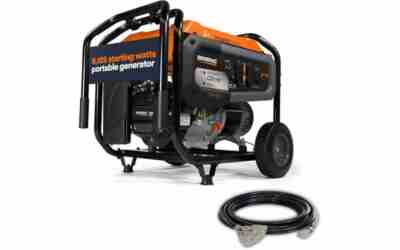
OXSERYN 4400W Inverter Generator (competitor): ABOK Ark3600 Portable Power Station wins on stored energy and rated output. Its 3840Wh battery and 3600W rating compare with the OXSERYN’s 3400 running watts from a gas engine. The OXSERYN, however, offers a 2-gallon fuel tank, 14 hours of runtime at 25% load, EPA compliance, and a 56 lb weight. Skip the ABOK Ark3600 Portable Power Station and get the OXSERYN 4400W Inverter Generator if your outages run longer than any battery can cover and you prefer refueling to recharging.
Jackery Explorer 1000 v2 (competitor): ABOK Ark3600 Portable Power Station has far more capacity and output, with 3840Wh and 3600W against the Jackery’s 1070Wh and 1500W AC rating. The Jackery counters with a one-hour emergency charge from 0 to 100% through its app, a 200W solar panel in the box, and a quiet overnight charging mode. Skip the ABOK Ark3600 Portable Power Station and get the Jackery Explorer 1000 v2 if you need a smaller, faster-charging unit that ships with a solar panel. For a smaller Jackery alternative, see our Jackery Explorer 500 Solar Generator Review 2026.
Westinghouse iGen2800c (competitor): ABOK Ark3600 Portable Power Station offers much larger battery storage and rated output than the Westinghouse’s 2800W peak and 2200W running figures. The iGen2800c, however, runs up to 12 hours at 25% load, offers a TT-30R 30A outlet, reports THD of 3% or less for sensitive electronics, and can be paralleled with a compatible Westinghouse unit. Skip the ABOK Ark3600 Portable Power Station and get the Westinghouse iGen2800c if you need a gas-powered generator with parallel capability and an RV-ready 30A outlet.
Is It Right for You?
Best For
- Whole-home backup for multi-appliance outages, where 3840Wh and a 3600W rating cover several loads at once.
- RV owners who want a 30A AC port and enough stored energy for extended off-grid stays.
- Buyers planning to expand storage, since the manufacturer states capacity can grow to 11520Wh.
- Long-term owners who value LiFePO4 chemistry and the listed 4000-plus cycle rating.
If noise is your top concern for an RV setup, our guide to the best quietest generator for RV covers the options that compete on that front.
Consider Something Else If…
- You will charge the unit in freezing conditions, since the listing calls for charging above 0°C.
- You need fuel-based runtime that lasts for days, where a gas generator is the more practical choice.
- You want a compact unit with one-hour charging, where the Jackery Explorer 1000 v2 is the stronger fit.
Final Verdict
Once the first-use novelty wears off, ABOK Ark3600 Portable Power Station earns its place through battery depth and output headroom. The 3840Wh LiFePO4 pack, the option to expand to 11520Wh, and the rating of over 4000 cycles point to a unit built for years of backup duty. The most important limitation from the listing is the cold-weather charging requirement, which can keep the unit from charging when it is most needed in winter.
Beyond that, the trade-offs are practical. You need to confirm solar panel and inverter compatibility before buying, and you should check the weight and the appliance ratings of your largest loads against the 3600W output. None of these are dealbreakers, but each is worth verifying against the manual.
Buy ABOK Ark3600 Portable Power Station if you want serious home or RV backup, plan to keep it charged in moderate temperatures, and value a long-lasting battery. If you need a quieter, fuel-based option or a smaller unit that charges in an hour, the OXSERYN 4400W Inverter Generator, Jackery Explorer 1000 v2, and Westinghouse iGen2800c each cover a different use case worth comparing.
View on Amazon.comStill deciding? See how it stacks up in our buying guides:
Frequently Asked Questions
How long does the ABOK Ark3600 take to charge?
The listing does not state a full recharge time in the details used for this review. It does say to charge only above 32°F (0°C), and that charging may take 30 minutes to 2 hours to begin in colder conditions.
How many appliances can it run at once?
The unit has a 3600W rated output and a 4500W peak rating, with 15 output ports including one 30A AC and four 20A AC ports. The number of devices you can run together depends on their combined wattage, so add up your running loads against the rating.
How long will the battery last before replacement?
The LiFePO4 battery is rated by the manufacturer for over 4000 cycles. At one full cycle per day, that works out to roughly 11 years, though actual life depends on how the battery is used and stored.
Can it power a refrigerator?
The 3600W rated output and 4500W peak give headroom for most common refrigerators, but you should confirm your model’s running and starting watts. The 3840Wh capacity then determines how many hours the unit can keep it running.
Is it compatible with solar panels?
The manufacturer asks buyers to make sure any solar panels and inverters they use are compatible with the power station. Refer to the product manual or contact customer support to confirm compatibility before purchase.
Browse All Models

Pros
- Starts reliably on first or few pulls after adding oil
- Handles heavy loads like heaters, tools, and appliances smoothly
- Long runtime proven in real-world tests up to 9-10 hours at high load
- Clean inverter power safe for sensitive electronics
- Great value with multiple outlets including RV port
Cons
- Oil not included, requires addition before first use
- Noticeably loud at 72 dBA up close, best at distance
- Initial gas smell from factory testing and shipping brackets to remove
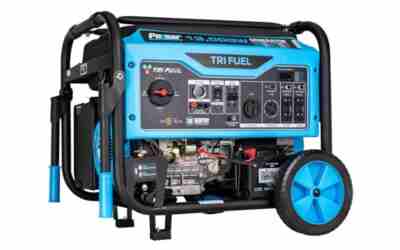
The OXSERYN 4400W inverter generator is a gas-powered open-frame unit designed for emergency home backup, RV camping, outdoor activities, and powering tools. With 4400 peak watts and 3400 running watts, it suits homeowners in storm-prone areas, campers needing RV hookups, and professionals requiring portable site power. Its EPA compliance ensures eco-friendly operation while delivering clean sine wave power for sensitive devices.
Standout performance shines in reviews, with users praising first-pull starts, steady voltage under 3000W loads, and up to 14 hours runtime at quarter load or 9-10 hours at full power on 2 gallons. The 30A RV outlet, dual 120V AC ports, and 12V DC make it versatile for refrigerators, heaters, and chargers during outages. ECO mode reduces fuel use and noise to 72 dBA, while safety protections like overload shutoff and low oil alert add peace of mind.
Build quality features a durable 4-stroke engine, electronic ignition, and 57-pound portable frame with wheels for easy transport. Cold start tech aids winter use, and the compact 19.4 x 15.2 x 19.2-inch size stores neatly. Reviewers note solid construction for the price, though some mention checking shipping bolts and the backwards choke label.
Minor drawbacks include needing to add oil (10W-30 recommended), louder operation nearby, and a faint initial gas odor from factory testing. Despite Chinese origins, early users report consistent reliability after proper break-in.
Overall, this generator excels as a budget-friendly powerhouse for backups and adventures, earning high marks for value and performance. Ideal if you prioritize runtime, portability, and RV compatibility over ultra-silence.
Power Output: 4400W peak / 3400W running watts
Fuel & Runtime: Gasoline, 2-gallon tank, 14 hours at 25% load
Noise Level: 72 dBA
Outlets: 2x 120V AC, 1x 30A RV, 1x 12V DC
Weight & Dimensions: 57 lbs, 19.4"L x 15.2"W x 19.2"H
Features: Inverter technology, ECO mode, low oil shutdown, overload protection, cold start

Pros
- Exceptionally fast 1-hour charging keeps you powered without downtime
- Whisper-quiet operation ideal for camping and home backup
- Proven reliability in real-world tests like powering radios, heaters, and fridges for hours
- Portable and easy to store with compact build and long battery lifespan
- Versatile ports charge laptops, phones, and appliances simultaneously
Cons
- Solar panel requires frequent realignment to sun for optimal input, dropping efficiency if misaligned
- Panel sags in the middle without support, reducing output until propped up
- Runtime limited for continuous high-wattage devices like large heaters beyond short bursts
The Jackery Explorer 1000 v2 solar generator kit combines a 1070Wh LiFePO4 portable power station with a 200W solar panel, delivering 1500W AC output and up to 3000W surge. Weighing just 23.8 pounds with a foldable handle, it suits campers, RVers, off-grid enthusiasts, and anyone needing emergency backup power for essentials like fridges, microwaves, and CPAP machines.
Standout features include ChargeShield 2.0 for safe, rapid recharging—full in 1 hour via app emergency mode or 1.7 hours standard—and a battery lasting over 10 years with 4000 cycles. Users praise its real-world performance: powering home theaters for 45 hours, ham radios for 5+ hours, and campers during outages or storms. The app enables quiet 30dB overnight charging and efficiency modes, while versatile ports (3 AC, 2 USB-C 100W, USB-A, DC) handle multiple devices effortlessly.
Build quality shines with a durable, compact design (12.87 x 8.82 x 9.72 inches) using recyclable packaging and carbon-verified eco-friendliness. Reviewers highlight its silence versus gas generators, easy setup, and portability for trailers or closets. The solar panel folds for travel but excels in full sun, recharging fully in 4-5 hours on partly cloudy days when adjusted properly.
Drawbacks include the solar panel's need for constant sun alignment via its level bubble, as slight misalignment halves input to 50-100W. The panel sags centrally without propping, impacting efficiency, and high loads like 2000W heaters drain capacity quickly. Not ideal as a full UPS for sensitive electronics or primary solar reliance without maintenance.
Overall, this kit earns high marks for innovation and reliability in portable power. Buy it for versatile off-grid adventures or peace of mind during blackouts—its fast charge, longevity, and power make it a top choice despite minor solar tweaks.
Capacity: 1070Wh LiFePO4 battery
Output: 1500W continuous AC (3000W surge), 100W USB-C PD, 3x AC outlets, USB-A, DC car port
Charging: 1hr fast AC (app-enabled), solar via 200W panel, car DC
Weight/Dimensions: 23.8 lbs, 12.87"L x 8.82"W x 9.72"H
Warranty: 5 years; Battery life: 10+ years (4000 cycles)
Versus Explorer 2000 v2: Half the capacity (1070Wh vs 2042Wh) but lower price, lighter weight, ideal for lighter loads like projectors (7.6hrs) or rice cookers (2.7hrs).
Outperforms gas generators in silence and portability; runs fridges 37hrs (low draw), kettles 1hr, microwaves 48mins.
Carbon footprint verified by TÜV SÜD, with 100% recyclable packaging for eco-conscious users.

Pros
- Super quiet and fuel-efficient for peaceful use
- Lightweight and compact for superior portability
- Intuitive LED display shows fuel, runtime, and output
- Reliable starts and strong performance in reviews
- Safety features like CO sensor and overload protection
Cons
- Some initial startup difficulties reported
- Customer support challenges for parts ordering
- Rare manufacturing issues like fuel line leaks
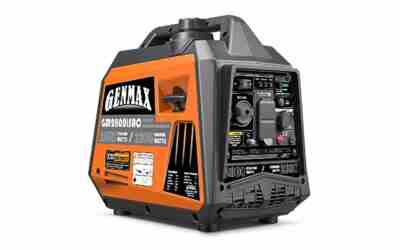
The Westinghouse iGen2800c is a compact, gas-powered inverter generator delivering 2800 peak watts and 2200 running watts, ideal for RV enthusiasts, campers, tailgaters, and homeowners seeking backup power for essentials like refrigerators, sump pumps, and electronics. Its variable speed engine with Eco Mode ensures fuel efficiency and low noise, making it suitable for noise-sensitive areas like parks or neighborhoods.
Standout features include a super quiet 52 dBA operation quieter than normal conversation, up to 12 hours runtime at 25% load on a 1.1-gallon tank, and clean sine wave power with less than 3% THD safe for sensitive devices. Reviewers rave about its reliability during hurricanes, field events, and travel, praising easy one-pull starts, the LED data center displaying fuel level, runtime, and voltage, plus RV-friendly TT-30R outlet and USB ports. Copper windings enhance durability and cooler operation.
Design-wise, it weighs just 45 pounds with ergonomic handling, measures 17.9 by 11.4 by 19.8 inches for simple storage, and supports paralleling for doubled power. Safety features like CO sensor, low oil shutdown, and overload protection add peace of mind, backed by a 3-year warranty.
Drawbacks include occasional startup glitches resolved after troubleshooting, reports of fuel line defects in new units, and frustrations with parts availability and customer service responsiveness.
Overall, the iGen2800c excels as a portable powerhouse for recreation and emergencies, earning high praise for quiet efficiency and portability despite minor service hiccups.
Power Output: 2800W peak, 2200W running
Fuel Type: Gasoline | Tank Capacity: 0.98 Gallons
Runtime: Up to 12 hours at 25% load
Noise Level: 52 dBA | Weight: 47.4 Pounds
Dimensions: 17.9in L x 11.4in W x 19.8in H
Outlets: TT-30R 30A RV, 120V 20A duplex, 2x USB 5V
Features: CO Sensor, Fuel Gauge, Hour Meter, Overload Protection, Parallel Capable
Engine: 98cc 4-Stroke OHV
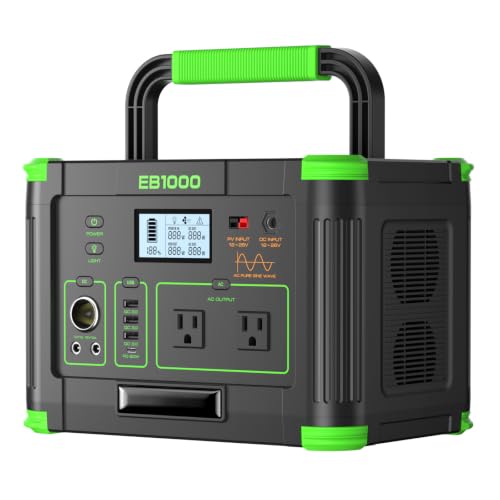
Pros
- Holds charge reliably even after long storage, recharges quickly via solar, AC, or car
- Quiet operation with minimal fan noise, easy-to-read display for power status
- Versatile for camping electronics, home backups like TV and fans, praised for sturdiness and convenience
- Supports pass-through charging to use while recharging, great real-world performance for low-to-medium loads
Cons
- Not suitable for devices rated over 1000W continuous or high-heat appliances like coffee makers that may overload
- Solar input maxes at 155W, so full recharge takes time with smaller panels
- Rare reports of battery indicator issues, though customer support resolves effectively
The GRECELL T-1000 is a versatile 1000W portable solar generator with 999Wh lithium-ion battery capacity, designed for outdoor enthusiasts, travelers, hunters, and anyone needing reliable home backup power during outages. It excels in powering essentials like phones, laptops, mini-fridges, CPAP devices, TVs, and lights simultaneously through its array of ports including 2 AC outlets (2000W peak), USB-C PD 60W, QC USB-A, wireless charging, and DC/car ports.
Standout features include a pure sine wave inverter for safe operation of sensitive electronics, built-in MPPT for efficient solar input up to 155W, and pass-through charging that lets you use devices while recharging. Users report strong real-world performance, such as running campsite gear for days, keeping modems alive during blackouts, or powering fridges on partly cloudy days with solar panels. The LCD screen shows input/output and battery status clearly, while quiet cooling fans and LED/SOS lighting add practicality.
Build quality is solid with a lightweight 17.8 lb metal/plastic frame that's easy to carry, rugged enough for camping, and includes protective covers for ports. Recharging is flexible via AC (under 2 hours full), car, or solar, with smart BMS ensuring safety from surges and overheat. Drawbacks include limitations on high-wattage loads over 1000W and slower solar recharges with modest panels, but it shines for its intended mid-range uses.
Overall, the GRECELL T-1000 delivers excellent value for portable power needs, earning consistent praise for reliability and ease of use. Ideal if you want a balance of capacity, portability, and versatility without excessive weight or cost.
Key Specs:
- Battery: 999Wh / 270000mAh Lithium-ion
- AC Output: 2 x 1000W (2000W Peak) Pure Sine Wave, 110V
- USB-C: 1 x PD 60W
- USB-A: 3 x QC3.0 18W
- Wireless: 10W
- DC/Car: 2 x 12V/5A, 1 x 12V/10A
- Recharge: AC, Solar (155W max MPPT), Car
- Dimensions: 11.6 x 7.9 x 7.9 inches
- Weight: 17.8 lbs
- Extras: LED Light/SOS, LCD Display
Who It's For: Campers needing multi-device power, homeowners prepping for outages, RV/travelers seeking solar backups. Runtime estimate: 999Wh x 0.85 / device watts (e.g., 8-10 hours for 100W fridge).
Pairing Tips: Use with 100-200W solar panels for best recharge. Avoid >1000W continuous loads. Turn off unused outputs to conserve battery.
Alternatives: Smaller GRECELL 500W for light use; larger 2200W for heavy appliances.