How much power do you truly need for your RV? For most recreational vehicles, especially those with 50-amp service, a generator capable of delivering between 3,000 to 4,000 running watts is often ideal to comfortably power essentials like air conditioners, microwaves, and other appliances. This range ensures you have sufficient power without overspending on an unnecessarily large unit.
Choosing the right generator for your RV can significantly enhance your travel experience, providing reliable power wherever your adventures take you. Consider factors like wattage, fuel type, noise level, and portability to match your specific RV power needs. For more insights into RV power solutions, check out our guide on The 5 Best Generators For 50 Amp 5th Wheel Rv of 2026.
What to Know Before Choosing Portable 50-amp RV Generators
What wattage is sufficient for a 50-amp RV?
When selecting a generator for a 50-amp RV, it’s crucial to understand that while your RV can handle a 50-amp input, the generator itself needs to supply enough wattage to meet your appliances’ demands. A typical 50-amp RV service is rated for 12,000 watts (50 amps x 240 volts, split into two 120V legs), but you rarely need a generator that can produce this much. Instead, focus on the running wattage required for your most power-hungry appliances, such as an air conditioner (which can draw 1500-3500 watts) and a microwave (around 1000-1500 watts).
Many RV owners find that generators offering 3,000 to 4,000 running watts are sufficient to power a single air conditioner along with other essential electronics. For example, the PowerSmart 3800 Watt Dual Fuel Inverter Generator provides 3300 rated watts on gasoline, which is ample for running a typical RV air conditioner and several other devices simultaneously. Always calculate your peak and running wattage needs to avoid overloading your generator.
How important is noise level for an RV generator?
Noise level is a significant consideration for RV generators, especially if you plan to use it in campgrounds or residential areas where noise restrictions often apply. Inverter generators are generally much quieter than traditional open-frame generators. For instance, the Westinghouse iGen2800 operates as low as 52 dBA, which is comparable to a quiet conversation and significantly less intrusive than louder models.
A lower decibel rating ensures a more peaceful experience for you and your neighbors. Look for generators with “quiet operation” or specific dBA ratings in their specifications. The AIVOLT 1750W Portable Inverter Generator, for example, also boasts a super quiet 52 dBA operation, making it an excellent choice for noise-sensitive environments.
Should I consider a dual-fuel generator for my RV?
Dual-fuel generators offer enhanced versatility for RVers, allowing you to switch between gasoline and propane. This flexibility can be incredibly useful, as propane might be more readily available or easier to store in certain situations, and it tends to burn cleaner, potentially extending engine life. The PowerSmart 3800 Watt Dual Fuel Inverter Generator is a prime example, providing the option to run on either fuel source, which can be a lifesaver when one fuel type is scarce.
The ability to use two different fuel types also provides a backup option if one fuel source runs out, giving you peace of mind during longer trips or in remote locations. This adaptability is a key benefit for maximizing your power options on the road. For other RV power solutions, consider exploring options like The 5 Best Portable Power Stations Rv Kit of 2026.

Pros
- Exceptionally quiet operation at 52 dBA
- Long 12-hour runtime on small fuel tank
- Lightweight and portable with handle
- Pure sine wave output for electronics
- Built-in safety like low oil shutdown
Cons
- Fuel tank holds only 0.98 gallons, needing refills for multi-day use
- Parallel cord sold separately for linking units
- May have initial residual oil or fuel odor from factory testing
The Westinghouse iGen2800 is a compact inverter generator designed for homeowners facing power outages and outdoor enthusiasts like campers and tailgaters. With 2800 peak watts and 2200 running watts from its 4-stroke OHV engine, it handles essentials such as refrigerators, furnaces, and electronics while staying portable at just 46.3 pounds.
Standout features include ultra-quiet 52 dBA operation, quieter than normal conversation, and up to 12 hours of runtime on a 0.98-gallon tank in economy mode. It produces clean power below 3% THD to protect sensitive devices, and the LED data center shows fuel level, remaining time, voltage, and output. Parallel capability lets users combine two units for more power using a separate cord.
Build quality shines with a lightweight frame, built-in handle, and safety features like overload protection and low oil shutdown. The automatic throttle enhances fuel efficiency by matching engine speed to demand, making it reliable for both home backup and recreation.
Drawbacks include the small fuel capacity requiring occasional refills for extended outages and the need to buy a parallel cord separately. Factory testing may leave a faint initial odor.
Overall, the iGen2800 excels as a versatile, efficient choice for quiet, portable power needs, backed by a 3-year warranty and lifetime support. It delivers strong value for emergency and outdoor use.
Power Output: 2800 peak watts / 2200 running watts at <3% THD
Engine: 4-Stroke OHV Westinghouse
Runtime: Up to 12 hours on 0.98 gallon tank
Noise Level: 52 dBA
Weight: 46.3 lbs
Outlets: Two 120V 20A, two USB
Features: Parallel capable, economy mode, LED display, low oil shutdown
Pros
- Dual fuel capability reduces dependency on single fuel source
- Quiet operation suitable for residential and campground use
- Reliable recoil start and solid build quality noted in reviews
- Clean inverter power protects laptops and medical equipment
Cons
- Manual recoil start requires physical effort in cold weather
- Runtime limited to around 4 hours at 50% load on a full tank
- Propane mode delivers slightly lower peak output than gasoline
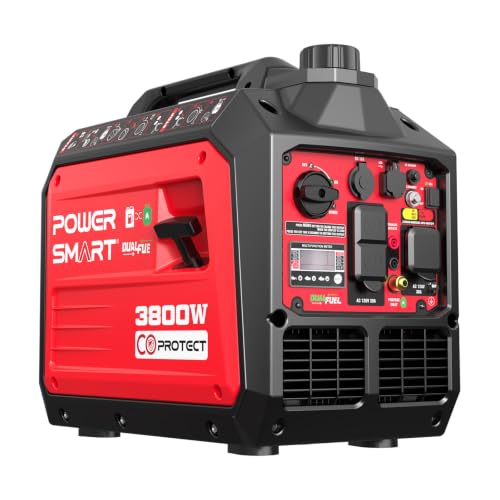
The PowerSmart 3800 Watt Dual Fuel Inverter Generator delivers portable power for home backup, camping, and tailgating. It runs on gasoline or propane and produces clean sine wave electricity suitable for electronics.
Users highlight easy starting, steady voltage output, and sufficient power for appliances, lights, and RV air conditioning. The CO safety sensor and overload protection add reliable safeguards during extended operation.
At 50.7 pounds with a compact footprint, the unit moves easily between locations. Noise levels remain acceptable for most outdoor settings while the parallel-ready feature allows capacity expansion when needed.
Drawbacks include the manual start mechanism and shorter runtime compared to larger stationary models. Overall it provides good value for users who need mid-range portable inverter power without excessive bulk.

Pros
- Clean sine wave output protects sensitive devices
- Parallel ready for higher power needs
- Compact and lighter than comparable generators
- Includes RV-ready outlet out of the box
Cons
- Recoil start only with no electric option
- Open frame design may produce more noise than enclosed models
- Rated output is 3500 watts despite 4000-watt peak
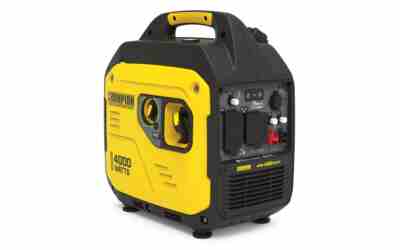
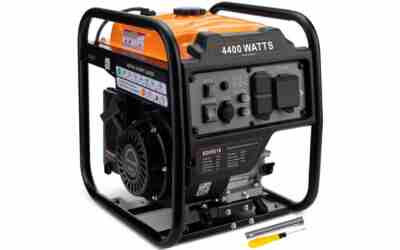
The WEN GN400iM is an open-frame inverter generator rated at 4000 surge watts and 3500 running watts. It produces clean power with total harmonic distortion under 1.2 percent at full load, making it suitable for laptops, phones, and other electronics.
This model targets campers, RV owners, and homeowners who need reliable portable backup power. The RV-ready TT-30R receptacle and parallel connection capability allow flexible use across different scenarios without additional adapters.
Key features include a 212cc 4-stroke engine, eco-mode for improved fuel efficiency, and automatic shutdown for low oil or overload conditions. The unit weighs less than standard generators in its class due to its optimized frame design.
Build quality focuses on essential protections and a two-year warranty. Drawbacks include manual recoil starting and an open-frame layout that does not enclose the engine for noise reduction.
Overall the GN400iM offers strong value for users prioritizing clean power, RV compatibility, and parallel options in a lightweight package.

Pros
- Lightweight and portable for camping or tailgating
- Pure sine wave output protects electronics
- Parallel ready for expanded power needs
Cons
- Gasoline only with no dual fuel option
- No electric start system included
- Limited runtime on a single tank
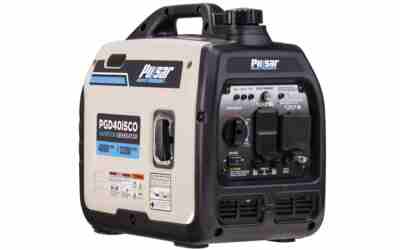
The Pulsar 2300W inverter generator provides portable power suitable for camping trips and outdoor events. Its compact design and low weight make it simple to carry and store.
Stable sine wave technology ensures safe operation of laptops, phones, and other sensitive devices. The included USB outlet adds convenience for charging small electronics directly.
Parallel capability allows users to link units for higher output when needed. Fuel efficiency supports up to 4.8 hours of runtime at half load.
Potential drawbacks include reliance on gasoline and the absence of an electric start. Overall this model offers solid performance for users seeking a lightweight inverter generator.

Pros
- Generates stable, clean power suitable for delicate devices.
- Operates exceptionally quietly, comparable to a normal conversation.
- Very lightweight and compact, making it easy to carry and store.
- Includes essential safety features like CO detection and auto-shutoff.
- ECO mode extends runtime and optimizes fuel consumption.
- Comes with a 2-year warranty and dedicated customer support.
Cons
- Engine oil is not included and must be purchased separately.
- Some users reported issues with the unit not starting or fuel leakage.
- May struggle with higher wattage appliances beyond 1000W.
The AIVOLT 1750W Inverter Generator is a compelling option for anyone seeking a portable, reliable, and quiet power source. Designed with both camping enthusiasts and homeowners in mind, this generator stands out for its ability to produce ultra-clean pure sine wave electricity with less than 3% Total Harmonic Distortion (THD). This makes it perfectly safe for powering sensitive electronics such as laptops, smartphones, and even medical devices like CPAP machines, eliminating worries about damaging your valuable gear.
One of the most impressive features of the AIVOLT 1750W is its exceptional portability and low noise output. Weighing in at a mere 26.5 pounds and boasting a compact design with a sturdy top handle, it's genuinely a "one hand, one lift" generator. This ease of transport makes it incredibly convenient for moving from your garage to a truck, campsite, or wherever power is needed. Furthermore, operating at just 52 dBA, it's quieter than a typical conversation, ensuring your peace and that of your neighbors, whether you're camping in a serene setting or using it for home backup in a residential area.
Safety and efficiency are also core to the AIVOLT 1750W's design. It incorporates a professional CO detection sensor that automatically shuts down the unit if unsafe carbon monoxide levels are detected, providing crucial peace of mind. Combined with low-oil shutdown and overload protection, your family and electronics are well-protected. The intelligent ECO mode throttle system further enhances efficiency by adjusting engine speed to match the load, extending its 0.66-gallon fuel tank to deliver up to 7 hours of runtime at 25% load. This feature not only saves fuel but also contributes to its quiet operation.
While the AIVOLT 1750W offers significant advantages, potential buyers should note that engine oil is not included in the package and must be purchased separately before first use. Some customer reviews also mention isolated incidents of starting issues or fuel leakage, though these appear to be exceptions rather than the norm given its overall positive reception. For those requiring power for very high-wattage appliances, it's important to be mindful of its 1350 running watts capacity, as some users found it performs optimally for loads around 1000W. However, for its intended use cases of camping, tailgating, and essential home backup, this generator delivers on its promises.
In conclusion, the AIVOLT 1750W Inverter Generator is an excellent investment for anyone prioritizing clean power, quiet operation, and portability. Its robust safety features, efficient ECO mode, and convenient design make it a standout choice for powering sensitive electronics and providing temporary power in various outdoor and emergency scenarios. With its 2-year warranty and dedicated customer support, it offers a reliable and user-friendly power solution.
Buying Guide for 2026
Understanding Wattage and RV Compatibility
When selecting a portable 50-amp RV generator, the wattage output is paramount. While your RV’s electrical system can handle a 50-amp connection, the generator needs to produce enough running and surge watts to power your specific appliances. For instance, a 50-amp RV typically uses two 120-volt legs, totaling 240 volts, but appliances usually run on 120 volts. A generator with a 30-amp RV outlet (TT-30R) provides up to 3,600 watts, which is often sufficient for one air conditioner and other smaller items. However, some larger RVs or those with multiple AC units may require more power or a parallel capability to combine two generators.
For example, the WEN RV-Ready 4000-Watt Open Frame Inverter Generator produces 3,500 rated watts and features a 120V RV-ready TT-30R receptacle, making it suitable for many 30-amp RV setups. If you need to power a larger 50-amp RV or multiple high-draw appliances, consider models with higher wattage or those that offer parallel capability, allowing you to link two identical units for increased output. Always check your RV’s power requirements and the generator’s output before making a purchase. For generators specifically designed for 30-amp RVs, you might want to look at The 5 Best Rv 30 Amp Generators of 2026.
Key Features for RV Use: Portability, Quietness, and Fuel Efficiency
Portability is a crucial factor for RV generators. Lightweight, compact designs with built-in handles or wheels make transportation and storage much easier. The Pulsar 2300W Portable Gas Inverter Generator, for example, weighs less than 47 lbs, making it highly manageable for RV trips. Quiet operation is another significant feature, as nobody wants a loud generator disturbing their peaceful camping experience or their neighbors. Inverter generators are known for their lower noise levels, often operating below 60 dBA. For comparison, a normal conversation is around 60 dBA, so a generator like the AIVOLT 1750W Portable Inverter Generator operating at 52 dBA is remarkably quiet.
Fuel efficiency is also important for extended run times without constant refueling. Generators with an “Economy Mode” or “ECO Mode” automatically adjust engine speed to match the load, saving fuel and reducing noise. The Westinghouse iGen2800 offers up to 12 hours of run time on a 0.98-gallon gas tank with its Economy Mode engaged, making it very efficient for longer periods of use. Considering these features ensures a more convenient and enjoyable RV experience.
Safety Features and Clean Power Output
Modern portable RV generators come equipped with essential safety features that protect both the user and sensitive electronics. A Carbon Monoxide (CO) sensor is a vital safety component that automatically shuts down the generator if dangerous levels of CO are detected, preventing accidental poisoning. The PowerSmart 3800 Watt Dual Fuel Inverter Generator includes a built-in CO shutdown sensor, prioritizing user safety.
For powering sensitive electronics like laptops, smartphones, and medical devices (e.g., CPAP machines), a generator must produce clean power with a low Total Harmonic Distortion (THD). Inverter generators are excellent in this regard, typically maintaining THD below 3%, which is safe for all electronics. All the generators on our list, including the AIVOLT 1750W, provide ultra-low THD, ensuring your devices are protected from voltage fluctuations. This clean power output is a non-negotiable feature for any RV owner with modern electronics.
Our Final Picks for 2026
Best Overall: PowerSmart 3800 Watt Dual Fuel Inverter Generator Quiet Portable Gas Propane with CO Sensor RV Ready
The PowerSmart 3800 Watt Dual Fuel Inverter Generator stands out for its versatility and robust performance, offering 3800 surge watts and 3300 rated watts on gasoline, with slightly lower but still substantial output on propane. Its dual-fuel capability provides excellent flexibility, while the whisper-quiet 70dB operation and CO sensor enhance both convenience and safety. The clean sine wave output with less than 3% THD ensures it’s safe for all sensitive RV electronics.
Skip this if: You prioritize an extremely lightweight unit, as its 50.7 lbs might be a bit heavier than some smaller alternatives.
View on Amazon.comBest Value: AIVOLT 1750W Portable Inverter Generator
The AIVOLT 1750W Portable Inverter Generator offers excellent value, providing 1750 peak watts and 1350 running watts of ultra-clean power with less than 3% THD. Its remarkably lightweight design at only 26.5 pounds and super quiet 52 dBA operation make it highly portable and unobtrusive for RV use. The integrated CO detection and ECO mode further enhance its safety and fuel efficiency, offering a compelling package for its capacity.
Skip this if: You require significantly higher wattage to power multiple large appliances simultaneously in a 50-amp RV setup.
View on Amazon.comBest for Quiet Operation: Westinghouse iGen2800 2800 Peak Watt Super Quiet Lightweight Portable Inverter Generator – Gas Powered, Parallel Ready
For those who prioritize peace and quiet, the Westinghouse iGen2800 is an outstanding choice. It delivers 2800 peak watts and 2200 rated watts while operating at an exceptionally low noise level of 52 dBA, making it one of the quietest options available. Its fuel-efficient Economy Mode provides up to 12 hours of run time, and its lightweight design at 46.3 lbs adds to its portability. This generator is ideal for campgrounds and other noise-sensitive environments, ensuring a serene RV experience.
Skip this if: You need dual-fuel capability or a higher single-unit wattage output for heavy-duty 50-amp RV loads.
View on Amazon.comWhy Trust Our Reviews
At WikiGenerators.com, our commitment is to provide comprehensive and unbiased reviews to help you make informed decisions. Our recommendations for the best portable 50-amp RV generators are based on thorough research of product specifications, key features, and extensive user feedback. We analyze performance metrics such as wattage output, noise levels, fuel efficiency, and safety features to assess each generator’s suitability for RV use.
We understand the importance of reliable power for your recreational vehicle and strive to highlight generators that offer the best balance of power, portability, and user-friendly features. Our goal is to present a clear picture of each product’s strengths and weaknesses, enabling you to choose the generator that best fits your specific RV lifestyle and power requirements.
Frequently Asked Questions
What’s the difference between peak and running watts?
Peak (or surge) watts refer to the maximum power a generator can produce for a short period, typically when starting an appliance with a motor, like an air conditioner or refrigerator. Running watts, on the other hand, are the continuous power a generator can supply to keep appliances operating. When choosing a generator for your RV, it’s important to ensure the running watts meet your continuous power needs, while the peak watts are sufficient to handle the initial surge of starting your largest appliances.
Can I run my RV’s air conditioner with a portable generator?
Yes, many portable generators are capable of running an RV’s air conditioner, but the specific wattage required depends on the AC unit’s size. A 13,500 BTU RV air conditioner typically requires around 1,500-2,000 running watts and 2,800-3,000 peak watts. Larger 15,000 BTU units will need more. Generators like the PowerSmart 3800 Watt Dual Fuel Inverter Generator, with its 3300 rated watts, are well-suited to handle most single RV air conditioners. Always check your AC unit’s power draw and match it with the generator’s output.
Are inverter generators better for RVs than conventional generators?
For most RV applications, inverter generators are generally preferred over conventional generators. Inverter generators produce clean, stable power (pure sine wave) with low THD, which is safe for sensitive electronics commonly found in RVs. They are also significantly quieter, more fuel-efficient due to their ability to adjust engine speed based on load, and often more compact and portable. While conventional generators can provide more raw power for heavy-duty tasks, their noise levels and less stable power output make them less ideal for RV camping environments. For more on RV generators, see The 5 Best Rv Camper Generators of 2026.
Quick Comparison: Side by Side
- – Dual Fuel Flexibility.
- – Quiet Operation.
- – Reliable Recoil Start, Solid Build.
- – Exceptionally Quiet at 52dBA.
- – 12-Hour Runtime.
- – Lightweight & Portable.
- – Clean Sine Wave Output.
- – Parallel-Ready.
- – Compact, Lighter Than Rivals.
- – Lightweight, Great for Camping.
- – Pure Sine Wave Output.
- – Parallel-Ready.
- – Generates stable, clean power suitable for delicate devices.
- – Operates exceptionally quietly, comparable to a normal conversation.
- – Very lightweight and compact, making it easy to carry and store.
- – Manual Recoil Start, Harder in Cold.
- – ~4-Hour Runtime at 50% Load.
- – Lower Peak Output on Propane.
- – Small 0.98-Gallon Tank.
- – Parallel Cord Sold Separately.
- – Minor Oil/Fuel Odor on Arrival.
- – Recoil Start Only.
- – Open-Frame, Louder Design.
- – Rated 3500W (Peak 4000W).
- – Gasoline Only.
- – No Electric Start.
- – Limited Tank Runtime.
- – Engine oil is not included and must be purchased separately.
- – Some users reported issues with the unit not starting or fuel leakage.
- – May struggle with higher wattage appliances beyond 1000W.