For those needing robust and reliable portable power, the PowerSmart 3800 Watt Dual Fuel Inverter Generator stands out as the best overall choice among 5 top large portable generators for its versatile dual-fuel capability and clean power output, making it suitable for sensitive electronics. For more options on portable power, explore our guide to The 5 Best 50 Amp Portable Generators of 2026.

Pros
- Exceptionally quiet operation at 52 dBA
- Long 12-hour runtime on small fuel tank
- Lightweight and portable with handle
- Pure sine wave output for electronics
- Built-in safety like low oil shutdown
Cons
- Fuel tank holds only 0.98 gallons, needing refills for multi-day use
- Parallel cord sold separately for linking units
- May have initial residual oil or fuel odor from factory testing
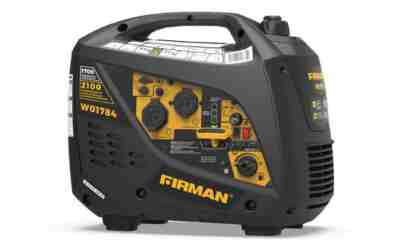
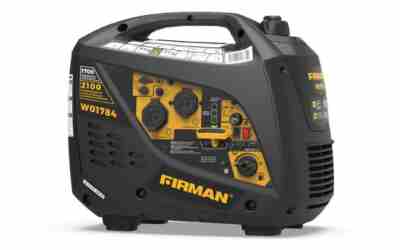
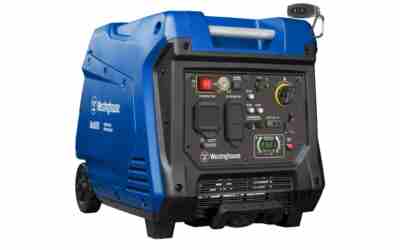
The Westinghouse iGen2800 is a compact inverter generator designed for homeowners facing power outages and outdoor enthusiasts like campers and tailgaters. With 2800 peak watts and 2200 running watts from its 4-stroke OHV engine, it handles essentials such as refrigerators, furnaces, and electronics while staying portable at just 46.3 pounds.
Standout features include ultra-quiet 52 dBA operation, quieter than normal conversation, and up to 12 hours of runtime on a 0.98-gallon tank in economy mode. It produces clean power below 3% THD to protect sensitive devices, and the LED data center shows fuel level, remaining time, voltage, and output. Parallel capability lets users combine two units for more power using a separate cord.
Build quality shines with a lightweight frame, built-in handle, and safety features like overload protection and low oil shutdown. The automatic throttle enhances fuel efficiency by matching engine speed to demand, making it reliable for both home backup and recreation.
Drawbacks include the small fuel capacity requiring occasional refills for extended outages and the need to buy a parallel cord separately. Factory testing may leave a faint initial odor.
Overall, the iGen2800 excels as a versatile, efficient choice for quiet, portable power needs, backed by a 3-year warranty and lifetime support. It delivers strong value for emergency and outdoor use.
Power Output: 2800 peak watts / 2200 running watts at <3% THD
Engine: 4-Stroke OHV Westinghouse
Runtime: Up to 12 hours on 0.98 gallon tank
Noise Level: 52 dBA
Weight: 46.3 lbs
Outlets: Two 120V 20A, two USB
Features: Parallel capable, economy mode, LED display, low oil shutdown
Pros
- Dual fuel capability reduces dependency on single fuel source
- Quiet operation suitable for residential and campground use
- Reliable recoil start and solid build quality noted in reviews
- Clean inverter power protects laptops and medical equipment
Cons
- Manual recoil start requires physical effort in cold weather
- Runtime limited to around 4 hours at 50% load on a full tank
- Propane mode delivers slightly lower peak output than gasoline
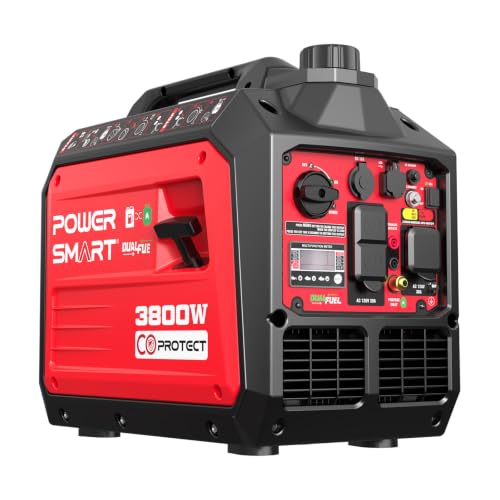
The PowerSmart 3800 Watt Dual Fuel Inverter Generator delivers portable power for home backup, camping, and tailgating. It runs on gasoline or propane and produces clean sine wave electricity suitable for electronics.
Users highlight easy starting, steady voltage output, and sufficient power for appliances, lights, and RV air conditioning. The CO safety sensor and overload protection add reliable safeguards during extended operation.
At 50.7 pounds with a compact footprint, the unit moves easily between locations. Noise levels remain acceptable for most outdoor settings while the parallel-ready feature allows capacity expansion when needed.
Drawbacks include the manual start mechanism and shorter runtime compared to larger stationary models. Overall it provides good value for users who need mid-range portable inverter power without excessive bulk.

Pros
- Clean sine wave output protects sensitive devices
- Parallel ready for higher power needs
- Compact and lighter than comparable generators
- Includes RV-ready outlet out of the box
Cons
- Recoil start only with no electric option
- Open frame design may produce more noise than enclosed models
- Rated output is 3500 watts despite 4000-watt peak
The WEN GN400iM is an open-frame inverter generator rated at 4000 surge watts and 3500 running watts. It produces clean power with total harmonic distortion under 1.2 percent at full load, making it suitable for laptops, phones, and other electronics.
This model targets campers, RV owners, and homeowners who need reliable portable backup power. The RV-ready TT-30R receptacle and parallel connection capability allow flexible use across different scenarios without additional adapters.
Key features include a 212cc 4-stroke engine, eco-mode for improved fuel efficiency, and automatic shutdown for low oil or overload conditions. The unit weighs less than standard generators in its class due to its optimized frame design.
Build quality focuses on essential protections and a two-year warranty. Drawbacks include manual recoil starting and an open-frame layout that does not enclose the engine for noise reduction.
Overall the GN400iM offers strong value for users prioritizing clean power, RV compatibility, and parallel options in a lightweight package.

Pros
- Lightweight and portable for camping or tailgating
- Pure sine wave output protects electronics
- Parallel ready for expanded power needs
Cons
- Gasoline only with no dual fuel option
- No electric start system included
- Limited runtime on a single tank
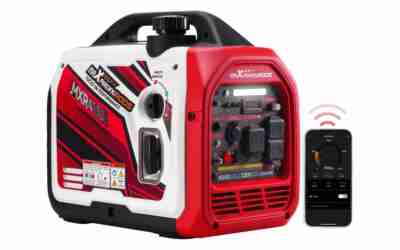
The Pulsar 2300W inverter generator provides portable power suitable for camping trips and outdoor events. Its compact design and low weight make it simple to carry and store.
Stable sine wave technology ensures safe operation of laptops, phones, and other sensitive devices. The included USB outlet adds convenience for charging small electronics directly.
Parallel capability allows users to link units for higher output when needed. Fuel efficiency supports up to 4.8 hours of runtime at half load.
Potential drawbacks include reliance on gasoline and the absence of an electric start. Overall this model offers solid performance for users seeking a lightweight inverter generator.

Pros
- High 11000W running output covers whole-home backup demands
- Tri-fuel flexibility with gasoline, LPG and natural gas
- Multiple start options including remote and recoil backup
- Built-in CO sensor and digital display improve safety and monitoring
- Generous 3-year warranty with lifetime technical support
Cons
- Heavy at 242.5 lbs, so moving it requires effort and planning
- Noise level and runtime figures are not published in the listing
- Large footprint needs significant storage and placement space
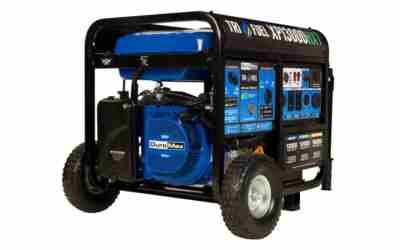
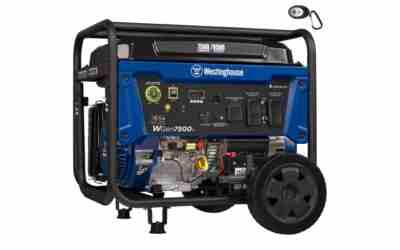
The GENMAX GM15000ET is a high-capacity tri-fuel generator delivering 11000 running watts and 15000 starting watts. It runs on gasoline, LPG or natural gas, which makes it a flexible choice for home backup, job sites and emergency preparedness.
It is aimed at homeowners who want to keep major appliances running during an outage, as well as contractors who need dependable power on site. The 120V/240V voltage transfer switch and 2-wire auto start function make it a good fit for setups that rely on automatic transfer or solar battery charging.
Standout features include a digital display for real-time operating data, a built-in CO sensor, a DC outlet, and an LED rope light that illuminates the panel at night. Starting is easy thanks to one-button electric start, a remote key and a recoil backup. The 10.56 gallon fuel tank supports long run periods for household needs.
Build quality is supported by 32 mm frame tubes intended for long-term durability, and the kit includes hoses, connectors, tools and a rain cover to get you running quickly. The main drawbacks are the weight of 242.5 lbs, the large footprint, and the lack of published noise and runtime figures.
Overall, the GM15000ET is a strong option for buyers who need serious power with fuel flexibility and modern safety features. Its 3-year warranty and lifetime technical support add confidence for long-term ownership.
Running watts: 11000W. Starting watts: 15000W. Fuel types: gasoline, LPG, natural gas. Tank size: 10.56 gallons. Frequency: 60 Hz. Voltage: 120V/240V. Starting: electric, remote and recoil. Weight: 242.5 lbs. Dimensions: 31.57 x 27.95 x 28.66 in. Warranty: 3 years.
Quick Picks for 2026
Best Overall: PowerSmart 3800 Watt Dual Fuel Inverter Generator Quiet Portable Gas Propane with CO Sensor RV Ready
This generator earns our top spot due to its exceptional dual-fuel flexibility, allowing seamless switching between gasoline and propane. With 3800 surge watts on gasoline and 3500 on propane, it offers significant power for various applications while maintaining a quiet 70dB operation. Its advanced inverter system ensures clean, stable power for sensitive electronics.
Skip this if: You primarily need a generator for extremely quiet environments, as its 70dB rating, while good, is not the absolute quietest available.
View on Amazon.comBest Value: Pulsar 2300W Portable Gas Inverter Generator with USB Outlet and Parallel Capability
The Pulsar 2300W offers an excellent balance of portability and power for budget-conscious buyers. With 2,300 peak watts and a compact suitcase design weighing less than 47 lbs, it’s highly convenient for camping and tailgating. It also provides stable sine wave technology, safe for charging laptops and cell phones. For more compact options, consider The 5 Best Portable Power Stations For Projector of 2026.
Skip this if: You require higher wattage for powering multiple large appliances simultaneously, as its 1,800 running watts might be insufficient.
View on Amazon.comBest for RV Use: WEN RV-Ready 4000-Watt Open Frame Inverter Generator GN400iM
The WEN GN400iM is specifically designed with RV enthusiasts in mind, featuring an RV-ready TT-30R receptacle. It delivers 4,000 surge watts and 3,500 rated watts, providing ample power for most RV needs. Its open-frame design is lighter than traditional 4000-watt generators, making it easier to transport for your adventures.
Skip this if: You prioritize extreme quietness over power output, as open-frame generators are typically louder than fully enclosed inverter models.
View on Amazon.comBuying Guide for 2026
Understanding Wattage and Power Needs
When selecting a portable generator, understanding the difference between surge watts (peak power) and running watts (continuous power) is crucial. Surge watts provide the extra boost needed to start motor-driven appliances, while running watts dictate what the generator can continuously power. For example, the PowerSmart 3800 offers 3800 surge watts and 3300 running watts on gasoline, which means it can handle the initial power spike of a refrigerator or air conditioner and then keep it running steadily.
To determine your needs, list all the appliances you plan to run simultaneously and sum their running wattages. Add the highest starting wattage of any single appliance to this total to get your required surge wattage. For instance, if you need to power a microwave (1500 running watts) and a few lights (500 running watts combined), you’d need at least 2000 running watts. If the microwave has a starting wattage of 3000, you’d need a generator with at least 3000 surge watts to avoid overloading.
Noise Levels and Portability
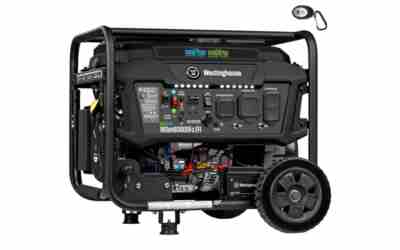
The noise output of a generator, measured in decibels (dBA), significantly impacts its usability, especially in camping or residential settings. Inverter generators are typically much quieter than conventional open-frame models. For instance, the Westinghouse iGen2800 operates as low as 52 dBA, which is comparable to a quiet conversation or the hum of a refrigerator. This makes it ideal for situations where minimizing noise pollution is a priority. Conversely, an open-frame generator like the WEN GN400iM, while powerful, will generally produce more noise.
Portability is also key for large portable generators. Factors like weight, dimensions, and the presence of wheels or handles contribute to how easily you can transport and set up your generator. The GENMAX GM15000ET 11000W Tri-Fuel Generator, for example, is a big-capacity unit, so look for wheels and handles that make it easier to move into position, and plan your setup spot before you head out.
Fuel Type and Run Time
Generators come with various fuel options, with gasoline and dual-fuel (gasoline and propane) being the most common for portable units. Dual-fuel models, like the PowerSmart 3800, offer greater versatility and can be more cost-effective if propane is readily available or preferred for longer storage. Propane also burns cleaner, which can extend engine life. Run time, or how long a generator can operate on a single tank of fuel, is another critical consideration. The Westinghouse iGen2800 boasts an impressive run time of up to 12 hours on a 0.98-gallon gas tank at 25% load, thanks to its efficient design and economy mode. This extended run time is crucial for overnight use or during prolonged power outages. Consider Fuel Types when making your decision.
Why Trust Our Reviews
Our comprehensive review process for large portable generators are rooted in a meticulous analysis of product specifications and aggregated user feedback. We delve into the technical details of each generator, examining wattage, engine size, fuel efficiency, noise levels, and safety features like CO sensors. This data-driven approach allows us to compare models objectively and identify their strengths and weaknesses based on verifiable metrics.
We synthesize thousands of consumer reviews and expert opinions to understand real-world performance and user satisfaction. By focusing on objective data and widespread user experiences, we ensure our recommendations are unbiased and reflect the practical utility and reliability of each generator, helping you make an informed decision without relying on anecdotal evidence or marketing claims.
Quick Comparison: Side by Side
- – Dual Fuel Flexibility.
- – Quiet Operation.
- – Reliable Recoil Start, Solid Build.
- – Exceptionally Quiet at 52dBA.
- – 12-Hour Runtime.
- – Lightweight & Portable.
- – Clean Sine Wave Output.
- – Parallel-Ready.
- – Compact, Lighter Than Rivals.
- – Lightweight, Great for Camping.
- – Pure Sine Wave Output.
- – Parallel-Ready.
- – High 11000W running output covers whole-home backup demands.
- – Tri-fuel flexibility with gasoline, LPG and natural gas.
- – Multiple start options including remote and recoil backup.
- – Manual Recoil Start, Harder in Cold.
- – ~4-Hour Runtime at 50% Load.
- – Lower Peak Output on Propane.
- – Small 0.98-Gallon Tank.
- – Parallel Cord Sold Separately.
- – Minor Oil/Fuel Odor on Arrival.
- – Recoil Start Only.
- – Open-Frame, Louder Design.
- – Rated 3500W (Peak 4000W).
- – Gasoline Only.
- – No Electric Start.
- – Limited Tank Runtime.
- – Heavy at 242.5 lbs, so moving it requires effort and planning.
- – Noise level and runtime figures are not published in the listing.
- – Large footprint needs significant storage and placement space.
Frequently Asked Questions
What makes an inverter generator “portable”?
An inverter generator is considered portable primarily due to its compact size, lighter weight, and often suitcase-like design, which contrasts with larger, heavier conventional generators. They are also typically quieter and more fuel-efficient, making them easier to transport and operate in various settings like camping, tailgating, or light home backup. Their ability to produce clean power also makes them safe for sensitive electronics.
Can I run sensitive electronics with large portable generators?
Yes, most modern large portable generators, especially inverter models, are designed to produce clean power with low Total Harmonic Distortion (THD), typically less than 3%. This pure sine wave output is safe for sensitive electronics such as smartphones, laptops, TVs, and medical devices like CPAP machines, preventing damage from power fluctuations. Always check the THD rating if you plan to power delicate equipment.
What’s the advantage of a dual-fuel large portable generators?
A dual-fuel large portable generators offers the flexibility to run on both gasoline and propane. This provides several advantages, including extended run times if one fuel source is depleted, easier fuel storage (propane has a longer shelf life), and potentially lower operating costs depending on fuel prices. Propane also burns cleaner, which can lead to reduced maintenance and a longer engine lifespan for your generator. For more on this, consider resources on Inverter generators.