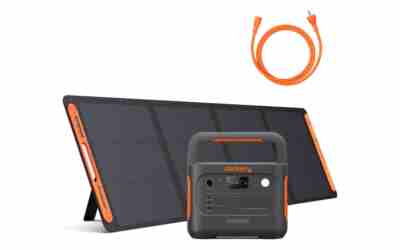
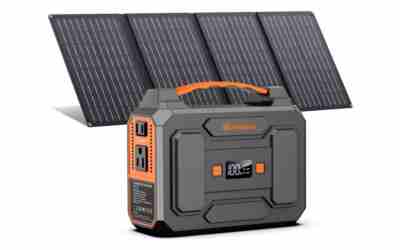
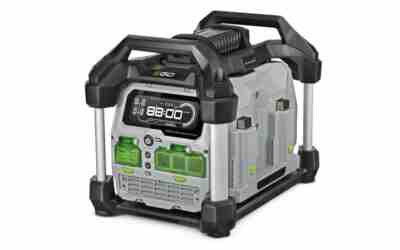
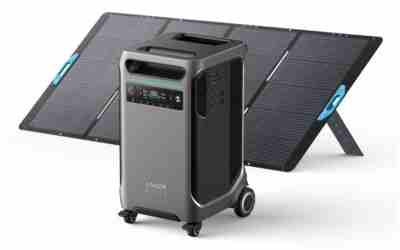
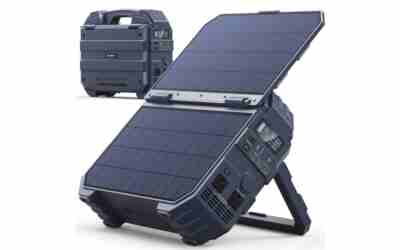
Our editorial team weighed ENGINSTAR's published specifications and how it stacks up against similar products in the generators category. What stands out: Pure Sine Wave, Quiet Power, 3-Way Charging, and Lightweight, Clear LCD. Where it falls short: 300W Device Limit and Solar Panel Sold Separately. That puts it at 8.1/10 on our WG Score – an excellent, well-rounded option.
 Reviewed bySarah Watts
When a power outage strikes, how much power do you actually need from a solar generator? For most households aiming to keep essential devices running during short blackouts, a portable solar generator with a capacity between 150Wh and 300Wh is often sufficient. These units can power small appliances, charge phones, and keep lights on, providing peace of mind without requiring a massive investment in a whole-home solution. For more comprehensive solar generator options, consider exploring the best LiFePO4 solar generators.
What to Know Before Choosing Solar Generators For Power Blackouts
What capacity and wattage are essential for basic blackouts?
For basic power blackouts, focusing on units with a capacity around 150Wh to 300Wh and a continuous output of at least 100W to 300W is a good starting point. This range allows you to power critical small devices like smartphones, laptops, LED lights, and even some medical equipment like CPAP machines. For instance, a 288Wh solar generator like the Anker SOLIX C300 DC can keep a 60W laptop charged for approximately 4.8 hours (288Wh / 60W), offering significant utility during an outage.
Consider the total wattage of the devices you plan to run simultaneously. While a higher capacity means longer runtimes, sufficient wattage ensures your appliances can actually operate. Products like the EnginStar R300, with its 300W output and 296Wh capacity, are well-suited for powering multiple smaller electronics or a single medium-power device, making them versatile for emergency use.
Are integrated solar panels a must-have, or is external better?
Whether integrated or external, solar panels are crucial for sustained power during extended blackouts, allowing you to recharge your generator without relying on grid power. Units that include a solar panel, like the MARBERO 155Wh Solar Generator with its 30W panel, offer an immediate, all-in-one solution for off-grid charging. These integrated kits simplify setup and ensure compatibility.
However, external solar panels often offer more flexibility in placement and can sometimes provide higher wattage for faster recharging. If a generator supports a higher wattage solar input than its included panel provides, investing in a separate, more powerful solar panel can significantly reduce recharge times. Always check the generator’s input specifications to ensure compatibility and maximize charging efficiency.
What battery type offers the best longevity for emergency use?
For solar generators intended for emergency use and long-term reliability, LiFePO4 (Lithium Iron Phosphate) batteries are often preferred. They offer significantly more charge cycles and a longer lifespan compared to traditional lithium-ion batteries. The Anker SOLIX C300 DC, for example, features a LiFePO4 battery with a 3-year guarantee, highlighting its durability and suitability for repeated use over many years.
While other battery types are still effective for occasional use, the enhanced safety, stability, and extended lifespan of LiFePO4 technology make it a superior choice for devices you expect to rely on during critical power outages. For more information on this battery type, check out our guide on the best LiFePO4 solar generators.

Pros
- Ultra-portable at 6.17 lbs with compact dimensions for easy travel
- Multiple recharge methods including fast USB-C, solar, and car
- Durable LiFePO4 battery with smart temperature control
- Zero noise operation ideal for camping
- App connectivity for convenient power management
Cons
- No wall charger included, requires separate USB-C PD purchase
- DC-only output with no AC inverter
- Solar input limited to 100W max and specific panel compatibility
The Anker SOLIX C300 DC is a lightweight portable power station designed for outdoor enthusiasts, campers, travelers, and those preparing for emergencies. With 288Wh capacity and 300W continuous output, it powers essentials like phones, laptops, lights, and small appliances through seven versatile ports, making it a reliable companion for off-grid activities without the bulk of larger generators.
Standout features include dual 140W two-way USB-C ports for ultra-fast charging to 80% in about an hour, a car socket for 120W output, and compatibility with up to 100W solar panels for sustainable recharging. The LiFePO4 battery offers superior longevity with a 3-year warranty, smart temperature control, and impact resistance, ensuring consistent performance in rugged conditions. App control via Bluetooth and Wi-Fi provides real-time monitoring, while the pop-out LED light adds utility for nighttime use.
Its build quality shines in the go-anywhere design: at 4.89 x 4.72 x 7.87 inches and 6.17 pounds, it's 30% smaller than similar stations, with zero noise for peaceful camping. Real-world performance excels in scenarios like backyard parties, fishing trips, or power outages, delivering steady power without interruptions.
Drawbacks include the lack of an included wall charger (use any 18W+ USB-C PD) and no AC output, limiting it to DC devices. Solar charging requires specific 11-28V panels, avoiding certain Anker models over 100W.
Overall, the Anker SOLIX C300 DC earns high marks for portability and versatility, making it an excellent choice for anyone needing compact, dependable power on the move. Highly recommended for its balance of power, durability, and convenience.
Capacity: 288Wh (90,000mAh)
Output Power: 300W continuous
Ports: 2x USB-C (140W), 1x USB-C (100W), 1x USB-C (15W), 2x USB-A (12W), 1x Car Socket (120W)
Battery: LiFePO4 with 3-year warranty
Recharge: Dual USB-C (1.5h to 100%), Solar (100W max), Car (120W)
Dimensions: 4.89 x 4.72 x 7.87 inches
Weight: 6.17 lbs
Connectivity: Bluetooth & Wi-Fi app control
Pros
- Pure sine wave ensures stable, quiet power for electronics
- Versatile 3-way charging keeps you powered on the go
- Lightweight and portable with clear LCD for easy monitoring
- Reliable for CPAP backup and small appliances per user reviews
- Long battery life supports multiple device charges
Cons
- Limited to 300W devices; not for microwaves or heaters
- Solar panel sold separately
- Cooling fan audible during heavy loads
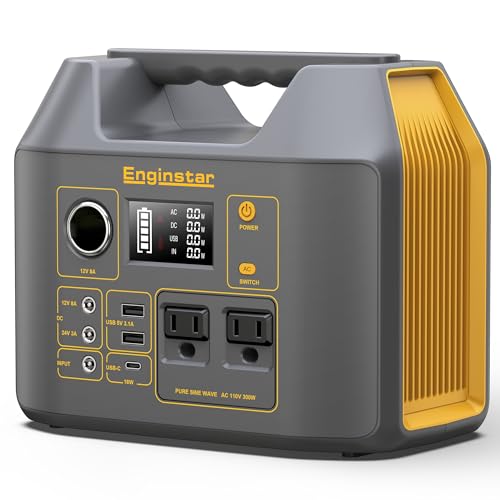
The EnginStar R300 is a compact 296Wh portable power station designed for campers, travelers, RV enthusiasts, and anyone needing reliable emergency backup. Weighing just 6.5 pounds with dimensions of 9 x 5.5 x 7.6 inches, it delivers 300W pure sine wave AC power alongside USB, USB-C, and DC outputs, making it perfect for running CPAP machines, charging laptops, phones, cameras, and small appliances like fans or mini fridges during outages or off-grid trips.
Standout features include its multipport setup for simultaneous charging and three recharging methods: wall outlet in about 7 hours, car charger on the road, or compatible solar panels for true off-grid use. Users praise its real-world performance, powering devices for hours—such as CPAP for 4+ hours or multiple lamps through an 8-hour outage—while the LCD screen provides clear input/output monitoring. Pure sine wave output ensures sensitive electronics run smoothly without damage, and protections against overloads and short circuits add peace of mind.
Build quality is solid for the price, with a durable housing, integrated LED light, and smooth port operation, though it's not fully rugged for extreme wet or dusty conditions without extra protection. Reviewers highlight its value as a UPS replacement and compare it favorably to pricier competitors for flexibility and display clarity.
Drawbacks include the 300W limit excluding high-draw items and the need for a separate solar panel purchase. Fan noise occurs under load, and full recharges take time.
Verdict: A top pick for portable power needs in camping, emergencies, or travel, offering excellent balance of capacity, portability, and safety for everyday off-grid reliability.
Capacity: 296Wh / 80000mAh Lithium-ion
AC Output: 300W / 110V Pure Sine Wave (2 outlets)
Other Outputs: DC 12V/8A, 24V/3A; USB 5V/3.1A (2); USB-C 18W
Weight: 6.5 lb | Dimensions: 9 x 5.5 x 7.6 in
Charging: Wall (7 hrs), Car, Solar (panel separate)
Operating Temp: -4°F to 113°F

Pros
- Highly portable and lightweight for outdoor use
- Versatile ports and passthrough charging handle phones, laptops, CPAP effectively
- Multiple recharging options including efficient solar panel
- Pure sine wave output protects sensitive devices
- Comprehensive display aids in monitoring performance
Cons
- 300W limit excludes high-draw appliances like microwaves
- Ports exposed, requiring protection in wet or dusty conditions
- Runtime around 4 hours for CPAP, not all-night without recharge
The ENGINSTAR R300 is a compact 300W portable solar generator paired with a 60W foldable monocrystalline solar panel, delivering 296Wh capacity from its lithium battery pack. Ideal for campers, RVers, van lifers, and home emergency backup, it powers phones, laptops, CPAP machines, radios, and small appliances safely via pure sine wave AC outlets.
Standout features include eight output ports for simultaneous charging, three input methods for quick recharges, and a high-efficiency solar panel that folds laptop-sized for easy carry. Users praise its real-world performance: running multiple lamps for 8 hours on minimal battery, supporting CPAP for 4 hours, or acting as a UPS replacement without interruptions. The LCD screen provides detailed input/output data, surpassing competitors in usability.
Build quality is solid with a 6.5-pound lightweight shell, smooth ports, and quiet operation under light loads, though the fan activates during heavy use. Safety systems prevent damage from overloads or shorts, and the battery endures 1000+ cycles. Drawbacks include vulnerability to weather exposure and power limits for intensive needs.
Overall, this power station excels as a reliable, versatile companion for off-grid adventures and outages, offering excellent value with its included solar panel and robust features.
Wattage: 300W (starting and running)
Capacity: 296Wh / 80000mAh
Ports: 2x 110V AC (pure sine wave), DC 12V/24V, USB-A (5V/3.1A), USB-C (18W)
Dimensions: 9.05 x 7.48 x 5.5 inches, 6.5 lbs
Charging: Solar (12-25V, panel included), AC wall, car 12V
Features: Digital display, short circuit protection, super quiet, USB ports
1x ENGINSTAR 300W Portable Power Station, 1x 60W Foldable Solar Panel, 1x AC Charger, 1x Car Charger Cable, 1x 10-in-1 Connector, 4x Hooks, 1x User Manual.

Pros
- Highly portable and compact for easy transport
- Multiple recharging options including solar, wall, and car
- Reliable emergency power as praised in user reviews for phones and small appliances
- Includes all essentials like adapters and manual out of the box
- Built-in protections for safety and longevity
Cons
- Solar charging slows without direct intense sunlight
- Runtime varies and limits high-wattage continuous use like fans for 4-6 hours
- Full recharge takes 5-7 hours depending on method
The MARBERO M155SL30 is a compact 155Wh solar generator kit paired with a 30W foldable panel, designed for anyone needing reliable backup power during home blackouts, camping trips, or RV adventures. It excels at powering essentials like phones, laptops, fans, and lights without the noise or bulk of traditional generators, making it perfect for urban dwellers facing outages or outdoor enthusiasts seeking off-grid convenience.
Standout features include two 100W AC outlets (150W peak), QC3.0 USB for rapid device charging, and multiple ports to run several gadgets at once. Users report strong real-world performance, such as keeping phones charged during disasters, powering hotspots and weather stations, or running small fans for hours. The efficient solar panel provides pass-through charging, and flexible recharge via wall, car, or sun keeps it ready anywhere.
Build quality shines with its lightweight 3.7 lb frame, durable ABS material, and intuitive LCD screen for monitoring power flow. The silent fan cooling system ensures quiet use, ideal for sleeping or focused work. Protections against overload, short circuits, and overvoltage add peace of mind.
Drawbacks include slower solar charging on cloudy days and limited runtime for power-hungry devices, requiring manual AC restart after low battery cutoffs. Still, its value as a portable lifesaver outweighs these for most users.
Verdict: A top pick for portable solar power needs, earning high marks for versatility and ease. Ideal if you want lightweight emergency readiness without complexity.
Capacity: 155Wh | AC Output: 2x 100W (150W peak) | USB: 1x QC3.0, 2x Standard | Solar Panel: 30W, 23% efficiency.
Recharge Time: Solar/Wall ~6-7 hours, Car ~7 hours | Weight: 3.7 lbs power station (5.4 lbs total) | Dimensions: 8.34 x 3.62 x 7.4 inches.
Features: Silent fan, LCD display, multiple protections, flashlight. Warranty: 12 months.

Pros
- Versatile outputs power phones, laptops, lights, and small appliances simultaneously
- Compact and lightweight design enhances mobility for outdoor activities
- Efficient solar panel with IP65 rating withstands dust and water exposure
- Three recharging options keep it ready for any scenario
- LED flashlight adds utility for camping or outages
Cons
- Limited to 100W continuous AC output, not ideal for high-power appliances
- 150Wh capacity suits light to moderate use, may require frequent recharges for extended needs
- Solar charging speed depends on sunlight, slower in cloudy conditions
The MARBERO M270SL30 solar generator kit pairs a 150Wh portable power station with a 30W foldable solar panel, making it perfect for campers, RVers, fishers, and anyone needing emergency backup power. This setup delivers reliable electricity off the grid, powering essentials like phones, laptops, fans, and lights during outages or outdoor trips.
Standout features include multiple outputs: two 110V AC ports at 100W continuous (150W peak), four DC ports, four USB ports with QC3.0 fast charging, and a built-in LED flashlight. The solar panel boasts over 23% efficiency and smart chip protection for optimal charging. Real-world performance shines in direct sunlight, fully recharging the station in hours, while AC wall or car options provide flexibility.
Design emphasizes portability with the power station at 2.9 lbs and 7.26 x 4.66 x 4.31 inches, and the panel folding to 8.34 x 11.96 x 1.18 inches at 2.18 lbs. IP65-rated panel resists water and dust, and comprehensive safety features like overcharge protection ensure durability. Build quality feels solid with ABS materials.
Drawbacks include the modest 150Wh capacity limiting runtime for power-hungry devices and solar-dependent charging varying with weather. Still, for its size, it excels.
Verdict: A top pick for lightweight, eco-friendly power needs. Ideal if you prioritize portability over heavy-duty capacity.
Power Station: 150Wh capacity, 100W continuous/150W peak AC, 2 AC/4 DC/4 USB outputs, 2.9 lbs, 7.26 x 4.66 x 4.31 inches.
Solar Panel: 30W, >23% efficiency, foldable IP65, 2.18 lbs, unfolds to 25.43 x 11.96 x 0.78 inches.
Recharge: AC 7hrs, solar/car compatible. Safety protections included. 12-month warranty.
Buying Guide for 2026
Understanding Watt-Hours (Wh) and Wattage (W)
When selecting a solar generator, two key specifications are Watt-hours (Wh) and Wattage (W). Watt-hours indicate the battery’s total energy storage capacity, essentially how long it can power devices. For example, a 296Wh generator could power a 50W device for nearly 6 hours (296Wh / 50W). Wattage, on the other hand, refers to the maximum power output the generator can provide at any given moment. This determines what devices you can run and how many simultaneously.
For power blackouts, consider the essential devices you’ll need to run. If you plan to power a laptop (typically 45-60W), a few LED lights (5-10W each), and charge phones (5-10W), a generator with around 250-300Wh capacity and a 300W output will offer a good balance. Always check the wattage requirements of your devices to ensure the generator can handle the load. For larger power needs, you might explore heavy-duty solar generators.
Portability and Design for Emergency Preparedness
The size and weight of your solar generator are critical, especially if you anticipate needing to move it frequently or if storage space is limited. Models like the MARBERO 155Wh, weighing only 3.7 lbs, are highly portable and easy to deploy quickly during an emergency. Compact designs not only make them easy to transport but also allow for discreet storage in homes or vehicles.
Beyond physical dimensions, look for user-friendly features like clear LCD displays that show remaining battery life and output status. Built-in LED lights can also be a significant advantage during a blackout, providing immediate illumination. Some designs, like the Anker SOLIX C300 DC, even offer options for attaching straps, enhancing their ‘go-anywhere’ capability.
Recharging Options and Efficiency
A versatile solar generator offers multiple ways to recharge, ensuring you can replenish power no matter the situation. Common recharging methods include wall outlets, car chargers, and, of course, solar panels. The efficiency of these methods can vary; for example, the Anker SOLIX C300 DC can fast charge to 80% in an hour using its dual PD 3.1 USB-C port, which is significantly faster than typical wall charging.
When using solar panels, look for high conversion efficiency. Panels with over 23% efficiency, such as those included with some MARBERO models, capture more sunlight, even on cloudy days, reducing the time needed to fully charge your generator. Having a solar panel included in the package, as with the ENGINSTAR 300W Portable Solar Generator, provides an immediate and sustainable recharging solution for prolonged blackouts.
Our Final Picks for 2026
Best Overall: Anker SOLIX C300 DC 288Wh Portable Power Station: 300W LiFePO4 Solar Generator for Camping, Travel & Emergencies
The Anker SOLIX C300 DC stands out with its robust 288Wh LiFePO4 battery, offering superior longevity and a 3-year guarantee. It delivers 300W of power, features seven versatile charging ports, including fast 140W USB-C ports, and boasts a compact design that’s 30% smaller than comparable units.
Skip this if: you need an integrated solar panel right out of the box, as it’s not included with this model.
View on Amazon.comBest Value: MARBERO 155Wh Solar Generator with 30W Panel – Portable Power Station 100W AC QC3.0 USB Ultra-Light Silent for Camping RV Blackouts
The MARBERO 155Wh offers an excellent balance of features and affordability, coming complete with a high-efficiency 30W solar panel. Weighing just 3.7 lbs, it’s incredibly portable, provides 100W (150W peak) AC output, and includes Quick Charge 3.0 USB ports for rapid device charging.
Skip this if: your power needs exceed 150W peak output or you require a significantly larger battery capacity.
View on Amazon.comBest for Extended Off-Grid Use: ENGINSTAR 300W Portable Solar Generator with 60W Foldable Panel, 296Wh Power Station for Camping RV Emergency Backup
This ENGINSTAR model is ideal for prolonged off-grid situations, providing a substantial 296Wh capacity and 300W pure sine wave AC output, along with a powerful 60W foldable solar panel for efficient recharging. Its comprehensive protection system ensures safety during extended use.
Skip this if: you prioritize ultra-compact size over a higher capacity and included solar charging capability.
View on Amazon.comWhy Trust Our Reviews
Our commitment to providing reliable recommendations for solar generators stems from a thorough analysis of product specifications, user feedback, and industry standards. We understand the critical role these devices play during power blackouts and emergencies, which is why we meticulously examine factors like battery capacity, output wattage, charging methods, and overall durability. Our goal is to equip you with accurate, unbiased information to make an informed decision for your specific needs.
Frequently Asked Questions
How long can a solar generator power my essential devices during a blackout?
The runtime of a solar generator depends on its battery capacity (Wh) and the wattage of the devices you’re powering. For example, a 150Wh generator running a 10W LED light could last for approximately 15 hours. If you’re powering multiple devices, sum their wattages to estimate total consumption. Generators with higher Wh ratings, like the 296Wh and 288Wh models reviewed, will naturally provide longer runtimes for a given load.
Can I use a solar generator indoors?
Yes, solar generators are safe to use indoors because they do not produce harmful fumes like gasoline generators. They operate silently and are ideal for powering indoor electronics, lights, and small appliances during a power outage. For more options suitable for indoor use, consider exploring the best indoor solar generators.
What maintenance is required for a solar generator?
Solar generators typically require minimal maintenance. It’s recommended to fully charge the unit every 3-6 months if not in regular use to preserve battery health. Keep the ports clean and ensure proper ventilation during operation. Store the generator in a cool, dry place away from direct sunlight and extreme temperatures to maximize its lifespan.
Quick Comparison: Side by Side
- – Ultra-Portable at 6.17 lbs.
- – Multiple Recharge Methods.
- – Durable LiFePO4, Smart Temp Control.
- – Pure Sine Wave, Quiet Power.
- – 3-Way Charging.
- – Lightweight, Clear LCD.
- – Highly Portable & Lightweight.
- – Versatile Ports, Pass-Through Charging.
- – Efficient Solar Recharging.
- – Highly Portable & Compact.
- – Multiple Recharging Options.
- – Reliable Emergency Power.
- – Versatile Simultaneous Outputs.
- – Compact & Lightweight.
- – IP65-Rated Solar Panel.
- – No Wall Charger Included.
- – DC-Only, No AC Inverter.
- – 100W Max Solar Input.
- – 300W Device Limit.
- – Solar Panel Sold Separately.
- – Audible Fan Under Heavy Load.
- – 300W Output Limit.
- – Ports Exposed, Needs Protection.
- – ~4h CPAP Runtime, Not All-Night.
- – Solar Needs Direct Sunlight.
- – Limited High-Wattage Runtime (4-6h).
- – 5-7 Hour Full Recharge.
- – 100W Continuous Limit.
- – Modest 150Wh Capacity.
- – Slower in Cloudy Conditions.