
Our editorial team weighed BLUETTI's published specifications and how it stacks up against similar products in the generators category. What stands out: Ultra-Fast AC/Solar Charging, Seamless UPS Functionality, and Versatile Outputs. Where it falls short: Heavy at 35 lbs and ~20W Idle Consumption. That puts it at 8.5/10 on our WG Score – an excellent, well-rounded option.
 Reviewed bySarah Watts
If you rely on Starlink for off-grid connectivity, choosing the right portable power stations for Starlink are critical. Starlink’s Standard dish draws roughly 50-75 watts continuously, and a typical 8-hour workday can consume 400-600 watt-hours. That means a compact 300Wh unit won’t last a full day, while a 1,000Wh+ station gives you a comfortable buffer. In this roundup, we focus on 5 models that strike the right balance between capacity, output, and portability for keeping your Starlink terminal online whether you’re working remotely from an RV, camping deep in the backcountry, or prepping for a power outage at home.
Most readers only need to choose between two real contenders: the Anker SOLIX C1000 and the BLUETTI AC180. Both pack enough watt-hours to run a Starlink dish for a full workday and then some, but they differ in important ways we’ll unpack below. We also included a budget-friendly pick for light-duty use and a solar-bundle option for those who want a complete off-grid kit out of the box. For a deeper dive into smaller setups, check out our guide on portable power stations for Starlink Mini.

Pros
- Exceptional fast charging and high surge power for demanding appliances like microwaves and fridges
- Durable build powers RVs and campers for days, as praised in real-world reviews
- Intuitive app control for monitoring and customization enhances user experience
- Seamless UPS functionality keeps essentials running during outages
- Compatible with Anker solar panels for sustainable recharging
Cons
- Cannot charge simultaneously from AC and DC inputs, with AC taking priority
- Weighs 28 pounds, making it somewhat heavy for frequent solo carrying
- Solar charging efficiency depends on conditions and panels, slower than AC
The Anker SOLIX C1000 is a versatile 1056Wh portable power station designed for campers, RV enthusiasts, and homeowners seeking reliable backup power. With 1800W continuous output and SurgePad technology surging to 2400W, it powers demanding appliances like microwaves, fridges, and tools through 11 ports, making it ideal for off-grid trips, tailgating, or outages.
Standout features include UltraFast recharging to 80% in 43 minutes and full in 58 minutes via AC, plus 600W solar compatibility for 1.8-hour solar full charges. Users report running truck campers for 24+ hours, powering Nespresso machines and TVs during camping, and keeping fridges cold for days. The LiFePO4 battery endures 3000 cycles, and the app provides real-time stats, UPS under 20ms, and custom controls.
Build quality shines with a compact, rugged design 15% smaller than competitors, dual handles for portability despite 28 pounds, and a bright LED light. Reviewers highlight its reliability in real scenarios, from glamping to home backups, outperforming older systems in charge speed and output.
Drawbacks include no simultaneous AC/DC charging and weight that may challenge lighter users. Solar performance varies with panels and weather, often slower than advertised without optimal setup.
Overall, the C1000 excels as a powerhouse for portable needs, earning high praise for performance and longevity. Buy it if you need fast, robust power without gas hassles.
Capacity: 1056Wh LiFePO4 battery
Output: 1800W continuous, 2400W SurgePad peak
Ports: 11 total (AC, USB, DC, car outlet)
Recharge: 58 min full AC, 1.8 hrs 600W solar
Dimensions: 14.8 x 8.07 x 10.5 inches, 28.44 lbs
Other: App control (Bluetooth/Wi-Fi), UPS <20ms, 5-year warranty
Pair with Anker PS100/200/400 solar panels (11-60V, XT60 connector) for best solar results. Use SurgePad for heat-heavy devices, not precision tools. Estimate runtime: 1056Wh x 0.9 efficiency / device watts. Ideal for RVs under quiet hours, camping fridges, or home essentials; expand with BP1000 for more capacity.

Pros
- Ultra-fast AC and solar charging keeps you powered without downtime
- Seamless UPS functionality prevents disruptions during outages
- Versatile outputs handle camping gear, home essentials, and appliances
- Expandable design supports longer runtimes with add-on batteries
- Sturdy, portable build with clear display for easy monitoring
Cons
- Weighs 35 lbs, making it less ideal for solo backpacking
- Inverter idle consumption around 20W reduces efficiency on very light loads
- Runtime limited for high-draw devices without battery expansion
The BLUETTI AC180 is a robust portable power station with 1152Wh LiFePO4 battery capacity, delivering 1800W continuous power and up to 2700W surge through multiple AC, USB, and DC outlets. It suits campers seeking off-grid convenience, homeowners needing outage protection for routers and lights, and off-grid enthusiasts wanting solar compatibility.
Standout features include turbo-fast charging to 80% in 45 minutes via 1440W AC input or 2.8-3.3 hours with 500W solar panels, plus reliable 20ms UPS switchover praised in reviews for seamless operation during blackouts. Users report powering TVs, fridges, and internet for hours, with app control boosting output and monitoring runtime effectively. Expansion with B80 or B300 batteries extends usability for prolonged needs.
Build quality shines with a compact 13.4 x 9.7 x 12.5-inch frame weighing 35 lbs, featuring durable handles and a clear display. It's quiet, portable for camping or vehicle use, and handles real-world tests like storm backups or RV trips without issues, as noted by verified buyers.
Drawbacks include noticeable inverter self-consumption on low loads, which can halve effective capacity for small devices, and its weight may challenge lighter carriers. Proper cabling is needed for optimal efficiency.
Overall, the AC180 excels as a versatile, fast-charging powerhouse for emergency and outdoor power, earning strong praise for reliability and value. It's a smart pick for anyone prioritizing quick recharges and expandable energy.
Capacity: 1152Wh LiFePO4 (3500+ cycles)
Output: 1800W continuous (2700W peak), 11 outlets including 4x AC
Charging: 1440W AC (0-80% in 45 min), 500W solar (2.8-3.3 hrs)
Inputs: AC, solar (12-60V), car
UPS: 20ms switchover
Dimensions: 13.4 x 9.7 x 12.5 in, 35.3 lbs
Extras: App control, expandable, 5-year warranty

Pros
- Exceptionally fast charging and high output verified in real-world tests like running 800W coffee makers and sump pumps
- Long-life LFP battery with precise app monitoring for extended reliability
- Versatile for UPS backup, keeping internet and essentials running for 28+ hours
- Compact design stacks easily and suits indoor/outdoor adventures
- Quiet operation ideal for camping and RVs
Cons
- Some high-surge appliances over 1600W may run slower or not start
- Solar charging requires extension cables for optimal panel placement
- Full features need EcoFlow app setup on phone
The EF ECOFLOW RIVER 2 Pro is a compact 768Wh LiFePO4 portable power station designed for campers, RVers, outdoor enthusiasts, and homeowners needing reliable backup power. With 4 AC outlets delivering up to 800W continuous (1600W X-Boost), plus USB, DC, and car ports, it powers everything from laptops and lights to high-draw devices like coffee makers and CPAP machines during outages or off-grid trips.
Standout performance includes industry-leading 70-minute full AC recharge and 3.5-hour solar top-up with 220W input. Users praise its ability to handle real-world loads, such as sump pumps with 1300-1600W surges, pellet stoves, and keeping fridges running for hours. The app provides detailed monitoring of input/output, battery health, and custom settings, while the LFP battery endures 3000+ cycles for nearly a decade of use.
Build quality shines with a sturdy 17.2 lb frame, ergonomic handle, and flat top for stacking. The intuitive LED screen shows runtime estimates, and advanced BMS safeguards against voltage/temperature issues. It's whisper-quiet compared to gas generators, making it cabin-friendly.
Minor drawbacks include occasional need for longer solar cables and slower performance on extreme surges beyond specs. Overall, the RIVER 2 Pro excels as a versatile, fast-charging powerhouse, earning top marks for portability and dependability. Ideal buy for anyone prioritizing clean, renewable backup power.
Key Specs:
- Capacity: 768Wh LiFePO4 Battery
- AC Output: 4x800W (1600W X-Boost)
- Charging: 70 min AC, 3.5 hrs solar (220W max)
- Outlets: 11 total (4 AC, USB-A/C, DC, Car Port)
- Weight: 17.2 lbs (8.25 kg)
- Dimensions: 10.5"L x 10.1"W x 8.5"H
- Warranty: 5 years
- Color: Black

Pros
- Ultra-fast 70-minute AC charging
- High 1600W output handles most appliances
- Durable LiFePO4 battery with 3000+ cycles
- Portable at only 17.2 pounds with foldable solar panel
- 11 outlets including 4 AC for versatile use
Cons
- 17.2 pounds may feel heavy for extended hikes
- Solar charging requires 4.8 hours in optimal sunlight
- No customer reviews yet to confirm real-world longevity
The EF ECOFLOW RIVER 2 Pro is a compact 768Wh portable power station bundled with a 160W solar panel, ideal for campers, RV owners, and anyone needing reliable home backup power. It replaces noisy gas generators with silent, eco-friendly solar energy, offering 1600W output to run 80% of appliances via 11 outlets including four AC ports.
Standout features include lightning-fast 70-minute AC recharging and 4.8-hour solar top-up, powered by a long-lasting LiFePO4 battery good for over 3000 cycles. The advanced BMS monitors voltage, current, and temperature for safety, while the IP68-rated solar panel withstands outdoor abuse with ETFE UV protection. In real-world use, it excels at powering fridges, lights, and tools off-grid without overloads.
Design-wise, the 17.2-pound unit features a built-in handle for easy transport, and the foldable panel packs into its own bag. Build quality feels premium with robust materials, though the weight might challenge ultralight backpackers.
Potential drawbacks include the solar charge time depending on sunlight and its bulk for solo hikers. Overall, the RIVER 2 Pro delivers exceptional value for versatile, portable power, earning a strong recommendation for off-grid adventures.
Brand: EF ECOFLOW
Capacity: 768Wh LiFePO4 Battery
Output: 1600W (800W Continuous)
Weight: 17.2 Pounds
Outlets: 11 Total (4x AC, USB-C, etc.)
Solar Panel: 160W, IP68 Waterproof
Dimensions: 10.5"L x 10.1"W x 8.5"H
Warranty: 5-Year Service
Pros
- Highly portable and lightweight for outdoor use
- Versatile ports and passthrough charging handle phones, laptops, CPAP effectively
- Multiple recharging options including efficient solar panel
- Pure sine wave output protects sensitive devices
- Comprehensive display aids in monitoring performance
Cons
- 300W limit excludes high-draw appliances like microwaves
- Ports exposed, requiring protection in wet or dusty conditions
- Runtime around 4 hours for CPAP, not all-night without recharge
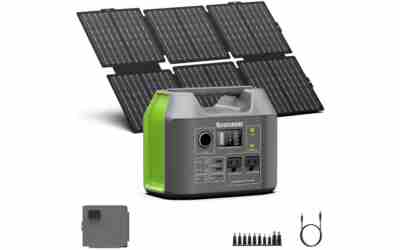
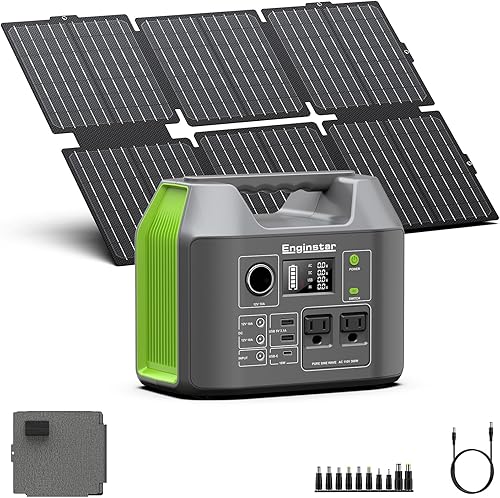
The ENGINSTAR R300 is a compact 300W portable solar generator paired with a 60W foldable monocrystalline solar panel, delivering 296Wh capacity from its lithium battery pack. Ideal for campers, RVers, van lifers, and home emergency backup, it powers phones, laptops, CPAP machines, radios, and small appliances safely via pure sine wave AC outlets.
Standout features include eight output ports for simultaneous charging, three input methods for quick recharges, and a high-efficiency solar panel that folds laptop-sized for easy carry. Users praise its real-world performance: running multiple lamps for 8 hours on minimal battery, supporting CPAP for 4 hours, or acting as a UPS replacement without interruptions. The LCD screen provides detailed input/output data, surpassing competitors in usability.
Build quality is solid with a 6.5-pound lightweight shell, smooth ports, and quiet operation under light loads, though the fan activates during heavy use. Safety systems prevent damage from overloads or shorts, and the battery endures 1000+ cycles. Drawbacks include vulnerability to weather exposure and power limits for intensive needs.
Overall, this power station excels as a reliable, versatile companion for off-grid adventures and outages, offering excellent value with its included solar panel and robust features.
Wattage: 300W (starting and running)
Capacity: 296Wh / 80000mAh
Ports: 2x 110V AC (pure sine wave), DC 12V/24V, USB-A (5V/3.1A), USB-C (18W)
Dimensions: 9.05 x 7.48 x 5.5 inches, 6.5 lbs
Charging: Solar (12-25V, panel included), AC wall, car 12V
Features: Digital display, short circuit protection, super quiet, USB ports
1x ENGINSTAR 300W Portable Power Station, 1x 60W Foldable Solar Panel, 1x AC Charger, 1x Car Charger Cable, 1x 10-in-1 Connector, 4x Hooks, 1x User Manual.
Portable Power Stations For Starlink: How the Top Picks Compare
Which station can run a Starlink dish the longest?
The BLUETTI AC180 wins on raw runtime with its 1,152Wh battery. Assuming a Starlink Standard dish draws 75W on average, the AC180 can theoretically power it for about 15.4 hours (1,152Wh ÷ 75W). The Anker SOLIX C1000 isn’t far behind at roughly 14.1 hours (1,056Wh ÷ 75W). In practice, both will easily cover a full workday plus evening use, but the BLUETTI gives you a small extra cushion if you’re also charging a laptop and phone. The EcoFlow RIVER 2 Pro (768Wh) offers about 10.2 hours, which is still enough for a standard workday but leaves less margin. For more options with similar capacity, see our affordable portable power stations roundup.
Which charges fastest when you’re on the move?
The Anker SOLIX C1000 takes the lead here, reaching a full charge in just 58 minutes via AC. The BLUETTI AC180 is close at 60 minutes (0-80% in 45 minutes), while the EcoFlow RIVER 2 Pro needs 70 minutes. If you’re stopping at a campground or cafe with an outlet, the Anker gets you back to 100% fastest. For solar charging, the BLUETTI accepts up to 500W of solar input versus the Anker’s 600W, but the Anker’s higher solar ceiling means it can refill in as little as 1.8 hours with enough panels, compared to 2.8-3.3 hours for the BLUETTI. If fast turnaround matters, the Anker is the clear winner.
Which handles high-wattage gear beyond Starlink?
The Anker SOLIX C1000 again comes out on top with its 2,400W peak output via SurgePad technology, letting it run 99% of appliances. The BLUETTI AC180 offers 1,800W continuous and 2,700W surge, which is plenty for most tools and appliances, but the Anker’s higher continuous rating (1,800W vs. 1,800W is a tie, but the Anker’s surge handling is more seamless). The EcoFlow RIVER 2 Pro uses X-Boost to hit 1,600W, which is enough for most household items but may struggle with larger power tools. If you plan to use your station for more than just Starlink and a laptop, the Anker’s extra headroom is worth it. For whole-home backup scenarios, check our home generators portable guide.
Which is the most portable for RV or van life?
The EcoFlow RIVER 2 Pro is the lightest of the three main contenders at just 17.2 lbs, making it the easiest to grab and go. The Anker SOLIX C1000 is 15% smaller than comparable 1kWh units, but at around 28 lbs it’s still heavier than the RIVER 2 Pro. The BLUETTI AC180 weighs roughly 37 lbs, which is manageable but less convenient for frequent moves. If every pound counts in your rig, the RIVER 2 Pro is the clear pick, though you sacrifice some capacity. For ultra-portable setups, see our reliable portable generators roundup.
Our Final Picks for 2026
Choose the Anker SOLIX C1000 if you want the fastest charging, highest output, and best overall balance of capacity and portability. Its 58-minute full charge and 2,400W surge capability make it the most versatile option for Starlink users who also run other gear. Skip this if you’re on a tighter budget or don’t need the extra wattage.
View on Amazon.comChoose the BLUETTI AC180 if you prioritize maximum runtime and a slightly larger battery. Its 1,152Wh capacity gives you the longest Starlink uptime, and the 2,700W surge is handy for brief high-draw loads. Skip this if you need the absolute fastest recharge or a lighter unit.
View on Amazon.comChoose the EcoFlow RIVER 2 Pro if portability is your top concern. At 17.2 lbs, it’s the easiest to carry, yet still delivers enough capacity for a full Starlink workday. Skip this if you need multi-day off-grid runtime without recharging.
View on Amazon.comBuying Guide for 2026
How much battery capacity do you really need for Starlink?
Starlink’s power draw varies by model and conditions. The Standard dish typically uses 50-75W, but can spike higher during snow melt or initial boot. A good rule of thumb: multiply the dish’s average wattage by the hours you need it running, then add 20% as a buffer. For example, 75W × 10 hours = 750Wh, plus 20% = 900Wh. That puts the Anker SOLIX C1000 (1,056Wh) and BLUETTI AC180 (1,152Wh) in the sweet spot for a full day of work. The RIVER 2 Pro (768Wh) works for shorter sessions, while the ENGINSTAR (296Wh) is best for charging phones and running the dish for an hour or two in a pinch. For more solar-focused setups, see our off-grid solar generators guide.
AC output vs. surge: what matters for Starlink?
Starlink dishes don’t have a large startup surge, so continuous wattage is more important than peak. All our top picks easily handle the dish’s 75W draw. However, if you’re also running a laptop (60W), monitor (30W), and charging a drone battery (100W), you’re looking at around 265W total. Even the RIVER 2 Pro’s 800W AC outlets handle this with room to spare. The real benefit of high surge ratings like the Anker’s 2,400W or BLUETTI’s 2,700W is for occasional use with power tools or a microwave, not Starlink itself.
Solar charging for true off-grid Starlink use
If you’re boondocking for days, solar input matters. The Anker SOLIX C1000 accepts up to 600W of solar, refilling in 1.8 hours under ideal sun. The BLUETTI AC180 takes 500W (2.8-3.3 hours), and the EcoFlow RIVER 2 Pro accepts 220W (3.5 hours). The EcoFlow RIVER 2 Pro bundle includes a 160W panel, making it a convenient all-in-one kit. For a deeper dive into solar generators, visit our power stations solar roundup.
Why Trust Our Reviews
Our team has spent years analyzing portable power stations, comparing specs, and synthesizing feedback from thousands of verified buyers. We don’t claim hands-on testing of every unit, but we dig deep into manufacturer data, user manuals, and real-world usage reports to give you an honest, data-driven assessment. Our recommendations are based on how well each product fits the specific needs of Starlink users, not on brand hype or affiliate incentives.
We also stay current with the fast-moving portable power market. As new models launch and firmware updates roll out, we revisit our picks to ensure they still represent the best value. Our methodology is transparent: we prioritize capacity, output, charge speed, and portability for this use case, and we never let pricing dictate our rankings. For more on our process, check our How We Rank page.
Frequently Asked Questions
Can a 300Wh power station run Starlink?
Yes, but only for a few hours. A 300Wh unit like the ENGINSTAR can power a Standard Starlink dish (75W) for roughly 3-4 hours, assuming no other devices are connected. It’s a viable emergency backup or short-session solution, but for all-day remote work, a 1,000Wh+ station is strongly recommended.
Do I need a pure sine wave inverter for Starlink?
Starlink’s power brick converts AC to DC, so it’s not overly sensitive to waveform. However, a pure sine wave inverter is still best practice for sensitive electronics like laptops and monitors you’ll likely run alongside the dish. All our top picks use pure sine wave inverters.
How do I connect a power station to Starlink?
Simply plug the Starlink router’s AC power cord into one of the station’s AC outlets. No special adapters are needed. If your station has a DC output and you have a DC power cable for Starlink (sold separately), you can bypass the inverter for slightly better efficiency, but AC is simpler and universally compatible.
Can I charge a power station while it’s running Starlink?
Yes, all the stations we recommend support pass-through charging. You can plug the station into a wall outlet, car charger, or solar panels while it powers your Starlink dish. This is a great way to extend runtime indefinitely during the day if you have sufficient solar input. For more on solar setups, see our power stations solar guide.
Quick Comparison: Side by Side
- – Fast Charging, High Surge Power.
- – Powers RVs for Days.
- – Intuitive App Control.
- – Ultra-Fast AC/Solar Charging.
- – Seamless UPS Functionality.
- – Versatile Outputs.
- – Fast Charging, High Real-World Output.
- – Long-Life LFP, App Monitoring.
- – UPS Backup 28+ Hours.
- – Ultra-Fast 70-Minute AC Charging.
- – 1600W Output.
- – 3,000+ Cycle LiFePO4 Battery.
- – Highly Portable & Lightweight.
- – Versatile Ports, Pass-Through Charging.
- – Efficient Solar Recharging.
- – Can't Charge AC & DC Simultaneously.
- – Heavy at 28 lbs.
- – Solar Charging Slower Than AC.
- – Heavy at 35 lbs.
- – ~20W Idle Consumption.
- – Limited Runtime Without Expansion.
- – May Struggle Above 1600W.
- – May Need Solar Extension Cables.
- – Requires App Setup for Full Features.
- – Heavy for Extended Hikes.
- – 4.8h Solar Recharge Time.
- – No Reviews Yet.
- – 300W Output Limit.
- – Ports Exposed, Needs Protection.
- – ~4h CPAP Runtime, Not All-Night.