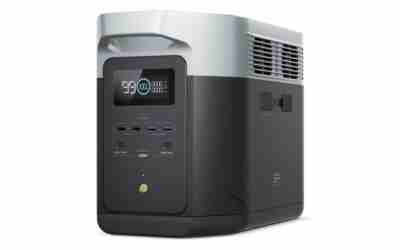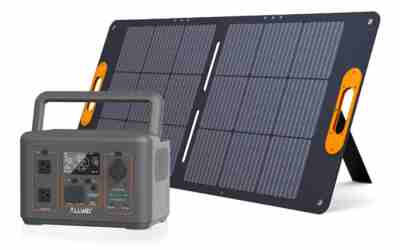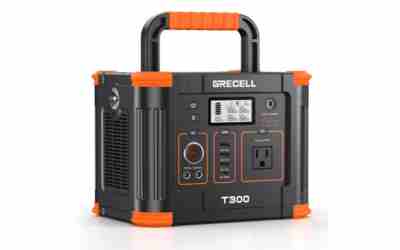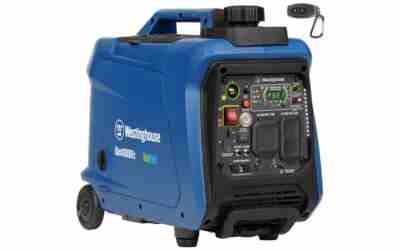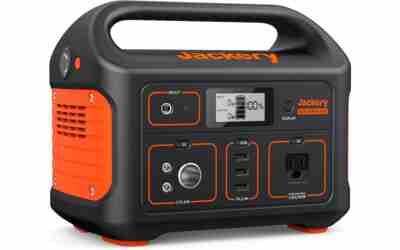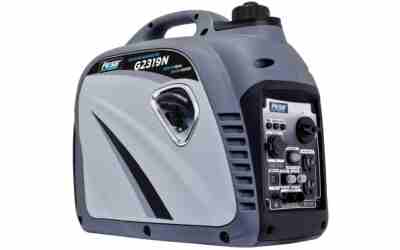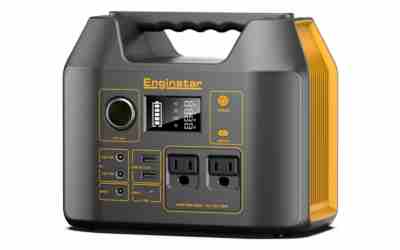

Our editorial team weighed 's published specifications and how it stacks up against similar products in the generators category. What stands out: Expandable 2kWh to 24kWh, Fast Charging, 6x200W Solar, and 10-Year Battery Lifespan. Where it falls short: Solar Panels Sold Separately and Heavier at Large Capacity. That puts it at 8.5/10 on our WG Score – an excellent, well-rounded option.
 Reviewed byDaniel
We researched and analyzed specs, user reviews, and publicly available data from across the web to bring you this guide. If you purchase through our links, we may earn a commission at no extra cost to you.
A portable power station is one of the most versatile pieces of gear you can own. Whether you are camping off-grid, preparing for a blackout, working remotely, or running tools at a job site, these battery-powered units deliver clean, silent electricity wherever you need it – no gasoline, no fumes, no noise ordinance violations.
After evaluating dozens of models based on capacity, output power, charging speed, portability, battery chemistry, and value, we selected the best portable power stations for every type of user and budget.
The best portable power station for most people is the Anker Solix C1000. It delivers 1,056 Wh of capacity and 1,800W of output in a 28.7 lb package – light enough to carry in one hand, powerful enough to run the full range of everyday needs, and fast enough to charge from empty in about an hour and a half. For campers who need serious multi-day runtime, the Jackery Explorer 2000 v2 is our pick – 2,042 Wh, 2,200W output, and the lightest 2kWh unit available at 38.9 lbs. If home backup is your priority, nothing at this price touches the EcoFlow Delta Pro 3. And for buyers on a budget, the Bluetti AC70 delivers genuine LiFePO4 quality at a budget-friendly price.
Pros
- Ultra-compact and lightweight at 39.5 lbs thanks to EV-inspired CTB tech
- Lightning-fast charging options including app-controlled super mode
- Whisper-quiet and eco-friendly alternative to gas generators
- Certified UPS for reliable home backup during storms
- Durable LiFePO4 battery with 10-year lifespan
Cons
- Not expandable with extra batteries like some larger models
- Solar panels ship separately and require specific connectors
- Cannot charge electric vehicles
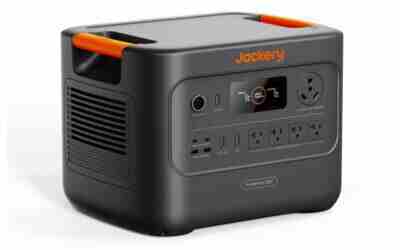
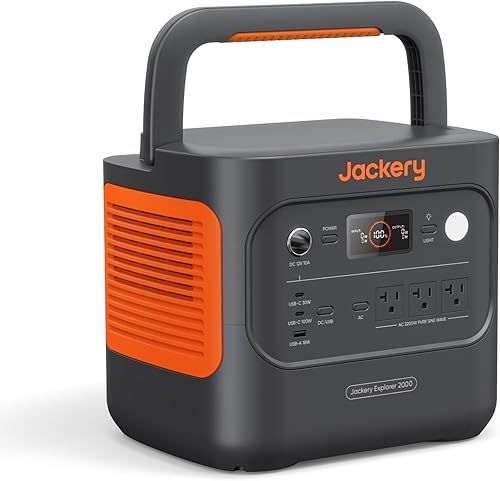
The Jackery Explorer 2000 v2 is a portable power station designed for home backup, camping, road trips, and outdoor activities. With a 2042Wh LiFePO4 battery and 2200W output, it powers household appliances like refrigerators, microwaves, and coffee makers, making it ideal for anyone preparing for power outages, emergencies, or off-grid adventures.
Standout features include ultra-fast charging to 80% in 66 minutes via AC, solar compatibility up to 400W, and a 20ms UPS switch for uninterrupted power. In real-world use, it runs a 520W refrigerator for 3.2 hours or charges laptops 24 times, while silent mode at under 30dB ensures it works without disturbance during sleep or work.
Build quality shines with CTB (Cell-to-Body) technology borrowed from EVs, making it the smallest and lightest 2kWh unit at 39.5 lbs and 13.2 x 10.4 x 11.5 inches. The rugged design supports indoor and outdoor use with smart temperature control for safety and longevity up to 10 years.
Potential drawbacks include no expandability, separate shipping for solar panels, and inability to charge EVs. It also lacks reviews as a new release, so long-term user feedback is pending.
Overall, the Explorer 2000 v2 delivers exceptional value for portable, reliable power. Buy it if you need a compact, quiet generator that outperforms bulky alternatives for everyday emergencies and adventures.
Capacity: 2042Wh LiFePO4 Battery
Output: 2200W (3 AC ports, USB-C PD 100W)
Weight: 39.5 lbs
Dimensions: 13.2"L x 10.4"W x 11.5"H
Charge Time: 1.7 hours AC (0-100%), 6 hours solar (400W)
Special Features: CTB Technology, UPS (20ms), Silent Mode (<30dB)
Warranty: 5 years

Pros
- Exceptional app for intuitive setup, monitoring, and energy management
- Reliable runtime for critical devices like oxygen concentrators and heat presses
- Rugged build with wheels and handle for portability despite weight
- Outstanding customer service with proactive support
- Fast solar compatibility keeps power flowing off-grid
Cons
- Heavy at 99 pounds, challenging to move without wheels
- No built-in dust/water covers for outlets
- Occasional reports of charging errors requiring support
The EcoFlow DELTA Pro 3600Wh is a high-capacity portable power station designed for demanding users needing robust backup power for home outages, RV camping, off-grid living, or professional mobile setups. With its LiFePO4 battery chemistry, it offers long-lasting safety and up to 4000 cycles of life, making it suitable for both residential and commercial applications where reliability is key.
Standout features include a 3600W AC output expandable to 4500W via X-Boost, powering heavy-duty appliances like refrigerators, tools, or medical equipment without issue. Users praise its real-world performance, such as running heat presses at markets or oxygen concentrators for over 10 hours on a single charge. Fast X-Stream charging refills it in 2.7 hours from a wall outlet, or via solar in under 3 hours with 1600W input, while the intuitive app provides remote monitoring and customization for optimal energy use.
Build quality is solid with a rugged ABS exterior, collapsible handle, and wheels for maneuverability, though its 99-pound weight demands two people for initial transport. Multiple ports including five AC outlets, USB-C 100W, and Anderson ensure versatility, and quiet fanless operation suits indoor emergencies.
Drawbacks include the heft making solo repositioning tough and lack of outlet covers for dusty environments. Rare firmware or overload issues have been noted but resolved via support.
Overall, the DELTA Pro delivers exceptional value for power-intensive needs, earning high marks for performance and support. It's a top choice for proactive power independence.
Capacity: 3600Wh LiFePO4 battery
Output: 3600W AC (7200W surge, X-Boost 4500W), 5x 120V outlets
Charging: 2.7H AC (1800W), 2.8H solar (1600W max), car/EV options
Ports: 15 total (USB-A/C, DC, car, Anderson)
Weight/Dims: 99 lbs, 25"L x 11.2"W x 16.4"H
Extras: App control, expandable to 25kWh

Pros
- Massive expandable capacity from 2kWh to 24kWh meets growing power needs
- Ultra-fast charging options including 6x 200W solar panels
- Exceptionally long 10-year battery lifespan
- Whisper-quiet and versatile multiple output ports
- Smart app integration for easy management
Cons
- Solar panels sold separately, requiring additional purchase for full solar setup
- Large capacity makes it heavier for true ultra-portability
- Expansion packs needed to reach maximum 24kWh output
The Jackery Explorer 2000 Plus is a high-capacity portable power station designed for demanding users like RV campers, off-grid homesteaders, and those needing reliable home backup during outages. With its 2042Wh LiFePO4 battery and 3000W output, it powers heavy loads such as air conditioners, welders, and RVs effortlessly, and expands up to 24kWh with additional packs for prolonged use.
Standout features include ultra-fast 2-hour full recharge via six 200W solar panels or wall outlet, whisper-quiet 30dB operation, and smart app control for monitoring and customization. Real-world performance shines in testimonials, like running multiple welds with minimal battery drop, making it a powerhouse for DIY projects and professional tools during blackouts.
Build quality emphasizes durability with advanced lithium technology for temperature and shock resistance, plus a 30% improved cooling system. The 10-year lifespan, boosted by ChargeShield tech, ensures long-term reliability, backed by a 5-year warranty.
Drawbacks include the need for separate solar panel purchases and its size, which suits stationary or vehicle-based use more than backpacking. Overall, it delivers exceptional value for scalable, safe power solutions.
Verdict: A top choice for serious power users seeking expandability and longevity in a solar generator.
Capacity: 2042Wh (expandable to 24kWh)
Output: 3000W (up to 6000W paralleled)
Battery: LiFePO4 with 10-year lifespan
Charging: 2 hours full via 6x 200W solar or AC
Noise: 30dB whisper quiet
Ports: Multiple AC, DC, USB options
Control: Wi-Fi/Bluetooth app

Pros
- Massive expandable capacity for extended backup
- Exceptionally quiet operation for home and sleep-friendly use
- Lightning-fast 10ms UPS for uninterrupted electronics
- Flexible multi-method charging eliminates fuel needs
- Durable IP65-rated build with premium LFP battery
Cons
- Large size reduces portability for lightweight travel
- Maximum capacity requires purchasing extra batteries
- Relies on app for full remote monitoring features
The EcoFlow DELTA Pro 3 is a robust portable power station tailored for whole-home backup, RV adventures, camping, and emergency preparedness. Its 4096Wh LFP battery, expandable to 48kWh, supports users who demand reliable, fuel-free power for extended periods during outages or off-grid living.
Key highlights include a 4000W 120/240V AC output that scales to 12000W with X-Boost, effortlessly handling heavy loads like central air conditioners or pumps. The 10ms UPS ensures seamless power transitions for sensitive devices, while X-Quiet technology keeps noise below 30dB for peaceful indoor operation. Versatile charging via seven methods, including solar and EV outlets, delivers real-world flexibility and quick recharges.
Design emphasizes ease with a plug-and-play setup, ergonomic handle, and intuitive EcoFlow app for remote control. The IP65-rated CTC battery pack and automotive-grade LFP cells provide superior durability and safety.
Potential limitations include its substantial footprint, which suits stationary or vehicle use better than backpacking, and the need for add-ons to reach full expansion. App connectivity is key for advanced functions.
In summary, the DELTA Pro 3 stands out as a premium, quiet, and scalable solar generator that prioritizes convenience and performance for serious power users.
Capacity: 4096Wh LFP, expandable to 48kWh
AC Output: 4000W (X-Boost up to 12000W), 120/240V
Charging: 7 methods including X-Stream, solar, EV, gas generator
Noise Level: As low as 30dB with X-Quiet
UPS: 10ms switchover
Other: App control, IP65-rated, 5-year warranty
Quick Look: Best Portable Power Stations
| Award | Model | Best For | Buy |
|---|---|---|---|
| 🥇 Best for Most People | Anker Solix C1000 | Everyday use – portable, fast-charging, powerful | View |
| 🏕️ Best for Extended Camping | Jackery Explorer 2000 v2 | Multi-day off-grid trips | View |
| 🏠 Best for Home Backup | EcoFlow Delta Pro 3 | Serious home backup with expandable capacity | View |
| 💰 Best Value | Bluetti AC70 | Budget buyers who still want LiFePO4 quality | View |
The Best Portable Power Stations
🥇 Best for Most People – Anker Solix C1000
Why we picked it: The Anker Solix C1000 is the power station we would recommend to most people starting out. It covers the full range of everyday needs – camping, van life, power outages, and remote work – without asking you to carry something heavy or wait hours to recharge. At 28.7 lbs according to manufacturer specs, it is genuinely light enough to carry in one hand. Its HyperFlash charging technology is rated to bring it from empty to full in about 58 minutes, and its 1,800W continuous output handles nearly everything short of high-draw cooking appliances. It is the rare product that does not require a meaningful tradeoff.
| Spec | Value |
|---|---|
| Capacity | 1,056 Wh |
| Max AC Output | 1,800W (2,400W surge) |
| Battery Chemistry | LiFePO4 (3,000+ cycles) |
| AC Charge Time | ~58 min (0–100%) |
| Solar Input | Up to 600W |
| Weight | 28.7 lbs (13 kg) |
| Ports | 5x AC, 2x USB-A, 3x USB-C, 1x Car outlet |
| Expandable | Yes – up to 2,112 Wh with expansion battery |
- What we like:
- Fastest charging in its class – HyperFlash technology rated at ~58 minutes to full charge via AC wall outlet
- Genuinely lightweight at 28.7 lbs – easy one-person carry, fits in a car backseat without fuss
- LiFePO4 battery rated for 3,000+ cycles – roughly 8–10 years of daily use before significant capacity loss
- 1,800W output with 2,400W surge covers CPAP machines, refrigerators, power tools, and most small appliances
- 5 AC outlets – more than most 1kWh competitors, useful when running multiple devices at camp
- UPS function with under 20ms switchover protects sensitive electronics during brief outages
- Expandable to 2,112 Wh by adding one external battery pack
- What we don’t like:
- Fan can be noticeably loud under heavy load – not ideal next to a tent at night with a CPAP running
- 1,800W continuous output rules out electric stove burners and some induction cooktops that require 2,000W or more
- 600W solar input is solid but not class-leading at this capacity tier
Bottom line: If you want one power station that handles camping, emergencies, remote work, and everyday use without compromise, the Anker Solix C1000 is the answer. The charge speed alone sets it apart – being able to top it up in under an hour means it is always ready when you need it.
View on Amazon.com🏕️ Best for Extended Camping – Jackery Explorer 2000 v2
Why we picked it: When you need serious runtime for a multi-day camping trip or an extended power outage, the Jackery Explorer 2000 v2 earns its place. According to Jackery’s specifications, its 2,042 Wh capacity can run an electric cooler for over 20 hours, charge a laptop more than 15 times, or power a CPAP machine for several nights straight. At 38.9 lbs, it is – according to Jackery – the lightest and most compact unit in the 2kWh class, 41% lighter than typical 2kWh power stations. That is the kind of engineering that makes a real difference when you are loading gear at a trailhead.
| Spec | Value |
|---|---|
| Capacity | 2,042 Wh |
| Max AC Output | 2,200W (4,400W surge) |
| Battery Chemistry | LiFePO4 |
| AC Charge Time | ~2 hours (standard) / ~1.7 hrs (emergency fast charge) |
| Solar Input | Up to 800W |
| Weight | 38.9 lbs (17.6 kg) |
| Ports | 3x AC, 1x USB-A, 2x USB-C (100W PD), 1x Car outlet |
| UPS Switchover | 20ms |
- What we like:
- 2,042 Wh capacity provides roughly double the runtime of 1kWh models – the right choice for 3–5 day trips without recharging
- 2,200W output supports induction cooktops, power saws, e-bike chargers, and other higher-draw appliances
- Lightest 2kWh unit available according to Jackery – 41% lighter than typical competitors in this class
- 800W solar input – two 200W solar panels can sustain it through a sunny day of use
- Emergency fast-charge mode via the Jackery app brings it from 0 to 80% in about 66 minutes
- AI-assisted battery management system designed to extend battery longevity over time
- Jackery’s well-established brand reputation with strong warranty and customer support
- What we don’t like:
- No expandable battery option – capacity is fixed at 2,042 Wh
- Three AC outlets is fewer than some competitors at this price point
- Non-Jackery solar panels require an adapter cable (sold separately, roughly $25)
- Standard AC charge time of 2 hours is reasonable but slower than the Anker C1000
Bottom line: For campers who spend extended time off-grid, the Jackery 2000 v2 is the best blend of high capacity and real-world portability in its class. The fact that it fits more watt-hours into less weight than anything else at 2kWh is genuinely useful when you are packing for a longer trip.
View on Amazon.com🏠 Best for Home Backup – EcoFlow Delta Pro 3
Why we picked it: The Delta Pro 3 is purpose-built for home backup power in a way that general-purpose power stations simply are not. Its 4,096 Wh base capacity, 4,000W output, and ability to expand to 48 kWh via external batteries make it a serious solution for anyone who wants to keep their home running through extended outages. According to EcoFlow, it supports 120V/240V split-phase output – meaning it can handle central air conditioning, electric ranges, well pumps, and other high-draw appliances that other portable units cannot. It can even be wired directly into your home breaker panel with an optional transfer switch kit.
| Spec | Value |
|---|---|
| Capacity | 4,096 Wh (expandable to 48 kWh) |
| Max AC Output | 4,000W (8,000W surge) |
| Battery Chemistry | LiFePO4 (IP65-rated battery pack) |
| AC Charge Time | ~2.7 hours (0–100%) |
| Solar Input | Up to 2,600W |
| Weight | 114 lbs (51.8 kg) |
| Ports | 4x 120V AC, 1x L14-30, 1x 30A, 2x USB-A, 2x USB-C |
| UPS Switchover | 10ms |
| Noise Level | As low as 30 dB (per EcoFlow specs) |
- What we like:
- 4,096 Wh base capacity – according to EcoFlow, enough to run a refrigerator for nearly 20 hours or power LED lights for over 190 hours
- 4,000W output with 120V/240V support – handles central AC, electric stoves, well pumps, and EV charging at lower speeds
- Expandable to 48 kWh – add smart generators or battery modules as your needs grow
- 10ms UPS switchover protects NAS systems, servers, and medical equipment from power disruptions
- 2,600W solar input – the highest on this list, viable for sustained off-grid or solar-backup setups
- X-Quiet technology rated at as low as 30 dB – quiet enough for indoor use according to EcoFlow
- Wheels and telescoping handle included – essential for a 114 lb unit
- What we don’t like:
- 114 lbs means this unit is essentially stationary – not a unit you take camping or move frequently
- Transfer switch kit for panel integration is sold separately and requires professional installation
- Price is significantly higher than the other units on this list – best justified as a long-term home infrastructure investment
Bottom line: If your primary goal is home backup power – not portability – the Delta Pro 3 is the benchmark in its category. The expandability means it can grow from weekend backup to whole-home off-grid over time. Think of it as infrastructure rather than a gadget purchase.
View on Amazon.com💰 Best Value – Bluetti AC70
Why we picked it: At its typical street price, the Bluetti AC70 offers more capability per dollar than almost any competitor in its price class. Its 768 Wh LiFePO4 battery charges from 0 to 80% in 45 minutes and from 0 to 100% in about 1.5 hours via AC – charging performance that matches or beats units costing twice as much. The 1,000W continuous output with a 2,000W Power Lifting mode in the app covers lights, fans, laptops, CPAP machines, phones, and most small appliances. For new buyers or anyone who does not need 2kWh of capacity, this is the smartest entry point into the category.
| Spec | Value |
|---|---|
| Capacity | 768 Wh |
| Max AC Output | 1,000W (2,000W with Power Lifting mode) |
| Battery Chemistry | LiFePO4 (3,000+ cycles) |
| AC Charge Time | 45 min (0–80%) / ~1.5 hrs (0–100%) |
| Solar Input | Up to 500W |
| Weight | ~22.5 lbs (~10.2 kg) |
| Ports | 2x AC, 2x USB-A, 2x USB-C (100W), 1x DC |
| UPS Switchover | 20ms |
- What we like:
- Outstanding value – 768 Wh with LiFePO4 chemistry is hard to beat in this price range
- 45-minute charge to 80% via AC – among the fastest in the budget category
- LiFePO4 battery rated for 3,000+ cycles – longer lifespan than most NMC competitors at this price
- 500W solar input – can fully recharge from solar in about 2 hours under good conditions per Bluetti’s specs
- Power Lifting mode allows brief 2,000W bursts for higher-draw resistive appliances like hair dryers and kettles
- At roughly 22.5 lbs, genuinely easy to carry with one hand
- What we don’t like:
- 1,000W continuous output rules out sustained use of induction cooktops, space heaters, and power tools above 1kW
- Only 2 AC outlets – limiting when running multiple appliances simultaneously
- BLUETTI app is functional but less polished than EcoFlow or Anker’s software experience
- Fan noise reported as louder than premium competitors under heavy load
Bottom line: For campers, emergency preppers, and first-time buyers on a budget, the AC70 is the best value in the category. If you do not need to run a space heater or induction cooktop, it handles almost everything else – lights, fans, CPAP, laptops, phones – without issue and without breaking the bank.
View on Amazon.comHow to Choose the Right Portable Power Station
1. Calculate Your Power Needs First
Before buying, estimate what devices you need to run and for how long. The key formula is simple: device wattage x hours of use = Wh needed. For example: a laptop at 60W for 8 hours = 480 Wh, LED camp lights at 10W for 6 hours = 60 Wh, and a few phone charges = roughly 20 Wh. That adds up to around 560 Wh. Add a 20–30% buffer for inverter losses – meaning you would want at least a 700 Wh unit for that scenario. Our Generator Sizer tool can help you estimate your exact needs.
2. Battery Chemistry Matters More Than You Think
LiFePO4 (LFP): Safer, longer-lasting (3,000–3,500+ cycles per manufacturer ratings), and more stable at temperature extremes. All four units on this list use LFP chemistry, and it is what we recommend for any serious purchase. NMC (Nickel Manganese Cobalt): Still found in some budget and older models. Fewer cycles (typically 500–1,000 per manufacturer specs), less thermally stable. Functional, but a shorter-lived investment.
3. Output Power vs. Capacity
These answer different questions. Capacity (Wh) tells you how long you can run things. Output (W) tells you what you can run at all. A 1,000 Wh station with 500W of output cannot run a refrigerator that needs 700–800W to start, regardless of how much energy is stored. Always match the continuous output wattage to your highest-draw device – and check the surge wattage too, since appliances with motors often need 2–3x their running wattage at startup.
4. Charging Speed
If you use your power station frequently, charge time matters as much as capacity. A unit that takes 8 hours to charge is essentially unavailable for half a day. Look for AC charge times under 2 hours for practical everyday use. The Anker Solix C1000’s HyperFlash technology (rated ~58 minutes) and the Bluetti AC70’s turbo charging (45 minutes to 80%) set the standard at their respective price points.
5. Solar Compatibility
If you plan to recharge off solar panels, check the maximum solar input wattage (higher = faster recharge), whether the unit uses a proprietary connector or accepts standard MC4 panels from any brand, and realistic solar recharge times based on panel size. A rule of thumb: assume 4–6 hours of useful solar output per day under good conditions, at around 80% panel efficiency. Use those numbers to estimate whether a given solar input wattage covers your daily usage.
6. Expandability
Some units support external battery expansion – letting you grow capacity without replacing the entire unit. The EcoFlow Delta Pro 3 can reach 48 kWh. The Anker Solix C1000 adds one 1,056 Wh pack. The Bluetti AC70 pairs with the B80 for 1,574 Wh total. The Jackery Explorer 2000 v2 does not expand – you buy a second unit if you need more. Expandability matters if your power needs are likely to grow or if you want to start smaller and scale up.
Frequently Asked Questions
Can a portable power station run a refrigerator?
Yes – but you need enough output wattage. Most refrigerators draw 100–400W during operation but may require 1,000–1,500W at startup. A unit like the Anker Solix C1000 (1,800W continuous / 2,400W surge) or the Jackery Explorer 2000 v2 (2,200W / 4,400W surge) handles most home refrigerators without issue. The Bluetti AC70 (1,000W continuous) may struggle with the startup surge of a full-size fridge but can power a compact refrigerator or electric cooler.
How long does a portable power station last on a single charge?
It depends entirely on what you are running. As a rough guide: a 1,000 Wh station can charge a smartphone roughly 80 times, run a laptop for 10–12 hours, or power a mini-fridge for 15–20 hours. The formula is: runtime (hours) = capacity (Wh) divided by device wattage. Factor in a 15–20% reduction for inverter losses to get a realistic estimate.
What is the difference between a portable power station and a generator?
Gas generators produce power by burning fuel – they are louder, require outdoor use due to CO emissions, and need fuel storage and regular maintenance. Portable power stations are battery-based: silent, safe for indoor use, zero emissions, and nearly maintenance-free. Their limit is stored charge capacity, though solar recharging can extend this significantly. For most home backup and camping use cases today, a quality power station is the cleaner and more convenient option. For extended outages without solar access, a gas generator’s unlimited runtime through refueling still gives it an edge.
Are portable power stations safe to use indoors?
Yes – this is one of their most significant advantages over gas generators. They produce no fumes or carbon monoxide and are completely safe for use in tents, campers, garages, and living areas. LiFePO4 chemistry adds an additional layer of safety due to its thermal stability compared to older lithium-ion chemistries. Keep units away from direct heat sources and moisture, but otherwise indoor use presents no safety concerns.
How many charge cycles do LiFePO4 power stations last?
Per manufacturer specifications, LiFePO4 batteries in quality power stations are typically rated for 3,000–3,500 cycles before capacity drops below 80%. At one full charge cycle per day, that represents roughly 8–9 years of daily use. NMC batteries are typically rated for 500–1,000 cycles. The LFP advantage in long-term value is significant – a more expensive LFP unit often costs less per year of useful life than a cheaper NMC alternative.
The Bottom Line
No matter which unit you choose, a portable power station is one of the best investments you can make for outdoor comfort and emergency preparedness. The technology has matured rapidly – today’s options are faster, lighter, and longer-lasting than anything available just a few years ago.
Specs sourced from manufacturer listings. Prices and availability are subject to change – check current pricing via the links above. Related: Best Portable Generators | Best Inverter Generators | Generator Wattage Calculator