Our editorial team weighed Home's published specifications and how it stacks up against similar products in the generators category. What stands out: Truly Handheld Size, Includes Solar Panel & Lights, and Quiet, Gas-Free Operation. Where it falls short: Tiny 4Wh Capacity and Slow 5W Solar Input. That puts it at 7.7/10 on our WG Score – a solid, dependable choice.
 Reviewed bySarah Watts
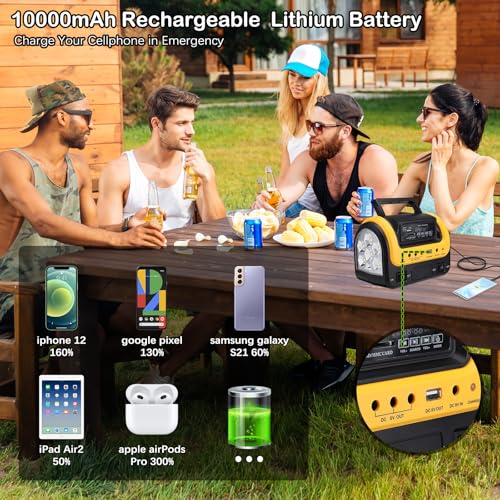
Finding a power source you can carry in one hand is the real challenge for hikers, campers and anyone who wants a simple backup for small electronics during an outage. The Upusa SDM-0603 Power Station takes a deliberately small-scale approach: a 12500mAh power station that bundles a solar panel and a string of LED bulbs into a single kit. This Upusa SDM-0603 Power Station review for 2026 asks whether that all-in-one concept delivers real value, or whether the modest size leaves you wanting more.
Below we cover the specs, strengths, weaknesses and how this kit compares with the alternatives. Our methodology is based on manufacturer specs and aggregated user feedback, so nothing here claims hands-on or lab testing. We compare it against the EcoFlow RIVER 2 Pro, GRECELL T300 and MARBERO 148Wh M822. If you are weighing much larger systems for outage planning, our guide to the best generator for emergency preparedness is a useful next stop.
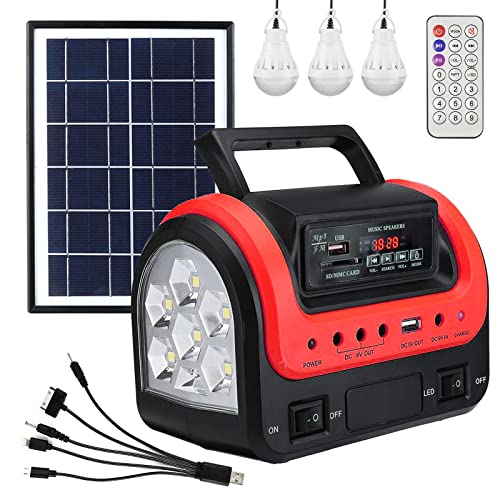
Upusa SDM-0603 Solar Generator Portable Power Station with 10W Panel



Our Verdict
The Upusa SDM-0603 Power Station is a featherweight, budget-friendly solar power kit built for small electronics and simple camp lighting. It ships with a solar panel and three switchable LED bulbs, which makes it easy to use straight out of the box. It is not a pick for anyone who needs AC power or to run larger appliances.
- Very light at 1.8 lbs, easy to pack and carry
- Includes a 10W solar panel and three LED bulbs with individual switches
- 1 USB port (5V) plus 3 DC outputs (6V) for multiple small devices
- Three recharging methods, including solar and wall outlet
- Built-in battery management against short circuit, overcurrent, overvoltage, overload and overheating
- 12500mAh capacity suits small electronics rather than appliances
- No AC outlet is listed among the outputs
- Solar recharging is listed at 8 to 15 hours
Specifications
| Spec | Value | Spec | Value |
|---|---|---|---|
| Battery Capacity (Wh) | 4 Watt-hours | Battery Type | LiFePO4 |
| Battery Lifespan | 3000+ cycles | AC Output (W) | 5 |
| Peak Output (W) | 1000 | Output Voltage | 120V |
| Solar Input (W) | 5W Max (System includes a 5W solar panel) | Recharge Time | Fully charged within 8 hours |
| Runtimei | ~0h RV use (350W) | ~0h Home use (600W) | ~0h Travel use (120W) | ~0 phone charges (14Wh/charge) | Outlets & Ports | 4 outlets/ports |
| Parallel Capable | No | Weight | 2.2 lbs |
| Dimensions | 3 x 2 x 3 in | Noise Level | quiet (~30dB) |
| RV Ready | Yes | Certifications | FCC, CE, RoHS |
| In the Box | solar_panel |
Battery Capacity and Power Output
According to the manufacturer, the Upusa SDM-0603 Power Station is built around a high-capacity 12500mAh power station. Capacity is stated in milliamp-hours rather than watt-hours, so a direct comparison with larger stations from other brands takes a little unit conversion. In practical terms, a battery of this class is aimed at topping up phones, e-readers, cameras and similar low-draw gear rather than powering household appliances.
The listing names phones, laptops, fans, e-readers, game consoles and cameras as devices you can charge. That is a broad list for such a compact unit, so it is worth checking the input requirements of your specific laptop or fan before counting on it. The output side is based on 5V USB and 6V DC rather than a rated wattage figure, and the listing does not publish a continuous or surge wattage rating. Users who go in expecting phone-and-light duty tend to be the happiest, while those expecting a mini generator for tools or cooking gear are likely to be disappointed.
Where this kit stands out is the bundled lighting. Three external LED bulbs come on a string, each with its own switch and its own 10 ft (3 m) extension cord. For a tent, a shed or a power outage, that means usable light the moment the box is open, without buying separate lamps. It is a thoughtful extra that larger stations in this comparison do not describe in their listings.
Portability and Build Quality
Weight is the headline here. At just 1.8 lbs, the power station is lighter than many hardcover books and roughly a tenth of the weight of the EcoFlow RIVER 2 Pro, which the manufacturer lists at 17.2 lbs. You can carry it in a daypack, stash it in a glove box or keep it in an emergency kit without thinking about it.
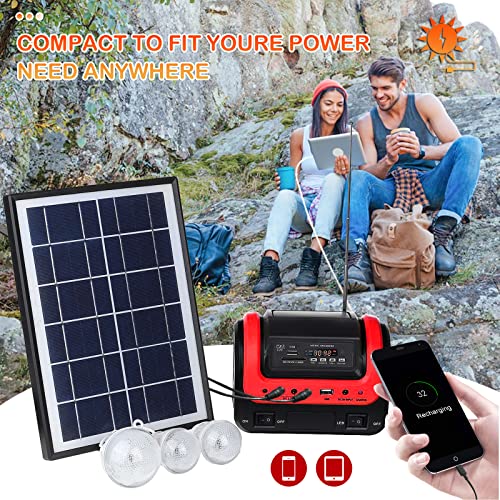
The listing describes a durable construction that withstands the elements, paired with a compact size designed for travel. No formal ingress protection rating or drop-test claim is published for the power station itself, so treat the weather resistance language as general guidance rather than a guarantee. A sensible approach is to keep the station shaded and dry, and to place only the solar panel in direct sun on its extension cable. The 10 ft cable lets you do exactly that, leaving the station in a cooler, more protected spot while the panel collects light.
For one-person carry, this is about as easy as portable power gets. The trade-off is simple: you give up capacity and outlets in exchange for a unit that is almost effortless to move around.
Charging Options and Speed
The Upusa SDM-0603 Power Station offers three recharging methods, according to the manufacturer. Two are spelled out in the listing: the included solar panel for an 8 to 15 hour solar charge, and a wall outlet for a 6 to 8 hour recharge. Those figures are realistic for a small battery paired with a small panel, and they set expectations clearly: this is a unit you refill overnight or over a full sunny day, not one you top up in an hour.
The solar panel in the box is rated at 10W and comes with a 10 ft (3 m) extension cable. Compared with the 40W foldable panel bundled with the MARBERO 148Wh M822 or the 160W panel in the EcoFlow kit, that is a small collector, which explains the wide 8 to 15 hour window. Cloud cover, panel angle and season will all push you toward the long end of that range. If you plan to rely on solar alone over several days, it is smart to ration your device charging and keep the wall adapter as a backup.
The package also includes a USB charge cable and an adapter, so the basic charging hardware is covered. The listing does not mention MPPT regulation, which some competitors advertise, so we would not expect the panel to extract maximum efficiency in marginal light.
Outlets and Connectivity
Output is provided through 1 USB port (5V) and 3 DC outputs (6V). The three DC outputs are what the bundled LED bulbs plug into, which means a real portion of the output hardware is devoted to lighting. That leaves the USB port as your main route for charging phones and similar gear, so you will usually run one charged device at a time alongside your lights.
The limitation to flag is the absence of a listed AC outlet. Stations such as the GRECELL T300, which lists 8 simultaneous outputs including AC and USB-C PD, or the MARBERO 148Wh M822 with two AC sockets, can power standard wall-plug devices. With the Upusa SDM-0603 Power Station, you are working with USB and low-voltage DC only, so anything that needs a standard household plug will not work directly.
For its intended audience this is a fair compromise. A camper who wants to keep a phone alive and run a few lights does not need an inverter, and leaving it out helps keep the unit this light and simple.
Safety Protections and Included Lighting
The manufacturer states that built-in battery management guards against short circuit, overcurrent, overvoltage, overload and overheating. That is a sensible layered set of protections for a pocket-sized lithium power source, and it reassures buyers who plan to leave the unit with kids or inside a vehicle. As always, a listed protection does not replace common sense: keep it out of extreme heat and use the supplied cables.
Information about battery chemistry, rated cycle life, third-party certifications and warranty is not provided in the listing details we reviewed. That is a gap compared with the EcoFlow RIVER 2 Pro, which lists LiFePO4 cells rated for more than 3000 cycles to 80 percent capacity and a 5-year service plan. If long-term durability is your top priority, those figures matter, and this is an area where the Upusa SDM-0603 Power Station gives you less assurance on paper.
For a closer look at one more compact station in a similar spirit, you can read our ALLWEI PPS300-4 256Wh Power Station review and see how a slightly larger design handles the same trade-offs.
How It Compares
Quick Comparison: Alternatives
- – Truly Handheld Size.
- – Includes Solar Panel & Lights.
- – Quiet, Gas-Free Operation.
- – Ultra-Fast 70-Minute AC Charging.
- – 1600W Output.
- – 3,000+ Cycle LiFePO4 Battery.
- – Powerful Output, Small Package.
- – Fast Multi-Device Charging.
- – Durable Anti-Collision Design.
- – Versatile Device Outputs.
- – Efficient Solar Recharging.
- – Compact & Lightweight.
- – Tiny 4Wh Capacity.
- – Slow 5W Solar Input.
- – No AC Outlets.
- – Heavy for Extended Hikes.
- – 4.8h Solar Recharge Time.
- – No Reviews Yet.
- – Only One AC Outlet.
- – Solar Panel Not Included.
- – Best for Light-Duty Devices.
- – Modest 148Wh Capacity.
- – Slow 40W Solar Charging.
- – 200W Output, Not Heavy-Duty.
Head-to-Head: How Does It Stack Up?
vs EcoFlow RIVER 2 Pro (Competitor): The Upusa SDM-0603 Power Station wins on weight, at 1.8 lbs against the EcoFlow’s listed 17.2 lbs, and it sits at a far more budget-friendly tier while still bundling a solar panel and lights. The EcoFlow RIVER 2 Pro wins nearly everywhere else on paper: 768Wh capacity, up to 1600W output, 11 outlets, LiFePO4 cells rated for 3000-plus cycles, a 160W panel and a roughly 70 minute fast charge. If you need to run real appliances at home or in an RV, the EcoFlow is the stronger choice, while the Upusa kit suits someone who only needs ultra-light charging and lighting.
vs GRECELL T300 (Competitor): The Upusa SDM-0603 Power Station is considerably lighter and comes with three LED bulbs with individual switches, which the GRECELL listing does not mention. The GRECELL T300 offers 288Wh capacity, 300W continuous output with a 600W surge on a pure sine wave AC outlet, a 60W USB-C PD port, eight simultaneous outputs and a built-in MPPT controller. That makes it the better fit for CPAP machines, laptops and mini-fridges. Pick the GRECELL for versatility, and the Upusa kit when weight and simplicity count for more than outlet variety.
vs MARBERO 148Wh M822 (Competitor): This is the closest match in spirit. The Upusa SDM-0603 Power Station is lighter at 1.8 lbs, against 3.3 lbs for the MARBERO station, and its 6 to 8 hour wall recharge is comparable to the MARBERO’s listed 7 to 8 hours. The MARBERO 148Wh M822 counters with two AC sockets rated 200W (270W peak), two USB-A QC3.0 ports and a foldable 40W panel that should collect noticeably more sun than the Upusa’s 10W panel. If you want AC and faster solar harvesting, take the MARBERO; if you want the lightest possible kit with lights included, take the Upusa. For a wider view of what is available at a modest budget, see our roundup of the best generator for home under $500.
Is It Right for You?
Best For
- Hikers and backpackers who value the 1.8 lb weight and only need to charge phones, cameras or e-readers.
- Campers who want built-in light, since three LED bulbs with individual switches and 10 ft cords come in the box.
- Emergency kit builders looking for a budget-friendly backup that can recharge from the wall in 6 to 8 hours or from the sun in 8 to 15 hours.
- Beginners who want a simple, all-in-one kit with USB and DC outputs and built-in battery protections.
Consider Something Else If…
- You need an AC outlet for household plugs, since none is listed. The GRECELL T300 and MARBERO 148Wh M822 both include AC outputs.
- You expect to run larger appliances or work gear, which the 12500mAh battery is not aimed at. Step up to something like the EcoFlow RIVER 2 Pro.
- You need fast solar recharging, because the 10W panel points to an 8 to 15 hour fill.
Final Verdict
The Upusa SDM-0603 Power Station earns its place through simplicity and portability. At 1.8 lbs, with a 12500mAh battery, a 10W solar panel, three switchable LED bulbs, a USB port and three DC outputs, it covers the essentials for light camping and basic outage preparedness. Built-in battery management adds reassurance, and three recharging methods give you flexibility. It sits firmly in the budget-friendly tier, which makes sense given what it offers.
The trade-offs are just as clear. There is no listed AC outlet, the capacity is limited to small electronics, and solar recharging can take 8 to 15 hours. Details such as battery chemistry, cycle life, certifications and warranty are not spelled out in the listing, so buyers who care about long-term durability get less information than they would with the EcoFlow RIVER 2 Pro.
Our recommendation, based on specs and user feedback, is straightforward. Choose the Upusa SDM-0603 Power Station if you want an ultra-light, ready-to-use solar kit for phones and lighting. Choose the GRECELL T300 or MARBERO 148Wh M822 if you need AC power, and the EcoFlow RIVER 2 Pro if you want serious capacity and longevity for home backup or RV use.
View on Amazon.comStill deciding? See how it stacks up in our buying guides:
Frequently Asked Questions
How long does the Upusa SDM-0603 Power Station take to recharge?
According to the manufacturer, a wall outlet recharge takes about 6 to 8 hours. Using the included solar panel, expect roughly 8 to 15 hours depending on sunlight conditions.
What can the Upusa SDM-0603 Power Station power?
It has 1 USB port (5V) and 3 DC outputs (6V), and the listing names phones, fans, e-readers, game consoles and cameras as compatible. The three included LED bulbs also run from the DC outputs. For higher-demand loads, see our guide to the best generator for home under $1000.
Does the Upusa SDM-0603 Power Station include a solar panel?
Yes, the box includes a 10W solar panel with a 10 ft (3 m) extension cable. It also includes three LED bulbs with individual switches, a USB charge cable and a manual.
Does it have an AC outlet?
The listed outputs are 1 USB port and 3 DC outputs, and no AC outlet is mentioned. If you need standard wall plugs, compare the GRECELL T300 or MARBERO 148Wh M822, which both list AC outputs.
How does the Upusa SDM-0603 Power Station compare with the EcoFlow RIVER 2 Pro?
The Upusa kit is far lighter at 1.8 lbs, while the EcoFlow RIVER 2 Pro offers 768Wh capacity, up to 1600W output and 11 outlets. Choose the Upusa for ultra-light small-device charging and the EcoFlow for appliances and home backup. See the comparison section above for more detail.
Browse All Models
Pros
- Ultra-fast 70-minute AC charging
- High 1600W output handles most appliances
- Durable LiFePO4 battery with 3000+ cycles
- Portable at only 17.2 pounds with foldable solar panel
- 11 outlets including 4 AC for versatile use
Cons
- 17.2 pounds may feel heavy for extended hikes
- Solar charging requires 4.8 hours in optimal sunlight
- No customer reviews yet to confirm real-world longevity
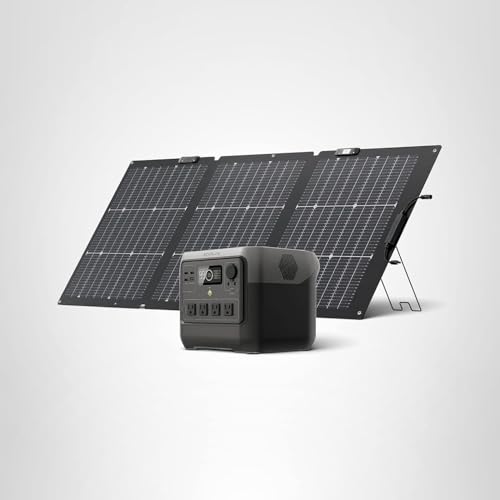
The EF ECOFLOW RIVER 2 Pro is a compact 768Wh portable power station bundled with a 160W solar panel, ideal for campers, RV owners, and anyone needing reliable home backup power. It replaces noisy gas generators with silent, eco-friendly solar energy, offering 1600W output to run 80% of appliances via 11 outlets including four AC ports.
Standout features include lightning-fast 70-minute AC recharging and 4.8-hour solar top-up, powered by a long-lasting LiFePO4 battery good for over 3000 cycles. The advanced BMS monitors voltage, current, and temperature for safety, while the IP68-rated solar panel withstands outdoor abuse with ETFE UV protection. In real-world use, it excels at powering fridges, lights, and tools off-grid without overloads.
Design-wise, the 17.2-pound unit features a built-in handle for easy transport, and the foldable panel packs into its own bag. Build quality feels premium with robust materials, though the weight might challenge ultralight backpackers.
Potential drawbacks include the solar charge time depending on sunlight and its bulk for solo hikers. Overall, the RIVER 2 Pro delivers exceptional value for versatile, portable power, earning a strong recommendation for off-grid adventures.
Brand: EF ECOFLOW
Capacity: 768Wh LiFePO4 Battery
Output: 1600W (800W Continuous)
Weight: 17.2 Pounds
Outlets: 11 Total (4x AC, USB-C, etc.)
Solar Panel: 160W, IP68 Waterproof
Dimensions: 10.5"L x 10.1"W x 8.5"H
Warranty: 5-Year Service

Pros
- Powerful output in a surprisingly small, lightweight package
- Fast charging for phones, laptops, and tablets
- Durable build with anti-collision corners and reliable performance
- Versatile ports and solar compatibility for outdoor adventures
- Stable pure sine wave power with no noise
Cons
- Only one AC outlet limits simultaneous high-power use
- Solar panel not included
- Capacity suits light-duty devices, not high-drain appliances
The GRECELL T300 is a compact 300W portable power station with 288Wh lithium battery capacity, designed for outdoor enthusiasts, campers, RV travelers, and home emergency backups. It excels at powering multiple devices like phones, laptops, fans, mini-fridges, and projectors simultaneously through its array of ports, making it a versatile solar generator for off-grid adventures.
Standout features include a 330W continuous output with 600W surge capability via pure sine wave AC, ensuring safe operation for sensitive electronics. Users praise its 60W USB-C PD for rapid laptop charging, multiple quick-charge USB-A ports, and compatibility with solar panels via built-in MPPT controller. Real-world tests show it running small appliances steadily, charging phones multiple times, and maintaining quiet operation with efficient cooling fans during extended use.
Build quality impresses with a sturdy handle, reinforced corners for durability, and an intuitive LCD screen displaying battery level, input/output wattage. At 8.2 pounds and portable dimensions, it's easy to carry, and the upgraded battery management system provides overload, overcharge, and short-circuit protection for peace of mind.
Minor drawbacks include just one AC outlet and no included solar panel, which may require add-ons for full off-grid setups. Capacity limits it from high-drain items like kettles.
Overall, the GRECELL T300 delivers exceptional value as a reliable, portable power solution, earning high marks for performance in camping, travel, and outages. Ideal if you need compact backup without bulk.
Key Specs:
- Wattage: 288Wh
- Output: 330W Running / 600W Peak
- Ports: 1 AC, 1 USB-C PD 60W, 3 USB-A QC 18W, 1 Car, 2 DC
- Recharge: AC, Solar (MPPT), Car
- Weight: 8.2 lbs
- Dimensions: 12.72"L x 7.68"W x 8.46"H
- Warranty: 2 Years
- Model: T300

Pros
- Highly portable at under 6 lbs with compact foldable design
- Multiple recharge options including efficient 60W solar panel
- Powers 8 devices simultaneously with pure sine wave safety
- Durable build with waterproof panel and drop-resistant shell
- Includes all essentials: adapter, car charger, and 12-month warranty
Cons
- 300W output limits use to smaller appliances only
- Full recharge takes about 7 hours with AC adapter
- No customer reviews available yet for real-user feedback
The MARBERO M188SL60 solar generator kit pairs a 296Wh portable power station with a 60W foldable solar panel, ideal for campers, RVers, van lifers, and anyone needing reliable off-grid or emergency power. With 300W pure sine wave AC output, it safely runs sensitive devices like mini fridges, fans, or laptops, while versatile ports handle phones, lights, and more for family outings or blackouts.
Standout features include three recharge methods: solar with 23% efficiency for quick outdoor top-ups, a 7-hour AC adapter charge, or car port for road trips. It powers an iPhone 15 up to 15 times or a laptop four times, and the eight output ports let you charge multiple gadgets without interruption. The built-in LED flashlight with SOS adds safety for night use.
Build quality shines with a rugged, impact-resistant shell, IP65 waterproof panel for light rain, and advanced BMS guarding against overcharge, heat, and shorts. At 5.73 lbs and slim dimensions, it's easy to carry, folding neatly for storage. Operation works from 14F to 104F, suiting varied conditions.
Drawbacks include the 300W limit, unsuitable for high-draw appliances, and longer recharge times without optimal sun. Still, for its class, it delivers exceptional portability and value.
Verdict: A top pick for lightweight, solar-ready backup power that balances capacity, outputs, and durability for outdoor enthusiasts and emergency prep.
Capacity: 296Wh (20Ah/14.8V)
AC Output: 300W (Peak 330W), 110V/60Hz, 2 outlets
USB Outputs: 1x USB-C PD 18W, 3x USB-A (2x QC3.0 18W, 1x 15W)
DC Outputs: 2x 12-16.8V/10A (150W max)
Recharge: Solar 16.4-24V/3.2A, Adapter 19V/3.15A (7hrs)
Weight: Power station 5.73 lbs, Panel 3.08 lbs
Dimensions: Station 9.09 x 4.01 x 8.38 inches
Battery Life: 90% capacity after 1000 cycles

Pros
- Versatile outputs support a wide range of devices from phones to small appliances
- Multiple recharging options including efficient solar for true portability
- Compact, lightweight design ideal for travel and outdoor activities
- High solar efficiency and smart safeguards enhance reliability
- Complete kit with all adapters and manual included
Cons
- 148Wh capacity limits runtime for high-power devices like larger appliances
- 40W solar panel recharges slowly in low light or cloudy conditions
- Entry-level 200W output not suited for heavy-duty continuous use
The MARBERO 148Wh Solar Generator kit pairs the M822 portable power station with a 40W foldable solar panel, ideal for campers, hikers, fishers, and anyone needing backup power during outages or off-grid trips. This electric generator provides 200W continuous output (270W peak) through diverse ports, keeping essentials like phones, laptops, cameras, and lights running without fuel hassles.
Standout features include multiple outputs: two AC sockets, QC3.0 USB-A, USB-C PD (18W), standard USB-A, and DC port, powering various devices efficiently. The solar panel's 21.5-23.5% conversion rate and smart chip deliver optimal charging speeds while preventing overcharge or overload. Real-world performance shines for light to moderate loads, with solar recharging viable in sunlight and wall/car options for quick top-ups in 7-8 hours.
Design prioritizes portability with the 3.3lb station (7.6x3.6x5.4 inches) and 2.3lb panel (folds to 8x10x1 inches), made from durable ABS plastic. Safety features like short circuit and over-voltage protection add peace of mind, and the complete kit includes all necessary cables and adapters.
Drawbacks include the modest 148Wh capacity, which suits short trips but not extended heavy use, and solar-only recharging that depends on good weather. The 200W limit also means it's best for smaller gadgets rather than power-hungry tools.
Overall, this MARBERO kit earns high marks for portability and value in outdoor and emergency scenarios, making it a smart pick for adventurers seeking lightweight, solar-ready power.
Capacity: 148Wh | Output: 200W (270W peak) | Weight: Power station 3.3lbs, Solar panel 2.3lbs
Ports: 2x AC, 2x USB-A QC3.0, 2x USB-A, 1x USB-C PD, 1x DC | Recharge: AC (7-8hrs), Solar, Car
Solar Efficiency: 21.5-23.5% | Battery: Lithium Ion | Warranty: 12 months
1x MARBERO M822 Portable Power Station, 1x 40W Folding Solar Panel, 1x Power Adapter, 1x Cigarette Lighter Adapter, 1x User Manual.
Pros
- Lightweight and truly handheld size
- Comes complete with solar panel and lights
- Quiet gas-free operation
- Multiple recharge methods
Cons
- Only 4Wh capacity limits runtime for high-draw devices
- Low 5W solar input requires long recharge times
- No AC outlets for standard household appliances
The Upusa SDM-0603 is a small solar generator built around a 12500mAh battery and paired 10W panel. It targets campers and homeowners needing basic off-grid lighting and device charging.
Standout elements include the three included LED bulbs with individual switches and long extension cords plus built-in radio. The unit weighs under two pounds and fits easily in a backpack.
Recharge occurs via the solar panel in 8-15 hours, wall adapter in 6-8 hours, or USB. Safety features cover overcharge and short circuits while promising over 3000 cycles.
Drawbacks center on the tiny 4Wh capacity and 5W solar input, which restrict use to low-power items only. No AC outlets are present.
Overall verdict: a niche ultra-portable kit for minimal emergency lighting and phone top-ups rather than full power station duties.