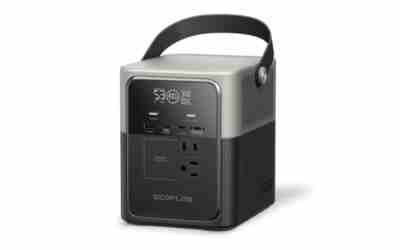
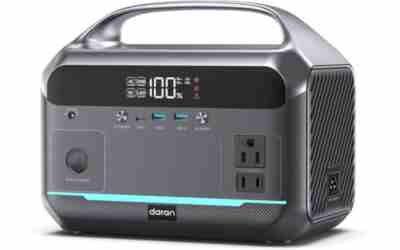
Our editorial team weighed OUPES's published specifications and how it stacks up against similar products in the generators category. What stands out: Reliable for Extended Outages, Efficient Solar Recharging, and Versatile RV/Road Trip Use. Where it falls short: Heavy Solar Panels and Needs Direct, Unshaded Sunlight. That puts it at 8.4/10 on our WG Score – an excellent, well-rounded option.
 Reviewed byDaniel
Anyone shopping for backup power for an RV, a campsite or a home outage soon hits the same problem. Small power banks are too weak for a fridge or CPAP, while gas generators are loud and need fuel. That gap is where the OUPES Mega 1 Solar Generator Kit aims to sit, and this OUPES Mega 1 Solar Generator Kit review for 2026 looks at how well it fills it. According to the manufacturer, it pairs a 1024Wh LiFePO4 battery and 2000W AC output with a 240W solar panel in one kit, so you can start charging from sunlight right away. If you are browsing broadly, our Reviews hub collects more hands-off, spec-based breakdowns like this one.
This review covers the specs, the strengths, the weaknesses and how the kit compares with similar products. Our methodology is based on manufacturer specs and aggregated user feedback, not hands-on or lab testing. We compare it against the Jackery Explorer 500 Solar Generator with 100W SolarSaga Panel, the BLUETTI Elite 30 V2 and the VTOMAN Jump 600X 600W Portable Power Station with Car Jump Starter. By the end you should know whether this kit matches your power needs and your carrying limits.

OUPES Mega 1 2000W Solar Generator Kit with 240W Panel, 1024Wh LiFePO4 Battery, UPS & App for RV, Camping, Outages


Our Verdict
The OUPES Mega 1 Solar Generator Kit is an all-in-one solar-ready kit built around a 1024Wh LiFePO4 battery, 2000W of AC output and a 240W monocrystalline panel. Based on specs and user feedback, it targets RV, camping and outage use, with a path to grow to 5120Wh. It is a strong fit if you want real appliance power, but it is heavier than compact units.
- 240W solar panel included in the kit
- 2000W AC output for fridge, CPAP and electronics
- Expandable to 5120Wh with the B2 battery
- 20ms UPS switchover during grid outages
- LiFePO4 battery rated for 3500+ cycles
- 27.8 lbs is heavier than compact power stations
- Solar recharge time depends on sunlight conditions
- Reaching 5120Wh requires adding the B2 battery later
Specifications
| Spec | Value | Spec | Value |
|---|---|---|---|
| Battery Capacity (Wh) | 1024Wh | Battery Type | LiFePO4 |
| Battery Lifespan | 3500+ cycles | AC Output (W) | 2000 |
| Peak Output (W) | 4500 | Output Voltage | 120V |
| Solar Input (W) | 2200W max solar input | Recharge Time | UPS transfer within 20 ms |
| Runtimei | ~2.5h for RV use | Outlets & Ports | 4 outlets/ports |
| Parallel Capable | No | Weight | 27.8 lbs |
| Dimensions | 15.1 x 9.1 x 11.6 in | Noise Level | quiet (~30dB) |
| RV Ready | Yes | Certifications | FCC, CE, RoHS, UN38.3 |
| In the Box | 1x OUPES Mega 1 Portable Power Station, 1x OUPES Portable Solar Panel 240W | Warranty | 3-year warranty |
Battery Capacity and Power Output
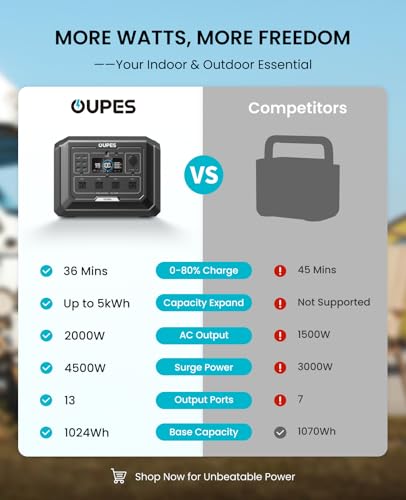
The core of the OUPES Mega 1 Solar Generator Kit is a 1024Wh LiFePO4 battery paired with a 2000W AC output, according to the manufacturer. In practical terms, that is enough headroom to run a fridge, a CPAP machine and everyday electronics from the same unit. The listing specifically names those loads, which suggests the design is aimed at people who need essential appliances running rather than just phone charging.
A 2000W output ceiling matters because many household and RV devices draw a burst of power when they start. Smaller stations with output in the hundreds of watts often cannot handle those loads at all. Here you get a much wider range of compatible devices, although a 1024Wh tank will still drain faster the heavier the load you attach. For long outages, plan your usage by prioritizing essentials such as a fridge and medical devices.
The expandability is a notable selling point. The manufacturer says you can add the B2 battery later to reach 5120Wh in total. That means a buyer can start with the kit as sold and scale runtime later if needs grow. For anyone comparing options by use case, our By Use page is a handy starting point for matching capacity to your situation.
Portability and Build Quality
The battery weighs 27.8 lbs, which is manageable for most adults to lift into a vehicle but not something you would carry casually for long distances. Compared with palm-sized units that weigh single-digit pounds, it is clearly a heavier piece of kit. The trade-off is straightforward: more capacity and output come with more mass.
On durability, the manufacturer describes a shockproof power station and a waterproof solar panel built for camping, RV and off-grid use. We cannot verify those claims ourselves, so treat them as manufacturer statements. They do point to a design intended for bumpy road trips and outdoor setups rather than purely indoor standby. The unit also includes an informative display and app control, which help you keep an eye on the system without opening a menu on the device itself.
Charging Options and Speed
Charging flexibility is one of the strongest parts of the spec sheet. The included 240W monocrystalline panel is said to recharge the Mega 1 in 5 to 8 hours, with the caveat that sunlight conditions apply. Real results will vary with season, panel angle and cloud cover, so use that range as a best-case guide.
The system supports solar and AC input at the same time, for a stated maximum charging speed of 2200W. The product listing also highlights a 36 minute fast-charge headline and lists four charge methods overall. For outage preparedness, fast wall charging is valuable because grid power may only be available in short windows. For off-grid trips, the solar kit means you are not dependent on a campground hookup.
Outlets and Connectivity
The listing highlights 13 outputs and PD100W charging, so you can power several devices at once, from laptops and phones to AC appliances. A USB-C port at that wattage can usually handle modern laptops, which reduces the need for bulky adapters. The exact breakdown of port types is best confirmed on the retailer listing before you buy.
Connectivity is covered through WiFi and Bluetooth app control, which lets you track solar input and battery status remotely. This is useful when the unit sits in a van compartment or garage corner. The 20ms UPS switch is also relevant here: it is designed to keep devices running during grid outages, which makes it suitable for desktop computers, networking gear and similar sensitive equipment. As always, we recommend checking your device’s tolerance for brief switchover times.
Battery Longevity and Certifications
The OUPES Mega 1 Solar Generator Kit uses LiFePO4 chemistry, which is generally valued for long cycle life and stable thermal behavior compared with other lithium chemistries. The manufacturer rates the battery for 3500+ cycles, and a 3-year warranty backs the product. If you used the unit regularly, that cycle rating suggests many years of service before capacity meaningfully declines.
No certification details were supplied in the data we reviewed, so we do not make any safety certification claims here. If certifications matter to you, check the official listing and product manual before purchasing.
How It Compares
Quick Comparison: Alternatives

- – Reliable for Extended Outages.
- – Efficient Solar Recharging.
- – Versatile RV/Road Trip Use.
- – Portable at 13.3 lbs.
- – Pure Sine Wave Output.
- – Proven Harsh-Condition Reliability.
- – Very lightweight and compact for a 600W-class power station.
- – Fast AC recharge with 8 flexible charging modes including solar and car.
- – LiFePO4 chemistry supports long-term durability.
- – 2-in-1 Power Station & Jump Starter.
- – Regulated Outputs for CPAP.
- – Pass-Through Charging.
- – Heavy Solar Panels.
- – Needs Direct, Unshaded Sunlight.
- – Rare Early Failures.
- – 9.5h Solar Recharge Time.
- – 500W Continuous Limit.
- – Rare Early Failures.
- – 288Wh capacity limits runtime for high-wattage appliances like kettles or toasters.
- – Power Lifting Mode is intended for short bursts rather than sustained heavy use.
- – Solar panel (PV60L) is a separate purchase and no solar input rating is listed.
- – Jumper Cables Sold Separately.
- – Modest 299Wh Base Capacity.
- – Heavy at 7kg.
Head-to-Head: How Does It Stack Up?
Against the Jackery Explorer 500 Solar Generator with 100W SolarSaga Panel (a Competitor), the OUPES Mega 1 Solar Generator Kit wins on capacity and output: 1024Wh versus 518Wh, and 2000W AC versus 500W with a 1000W peak. It also ships with a larger 240W panel compared with the 100W SolarSaga. The Jackery wins on portability at 13.3 lbs, roughly half the weight of the Mega 1 battery. Pick the OUPES if you want to run a fridge or CPAP, and the Jackery if you only need light loads such as a fan, projector or small cooler.
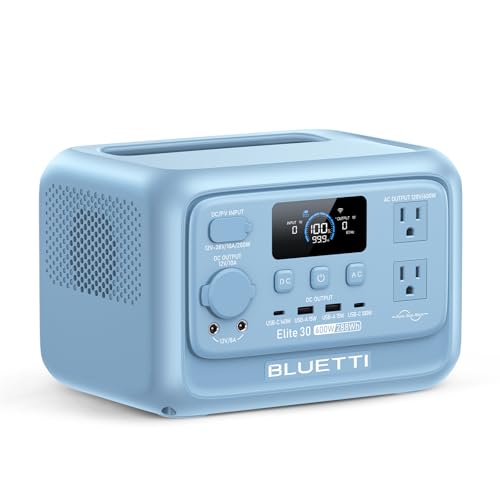
Versus the BLUETTI Elite 30 V2 (a Competitor), the gap is even larger in capacity, with 1024Wh against 288Wh, and in rated output at 2000W against 600W. The BLUETTI counters with a much lighter 9.4 lbs body, a 10ms UPS switchover compared with 20ms, and a quoted 0 to 80% wall charge in 45 minutes. Choose the Elite 30 V2 for short trips and light electronics, and the Mega 1 for longer runtimes. You can also see how BLUETTI’s smaller model fares in our BLUETTI Elite 10 review.
Next to the VTOMAN Jump 600X 600W Portable Power Station with Car Jump Starter (a Competitor), the OUPES Mega 1 Solar Generator Kit offers more than three times the base capacity at 1024Wh versus 299Wh, plus 2000W output versus 600W. The VTOMAN’s distinctive feature is a built-in car jump start function, which the OUPES does not list, and it can expand to 939Wh with an extra battery, while the OUPES can reach 5120Wh. If a dead car battery is a real worry and your loads are small, the VTOMAN is the practical choice. If you want serious appliance power and room to grow, the Mega 1 is the better match.
Is It Right for You?
Best For
- RV and van owners who want 2000W of AC output to run a fridge and electronics
- Households that need a quiet, fuel-free backup with a 20ms UPS switchover for outages
- Off-grid campers who want a 240W solar panel included so they can recharge in 5 to 8 hours of good sun
- Buyers who may want to scale up later to 5120Wh with the B2 battery
Consider Something Else If…
- You need something light to carry on hikes or flights, since the battery weighs 27.8 lbs. Browse our By Features page for lighter options.
- You expect guaranteed fast solar recharging, because real-world sunlight conditions will change the 5 to 8 hour estimate.
- You want 5120Wh from day one, since the extra B2 battery is a later add-on.
Final Verdict
The OUPES Mega 1 Solar Generator Kit stands out for combining a 1024Wh LiFePO4 battery, 2000W AC output and a 240W solar panel in a single kit. Add the 3500+ cycle rating, 3-year warranty, app monitoring and 20ms UPS function, and it reads as a well-rounded home and RV backup system. Its value positioning is mid-range for the capacity and output it offers, based on the category and the competitors we reviewed.
The trade-offs are honest ones. At 27.8 lbs it is not a grab-and-go unit, solar recharge times depend on sunlight, and the biggest 5120Wh configuration requires buying extra hardware later. Smaller competitors beat it on weight and, in the BLUETTI’s case, on UPS switchover speed.
Our recommendation is simple. If you want to power real appliances during outages or off-grid trips and value expandability, this kit is a strong candidate against the Jackery, BLUETTI and VTOMAN alternatives we reviewed. If your loads are light and portability matters most, one of those smaller stations will suit you better.
View on Amazon.comStill deciding? See how it stacks up in our buying guides:
Frequently Asked Questions
How long does the OUPES Mega 1 Solar Generator Kit take to recharge?
According to the manufacturer, the included 240W panel recharges it in 5 to 8 hours, depending on sunlight conditions. It also supports solar and AC input at once for up to 2200W of charging.
What appliances can it run?
With 2000W of AC output and 1024Wh of capacity, the manufacturer says it can run a fridge, a CPAP and electronics. Runtime will shorten as you add more loads. See our By Power page for other wattage classes.
How long will the battery last before replacement?
The LiFePO4 battery is rated for 3500+ cycles and is covered by a 3-year warranty. Actual lifespan depends on how often and how deeply you discharge it.
Can I expand the capacity later?
Yes. The manufacturer states you can add the B2 battery to reach 5120Wh in total. That expansion battery is an additional purchase.
Does it work as a UPS during power outages?
The manufacturer lists a 20ms UPS switch that keeps devices running during grid outages. That is slower than the 10ms switchover quoted for the BLUETTI Elite 30 V2, so check your equipment’s tolerance.
Browse All Models

Pros
- Exceptional portability at 13.3 lbs with sturdy handle
- Pure sine wave output runs sensitive electronics smoothly
- Real-world reliability proven in harsh conditions per user stories
- Multiple recharge options including efficient solar integration
- Intuitive display shows exact battery status and input/output
Cons
- Solar recharge requires 9.5 hours under optimal sunlight
- Limited to 500W continuous for high-demand appliances
- Rare reports of units failing after initial use
The Jackery Explorer 500 Solar Generator is a compact 518Wh portable power station paired with a 100W SolarSaga panel, designed for campers, RVers, off-grid adventurers, and emergency home backup. It delivers 500W continuous AC power (1000W peak) alongside USB, DC, and car ports, powering devices like mini fridges, fans, lights, and laptops without noise or fuel hassles.
Standout features include pass-through charging, allowing simultaneous device powering and recharging, plus a Battery Management System for optimal lifespan. Users praise its endurance in deserts, outages, and sports events, running coolers and lights for hours. Real-world tests show about 7 hours for a 60W device, with solar adding sustainable off-grid freedom.
Build quality impresses with a rugged plastic frame, clear LCD display, and easy-carry handle, weighing just 13.3 lbs in basketball dimensions. It handles 14-104°F operations quietly, outperforming gas generators in portability and eco-friendliness.
Drawbacks include slower 9.5-hour solar recharges and a 500W limit, unsuitable for heavy appliances. Isolated failure reports exist, but most highlight multi-year reliability.
Verdict: Ideal for portable, silent power needs; a top pick for reliable outdoor and backup use.
Capacity: 518Wh (24Ah, 21.6V)
Outputs: 1x AC 500W (1000W peak), 3x USB-A 5V/2.4A, 1x Car 12V/10A, 2x DC 12V/7A
Inputs: AC wall (7.5 hrs full), Car (7.5 hrs), Solar 100W (9.5 hrs)
Weight: 13.3 lbs | Dimensions: 11.8 x 7.6 x 9.2 inches
Other: Lithium-ion battery, pass-through charging, 14-104°F operation, 2-year warranty
Best for camping, RV trips, or blackouts powering under-500W devices. Calculate runtime: 500Wh x 0.85 / device watts (e.g., 7 hrs for 60W fan).
Choose if you value silence, portability over raw power. Pair with SolarSaga for off-grid; wall/car for speed.
Avoid for microwaves or tools over 500W; consider larger models like Explorer 1000.
Pros
- Reliable for extended outages, powering CPAP and lights overnight
- Efficient solar recharging during camping with direct sun
- Versatile for road trips, RVs, and off-grid setups
- Sturdy handles make 27.8lb unit portable
- Multiple fast charging options including AC + solar combo
Cons
- Solar panels are heavy and require careful handling
- Optimal charging needs direct, unshaded sunlight
- Rare reports of early failures and support challenges
The OUPES Mega 1 Solar Generator Kit pairs a 1024Wh LiFePO4 power station with a 240W monocrystalline solar panel, delivering 2000W continuous output for camping, RV trips, off-grid living, and power outages. Ideal for users needing reliable portable energy without fuel, it supports essentials like fridges, CPAP machines, laptops, and lights.
Standout features include expandable capacity up to 5kWh, 2200W max charging from AC and solar combined, and a 20ms UPS for uninterrupted power. Real-world tests from users show it sustaining devices through multi-day blackouts and camping, recharging fully in 5-6 hours under peak sun while powering fans, projectors, and more, often retaining 40-50% overnight.
Build quality shines with a durable, shockproof station at 27.8 pounds, sturdy handles, waterproof panel, and informative display plus WiFi/Bluetooth app for smart monitoring. The LiFePO4 battery offers 3500+ cycles and a 3-year warranty, making it rugged for outdoor use.
Potential drawbacks include the hefty solar panels, which demand direct sunlight for best results, and isolated cases of unit issues with support hurdles. Overall, it balances power, portability, and expandability well.
Verdict: A top pick for emergency backup and adventures, excelling where reliability and solar integration matter most.
Capacity: 1024Wh (expandable to 5kWh)
Output: 2000W (4500W surge), 120V AC
Battery: LiFePO4, 3500+ cycles
Charging: 2200W max (AC + Solar), 800W MPPT
Weight: 27.8 lbs station
Dimensions: 15.1"L x 9.1"W x 11.6"H
Includes: Mega 1 station + 240W solar panel
Users praise its lifesaving role in hurricanes, running CPAP all night and charging devices from 50% battery. Campers note full recharges in 5-6 hours with sun, powering fans, lights, and projectors effectively.
International buyers highlight multi-day runtime without daily recharges. Handles are secure despite weight, and charity donations add appeal.
Pros
- Very lightweight and compact for a 600W-class power station
- Fast AC recharge with 8 flexible charging modes including solar and car
- LiFePO4 chemistry supports long-term durability
- Seamless 10ms UPS switchover protects sensitive electronics
- High 1500W Power Lifting output for occasional heavy loads
Cons
- 288Wh capacity limits runtime for high-wattage appliances like kettles or toasters
- Power Lifting Mode is intended for short bursts rather than sustained heavy use
- Solar panel (PV60L) is a separate purchase and no solar input rating is listed
The BLUETTI Elite 30 V2 is an entry-level portable power station built around a 288Wh LiFePO4 battery. It delivers 600W of continuous AC output and weighs about 9.5 lbs, making it one of the easier units in its class to carry to a campsite, beach, or job site.
It is aimed at campers, road trippers, and households wanting a small backup source for essentials. With nine outlets and 140W PD fast charging, it can run lights, speakers, laptops, phones, a car fridge, and a CPAP machine. Power Lifting Mode raises output to 1500W, which opens the door to small heating appliances such as a kettle or toaster.
Charging is a strong point. Eight charging modes cover AC wall, solar, and car input, and the wall charger can reach 80% in 45 minutes and 100% in 70 minutes. UltraCell technology and smart cooling reduce power consumption by 50%, with low standby draw of 4.5W. The UPS mode switches in 10ms, which helps protect computers and other sensitive gear during an outage.
The main drawback is capacity. At 288Wh, high-wattage appliances will drain the battery quickly, so it is best for short bursts of heavy loads and longer runs of low-power devices. The PV60L solar panel is sold separately.
Overall, the Elite 30 V2 is a practical, portable choice for light camping, travel, and emergency backup for essential devices. Buyers who need extended runtime for larger appliances should consider a higher-capacity model.

Pros
- Very light and compact at 4 lbs, easy to carry or pack
- Long-lasting LiFePO4 battery rated for 3000+ cycles
- 10ms UPS switchover protects sensitive electronics during power loss
- Several recharge methods, including solar, wall and car
- Quiet operation compared with fuel generators
Cons
- Only one AC outlet and a 200W output limit, so it cannot run high-draw appliances
- 128Wh capacity gives limited runtime for anything beyond small devices
- The 60W solar panel ships separately, so the kit may arrive in more than one package
The BLUETTI Elite 10 is a mini portable power station built around a 128Wh LiFePO4 battery and a single 200W AC outlet. It is sold here as a solar generator kit with a 60W portable solar panel, which ships separately. Its main appeal is size: at 4 lbs and about 7.8 x 5.7 x 4.3 inches, it is closer to a large power bank than a traditional generator.
This unit is best for campers, travelers, remote workers and anyone who wants a small backup for short outages. The listing describes it as equivalent to 4 power banks, and it can charge laptops, cameras and other small devices through its AC outlet and multiple DC ports. It is also approved for major airlines, which makes it practical for trips. The ergonomic handle and compact shape make it easy to slip into a bag.
The standout feature for home and office use is the UPS mode, with a 10ms switchover and 350W bypass output. This helps keep a desktop, router or gaming setup running through a brief power interruption. The LiFePO4 battery with BMS protection is rated for 3000+ cycles, so it is built for repeated use. Recharging is flexible: you can use solar, AC or a car cable, and a full charge takes about 130 minutes.
The trade-offs follow from the small size. With 128Wh of capacity and a 200W output limit, it will not run space heaters, power tools or other high-draw appliances, and runtime on anything larger than small electronics will be short. There is only one AC outlet, and the solar panel ships separately. For anyone who needs lightweight, quiet, portable power for small devices, the Elite 10 is a focused and well-equipped choice. Buyers with bigger power needs should look at a higher-capacity model.