Our editorial team weighed Westinghouse's published specifications and how it stacks up against similar products in the generators category. What stands out: Quiet & Fuel-Efficient, Remote Fob Start, and Telescoping Handle & Wheels. Where it falls short: Heavy at 105.8 lbs and Finicky Electric Starter. That puts it at 8.4/10 on our WG Score – an excellent, well-rounded option.
 Reviewed byEthan
No, you should not run a propane generator under a deck. A portable unit needs open air, and 20 feet from the house is the common safety guideline, because carbon monoxide and heat get trapped under deck framing. Permanently installed standby units are different: they have listed clearances, but the manual, NFPA 37 and local code decide.
Can you run a propane generator under a deck?
Portable generator: no, never. A deck, porch or any roofed or partly enclosed space holds exhaust close to the house. Carbon monoxide (CO) is odorless, and it can drift through windows, doors, vents and gaps into living space. Opening a door or running a fan does not make it safe.
Three problems stack up under a deck:
- CO buildup. Exhaust has nowhere to disperse, and the deck floor can push it back toward the house wall.
- Heat and fire. Engines and mufflers run hot. Wood joists, decking and any stored items sit right above them.
- Poor airflow. Generators need fresh air for cooling and combustion. Restricted airflow causes overheating and shutdowns.
Propane adds one more: the gas is heavier than air, so a leak at a hose or fitting can settle in a low, enclosed area like the space under a deck instead of blowing away.
Propane burns somewhat cleaner than gasoline, but it still produces deadly CO. Fuel type does not change the placement rule.
Portable vs. standby: which rules apply to your generator?
Many pages blur these two. They follow different rules.
| Type | Under or beside a deck? | What controls placement |
|---|---|---|
| Portable (wheeled, moved by hand) | Never run under a deck, porch or in any covered space | Manual warnings; 20 ft from the house is the usual safety guideline |
| Inverter or camping propane unit | Same as portable | Manual; some have CO shutoff sensors, which are a backup, not permission |
| Permanent standby on a pad | Sometimes allowed near, rarely under, a deck, if clearances are met | Manual (a listing requirement under the NEC), NFPA 37, NFPA 58, local code, permit |
The 20 ft figure for portables is a safety-agency guideline, not a code number. Some manuals say more or less, so follow yours.
For standby units, the baseline in NFPA 37 is generally 5 ft from wall openings and from combustible walls, unless the wall has a fire rating (often 1 hour). Local jurisdictions adopt and amend this, so your inspector may require more. Some manufacturers list fire-tested models that can sit as close as 18 in from a structure, while other models call for 36 in from noncombustible surfaces and 60 in from combustible ones like wood or vinyl siding. Those numbers vary by model, so check the install manual.
If you are shopping for a permanent unit, see our roundup of propane home standby generators and ask the installer to confirm placement against your deck before you buy.
Clearance checklist before you place any propane generator
Use this as a starting point, then confirm each item against your manual and local code.
- Open air on all sides. No walls, skirting, lattice or tarps closing in the unit.
- Nothing overhead for portables. Not under a deck, balcony, carport roof or eave. Use a rated canopy only (see below).
- Distance from the house. Portable: 20 ft is the common guideline. Standby: the manual and code, often 18 in to 5 ft.
- Exhaust points away. Aim the exhaust away from the house and neighbors’ homes, not toward any opening.
- Windows, doors, vents. Keep the unit away from every opening, including dryer vents, crawlspace vents, attic vents and air-conditioner intakes. Measure from the nearest opening, not the wall.
- Side and rear service clearance. Many manuals call for about 3 ft on the sides and rear so air flows and you can service it.
- Level, firm, noncombustible surface. A concrete pad, pavers or gravel. Not on wood decking.
- Away from fuel and clutter. No gasoline cans, leaves, cardboard or firewood nearby.
Common mistake: measuring 20 ft to the house wall and ignoring the bedroom window around the corner. Measure to the closest opening that exhaust could reach.
Decision chart: can a standby generator go near or under my deck?
For a permanent unit, answer these in order. If any answer is “no” or “unknown,” stop and ask your installer or local building department (the AHJ).
| Question | If yes | If no |
|---|---|---|
| Does the manual allow installation under an overhang, and does the deck have open sides? | Continue | Do not install under it |
| Is the overhead clearance met? | Continue | Move the unit or raise the deck |
| Is there clearance to combustible framing, sides and rear? | Continue | Move it |
| Is it far enough from windows, doors and vents per code? | Continue | Move it |
| Is there room to service it and for airflow? | Continue | Move it |
| Has the AHJ approved it and issued a permit? | Proceed with a licensed installer | Stop |
Worked overhead example (hypothetical numbers). Suppose a standby unit is 30 in tall and its manual requires 48 in of clearance above it from any overhang. The underside of the deck needs to be at least 30 + 48 = 78 in (6.5 ft) above the pad. A deck with joists 5 ft above grade fails, and a deck 8 ft up may pass that one test but still fail on side clearance or enclosure.
Some manufacturers explicitly advise against installing under a deck or any structure that is closed in or restricts airflow. One installer guide mentions a 10 ft deck height, but we could not verify that against a code, so treat the unit’s manual as the rule.
If you plan to build a deck over an existing generator, check with the AHJ first. Inspectors have flagged installs that became noncompliant after a deck was added.
Propane tank and regulator rules that affect deck placement
Propane has its own spacing rules, set mainly by NFPA 58 and adopted locally. The required distances depend on tank size and type, so we will not give a single number here. Your propane supplier or licensed installer applies them to your site.
- Keep gas away from low pockets. Leaked propane sinks and collects in low, enclosed spaces, such as under a deck.
- Tanks stay outdoors, upright, in open air. Do not store cylinders under a deck or in a shed with the generator.
- Keep ignition sources away. A running engine, hot exhaust and electrical sparks are all ignition sources near a leak.
- Gas lines for standby units. A licensed installer should run and pressure-test them, and the line route should avoid deck framing where it could be damaged.
- Check hoses and fittings with soapy water before each use. Bubbles mean a leak.
If you smell gas (a rotten-egg odor), shut off the tank valve if you can do so safely, move away from the area, and call your propane supplier or 911 from a safe distance.
CO alarms and symptoms: what to set up before an outage
Set up alarms before the power goes out, not during it.
- Install CO alarms on every level of the home and outside each sleeping area.
- Choose alarms with battery backup, and look for UL 2034 listing on the label.
- Test them monthly and replace them per the date printed on the alarm, typically 5 to 10 years.
- Keep fresh batteries on hand for outages.
- Plug-in alarms without battery backup go silent when the power fails, which is exactly when you need them.
Symptoms of CO poisoning: headache, dizziness, nausea, weakness, confusion, shortness of breath and chest pain. They can resemble the flu, and sleeping people may not wake up.
If an alarm sounds or you feel these symptoms: get everyone outside into fresh air, call 911, and do not go back in until emergency responders say it is clear. Turn off the generator only if you can do it without re-entering the building.
Safer ways to run a generator and power the house
Place it in the open. A concrete pad or flat ground 20 ft or more from the house, exhaust pointing away, is the standard setup for portables. Protect it from rain and snow with a generator tent or canopy only if the product is made and rated for generator use, stays open on the sides, and the generator manual allows it. A tarp or a homemade cover is not a substitute.
Connect power safely. You have two good options:
- Heavy-duty extension cords. Use outdoor-rated cords sized for the load (check the cord’s amp rating against the total watts of what you plug in). Run them through a cord path that does not require leaving a window or door open wide, and do not run cords under rugs.
- Inlet box with a transfer switch or interlock. A licensed electrician installs this and it lets you power selected circuits safely. It prevents backfeeding the grid, which can injure utility workers. Never plug a generator into a wall outlet using a double-male cord.
Choosing a unit. If you want a portable that runs on propane, browse our propane portable generators. For quieter, lower-wattage needs, see the propane inverter generators, and check the spec sheet for a built-in CO shutoff sensor. That feature is a backup, never a reason to run the unit in a covered area.
Before you buy or move a unit: read the manual’s placement section, call your local building department about permits, and have a licensed installer handle gas and electrical work for any permanent setup.
Our Top Picks
Ready to shop? These are the top-rated options from our hands-on roundup, Best Propane Home Standby Generators of 2026.

Westinghouse iGen5000DF 5000 Peak Watt Dual Fuel Inverter Generator - Super Quiet RV Ready Remote Start

Westinghouse iGen4000DFc 4000 Peak Watt Dual Fuel Inverter Generator - Super Quiet RV Ready Remote Start CO Sensor
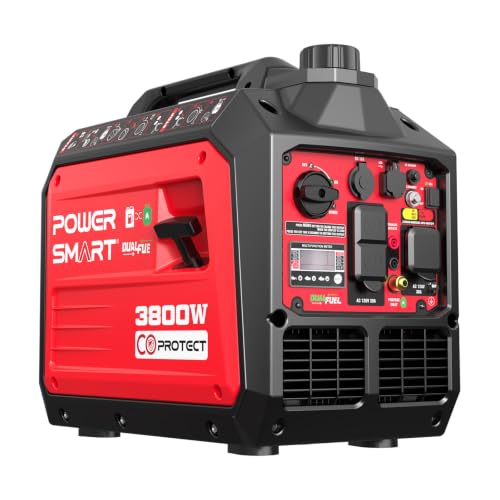
PowerSmart 3800 Watt Dual Fuel Inverter Generator Quiet Portable Gas Propane with CO Sensor RV Ready
As an Amazon Associate we earn from qualifying purchases. Product prices and availability are accurate as of the date/time indicated.
Frequently Asked Questions
How far should a propane generator be from the house?
For portables, 20 feet is the common safety guideline, with the exhaust pointed away from all openings. Permanent standby units follow the manual and local code, often between 18 inches and 5 feet from walls. Always confirm with your manual and building department.
Can I put a standby generator under a covered porch?
Usually not. Some manufacturers advise against installing under a deck or any structure that is closed in or restricts airflow. Overhead clearance, combustible materials and airflow all matter. Ask the manufacturer and your local building department before deciding.
Do I need a permit for a propane standby generator?
In most areas, yes. Permanent installs usually need building, electrical and gas permits, and an inspection. Requirements vary by city and county, so call your building department. A licensed installer typically handles the paperwork.
Is it safe to run a generator in an open garage or carport?
No. Open garage doors and carports still let CO build up and drift indoors. Keep portable generators outside in open air, away from the house, and use CO alarms inside the home.
{“@context”: “https://schema.org”, “@type”: “FAQPage”, “mainEntity”: [{“@type”: “Question”, “name”: “How far should a propane generator be from the house?”, “acceptedAnswer”: {“@type”: “Answer”, “text”: “For portables, 20 feet is the common safety guideline, with the exhaust pointed away from all openings. Permanent standby units follow the manual and local code, often between 18 inches and 5 feet from walls. Always confirm with your manual and building department.”}}, {“@type”: “Question”, “name”: “Can I put a standby generator under a covered porch?”, “acceptedAnswer”: {“@type”: “Answer”, “text”: “Usually not. Some manufacturers advise against installing under a deck or any structure that is closed in or restricts airflow. Overhead clearance, combustible materials and airflow all matter. Ask the manufacturer and your local building department before deciding.”}}, {“@type”: “Question”, “name”: “Do I need a permit for a propane standby generator?”, “acceptedAnswer”: {“@type”: “Answer”, “text”: “In most areas, yes. Permanent installs usually need building, electrical and gas permits, and an inspection. Requirements vary by city and county, so call your building department. A licensed installer typically handles the paperwork.”}}, {“@type”: “Question”, “name”: “Is it safe to run a generator in an open garage or carport?”, “acceptedAnswer”: {“@type”: “Answer”, “text”: “No. Open garage doors and carports still let CO build up and drift indoors. Keep portable generators outside in open air, away from the house, and use CO alarms inside the home.”}}]}